-

This event is cosponsored by the Abbasi Program in Islamic Studies at Stanford University and the Ten Years On Project, www.TheArabUprisings.org

ABSTRACT

During the height of the mass uprisings against authoritarian rule, excitement about the prospects for a more just and representative political order across the Arab region was often tempered by questions concerning the role that Islamist parties would play in post-authoritarian transitions. Movements that maintained deep social roots but were often on the margins of state power were poised to implement an Islamist political project decades in the making. The outcomes of the subsequent transitions, particularly the legacy of destructive civil conflicts, foreign interventions, and authoritarian resurgence, have frequently obscured attempts to understand the impact of the Arab uprisings on Islamism. 

This talk examines these recent developments by placing them within a broader historical analysis that traces the evolution of Islamist thought and activism from its tentative embrace of the nation state to its wholehearted entry into national party politics. It argues that, by the eve of the uprisings, the posture of Islamist movements reflected a set of political commitments that had emerged largely at the expense of their ideological program and social mission. Rooted in the historical and recent acceptance of state institutions and political structures, expressions of Islamism by parties across the Arab region reflected a shift that subsumed long held beliefs beneath the needs of (alternately or in combination) democratic pluralism and political expediency, most clearly visible in the transformation of Tunisia’s Ennahda Party. That tension has been exacerbated in the wake of political defeats experienced by many of these movements, particularly Egypt’s Muslim Brotherhood. While the “Islamist idea” is likely to endure its current bout with state repression, its survival as a political force in the future will depend on its determination to complete this evolution, a process that was both accelerated and interrupted during the critical moments of the Arab uprisings.

SPEAKER BIO

Image
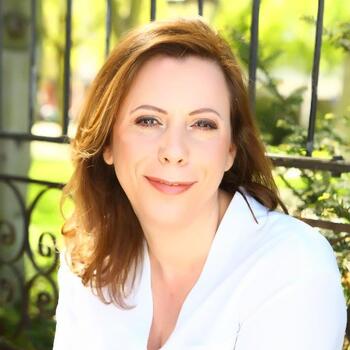
Abdullah Al Arian

Abdullah Al-Arian is an associate professor of history at Georgetown University in Qatar where he specializes in the modern Middle East and the study of Islamic social movements. He is the author of Answering the Call: Popular Islamic Activism in Sadat's Egypt (Oxford University Press). His upcoming book compares the historical experiences of Islamist movements in six different Arab states and will be published by Cambridge University Press. He is also editor of the Critical Currents in Islam page on Jadaliyya ezine.


*Note: Event time listed above is PST.

Online, via Zoom:  REGISTER

Abdullah Al-Arian Associate Professor of History Georgetown University in Qatar
Seminars
Authors
News Type
News
Date
Paragraphs

In a webinar dated, February 12, 2021, a panel of Stanford University scholars shared their reflections on the legacy of the January 25, 2011 Uprising in Egypt. Marking the 10-year anniversary of the uprising and the ouster of Hosni Mubarak, the panel examined the trajectory of authoritarianism in the country over the past decade. Moderated by ARD Associate-Director Hesham Sallam, the panel included former CDDRL Visiting Scholar Nancy Okail, Stanford Professor of History Emeritus Joel Beinin, and CDDRL Senior Research Scholar Amr Hamzawy. The panelists addressed a variety questions including: How have political developments in Egypt and elsewhere in recent years informed our understanding of the January 25 Uprising and its significance? In what ways have authoritarian institutions adapted in the aftermath of the 2011 uprising and how have they shaped the prospects for political change and/or stability? Where are the sites of political contestation and resistance in today’s Egypt?


Hero Image
Joel Beinin Nancy Okail Amr Hamzawy Hesham Sallam
All News button
1
-

This event is cosponsored by the "Ten Years on Project"


ABSTRACT

To mark the 10-year anniversary of Egypt’s January 25 Uprising and the ouster of Hosni Mubarak, this panel examines the trajectory of authoritarianism in the country over the past decade. The panelists reflect on a variety questions including: How have political developments in Egypt and elsewhere in recent years informed our understanding of the January 25 Uprising and its significance? In what ways have authoritarian institutions adapted in the aftermath of the 2011 uprising and how have they shaped the prospects for political change and/or stability? Where are the sites of political contestation and resistance in today’s Egypt?

SPEAKERS BIOS

Image
beinin photo images2 2
Joel Beinin is the Donald J. McLachlan Professor of History and Professor of Middle East History, Emeritus at Stanford University.  From 2006 to 2008 he served as Director of Middle East Studies and Professor of History at the American University in Cairo.  In 2002 he served as president of the Middle East Studies Association of North America. Beinin’s research and writing focus on the social and cultural history and political economy of modern Egypt, Palestine, and Israel and on US policy in the Middle East. He has written or edited twelve books, most recently A Critical Political Economy of the Middle East and North Africa (Stanford University Press, 2020), co-edited with Bassam Haddad and Sherene Seikaly; Workers and Thieves: Labor Movements and Popular Uprisings in Tunisia and Egypt (Stanford University Press, 2015); and Social Movements, Mobilization, and Contestation in the Middle East and North Africa, 2nd edition (Stanford University Press, 2013) co-edited with Frédéric Vairel.

Image
Amr Hamzawy Headshot
Amr Hamzawy is currently a senior research scholar at the Center on Democracy, Development, and the Rule of Law at Stanford University. He studied political science and developmental studies in Cairo, The Hague, and Berlin. He was previously an associate professor of political science at Cairo University and a professor of public policy at the American University in Cairo. Between 2016 and 2017, he served as a senior fellow in the Middle East program and the Democracy and Rule of Law program at the Carnegie Endowment for International Peace, Washington, DC. His research and teaching interests as well as his academic publications focus on democratization processes in Egypt, tensions between freedom and repression in the Egyptian public space, political movements and civil society in Egypt, contemporary debates in Arab political thought, and human rights and governance in the Arab world. His new book On The Habits of Neoauthoritarianism – Politics in Egypt Between 2013 and 2019 appeared in Arabic in September 2019. Hamzawy is a former member of the People’s Assembly after being elected in the first Parliamentary elections in Egypt after the January 25, 2011 revolution. He is also a former member of the Egyptian National Council for Human Rights. Hamzawy contributes a weekly op-ed to the All Arab daily al-Quds al-Arabi.

Image
okail cropped
Nancy Okail is a visiting scholar at CDDRL. She has 20 years of experience working on issues of democracy, rule of law, human rights, governance and security in the Middle East and North Africa region. She analyzes these issues and advocates in favor of human rights through testimony to legislative bodies, providing policy recommendations to senior government officials in the U.S. and Europe. She is currently the president of the board of advisors of The Tahrir Institue for Middle East Policy (TIMEP), previously she was the Institute’s executive director since its foundation. Dr. Okail was the director of Freedom House’s Egypt program. She has also worked with the Egyptian government as a senior evaluation officer of foreign aid and managed programs for several international organizations. Dr. Okail was one of the 43 nongovernmental organization workers convicted and sentenced to prison in a widely publicized 2012 case for allegedly using foreign funds to foment unrest in Egypt. She holds a Ph.D. from the University of Sussex in the UK; her doctoral research focused on the power relations of foreign aid.


Online, via Zoom: REGISTER

0
amr.jpg

Amr Hamzawy is the director of the Carnegie Middle East Program. He studied political science and developmental studies in Cairo, The Hague, and Berlin. He was previously an associate professor of political science at Cairo University and a professor of public policy at the American University in Cairo.

His research and teaching interests as well as his academic publications focus on democratization processes in Egypt, tensions between freedom and repression in the Egyptian public space, political movements and civil society in Egypt, contemporary debates in Arab political thought, and human rights and governance in the Arab world. His new book On The Habits of Neoauthoritarianism – Politics in Egypt Between 2013 and 2019 appeared in Arabic in September 2019.

Hamzawy is a former member of the People’s Assembly after being elected in the first Parliamentary elections in Egypt after the January 25, 2011 revolution. He is also a former member of the Egyptian National Council for Human Rights. Hamzawy contributes a weekly op-ed to the Arab daily al-Quds al-Arabi.


Former Senior Research Scholar, CDDRL
Amr Hamzawy
Joel Beinin
Nancy Okail
Seminars
-

ABSTRACT 

This talk is based on the speakers’ recently published edited volume The Unfinished Arab Spring: Micro-Dynamics of Revolts between Change and Continuity. Adopting an original analytical approach in explaining various dynamics at work behind the Arab revolts and giving voice to local dynamics and legacies rather than concentrating on debates about paradigms, we highlight micro-perspectives of change and resistance as well as of contentious politics that are often marginalized and left unexplored in favor of macro-analyses. First, we re-examine the stories of the uprisings in Tunisia, Egypt, Syria, Morocco and Algeria through diverse and novel perspectives, looking at factors that have not yet been sufficiently underlined but carry explanatory power for what has occurred. Second, rather than focusing on macro-comparative regional trends – however useful they might be – we focus on the particularities of each country, highlighting distinctive micro-dynamics of change and continuity. ​

SPEAKERS BIO

Image
Fatima el Issawi
Fatima el Issawi is a Reader in Journalism and Media Studies at the University of Essex. Her research focuses on the intersection between media, politics and conflicts in transitional contexts to democracy in North Africa. She is the Principal Investigator for the research project “Media and Transitions to Democracy: Journalistic Practices in Communicating Conflicts- the Arab Spring” funded by the British Academy Sustainable Development Programme, looking at media’s impact on communicating political conflicts in post uprisings in North Africa. Since 2012, el Issawi has been leading empirical comparative research projects on the interplay between media and political change, funded by Open Society Foundation and the Middle East Centre/LSE, covering Egypt, Tunisia, Morocco, Libya and Algeria. El Issawi’s expertise crosses journalism, public communication, policy and academia. She has over fifteen years of experience as international correspondent in conflict zones in the MENA region. She is the author of “Arab National Media and Political Change” investigating the complex intersections between traditional journalists and politics in uncertain times of transitions to democracy.

Image
Francesco Cavatorta
Francesco Cavatorta is full professor of political science and director of the Centre Interdisciplinaire de Recherche sur l’Afrique et le Moyen Orient (CIRAM) at Laval University, Quebec, Canada. His research focuses on the dynamics of authoritarianism and democratization in the Middle East and North Africa. His current research projects deal with party politics and the role of political parties in the region. He has published numerous journal articles and books.

Online, via Zoom: REGISTER

Fatima el Issawi University of Essex
Francesco Cavatorta Laval University
Seminars
News Type
News
Date
Paragraphs

Statement in Support of the Egyptian Initiative for Personal Rights (EIPR)

[The following statement was issued by a group of scholars and human rights advocates in support of the Egyptian Initiative for Personal Rights, which currently faces an escalating crackdown by authorities with the arrest of three of its senior personnel, including its executive director. If you wish to add your name to the statement, you can do so via the following link.]

We, the undersigned scholars and human rights advocates, express our deep concern at the escalating crackdown that Egyptian authorities have launched against civil society organizations in recent days. In an unprecedented move, on November 15 security forces arrested Mr. Mohamed Basheer, the administrative manager of the Egyptian Initiative for Personal Rights (EIPR), one of the most prominent and reputable civil society organizations in Egypt. Despite strong international condemnation of that action, on November 18 authorities arrested Mr. Karim Ennarah, the director of the criminal justice unit at EIPR, while launching a vicious campaign against EIPR in state-owned media and leveling false accusations against its personnel. A day later, authorities arrested EIPR Executive Director Mr. Gasser Abdel-Razek. They also leveled terrorism-related charges against Mr. Ennarah and Mr. Basheer, adding their names to a legal case that includes numerous human rights advocates. 

Most concerning is that this escalation comes after EIPR hosted senior diplomats from 14 countries, including Canada, the UK, Norway, several European Union (EU) member states, as well as the EU delegation to discuss the implications of the outcome of the United States elections for the human rights situation in Egypt. We call on the Egyptian government to immediately release EIPR's personnel and halt all politically motivated investigations against civil society organizations in the country.

Signatories*


Nancy Okail, Stanford University

Joshua Stacher, Kent State University

Danny Postel, Northwestern University

Lisa Hajjar, University of California - Santa Barbara

Omar Dahi, Hampshire College

Robert Springborg, Naval Postgraduate School (ret)

Jillian Schwedler, Hunter College and the Graduate Center, CUNY

Jennifer Derr, University of California, Santa Cruz

Rochelle Davis, Georgetown University

Elliott Colla, Georgetown University

Joel Gordon, University of Arkansas

Joel Beinin, Stanford University

Marietje Schaake, Stanford University

Rim Naguib, EUME fellow, Forum Transregionale Studien, Berlin

Chris Toensing, International Crisis Group

Ted Swedenburg, University of Arkansas

Wendy Pearlman, Northwestern University

Larry J Diamond, Hoover Institution, Stanford University

Will Hanley, Florida State University

Amy Hawthorne, Project on Middle East Democracy

Fadi Awad Elsaid, University of Connecticut

Vickie Langohr , College of the Holy Cross

Ahmed Ezzat, University of Cambridge

Sherene R Seikaly, University of California, Santa Barbara

Iman Mersal, University of Alberta - Canada

Gennaro Gervasio, Roma Tre University, Rome

Enrico De Angelis, Independent Researcher

Kenza Rady    

Owain Lawson, Columbia University

Michele Dunne, Carnegie Endowment for International Peace

Atef Said, University of Illinois at Chicago

Omar Cheta, Bard College

Pascale Ghazaleh, The American University in Cairo

Hanny Megally, NYU

Nicola Melis, University of Cagliari, Sardinia

Paola Rivetti, Dublin City University

Brecht De Smet, Ghent University

Francesca Biancani, Bologna University

Seppe Malfait, Ghent University

Nicola Perugini, University of Edinburgh

Alessandra Marchi, Università Cagliari

Koenraad Bogaert, Ghent University

Lucia Sorbera, The University of Sydney, NSW

Patrizia Manduchi, University of Cagliari (Italy)

John T Chalcraft, LSE

Soraya El Kahlaoui, Ghent University

Khaled Fahmy, Cambridge University

Nejla Lyons, Independent human rights researcher

Mamdouh Habashi, Socialist People's Alliance Party

Daniela Pioppi, University of Naples 'L'Orientale'

Iain Chambers, University of Naples, 'Orientale'

Ray Bush, University of Leeds

Heba Youssef, University of Brighton

Nicola Pratt, University of Warwick, UK

Magda Adly, Nadim center for rehabilitation of victims of violence

Hussein Baoumi, Amnesty International

Suzan Abd El Moty Fayyad, El Nadim Center

Ibrahim Seyam           

Saerom Han, University of Aberdeen

Amel Fahmy, TADWEIN

Aziz Barkaoui, Amnesty-France

Mohamad Najem, SMEX

Nihad Aboud  

Samir Khattab, Researcher

Pinar E. Donmez, De Montfort University

Mohamed Mokhtar, Human rights defender ( ECRF)

Hassan Ali, متطوعون من أجل حقوق الإنسان

Steven Heydemann, Smith College

Sara Abughazal, Regional Coordinator

Agnieszka Paczynska, George Mason University

Asmaa Elmalky           

Lynn Darwich, University of Illinois at Chicago

Mohammad El Taher, Researcher and Technologist

Lorenzo Feltrin, University of Warwick

Gilbert Achcar, SOAS, University of London

Dina Matar, SOAS

Marco Lauri, Università di Macerata

Feyzi Ismail, SOAS University of London

Deniz Kandiyoti, School of Oriental and African Studies

Ziad Elmarsafy, King's College London

Barbara Pizziconi, SOAS, University of london

Dr Vanja Hamzić, SOAS University of London

Lynn Welchman, SOAS, University of London

Mohamed Noby, Lawyer

Bashir Abu-Manneh, University of Kent

Salwa Ismail, SOAS

Ramy Yaacoub, The Tahrir Institute for Middle East Policy

Veronica Ferreri, ZMO Berlin

Jens Lerche, SOAS, University of London

Rahul Rao, SOAS University of London

Andrea Teti, University of Aberdeen

John Faulkner, Administrator (retired)

Anne Alexander, University of Cambridge

Shreeta Lakhani, SOAS

Francesco De Lellis, Centro Studi sull'Africa Contemporanea - Università L'Orientale Napoli

Akansha Mehta, Goldsmiths, University of London

Cristina Flesher Fominaya, Loughborough University

Myrsini Manney-Kalogera, University of Arizona

Kim Rochette, Save the Children

Rima Majed, American University of Beirut

Aleksandra Zaytseva, Georgetown University

Ryota Jonen, World Movement for Democracy

Chiara Pagano, Università di Pavia

Paul Sedra, Simon Fraser University

Tarek Masoud, Private citizen

Christopher Hitchcock, ACRPS

Juan Cole, University of Michigan

Feyzi Ismail, SOAS University of London

Zachary Lockman, New York University

Yasmin Elsouda, SOAS University of London 

Dalia Ghanem, University of California, Davis

Charlie Lawrie, Johns Hopkins SAIS

Sophie Chamas, SOAS, University of London

Kerem Nisancioglu, SOAS University of London 

Jo Tomkinson, SOAS, University of London

Imran Jamal, SOAS

Saffo Papantonopoulou, University of Arizona

Suad Joseph, University of California, Davis

Fayrouz Yousfi, Gent University 

Abdulrahman El-Taliawi, University College London

Anthony Alessandrini, City University of New York

Yair Wallach, SOAS

Huseyin Silman, GLOPOL

Alfredo Saad Filho, King's College London

Sami Zemni, Ghent University 

Maher Hamoud, Ghent University

Omar Jabary Salamanca, ULB

Sharan Grewal, College of William & Mary

Michael Chamberlin, Human Rights Defender in Mexico

Mattia Giampaolo, CeSPI

Liliana Toledo Guzmán, University of Arizona

Keith Cook, University of Arizona

Ifigeneia Mourelatou, UCL

Katharina Grüneisl, Durham University

Zoe Basiouri, Aristotle University

Hani Sayed, American University in Cairo

Jason Brownlee, University of Texas at Austin

Charles W. Dunne, Arab Center Washington DC

Francis Fukuyama, Center on Democracy, Development, and the Rule of Law, Stanford University

Jessica Winegar, Northwestern University

Michael Michaelides, University of Florida 

Catherine Jenkins, SOAS, University of London

Muhammad Ebaid, The Egyptian Commission for Rights and Freedoms (ECRF)

Aleś Łahviniec, European Humanities University, Lithuania-Belarus

Sarah Rifky, MIT

Aymen Zaghdoudi, ARTICLE 19

Tania Kaiser, SOAS

Chenjia Xu, SOAS

Miriam Gastélum, UCL

Lars Peter Laamann, SOAS, University of London

Alessandra Mezzadri, SOAS

Andrew Newsham, SOAS, University of London 

Myat Ko Ko, Yangon School of Political Science

Mayur Suresh, SOAS, University of London

Frances Grahl, SOAS

Sadek Hamid, Independent Academic

Andrea Cornwall, SOAS

Judith E. Tucker, Georgetown University

Georges Khalil, EUME, Forum Transregionale Studien Berlin

William Aceves, California Western School of Law

Karima Laachir, Australian National University 

Aida Seif El Dawla, El Nadim Center

Ruba Salih, SOAS 

Shereif Elroubi

Hadi Enayat, SOAS

Karen Rignall, University of Kentucky

Ahmed Gad, Amnesty International 

Taher Mokhtar, Medical Doctor 

Hassan Osman , University of Minya

Vivienne Matthies-Boon, University of Amsterdam

Sigrid Vertommen, Ghent University

Frances Grahl, SOAS

Rebeca Robertson, SOAS

Alla Kos, Responsible AI

Mahfouz Eltaweel       

Peter Hill, Northumbria University, Newcastle-upon-Tyne

Ahmed Naji, BMI

Ahmed Abbes, CNRS, Paris, France

Kholoud Saber Barakat, Catholic University of Louvain (UCLouvain)

Assaf Kfoury, Boston University

Reda Eldanbouki, Women's Center for Guidance and Legal Awareness 

Mona Hamed Imam, El Nadeem Center

Tania Tribe, SOAS

Sherif Azer, University of York, UK 

Omnia El Shakry, University of California, Davis

Manjeet Ramgotra, SOAS University of London

Boris Kilgarriff, SOAS

Mohamef Lotfy, Egyptian Commission for Rights and Freedoms

Lorenzo Casini, University of Messina

Yousra Hassenien       

Christian Achrainer, Philipps University Marburg

Sara Mohani, Journalist

Michael McFaul, Stanford University

Abbas Milani, Stanford University

Karina Sarmiento

Democracy for the Arab World Now (DAWN)

Nathan Grubman, Stanford University

Azza Soliman, Lawyer

Jacqueline Charretier, Human rights defender

Mohammad Hossam Fadel, University of Toronto Faculty of Law

Necla Tschirgi, Kroc School of Peace Studies, University of San Diego

Elisa Massimino, Georgetown University Law Center

Stuart Schaar, Brooklyn College, CUNY

Alya Khemakhem, USC

Daniel Marwecki, University of Hong Kong

Brad Fox, The Graduate Center, CUNY

Karim Reda, ناشط سياسي و مدون مستقل

Dolores Soto

Irene Gendzier , Boston University (Prof. Emeritus)

Basma El Husseiny

Ahmed Ramy, Egyptian Pharmaceutical Syndicate

Sherif Gamal, IT Specialist 

Ahmed Melad, Lawyer

Khaled Mansour, Independent Consultant

Richard Falk, Queen Mary University London

Wagdy Abdel Aziz, مركز الجنوب لحقوق الانسان

Laila Soueif, Cairo University

Matt Gordner, University of Toronto

Emad Shahin, Academic 

Khalda Yassin, Egyptian citizen

Céline Cantat, Sciences Po Paris 

Ahmed Said, ECRF

Ismail Ammar, Student

Amr Tajuddin, Egyptian citizen 

Giovanni Piazzese, Freelance journalist and Ph.D. researcher 

Lamia Radi, Journalist 

Sameh Elbarky, Alaraby Aljadeed newspaper

Magda Boutros, Brown University

Céline Lebrun Shaath, Harvard Kennedy School of Government 

Riya Al'sanah, Who Profits Research Center 

Nesting Badawi, The American University in Cairo

Nadia Kamel    

Shaimaa El-Banna, Committee for Justice 

Zoé Carle, Université Paris 8

ahmed altigani, IRFC

Ali Hegazy, Royal College of Obstetricians & Gynecologists

Hakim Abdelnaeem, Artist

Khaled Sobhy

Tanya Monforte, McGill University

Emma Frampton, SOAS

Nathalie Bernard-Maugiron, Institut de Recherche pour le Développement

Jens Hanssen, University of Toronto

Manar Tantawie, استاذ بمعهد هندسي خاص

Dee Smythe, Centre for Law & Society, University of Cape Town

Manar Mohsen           

Ranjit Singh, University of Mary Washington

Vasuki Nesiah, New York University

Pascal Menoret, Brandeis University

Mona Khneisser, University of Illinois at Urbana Champaign 

Yasser Munif, Emerson College

Corinna Mullin , CUNY

Alice Finden, SOAS

Alfredo Ortiz Aragón, University of the Incarnate Word

Amira Abdelhamid, University of Sussex

Magdi El Gawhary       

Daniel Watson, University of Sussex

Maha Alaswad, Georgetown University 

Andrea Brock, University of Sussex

Hani Faris, University of British Columbia, Canada

Noam Chomsky, University of Arizona

Saghar Sara, Collaborative Social Change

Ziad Abu-Rish, Bard College

Sarah El-Kazaz, SOAS

Sara Kermanian, University of Sussex

Heather Allansdottir, University of Bifrost

Louiza Odysseos, University of Sussex

Adam Ramadan, University of Birmingham

Karem Yehia, Journalist freelance

M. Abbas Yongacoglu, University of Ottawa (Emeritus Professor)

Liliane Daoud, Journalist 

Rossella Merullo, Humboldt University

Juan M. Amaya-Castro, Universidad de los Andes (Bogotá - Colombia)

Beth Baron, CUNY

Dina Fergani, University of Toronto 

David Kramer, FIU

Ghayth Omar, Alnasser and Partners

Lori Allen, SOAS University of London

Azzah Ahmed, UCLA

Derek Ludovici , City University of New York

Farah Al Shami, Arab Reform Initiative

Rosemary Sayigh, American University of Beirut

Muhammad Ali Khalidi, City University of New York - Graduate Center

Mohammed Mostafa, Intersection Association for Rights and Freedoms 

Ali Ugurlu, Columbia University

Wafaa Hefny, Professor of English Literature

Lamis al Nakkash, Cairo University 

Nadje Al-Ali, Brown University

Yezid Sayigh, Malcolm H. Kerr Carnegie Middle East Center

Patrizia Manduchi, University of Cagliari

Daniela Potenza, Università degli studi di Napoli "L'Orientale"

Giulia Cimini, University of Bologna 

Brendan O’Duffy, Queen Mary University of London

Alessandro Buontempo, Università Statale di Milano

Tony Outang, SOAS 

Sophie Chapman, SOAS

Chiara Cascino, University of Naples "L'Orientale", Italy

Teodora Boanches, SOAS

Caterina Roggero, Università degli Studi di Milano-Bicocca

Laura Vale, SOAS

Martina Biondi, University of Perugia

Felix Henson, SOAS

Caitlin Callies, SOAS

Fez Endalaust, SOAS, University of London

Charlotte Paule, SOAS 

Hanna Uihlein, SOAS University of London

Emily Bayliss, SOAS

Lauren Feechan, SOAS

Giuseppe Acconcia, Padova University

Matthew Holt

Faiz Sheikh, University of Sussex

James White, SOAS, University of London

Yusra Siddique

Lucy Roberts, SOAS

Leona Li, SOAS, University of London

Amory Lumumba, SOAS

Virginia Ruosi, SOAS

Amanda Kutch, SOAS 

Luisa Hausleithner, SOAS

Jack McGinn, London School of Economics

Alessandro Cane, SOAS

Ottilia Mackerle, SOAS

Ishrat Sanjida, SOAS

Flora Butler, SOAS

Max La Fosse, SOAS

Callum Cafferty, SOAS University of London

June Derz, SOAS

Doris Duhennois, SOAS

KP Sarvaiya, SOAS

Madhubanti Bhaduri, School of Oriental and African Studies 

Debora Del Pistoia, Amnesty International 

Sarah Zellner, University of Oxford 

Laura Janicka, SOAS

Liana Parry, SOAS

Ella Spencer, SOAS

Clara Kristola Truc, SOAS

Oliver Hampden, SOAS

Evangelin Dupret, SOAS

Sara Bertotti, SOAS University of London

Alada Taylor, SOAS

Aoife Delaney, SOAS

Hazel Ke, SOAS

Sophie Snook, SOAS

Alexander Curtis, School of Oriental and African Studies (SOAS)

Lachlan Kenneally, SOAS

Sara Birch, Brighton University, UK 

Gabrielle Nuttall, SOAS

Sascha Gill, SOAS, University of London

Filippo Angeli, SOAS

Renata Rouvinen, SOAS 

Ruth George    

Joseph Edwards, SOAS

Muhsin Chang, SOAS

Emmy Toulson , SOAS

Margot Chesne, SOAS 

Holly Haynes, SOAS

Georgia Jones, SOAS

Maliha Sohail, SOAS

Sascha Kröger, SOAS

Silvia Sanchez, SOAS

Joshua Young, SOAS

Anna Etter       

Rebekka Muth, SOAS

Chao Ping Yi, SOAS

Cristina Stanescu, SOAS

Raimond Christian Dasalla, SOAS

Daisy Webster-Kincaid, SOAS

Hisham Parchment, SOAS, University of London

Anthea Frank, SOAS

Martina Censi, Università di Bergamo

Lucy Mair, Garden Court North Chambers

Malina Mihaiu, SOAS

Olivia Smith, SOAS

Polina Volkova, SOAS University of London

Kay Zhang       

Julia Llaurado, SOAS

Yukari Ishii, SOAS 

Alessandro Gatti Bonati          

Lornelle Gayle-Harris, SOAS

Gaelle Poncelet, SOAS

Helena Buckley, SOAS

William Tod, SOAS

Mario Arulthas, SOAS

Taher Saad

Judith Heimbach, SOAS

Chelsea Krajcik, SOAS

Tanzidah Islam, SOAS

Ilyas Saliba, WZB Berlin Social Science Center 

John Peterson, SOAS

Lyna Belmekki, SOAS

Francesco Vacchiano, University Ca' Foscari, Venice

Aaron G. Jakes, The New School

Joshua Ong, SOAS 

Emmy Toulson, SOAS

Alex Schumann, SOAS

Caitlin Pether, SOAS 

Jamie Corson, SOAS

Noah Lepawsky           

Nayeema Rahman, SOAS

Katherine Saunders, SOAS, University of London 

Ioana Ille, SOAS

Taha Metwally, Founder, ANKH association

Nijmi Edres, Georg-Eckert-Institut für internationale Schulbuchforschung

Serena Tolino, University of Bern

Lutz Oette, Centre for Human Rights Law, SOAS, University of London

Samia Bano, SOAS University of London 

Laura Hammond, SOAS University of London

Sinan Antoon, New York University

Richard Alexander, SOAS University of London

Isabel Toledo Guzmán, Secretaría de Educación Pública SEP

Andrew Antoine, SOAS University

Michael Reinsborough, School of Oriental and African Studies

Jeffery Lin, PEN Hong Kong, Univ. of Hong Kong Cultural Leadership Youth Academy

Thabo Huntgeburth, SOAS

Nadine Wassef, Ain Shams University 

Ilyas Saliba, WZB Berlin Social Science Center 

Ceri Gibbons, Researcher

Dishan Abrahams, SOAS

Laura Bier, Georgia Tech

Veli Yadirgi, SOAS

Genevieve Ladd, SOAS

Daphne Muscat, SOAS, University of London

Hannah Abbott, SOAS University

Sasha Hubbard, SOAS

Zaeema Ali, SOAS

Shamita Ray, SOAS

Ilaria Bertocchini, SOAS

Alexandria Pilides, SOAS

Viktor da Silva, SOAS 

Alaina Hall, SOAS 

Tanja Tabbara, Rosa Luxemburg Stiftung

Raffaele Cattedra, Università di Cagliari

Jingfei Zhang, SOAS

Clive Rosewarne, Latrobe University

Ugo GRAGNOLATI, Université Paris 1 Panthéon-Sorbonne

Natasha Kaluzynski, SOAS

Naila Awwad, Women Against Violence

Rani Jana, SOAS University of London

Catriona Drew, School of Law, SOAS University of London 

Samuel Smith-Stanley, SOAS

Sarah Guennoun, SOAS

Maya Shukla, SOAS

Rosa Lynch-Northover, SOAS

Laurence Davis, University College Cork

Sarah Irving, Edge Hill University

Neve Gordon, Queen Mary University of London

Charles Melville, Pembroke College Cambridge

Sara Salem, LSE

Richard Tapper, SOAS University of London (Emeritus Professor)

Eugene Rogan, University of Oxford

Michael Mason, London School of Economics and Political Science

Hilary Kilpatrick, Independent scholar

Hendrik Kraetzschmar, University of Leeds

Catherine Cobham, University of St Andrews

Birgit Poopuu, Tallinn University

Lewis Turner, Newcastle University

Anthony Gorman, University of Edinburgh

Rayane Anser, University of Warwick- Department of Politics and International Studies

Alessia Carnevale, Sapienza University of Rome

Shelagh Weir, Former British Museum

Mona Baker, University of Manchester

Sharri Plonski, Queen Mary University of London

Jorgen Nielsen, University of Birmingham

Guy Burton, Vesalius College

Sherry Dawoud           

James Godfrey, Birkbeck, University of London

James Dickins, University of Leeds

Marilyn Booth, University of Oxford

Matthew Hedges, Durham University

Hoda Mohieldin, Cairo university 

Celestine Hanssens, SOAS

Mandy Turner, University of Manchester, UK

Wafaa Farhat, SOAS

Laure Guirguis, Aarhus University, Denmark

Cecilia Martinez, SOAS UNIVERSITY

Cıgdem Balım, Indiana University (Emerita)

Nadim Houry, Arab Reform Initiative

Jeremy Wildeman, uOttawa

Line Khatib, McGill

Irene Fernández-Molina, University of Exeter

Emmy Toulson, SOAS

Vicky Blake, UCU

Georgia Hunt, SOAS

Celia Kerslake, University of Oxford

Daniel Vitkus, University of California, San Diego

Miray Philips, University of Minnesota

Antonino Adamo, CNR

Antonio Pezzano, Università di Napoli "L'Orientale"

Eve Caplowe, SOAS

Gunvor Mejdell, University of Oslo

Lord John Alderdice, Harris Manchester College, University of Oxford

Noemie Bachellerie, SOAS

Sami Zubaida, Birkbeck, University of London

Mark Ayyash, Mount Royal University

David Wearing, University of Southampton

Nurcin Ileri, Forum Transregionale Studien, EUME Program

Bonnie Bates, Carleton University

Mariam Iskajyan, SOAS Development Studies

Marta Bellingreri, Independent researcher 

Nick Riemer, University of Sydney

Sandra Nicholls, SOAS

Nathalie Bernard-Maugiron, Institut de recherche pour le développement

Youssef Mohieldin, University Professor 

Jacob Høigilt, University of Oslo

Sana Tannoury-Karam, Forum Transregionale Studien

Anni Vendelin, SOAS

Kaoutar Ghilani, University of Oxford

Sophie Abramovici, SOAS

Karim El Taki, University of Cambridge

Leo Zeilig, University of London 

Maria Sussex, University of Sussex

Zoe Peppitt, SOAS

Jonathan Purkis, Independent academic and freelance consultant

Nicole Crisp, University of Arizona 

Loes Debuysere, Ghent University

Leila Schneps, CNRS France

Nachoua Azhari, Freelance translator. 

Kathleen Ryou             

Kelly McBride, IFRC Psychosocial Centre 

Sergey Shpectorov, University of Birmingham, UK

Frances S. Hasso, Duke University

Barry Simon, Caltech

Ophélie Mercier, Ghent University

Hesham Sabry, Qadreen Egypt

Dina El Henawy, Qadreen

Omar Sedky

Mehdi Labzaé, Maison des Sciences de l'Homme

Paul Grassin, Université Paris 1 Panthéon-Sorbonne 

Garth Frankland, Leeds Left Unity

Mathilde Zederman, Sciences Po Toulouse

Marianne Saddier, Paris 1 Panthéon-Sorbonne

Bjørn Olav Utvik, University of Oslo

Katerina Dalacoura, LSE

Dominique Maliesky, Sciences Po Rennes

Giuseppe Restifo, Independent Historian Researcher

Nils A. Butenschøn, Norwegian Centre for Human Rights, Faculty of Law, University of Oslo

Ece Onderoglu Bayazit, SOAS

Dubois Simon, IFPO

Karim Eid-Sabbagh, Independent Researcher

Owoh Henry, SOAS

Ben Radley, University of Bath

Genevieve Ladd, SOAS

Agnès Aubry, University of Lausanne

Adele Oliver, SOAS

Ricarda Ameling, FU Berlin

Elliot Shirnia, SOAS

Aderemi Medupin, CEE Coalition

Hyaah Chowdhury, SOAS Student 

Azzah Ahmed, UCLA

Laura Moreno Vela


*Institutional affiliations listed for identification purposes only

Hero Image
EIPR
Egyptian Initiative for Personal Rights logo
All News button
1
Authors
News Type
News
Date
Paragraphs

In a webinar dated June 8, 2020, American University in Cairo Scholar Amr Adly presented findings from his new book Cleft Capitalism: The Social Origins of Failed Market Making in Egypt (Stanford University Press, 2020). Egypt has undergone significant economic liberalization under the auspices of the International Monetary Fund, the World Bank, USAID, and the European Commission. Yet after more than four decades of economic reform, the Egyptian economy still fails to meet popular expectations for inclusive growth, better standards of living, and high-quality employment. While many analysts point to cronyism and corruption, this study finds the root causes of this stagnation in the underlying social and political conditions of economic development. It offers a new explanation for why market-based development can fail to meet expectations: small businesses in Egypt are not growing into medium and larger businesses. The practical outcome of this missing middle syndrome is the continuous erosion of the economic and social privileges once enjoyed by the middle classes and unionized labor, without creating enough winners from market making. This in turn set the stage for alienation, discontent, and, finally, revolt. With this book, Adly uncovers both an institutional explanation for Egypt's failed market making, and sheds light on the key factors of arrested economic development across the Global South.


Hero Image
screen shot 2020 06 09 at 2 41 41 pm
All News button
1
-

ABSTRACT

Democracy promotion has been a longstanding goal of US foreign policy in the Middle East and elsewhere. President George W. Bush championed democracy promotion as a way to counter the ideology and extremism that led to the September 11, 2001 terror attacks against the United States. After Bush’s attempts ended in abject failure, President Barack Obama sought to repair relations with the Muslim world but also withdraw the US footprint in the Middle East. But Obama was forced to take a far more hands-on approach with the outbreak of the 2010-2011 uprisings known as the Arab Spring. President Donald Trump, who has displayed an almost allergic aversion to Obama’s policies, has openly embraced the region’s autocrats with little regard for their abuse of human rights or absence of attention to political or economic freedom. How the United States approaches the region matters – both for aspiring democrats and for those who wish to silence them. Despite the rise of Russia and China, the United States remains the sole superpower, with the loudest voice on the world stage. Thus, the shift from democracy promoter – albeit reluctantly at times – to authoritarian enabler has made the task of democratic political reform far more challenging for people across the Middle East. This discussion will examine the recent democracy promotion efforts of the United States, with a focus on the Obama and Trump years.

SPEAKER BIO

Image
yerkes color large 2017
Sarah Yerkes is a fellow in the Carnegie Endowment for International Peace’s Middle East Program, where her research focuses on Tunisia’s political, economic, and security developments as well as state-society relations in the Middle East and North Africa.  She has been a visiting fellow at the Brookings Institution and a Council on Foreign Relations international affairs fellow and has taught in the Security Studies Program at Georgetown University and at the Elliott School of International Affairs at the George Washington University. Yerkes is a former member of the State Department’s policy planning staff, where she focused on North Africa. Previously, she was a foreign affairs officer in the State’s Department’s Office of Israel and Palestinian affairs. Yerkes also served as a geopolitical research analyst for the U.S. military’s Joint Staff Strategic Plans and Policy Directorate (J5) at the Pentagon, advising the Joint Staff leadership on foreign policy and national security issues.

Online, via Zoom: REGISTER

Sarah Yerkes Carnegie Endowment for International Peace
Seminars
Paragraphs

The current Egyptian political scene reveals an important paradox: since its ascendancy to power in 2013, the military-led authoritarian government has not faced significant challenges from civil society despite systematic human rights abuses and continuous societal crises. Apart from limited protests by labor activists, student movements, and members of syndicates, Egyptians have mostly refrained from protesting, instead of hoping that the government will improve their living conditions despite a rising poverty rate of 33 percent, an inflation rate between 11 and 12 percent, and unemployment at eight percent. This popular reluctance to challenge the authoritarian government has continued to shape Egypt’s reality since the collapse of the short-lived democratization process from 2011–2013, writes Amr Hamzawy in The Brown Journal of World Affairs. Read here.

All Publications button
1
Publication Type
Journal Articles
Publication Date
Authors
Amr Hamzawy
Authors
News Type
News
Date
Paragraphs

CDDRL’s Program on Arab Reform and Democracy held its annual conference at Stanford University on October 11 and 12, titled “The Struggle for Political Change in the Arab World.” The conference is an outgrowth of ARD’s efforts to support new research on the dynamics of political change in the countries of the Arab world. Scholars from across different disciplines sought to understand how social, economic, and political dynamics at the national level, as well as international and regional conflict and power rivalries, impact struggles for political and social change in the region.

Overview of Panels and Speakers

Image
larry diamond banner
Following opening remarks by FSI Senior Fellow Larry Diamond, the first panel titled “The Boundaries of Authoritarianism post-Arab Uprisings” featured CDDRL Senior Research Scholar Amr Hamzawy. His paper examined how the regime of Abdel Fattah Al-Sisi has employed discursive strategies to discredit calls for democratic change in the country. Sean Yom, Associate Professor of Political Science at Temple University, outlined how the protest strategies of Jordanian youth have limited their effectiveness in advancing meaningful political change. University of California, Davis Scholar Samia Errazzouki discussed the failure of state-led political and economic reform in Morocco.

Chaired by Harvard University Fellow Hicham Alaoui, the second panel was titled “Popular Uprisings and Uncertain Transitions.” University of California, Santa Cruz Political Scientist Thomas Serres provided an overview of the economic disruptions that contributed to Algeria’s uprising. Lindsay Benstead, who is an Associate Professor of Political Science at Portland State University, analyzed the electoral successes of Tunisia’s Ennahda Party. Khalid Medani, Professor of Political Science at McGill University, explained how Sudanese protesters leveraged new strategies of contention to force Omar Al-Bashir out of power.

farrah al nakib and michael herb Farah Al-Nakib (right) and Michael Herb (left)
The third panel, titled “Politics, Succession and Sectarianism in the GCC States,” included Oxford University Fellow Toby Matthiesen, who discussed how Saudi Arabia and the GCC states have increasingly sought to protect their regimes by actively molding the politics of their autocratic patrons in the region, and by using new technologies to upgrade the effectiveness of their surveillance states. Georgia State University Political Scientist Michael Herb explained how the aging of the Saudi line of succession contributed to the political ascendancy of Crown Prince Mohammad Bin Salman and the decay of family rule in the country. Cal Poly Historian Farah Al-Nakib described how Kuwait’s royal family has used its sponsorship of large-scale development projects to sidestep the country’s political polarization, undermine the power of the parliament, and weaken public access to spaces of political contestation.

Image
hesham and toby matthiesen
The fourth panel focused on “Social Strife and Proxy Conflict in the Middle East.” Chatham House Scholar Lina Khatib described Syria’s transformation during the civil war from a highly centralized security state to a transactional state in which the regime depends heavily on local powerbrokers. Stacey Philbrick Yadav, Associate Professor and Chair of the Department of Political Science at Hobart and William Smith Colleges, discussed differences in how local communities in Yemen have been affected by the country’s conflict. David Patel, who serves as Associate Director for Research at the Crown Center for Middle East Studies at Brandeis University, argued that Iraq’s democratic institutions have been impressively robust to a series of existential challenges, but he also highlighted a widespread feeling among the Iraqi public that its parliamentary system is failing to deliver.

Image
lisa blaydes
Finally, the fifth panel examined the topic of “International Forces in the Arab Political Arena.” Stanford University Political Scientist Lisa Blaydes suggested that China’s efforts to involve itself in the regional economy may improve its reputation among economically-frustrated Arab citizens, but that such efforts also spell trouble for democracy and human rights in the Middle East. Hamid & Christina Moghadam Director of Iranian Studies at Stanford University Abbas Milani argued that Iran’s ideological commitment to exporting the Islamic Revolution has been remarkably consistent for several decades. Colin Kahl, Co-director of the Center for International Security and Cooperation at FSI, reviewed the strategies of US administrations toward the Middle East, and posited that President Trump’s approach of pursuing maximalist objectives with minimal commitments is particularly likely to heighten instability in the region. FSI Scholar Ayca Alemdaroglu emphasized that Turkey’s neo-Ottoman foreign policy has failed to achieve its objectives in the face of mounting regional upheaval.

Common Themes of Political Change and Continuity

Image
hamzawy khatib patel stacey
Several themes emerged from conference presentations. First, across the panels, scholars discussed the lessons learned by autocrats and activists alike in the aftermath of the Arab Spring, and the ways in which these lessons have transformed regional politics. Hamzawy emphasized that the Sisi regime in Egypt has increasingly relied on intensive repression over cooptation to maintain stability, while at the same time refusing to grant even limited political openings as existed under Hosni Mubarak’s presidency. In part, this change appears to be rooted in the regime’s belief that relaxing the state’s authoritarian posture had contributed to the revolutionary upheaval of 2011. Likewise, Matthiesen suggested that Saudi Arabia and the Gulf Cooperation Council States have learned to become more aggressive in strengthening their surveillance apparatus and policing popular discourse transnationally. By contrast, Serres discussed how the Algerian military and bureaucracy have responded to mass protests not by intensifying repression, but instead by attempting to coopt anti-corruption initiatives and democratic reforms to limit political and economic change. Similarly, regarding Kuwait, Al-Nakib illustrated how the restructuring of urban spaces has proved itself a subtle but successful strategy for the royal family to rehabilitate its reputation while limiting geographic focal points for popular politics.

Image
sean yom
Activists have also learned their own lessons from the aftermath of the Arab Spring. According to Yom, Jordanian activists continue to look to the leaderless revolutions of Tunisia and Egypt as a model to be emulated. As a result, they prioritize agility and horizontality in their protests, and they forgo the organization of formal political movements. This approach has succeeded in acquiring short-term concessions from the regime but has failed to generate broader structural changes. On the other hand, activists in Sudan appear to have been more successful at using lessons from the Arab Spring to push for systematic transformations of their political system. According to Medani, Sudanese protesters developed novel tactics to avoid the repression of the coercive apparatus, and they were effective at gradually forging a counterhegemonic discourse that clearly exposed the regime’s failures to the public. Following the overthrow of Omar Al-Bashir, activists in Sudan have also insisted on dismantling the political and economic might of the deep state to avoid following Egypt’s path.

Image
hicham alaoui at conference
Second, the conference discussion indicated widespread dissatisfaction with formal political institutions across the region. For instance, Hamzawy suggested that Sisi’s regime has been relatively successful at discrediting civilian political institutions, including the legislature and civilian-led ministries. Errazzouki highlighted widespread dissatisfaction in Morocco with existing political institutions. Likewise, Yom’s discussion of activists in Jordan emphasized their lack of interest in entering formal politics. In Kuwait, the royal court has found an opening to pursue urban development projects outside of normal institutions in part because of the public’s frustration with gridlock in the legislature. Patel speculated that frustration with the parliament and muhasasa system in Iraq may finally prompt major changes to the country’s political process.

Image
thomas serres and khalid medani
Third, despite this disillusionment with formal politics, these political institutions have proved remarkably durable in countries across the region. For example, though current frustrations may finally prompt change in Iraq, Patel also highlighted the resilience of the parliamentary system in the face of a sectarian civil war, US troop withdrawal, the rise of ISIS, and a number of other major challenges. For both Algeria and Sudan, Serres and Medani stressed that militaries continue to exercise significant influence despite the popular uprisings. Meanwhile, for Egypt, Hamzawy noted the firm grip of the current military regime on power, and for Morocco, Errazzouki described the lack of systematic changes to the country’s ruling monarchy, even after years of popular pressure.

Image
stacey yadav
Fourth, this durability has not precluded a number of important shifts within existing political institutions. Regarding Syria, for instance, Khatib explained how the survival of Bashar al-Asad’s presidency has depended on moving state institutions away from a centralized security state to a transactional state reliant on local actors with a degree of independence from the regime. Herb described how the consensus-based family rule of the Saudi monarchy fell victim to deaths among the aging senior princes, which opened up opportunities for the king to appoint more officials in a manner that heightened his direct influence. Herb suggested that Mohammad Bin Salman recognized this change and knew that he would likely lose relevance upon his father’s death; as a result, he was motivated to gamble on consolidating his control while his father still held the power to issue royal decrees. In Algeria, the influence of the military and bureaucracy may remain paramount for now, but Serres also pointed out that protesters have succeeded in stripping away the civilian intermediaries who used to protect these institutions. Regarding the durability of local institutions, Yadav noted how pre-conflict and even pre-unification institutions in Yemen have continued to operate effectively in a number of local communities around the country.

Image
colin kahl with abbas and ayca
Fifth, foreign interventions will continue to destabilize the region and impede prospects for democratization or post-conflict reconstructions in the coming years. Khatib noted that Russia has positioned itself as the agenda setter who can bring the Syrian state back to its feet, but also that Russia and Iran are competing to profit off the country’s reconstruction. For Yemen, Yadav argued that fragmentation at the local level has important implications for best practices in the international community’s reconstruction efforts, but that current actors are not well positioned to understand these trends. Kahl predicted that the Middle East strategy of the Trump administration would likely contribute to further destabilization of the region because of its emphasis on empowering allies to do what they want and go after Iran while the United States maintains its distance. Meanwhile, Blaydes’ presentation on China’s regional involvement, Milani’s discussion of Iran’s efforts to export the Islamic Revolution, and Matthiesen’s observations about the GCC States’ authoritarian coordination all illustrated how intervening states are reducing prospects for democratic political change.

Image
milani with audience
Sixth, even as interventionist countries have contributed to the destabilization of the region, they have also confronted major obstacles themselves – and in some cases have failed outright to achieve their primary objectives. Khatib noted that Iran has faced backlash in Syria, while Abbas Milani and David Patel pointed to backlash against Iran in Iraq. Kahl emphasized that the Trump administration’s Middle East policy was unlikely to achieve its goals. Blaydes observed that China has not acquired greater salience in the Middle East despite its more active economic involvement, and individuals in many of the region’s countries – particularly those that are more developed – do not see China’s growth as a positive force. She also stressed the reputational risks China is taking in pursuing potentially unpopular investments through the Belt and Road Initiative. The GCC States are attempting to prop up strongmen in both Libya and Sudan, but this strategy has struggled in the face of local political dynamics; furthermore, the intervention in Yemen has been a disaster for Saudi Arabia and the UAE. Finally, Alemdaroglu stressed that Turkey’s ambitious “neo-Ottoman” foreign policy, which reflects a desire to revive Turkish influence in areas ruled by the Ottoman Empire, has largely failed. In particular, the architect of the policy, former foreign minister Ahmet Davutoglu, lost his job; the country miscalculated badly in how it handled the aftermath of the Arab Spring; and Turkey’s relations with many of its neighbors have soured.

Hero Image
group photo from annual conference
ARD 2019 Annual Conference participants. Front row (from left): Sean Yom, Stacey Philbrick Yadav, Lindsay Benstead, David Patel, Michael Herb. Middle row (from left): Colin Kahl, Lina Khatib, Hicham Alaoui, Larry Diamond, Samia Errazzouki, Lisa Blaydes, Hesham Sallam. Back row (from left): Toby Matthiesen, Ayca Alemdaroglu, Abbas Milani, Amr Hamzawy, Michael McFaul, Scott Williamson
All News button
1
Authors
News Type
News
Date
Paragraphs

Under the title “Political Contestation and New Social Forces in the Middle East and North Africa,” the Program on Arab Reform and Democracy convened its 2018 annual conference on April 27 and 28 at Stanford University. Bringing together a diverse group of scholars from across several disciplines, the conference examined how dynamics of governance and modes of political participation have evolved in recent years in light of the resurgence of authoritarian trends throughout the region.

Image
adel iskandar
Delivering the opening remarks of the conference, Freeman Spogli Institute (FSI) and Hoover Institution Senior Fellow Larry Diamond reflected on the state of struggle for political change in the Middle East and North Africa (MENA) region. In a panel titled “Youth, Culture, and Expressions of Resistance,” FSI Scholar Ayca Alemdaroglu discussed strategies the Turkish state has pursued to preempt and contain dissent among youth. Adel Iskandar, Assistant Professor of Communications at Simon Fraser University, explained the various ways through which Egyptian youth employ social media to express political dissent. Yasemin Ipek, Assistant Professor of Global Affairs at George Mason University, unpacked the phenomenon of “entrepreneurial activism” among Lebanese youth and discussed its role in cross-sectarian mobilization.

The conference’s second panel, tilted “Situating Gender in the Law and the Economy,” featured Texas Christian University Historian Hanan Hammad, who assessed the achievements of the movement to fight gender-based violence in Egypt. Focusing on Gulf Cooperation Council states, Alessandra Gonzales, a Visiting Postdoctoral Fellow at the Stanford Institute for Economic Policy Research, analyzed the differences in female executive hiring practices across local and foreign firms. Stanford University Political Scientist and FSI Senior Fellow Lisa Blaydes presented findings from her research on women’s attitudes toward Female Genital Mutilation (FGM) in Egypt.

Image
conference speakers
Speaking on a panel titled “Social Movements and Visions for Change,” Free University of Berlin Scholar Dina El-Sharnouby discussed the 2011 revolutionary movement in Egypt and the visions for social change it espouses in the contemporary moment. Oklahoma City University Political Scientist Mohamed Daadaoui analyzed the Moroccan regime’s strategies of control following the Arab Uprisings and their impact on various opposition actors. Nora Doaiji, a PhD Student in History at Harvard University, shared findings from her research examining the challenges confronting the women’s movement in Saudi Arabia.

The fourth panel of the conference, “The Economy, the State, and New Social Actors,” featured George Washington University Associate Professor of Geography Mona Atia, who presented on territorial restructuring and the politics governing poverty in Morocco. Amr Adly, an Assistant Professor of Political Science at the American University in Cairo, analyzed the relationship between the state and big business in Egypt after the 2013 military coup. Rice University Professor of Economics Mahmoud El-Gamal shared findings from his research on the economic determinants of democratization and de-democratization trends in Egypt during the past decade.

Image
image 1 3
The final panel focused on the international and regional dimensions of the struggle for political change in the Arab world, and featured Hicham Alaoui, a Research Fellow at Harvard University’s Weatherhead Center for International Affairs, Georgetown University Political Scientist Daniel Brumberg, and Nancy Okail, the Executive Director of the Tahrir Institute for Middle East Policy.

The conference included a special session featuring former fellows of the American Middle Eastern Network at Stanford (AMENDS), an organization dedicated to promoting understanding around the Middle East, and supporting young leaders working to ignite concrete social and economic development in the region. AMENDS affiliates from five different MENA countries shared with the Stanford community their experiences in working toward social change in their respective countries.

Hero Image
group photo from conference
ARD 2018 Annual Conference participants.
Front row (from left): Hanan Hammad, Hamza Arsbi, Ayca Alemdaroglu, Mahdi Lafram, Lior Lapid.
Second to front row (from left): Dina El-Sharnouby, Daniel Brumberg, Radidja Nemar, Mona Atia.
Third to front row (from left): Hesham Sallam, Joel Beinin, Nora Doaiji, Hicham Alaoui, Mohamed Daadaoui, Salma Takky, Larry Diamond, Amr Adly, Sultan Al Amer, Heba Al-Hayek.
Back row (from left): Amr Gharbeia, Mahmoud El-Gamal, Amr Hamzawy
All News button
1
Subscribe to Egypt