-

This event is open to Stanford undergraduate students only. 

The Center on Democracy, Development, and the Rule of Law (CDDRL) is currently accepting applications from eligible juniors due February 27, 2015 who are interested in writing their senior thesis on a subject touching upon democracy, economic development, and rule of law (DDRL) from any university department. CDDRL faculty and current honors students will be present to discuss the program and answer any questions.

For more information on the CDDRL Senior Honors Program, please click here.


CDDRL Class of 2015 Class of 2015 in front of the White House with Francis Fukuyama.


[[{"fid":"217337","view_mode":"crop_870xauto","fields":{"format":"crop_870xauto","field_file_image_description[und][0][value]":"SHP15 Info Session Flyer","field_file_image_alt_text[und][0][value]":"","field_file_image_title_text[und][0][value]":"","field_credit[und][0][value]":"","field_caption[und][0][value]":"SHP15 Info Session Flyer","field_related_image_aspect[und][0][value]":"","thumbnails":"crop_870xauto","pp_lightbox":false,"pp_description":false},"type":"media","attributes":{"height":1056,"width":870,"class":"media-element file-crop-870xauto"}}]]

Encina Hall, C148
616 Jane Stanford Way
Stanford, CA 94305

0
Olivier Nomellini Senior Fellow at the Freeman Spogli Institute for International Studies
Director of the Ford Dorsey Master's in International Policy
Research Affiliate at The Europe Center
Professor by Courtesy, Department of Political Science
yff-2021-14290_6500x4500_square.jpg

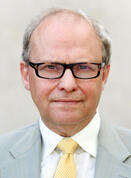
Francis Fukuyama is the Olivier Nomellini Senior Fellow at Stanford University's Freeman Spogli Institute for International Studies (FSI), and a faculty member of FSI's Center on Democracy, Development and the Rule of Law (CDDRL). He is also Director of Stanford's Ford Dorsey Master's in International Policy, and a professor (by courtesy) of Political Science.

Dr. Fukuyama has written widely on issues in development and international politics. His 1992 book, The End of History and the Last Man, has appeared in over twenty foreign editions. His book In the Realm of the Last Man: A Memoir will be published in fall 2026.

Francis Fukuyama received his B.A. from Cornell University in classics, and his Ph.D. from Harvard in Political Science. He was a member of the Political Science Department of the RAND Corporation, and of the Policy Planning Staff of the US Department of State. From 1996-2000 he was Omer L. and Nancy Hirst Professor of Public Policy at the School of Public Policy at George Mason University, and from 2001-2010 he was Bernard L. Schwartz Professor of International Political Economy at the Paul H. Nitze School of Advanced International Studies, Johns Hopkins University. He served as a member of the President’s Council on Bioethics from 2001-2004. He is editor-in-chief of American Purpose, an online journal.

Dr. Fukuyama holds honorary doctorates from Connecticut College, Doane College, Doshisha University (Japan), Kansai University (Japan), Aarhus University (Denmark), the Pardee Rand Graduate School, and Adam Mickiewicz University (Poland). He is a non-resident fellow at the Carnegie Endowment for International Peace. He is a member of the Board of Trustees of the Rand Corporation, the Board of Trustees of Freedom House, and the Board of the Volcker Alliance. He is a fellow of the National Academy for Public Administration, a member of the American Political Science Association, and of the Council on Foreign Relations. He is married to Laura Holmgren and has three children.

(October 2025)

CV
Date Label
Honors Program Director

Encina Hall, C150
616 Jane Stanford Way
Stanford, CA 94305

0
Center Fellow, Freeman Spogli Institute for International Studies
didi_kuo_2023.jpg

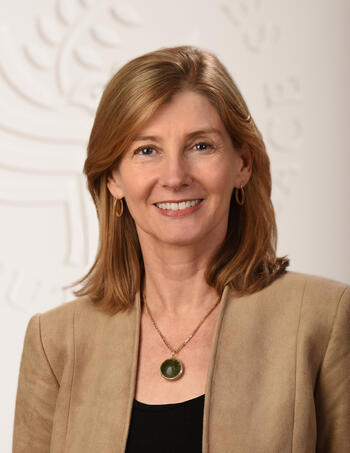
Didi Kuo is a Center Fellow at the Freeman Spogli Institute for International Studies (FSI) at Stanford University. She is a scholar of comparative politics with a focus on democratization, corruption and clientelism, political parties and institutions, and political reform. She is the author of The Great Retreat: How Political Parties Should Behave and Why They Don’t (Oxford University Press) and Clientelism, Capitalism, and Democracy: the rise of programmatic politics in the United States and Britain (Cambridge University Press, 2018).

She has been at Stanford since 2013 as the manager of the Program on American Democracy in Comparative Perspective and is co-director of the Fisher Family Honors Program at CDDRL. She was an Eric and Wendy Schmidt Fellow at New America and is a non-resident fellow with the Carnegie Endowment for International Peace. She received a PhD in political science from Harvard University, an MSc in Economic and Social History from Oxford University, where she studied as a Marshall Scholar, and a BA from Emory University.

Date Label
Mentor
Authors
News Type
News
Date
Paragraphs

Michael McFaul, a Stanford political scientist and former U.S. ambassador to Russia, has been selected as the next director of the university’s Freeman Spogli Institute for International Studies.

The announcement was made Wednesday by Stanford Provost John Etchemendy and Ann Arvin, the university’s vice provost and dean of research. McFaul will succeed Mariano-Florentino Cuéllar, who was nominated in July as an associate justice of the California Supreme Court and elected Tuesday.

McFaul takes the helm of FSI in January.

"Stanford has long been a home for scholars who connect academia to policy and public service, and Professor McFaul is the embodiment of that model," Etchemendy said. "We are grateful for Mike's service and confident he will be a strong leader for FSI."

Arvin said McFaul is a strong fit for the position.

“Professor McFaul’s background as an outstanding scholar and his service as an influential ambassador give him a vital perspective to lead FSI, which is Stanford’s hub for studying and understanding international policy issues,” she said. “His scholarship, experience and energy will keep FSI and Stanford at the forefront of international studies as well as some of the most pressing global policy debates."

McFaul has been a faculty member in the department of political science at Stanford since 1994.  He joined the Obama administration in January 2009, serving for three years as Special Assistant to the President and Senior Director for Russian and Eurasian Affairs at the National Security Council at the White House. He then served as U.S. Ambassador to the Russian Federation from 2012 to 2014.

McFaul already has a deep affiliation with FSI. Before joining the government, he served as FSI deputy director from 2006 to 2009.  He also directed FSI’s Center on Democracy, Development, and the Rule of Law (CDDRL) from 2005 to 2009.

During his four years leading CDDRL, McFaul launched the Draper Hills Summer Fellowship program for mid-career lawyers, politicians, advocates and business leaders working to shore up democratic institutions in their home countries. He also established CDDRL’s senior honors program.  From 1992-1994, McFaul also worked as a Senior Research Fellow at FSI’s Center for International Security and Cooperation (CISAC).

“I am thrilled to be assuming a leadership role again at FSI,” McFaul said.  “FSI has become one of the premier institutions in the country for policy-relevant research on international affairs.  I look forward to using my recent government experience to deepen further FSI’s impact on policy debates in Washington and around the world.”

Arvin said McFaul’s previous positions at FSI and CDDRL will make for a smooth transition in the institute’s leadership.

“His familiarity with FSI’s history and infrastructure will allow him to start this new position with an immediate focus on the institute’s academic mission,” she said.

McFaul is also the Peter and Helen Bing Senior Fellow at the Hoover Institution, and plans to build on his long affiliations with both Hoover and FSI to deepen cooperation between these two premier public policy institutions on campus.

He has written and co-authored dozens of books including Advancing Democracy Abroad: Why We Should, How We CanTransitions To Democracy: A Comparative Perspective (with Kathryn Stoner); Power and Purpose: American Policy toward Russia after the Cold War (with James Goldgeier); and Russia’s Unfinished Revolution: Political Change from Gorbachev to Putin.

“In so many ways, Mike represents the best of FSI,” said Cuéllar, who has held leadership positions at FSI since 2004 and begins his term on the California Supreme Court in January. “He knows the worlds of academia and policy extremely well, and will bring unique experience and sound judgment to his new role at FSI.”

McFaul currently serves as a news analyst for NBC News, appearing frequently on NBC, MSNBC, and CNBC as a commentator on international affairs. He also appears frequently on The Charlie Rose Show and The Newshour, as well as PBS and BBC radio programs. He has recently published essays in Foreign AffairsThe New York TimesPolitico, and Time

McFaul was one of the first U.S. ambassadors to actively use social media for public diplomacy. He still maintains an active presence on Facebook at amb.mcfaul and on Twitter at @McFaul.

McFaul received his B.A. in International Relations and Slavic Languages and his M.A. in Russian and East European Studies from Stanford University in 1986.  As a Rhodes Scholar, he completed his D. Phil. in International Relations at Oxford University in 1991.

“Since coming here in 1981 as 17-year-old kid from Montana, Stanford has provided me with tremendous opportunities to grow as a student, scholar, and policymaker,” McFaul said. “I now look forward to giving back to Stanford by contributing to the development of one of the most vital and innovative institutions on campus.” 


Hero Image
mcfaul color large
All News button
1
News Type
News
Date
Paragraphs

FSI Senior Fellow Michael McFaul speaks with BBC World Tonight on his use of 'Twitter diplomacy' as an instrumental tool during his time as U.S. Ambassador to Russia. McFaul made an exerted effort to interact with the Russian populace young and old via social media, which sparked some criticism from the Russian government. 

Hero Image
rsd14 056 0020a
Michael McFaul speaks to an audience at Bechtel Conference Center. August 2014.
Rod Searcey
All News button
1
-

Please note that this CDDRL seminar will be held on Wednesday. 


Abstract:

Recent estimates place half of the world’s poorest people in fragile and conflict-affected states by 2015. As the world moves towards the next phase of global development goals, which includes a central emphasis on eradicating extreme poverty, it will be necessary to understand the challenges for countries in the most difficult contexts. Is addressing and resolving fragility a condition (or precondition) for successfully addressing poverty?  Or, are there ways to significantly and sustainably reduce poverty even while countries remain fragile?

USAID is seeking to answer these questions as it recommits to working with its partners to end extreme poverty by 2030. And while we acknowledge that ending extreme poverty will not be easy, progress and gains already achieved over the past couple of decades have made us certain that it is possible. As the global community coalesces around this goal, USAID seeks to increase shared understanding of the nature of extreme poverty, where there has been success and why, and what we are already doing and will need to do differently to catalyze and invest in global solutions.


Speaker Bio: 

Alex Thier
Alex Thier is USAID’s assistant to the Administrator for Policy, Planning, and Learning (PPL). The PPL Bureau is USAID’s center for policy development, strategic planning, learning and evaluation, and partner engagement. From June 2010‐ June 2013, Thier served as assistant to the administrator for Afghanistan and Pakistan affairs, overseeing USAID’s two largest missions in the world.
Before joining USAID, Thier served with the U.S. Institute of Peace as senior rule of law adviser and director for Afghanistan and Pakistan from 2005‐ 2010. While at the Institute, he co‐authored The Future of Afghanistan (2009) as well as The Next Chapter: The United States and Pakistan, the 2008 report of the Pakistan Working Group. Thier also served as director of the Institute’sConstitution Making, Peacebuilding, and National Reconciliation project, during which he advised numerous governments and civil society organizations engaged in ongoing constitutional drafting and national reconciliation exercises. Thier was also a principal staffer on the Institute’s Genocide Prevention Task Force, and a coauthor of its final report, Preventing Genocide: A Blueprint for U.S. Policymakers. The recommendations from this report formed the backbone of President Barack Obama’s 2011 Directive on Mass Atrocities.
Thier previously served as director of the Project on Failed States at Stanford University’s Center on Democracy, Development, and the Rule of Law. From 2002 to 2004, he was legal adviser to Afghanistan’s Constitutional and Judicial Reform Commissions in Kabul, where he assisted in the development of a new constitution and judicial system. He has also worked as a senior analyst for the International Crisis Group, a legal and constitutional expert to the British Department for International Development, and as an adviser to the Constitutional Commission of Southern Sudan.
From 1993 to 1996, Thier worked as a U.N. and NGO official in Afghanistan and Pakistan during the Afghan civil war. He also served as coordination officer for the U.N. Iraq Program in New York.
An attorney, Thier was a Skadden fellow and a graduate fellow at the U.S. National Security Council’s Directorate for Near‐East and South Asia. He received the Richard S. Goldsmith award for outstanding work on dispute resolution from Stanford University in 2000.
Thier has a J.D. from Stanford Law School, a master’s degree in law and diplomacy from the Fletcher School of Law and Diplomacy at Tufts University, and a Bachelor’s Degree from Brown University.
Discussion Paper: Ending extreme poverty in fragile contexts
Download pdf

Philippines Conference Room

Encina Hall, 3nd Floor
616 Serra St
Stanford, CA 94305

Alex Thier Assistant to the Administrator for Policy, Planning, and Learning Assistant to the Administrator for Policy, Planning, and Learning United States Agency for International Development
Seminars
Authors
News Type
News
Date
Paragraphs

In August, CDDRL’s Draper Hills Summer Fellows program marked its 10-year anniversary by welcoming 20 of its alumni back to Stanford for a weeklong reunion.

Supported by Ingrid Hills and Bill and Phyllis Draper, the program brings practitioners from across the developing world to Stanford for a three-week intensive academic training program on democracy, good governance and rule of law reform. 

From Afghanistan to Venezuela, the program’s alumni form a network of over 250 leaders working under some of the most adverse conditions.

Fellows apply the academic lessons - taught by leading Stanford faculty - to practical problems in their countries. Many learn how to use technology to expose corruption, draw on case studies to improve the quality of public administration and borrow examples from history to build institutions in the aftermath of revolution.

An alumni network program - supported by the Omidyar Network - host’s global workshops, Stanford reunions and a robust communication platform to connect this global community of democratic leaders.

During the reunion, alumni attended sessions led by former Secretary of State Condoleezza Rice and Michael McFaul who has just returned back to Stanford after serving as U.S. ambassador to Russia.

While back on campus, some alumni found the occasion to reflect on the program and its impact on their professional and personal lives. Their inspiring stories are testament to the incredible work they are doing to build democratic systems in some of the most complex corners of the world.


Fighting for Democracy in Ukraine

When the EuroMaidan protests started in November 2013 in Kiev, Andriy Shevchenko (09’) was in Independence Square calling for the resignation of Ukraine’s President Viktor Yanukovych. It was there that he reflected on the lessons from the Draper Hills Summer Fellows Program on social mobilization as he helped translate the demands of protesters into political action.

Shevchenko, who was elected to parliament in 2006, is one of nine fellows from Ukraine who are part of a new generation of leadership working to move their country away from Russian influence and towards greater European integration. Working as journalists, civil society leaders and politicians, these fellows are pushing for democratic institutions and political accountability in a country transitioning towards democracy.

Before joining politics, Shevchenko was a journalist and founded the first independent 24-hour news channel – 5th Channel – which covered the events surrounding Ukraine’s 2004 Orange Revolution.

Shevchenko describes the program as “one of the greatest experiences of his life” because of the knowledge, friendships and inspiration he gained from his participation in the program. Leaving the program with an expanded interest in human rights, Shevchenko now serves as the first deputy chairman of the Human Rights Commission in Ukraine.

While the struggle for democracy continues in Ukraine, Shevchenko will draw on the program’s teachings and the strength of the peer community during these challenging times.


Empowering Women through Education in Afghanistan

Sakeena Yacoobi (08’) understands firsthand how education can change a life. After receiving her degree in the U.S., Yacoobi returned to Afghanistan with a mission to empower women and children through access to quality education. In 1995, Yacoobi founded the Afghan Institute of Learning (AIL) and set off to change the system of education – often operating underground due to threats from the Taliban – by training a network of teachers and opening women’s learning centers.

Yacoobi was overwhelmed with interest from women seeking education and in decades AIL has set up 300 learning centers in 12 provinces, serving over 11 million people in Afghanistan. Training is at the heart of AIL’s model and Yacoobi has applied much of what she has learned from the Draper Hills Summer Fellows Program to offer civic education to AIL’s students.

As the country emerges from over three decades of conflict, Yacoobi credits the Program and its curriculum in democracy and leadership for inspiring Afghan citizens to be more civic minded and involved in democratic processes - such as voting. Recognizing the current political struggles that Afghanistan faces, Yacoobi hopes that these important lessons will help to build a greater democratic culture for the country’s future generations. 


Building New Institutions of Democracy in Argentina

Laura Alonso (12’) never envisioned herself as a politician. With an esteemed career in civil society as the head of the Argentine chapter of Transparency International, she had always operated outside of the political system. But one day she realized that she might be more effective inside government. 

In 2009, Alonso was elected as a member of Congress for the city of Buenos Aires and began to advocate for greater transparency and reform Her push for better governance has often put her at odds with her party and the subject of attacks, but she continues to defend her reform agenda.

Re-elected to a second term of Congress in 2013, Alonso has set out to improve the quality of democracy in Argentina by strengthening institutions that deliver public services and to help steer the country in a different direction. From time to time, she has been able to reflect on the case studies taught in the Draper Hill’s Summer Fellows Program by Francis Fukuyama to inform her policymaking.   

While Alonso is unsure of what her future may hold - may it be in politics or elsewhere - she will continue to raise her voice when necessary to make the government more accountable to the people of Argentina.


Defending Civil Society in Russia

Anna Sevortian (06’) served as the Russian director for Human Rights Watch when the crackdown on civil society began in 2011. Non-profit organizations (NGO’s) receiving foreign funding were labeled as foreign spies and forced to register their operations with the Russian government.

Sevortian describes this repressive environment as reminiscent of Soviet times when propaganda and inspections were common practice. Cut off from funding, many NGO’s supporting important social needs have been forced to shut their doors.

A longtime journalist, Sevortian spent three years at Human Right’s Watch in the height of this crackdown documenting worsening conditions for civil society and also covering Belarus, Ukraine and the North Caucuses.

It was during this period that one of the Draper Hills Summer Fellows Program’s founding faculty members - Michael McFaul - was serving as U.S. ambassador to Russia and Sevortian was able to raise human rights concerns to him directly.

Sevortian now serves as the executive director for the newly launched EU-Russia Civil Society Forum in Berlin, a platform designed to amplify the voice of civil society. Despite the deteriorating situation in Russia, Sevortian hopes to use the forum to help encourage the growth and development of civil society in Russia and Europe. 

Hero Image
rsd14 056 0174a 1
2008 Draper Hills Summer Fellow Alumni Sakena Yacoobi from Afghanistan asks a question to one of the guest lecturers during the tenth anniversary reunion program.
Rod Searcey
All News button
1
News Type
Commentary
Date
Paragraphs

In this week's Politico, David Remnick has written a lengthy piece about former U.S. Ambassador to Russia Michael McFaul's rocky tenure in Moscow, as Vladir Putin came back into power as president and U.S.-Russia relations began to deteriorate.

Michael A. McFaul, a FSI senior fellow and CISAC affiliated faculty member, writes in this Center on Democracy, Development, and the Rule of Law that while the U.S. and Europe maintain pressure on Putin through sanctions, the West also needs to get serious about strengthening Ukraine.

"So far, Ukrainians have done more to thwart Mr. Putin than any action by outside powers," says McFaul. "The West can likewise do more to help the Kiev government win hearts and minds in eastern Ukraine."

And in a Politico magazine piece by McFaul earlier this week, he argues that Putin today sees a path to glory that does not involve democratic governance and ignores international norms.

"Putin dreams of comparisons with Peter the Great or the Catherine the Great," writes McFaul, who was ambassador in Moscow from January 2012 until this February, when he returned to Stanford as a political science professor at FSI's New Yorker.

"But if we judge him by his ability to achieve even his own stated goals, his record is not so great. He has achieved some objectives aimed at restoring Russia to the position of global greatness he believes it deserves, but failed at achieving those most important to him. And the future looks even darker."


Hero Image
1 Putin May 2014 001
Russian President Vladimir Putin speaks during a session of the St. Petersburg International Economic Forum on May 24, 2014.
Reuters
All News button
1
Authors
News Type
News
Date
Paragraphs

Former President George W. Bush met with Stanford students for an hourlong conversation that touched on many of the defining moments and policies of his presidency.

In a relaxed and sometimes self-deprecating exchange on May 5, Bush talked about the limits of congressional power and his relationships and personal diplomacy with other world leaders. His tone was more serious when discussing what he described as universal desires for freedom, his military strategies following 9/11, and his commitment to addressing Africa’s HIV/AIDS pandemic.

Mariano-Florentino Cuéllar, director of the university’s Freeman Spogli Institute for International Studies, moderated the session. Stanford President John Hennessy and Condoleezza Rice – Bush’s secretary of state and national security adviser who has returned to teaching political science and business at Stanford – joined the conversation.

"FSI has a terrific track record of convening leaders at Stanford, from the head of the International Monetary Fund to prime ministers and presidents,” Cuéllar said. “On this occasion, we wanted our students to have an opportunity for a candid conversation with one of the key policymakers of the early 21st century, and we think such experiences will further prepare them for leadership in a complex world."

About 30 students were invited to the session at Encina Hall, but they didn’t know they were meeting Bush until the 43rd president walked into the room.

“I suspect he misses this sort of engagement,” said Gregory Schweizer, a second-year law school student who was part of the discussion that also covered immigration reform, national education policies and the Edward Snowden affair.

“The media always portrays him as being disengaged from current affairs,” Schweizer said. “But I’m impressed with how interested and engaged he still is.”

Along with representatives from Stanford Law School, other students were invited from the Ford Dorsey Program in International Policy Studies. Honors students from FSI’s Center for International Security and Cooperation and Center on Democracy, Development, and the Rule of Law also joined the conversation.

Bush’s visit was arranged with the help of  Brad Freeman, a former university trustee and Ronald Spogli, who is currently on Stanford's board of trustees. Freeman and Spogli are longtime friends of the former president and philanthropists who donated a naming gift to FSI in 2005. Bush appointed Spogli as ambassador to Italy in 2005 and as ambassador to San Marino a year later. 

Stanford has a tradition of hosting current and former heads of state, including German Chancellor Angela Merkel and former Russian President Dmitry Medvedev – both of whom visited in 2010.

Hero Image
screen shot 2014 08 22 at 10 16 22 am
All News button
1
Date
Paragraphs
CDDRL Director Larry Diamond addresses concerns of an intensifying democratic recession in a piece in The Atlantic. Despite recent turmoil in Ukraine and democratic breakdowns in Thailand and Turkey, among others, Diamond emphasizes the critical role economic development, globalization and the growth of civil society will play in the long-run inducement of democratic change worldwide.
Hero Image
democracy Logo
Protesters carry a large banner reading: ''Democracy'' as they participate in an anti-government protests organized by Bahrain's leading opposition Al Wefaq. Sept. 14, 2012.
Hamad I Mohammed / Reuters
All News button
1
Subscribe to Russia and Eurasia