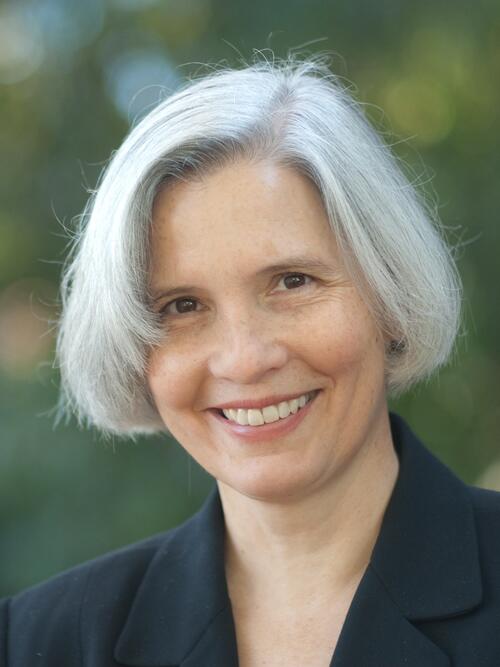
-

Abstract:

One of Taiwan's leading political scientists and most widely quoted authorities on Taiwan politics and cross-Strait relations, Professor Chu will address five issues in his talk:

   First, how should we interpret the outcome of the January election and the nature and extent of President Ma's renewed mandate?

   Second, to what extent has the 2012 election enhanced the overall quality of Taiwan's democracy?

   Third, what can we expect in terms of President Ma's domestic agenda for the next four years?

   Fourth, how much further and faster can the warming of cross-Strait relations proceed during President Ma's second term?

   Fifth, what are the challenges and opportunities for the US-Taiwan relationship in the coming year?

 Speaker Bio:

Yun-han Chu is Distinguished Research Fellow of the Institute of Political Science at Academia Sinica and Professor of Political Science at National Taiwan University. He also serves concurrently as President of Chiang Ching-Kuo Foundation for International Scholarly Exchange. Professor Chu joined the faculty of National Taiwan University in 1987. He was a visiting associate professor at Columbia University in 1990-1991 and has held a visiting professorship at Peking University since 2007. Professor Chu specializes in politics of Greater China, East Asian political economy, international political economy, and democratization. He is the Coordinator of Asian Barometer Survey, a regional network of survey on democracy, governance and development covering more than seventeen Asian countries. He currently serves on the editorial board of Pacific Affairs, International Studies Perspective, China Review, Journal of Contemporary China, Journal of East Asian Studies and Journal of Democracy. He is the author, co-author, editor or co-editor of thirteen books. Among his recent English publications are Consolidating Third-Wave Democracies (Johns Hopkins University Press, 1997), China Under Jiang Zemin (Lynne Reinner, 2000), The New Chinese Leadership: Challenges and Opportunities after the 16th Party Congress (Cambridge University Press 2004) and How East Asians View Democracy (Columbia University Press, 2008).

Philippines Conference Room

Yun-han Chu Distinguished Research Fellow at Academia Sinica; Professor of Political Science Speaker National Taiwan University
Seminars
-

Life expectancy at aged 65 is remarkably similar in the three Chinese cities of Hong Kong, Shanghai, and Taipei, even though the cities differ in levels of socioeconomic development, health systems, and other factors. Edward Jow-Ching Tu will discuss research that aims to understand this phenomenon. Despite unprecedented increases in life expectancy and attainment of similar current levels of life expectancy, the cities differ in the contributions of changes in major causes of death to the improvements in life expectancy among the elderly. Tu and colleagues have explored several possible determinants of these different patterns and trends in the three cities, including socioeconomic development, health service delivery systems, cause-of-death classification systems, and competing risks from cardiovascular disease and other diseases. Their analysis suggests that the effect of equity of health service delivery has become more important over time.

Edward Jow-Ching Tu is a senior lecturer of demography in the Division of Social Science at Hong Kong University of Science and Technology. His work is focused on the impact of fertility, mortality, and migration on socio-economic changes in East Asia countries with special emphasis on nations experiencing a transition from planned economy to market economy; on causes and impacts of mortality changes and health transition on aging societies; and on the causes of lowest-low fertility in many East Asia countries. He has several active research projects ongoing in China, Japan, Taiwan, Hong Kong, and Singapore. He holds graduate degress from West Virginia University, the University of Pennsylvania, and the University of Tennessee (Knoxville). Tu has worked extensively in Asia, and has served as an adjunct professor and taught in many universities in China, including Peking University, Peoples University, Nankai Univerity, and Fudan University. He had served as a senior research scientist at the New York State Health Department and as a research fellow (full professor) at the Institute for Social Sciences and Philosophy at Academia Sinica. Tu has also taught at the State University of New York in Albany.

Philippines Conference Room

Edward Jow-Ching Tu Senior Lecturer of Demography at the Division of Social Science Speaker Hong Kong University of Science and Technology
Seminars
-

Confucian Humanism as World Governance

Dialogue with FRANCIS FUKUYAMA, Olivier Nomellini Senior Fellow at FSI, Stanford University 

Tu Weiming, has been instrumental in developing discourses on dialogue among civilizations, Cultural China, reflection on the Enlightenment mentality of the modern West, and multiple modernities.  He is currently studying the modern transformation of Confucian humanism in East Asia and tapping its spiritual resources for human flourishing in the global community.  He is a Fellow of the American Academy of Arts and Sciences (AAAS), and a Member of the International Philosophical Society (IIP).     

Francis Fukuyama, has written widely on issues relating to democratization and international political economy.  His most recent book, The Origins of Political Order, was published in April 2011. He is a resident in FSI’s Center on Democracy, Development and the Rule of Law at Stanford University, a senior fellow at the Johns Hopkins SAIS Foreign Policy Institute, and a non-resident fellow at the Carnegie Endowment for International Peace. 

This event is co-sponsored by the Center on Democracy, Development and the Rule of Law’s ‘The Governance Project’ and the Confucius Institute at Stanford University


CISAC Conference Room

Tu Weiming Lifetime Professor in Philosophy and Director of the Institute for Advanced Humanistic Studies, Peking University; Research Professor and Senior Fellow of the Asia Center, Harvard University Speaker

Encina Hall, C148
616 Jane Stanford Way
Stanford, CA 94305

0
Olivier Nomellini Senior Fellow at the Freeman Spogli Institute for International Studies
Director of the Ford Dorsey Master's in International Policy
Research Affiliate at The Europe Center
Professor by Courtesy, Department of Political Science
yff-2021-14290_6500x4500_square.jpg

Francis Fukuyama is the Olivier Nomellini Senior Fellow at Stanford University's Freeman Spogli Institute for International Studies (FSI), and a faculty member of FSI's Center on Democracy, Development and the Rule of Law (CDDRL). He is also Director of Stanford's Ford Dorsey Master's in International Policy, and a professor (by courtesy) of Political Science.

Dr. Fukuyama has written widely on issues in development and international politics. His 1992 book, The End of History and the Last Man, has appeared in over twenty foreign editions. His book In the Realm of the Last Man: A Memoir will be published in fall 2026.

Francis Fukuyama received his B.A. from Cornell University in classics, and his Ph.D. from Harvard in Political Science. He was a member of the Political Science Department of the RAND Corporation, and of the Policy Planning Staff of the US Department of State. From 1996-2000 he was Omer L. and Nancy Hirst Professor of Public Policy at the School of Public Policy at George Mason University, and from 2001-2010 he was Bernard L. Schwartz Professor of International Political Economy at the Paul H. Nitze School of Advanced International Studies, Johns Hopkins University. He served as a member of the President’s Council on Bioethics from 2001-2004. He is editor-in-chief of American Purpose, an online journal.

Dr. Fukuyama holds honorary doctorates from Connecticut College, Doane College, Doshisha University (Japan), Kansai University (Japan), Aarhus University (Denmark), the Pardee Rand Graduate School, and Adam Mickiewicz University (Poland). He is a non-resident fellow at the Carnegie Endowment for International Peace. He is a member of the Board of Trustees of the Rand Corporation, the Board of Trustees of Freedom House, and the Board of the Volcker Alliance. He is a fellow of the National Academy for Public Administration, a member of the American Political Science Association, and of the Council on Foreign Relations. He is married to Laura Holmgren and has three children.

(October 2025)

CV
Date Label
Francis Fukuyama Moderator
Conferences
-

Kathleen Reen is the Vice-President for Asia and New Media Programs with Internews. Reen leads media and information development programs across Asia, and a global Open Internet programs with a team of 12 international and local partner organizations. She has worked for Internews on a variety of assignments from Bosnia and Serbia, founding Internews’ program in Indonesia in as well as projects in Thailand, Cambodia, Timor, Pakistan and China. As Country Director in Indonesia she managed a project developing and implementing media legal reforms, training and productions, Internet access, and local media NGO-building efforts. In late 2004 she led Internews first humanitarian media efforts in Aceh after the devastating earthquake and tsunami.

A journalist and documentary producer by background, Reen worked in Eastern and Southern Europe and Southeast Asia before joining Internews. In 2005 she was a co-founder and first Director of the Global Forum for Media Development (GFMD). In 2006 she was selected as a fellow of the Asia Society’s “Asia 21″ program. In 2008 she became a fellow of the Flowfund, which supports the development of US domestic and global philanthropy with a focus on social entrepreneurs. She has helped establish several national and regional organizations in Asia that are devoted to media development and information. She represents Internews to the GNI – the Global Network Initiative, a multi-stakeholder initiative that seeks to improve freedom of expression and best practices for companies with NGOs and human rights organizations around the world.

Sloan Mathematics Center

Kathleen Reen VP Asia and Internet Initiatives Speaker Internews
Seminars
-

Abstract:

The 2012 Republic of China presidential and legislative elections to be held on January 14th mark the fifth presidential and seventh national legislative direct elections in Taiwan. Incumbent ROC President Ma Ying-jeou of the Kuomintang (KMT) enjoyed a landslide victory in 2008 over Democratic Progressive Party (DPP) candidate Hsieh Chang-ting, winning by over 2.2 million votes. Subsequent revelations of corruption by former President Chen Shui-bian of the DPP and various members of his administration further damaged the DPP's public image and electoral prospects.

In the intervening years, however, current DPP candidate Tsai Ing-wen and other members of the DPP have worked to revitalize their party's image, and as chairperson of the DPP Tsai established a special internal investigative committee to root out corruption in the party. A potentially complicating new factor in the race is the first-ever presidential bid by the People's First Party (PFP), led by candidate James Soong. Polling results to date have indicated the potential for a very close race between Ma and Tsai, with Soong also pulling a substantial portion of the vote that may affect the electoral outcome.

On the legislative side, the KMT won 81 out of 113 total seats in the Legislative Yuan in the 2008 elections, a circumstance that has facilitated the passage of various controversial measures supported by the Ma administration, including in particular the Economic Cooperation Framework Agreement (ECFA) with mainland China, and a significant shift in the composition of this body is likely to have a pronounced impact.

Regardless of the outcome, the results of the 2012 elections promise to offer much insight into the popular attitudes of the Taiwanese people and the prospects for future democratic consolidation and development in Taiwan. Ten days following the elections, Professors Shelly Rigger and Eric Chen-hua Yu will join us for a panel discussion to analyze the outcomes of these elections and discuss their relevance to the US and the world.

Speaker Bios:

Image
Shelley Rigger is the Brown Professor of East Asian Politics and Chair of Political Science at Davidson College in Davidson, North Carolina. She has a PhD in Government from Harvard University and a BA in Public and International Affairs from Princeton University. She has been a visiting researcher at National Chengchi University in Taiwan (2005) and a visiting professor at Fudan University in Shanghai (2006). Rigger is the author of two books on Taiwan’s domestic politics, Politics in Taiwan: Voting for Democracy (Routledge 1999) and From Opposition to Power: Taiwan’s Democratic Progressive Party(Lynne Rienner Publishers 2001). In 2011 she published Why Taiwan Matters: Small Island, Global Powerhouse, a book for general readers. She has published articles on Taiwan’s domestic politics, the national identity issue in Taiwan-China relations and related topics. Her current research studies the effects of cross-strait economic interactions on Taiwan and Mainland China. Her monograph, “Taiwan’s Rising Rationalism: Generations, Politics and ‘Taiwan Nationalism’” was published by the East West Center in Washington in November 2006.

Image

Eric Chen-hua Yu is an assistant research fellow of the Election Study Center and

jointly appointed as an assistant professor of political science at National Chengchi University in Taiwan. Before he returned to Taiwan to serve in his Alma mater in 2009, he has been a research fellow and program manager of Center on Democracy, Development, and the Rule of Law at Stanford’s Freeman Spogli Institute for International Studies since 2006. His research interests include public opinion, electoral politics, quantitative methods, and American politics. He also participates in a number of joint survey projects such as Taiwan Election and Democratization Studies (TEDS) and World Value Survey. Yu recently published academic articles on Taiwan’s domestic politics in
Taiwan Political Science Review, Journal of Electoral Studies, Review of Social Sciences, and Japanese Journal of Electoral Studies. Yu received a MS (2000) in Public Policy Analysis from the University of Rochester, and a Ph.D. in political science (2006) from Columbia University.

CISAC Conference Room

Shelly Rigger Professor of East Asian Politics and Chair of Political Science Speaker Davidson College

616 Serra St.
Encina Hall
Stanford, CA 94305

1
3x4200dpi[2]_self.JPG MS, PhD

Eric Yu was a research fellow and program manager for the Democracy in Taiwan program at CDDRL. His research interests included public opinion, electoral politics, federalism, and quantitative methods. He worked with Election Study Center at National Chengchi University (Taiwan) on a multi-year research project examining the relationship between public opinion and policy output at the local level in Taiwan. This project aimed to explore the extent to which local policy-makings respond to public opinions across a variety of policy dimensions. His recent studies also include the development of Taiwanese public attitudes toward cross-strait relations, the emergence of the third force under the new "single-district, two-ballot" electoral system for Taiwan's legislative elections, and mass policy preferences and their implications for political parties in Taiwan.

Yu received a BA (1995) in Political Science from the National Chengchi University in Taiwan, a MS (2000) in Public Policy Analysis from the University of Rochester, and a Ph.D. (2006) in Political Science from Columbia University.

Research Fellow and Program Manager for the Democracy in Taiwan Program
Eric Chen-hua Yu Assistant Research Fellow and Assistant Professor of Political Science Speaker Election Study Center; National Chengchi University
Panel Discussions
-

Abstract:

     While the reelection of Taiwan’s president, Ma Ying-jeou, relieved concerns about an immediate deterioration in cross-Strait relations, the future of ties between Beijing and Taipei remain uncertain. Much will depend on the PRC’s policy. Moreover, calls in the United States either to abandon Taiwan or, conversely, to embrace it ever more closely as a hedge against the Mainland’s growing strength, have yet to play themselves out. Alan D. Romberg will address the implications of the election for these issues, as well as for Sino-American relations and for the region.

Speaker Bio:

     Alan Romberg is the director of the East Asia program at Stimson. 

     Before joining Stimson in September 2000, he enjoyed a distinguished career working on Asian issues, both in and out of government, including twenty years as a US Foreign Service Officer. Romberg was the principal deputy director of the State Department's Policy Planning staff and deputy spokesman of the department. He served in various capacities dealing with East Asia, including director of the Office of Japanese Affairs, member of the Policy Planning staff for East Asia, and staff member at the National Security Council for China. He served overseas in Hong Kong and Taiwan. 

     Additionally, Romberg spent almost ten years as the CV Starr Senior Fellow for Asian Studies at the Council on Foreign Relations, and was special assistant to the Secretary of the Navy. 

     Romberg holds an MA from Harvard University, and a BA from the Woodrow Wilson School of Public and International Affairs at Princeton University.

CISAC Conference Room

Alan Romberg Distinguished Fellow Speaker the Stimson Center
Seminars
-

Abstract
A global struggle for control of the Internet is now underway. At stake are no less than civil liberties, privacy and even the character of democracy in the 21st century.

Many commentators have debated whether the Internet is ultimately a force for freedom of expression and political liberation, or for alienation, and repression. Rebecca MacKinnon moves the debate about the Internet’s political impact to a new level. It is time, she says, to stop arguing over whether the Internet empowers individuals and societies, and address the more fundamental and urgent question of how technology should be structured and governed to support the rights and liberties of all the world’s Internet users.

Rebecca MacKinnon is a Bernard L. Schwartz Senior Fellow at the New America Foundation, where she conducts research, writing and advocacy on global Internet policy, free expression, and the impact of digital technologies on human rights. She is author of Consent of the Networked: The Worldwide Struggle for Internet Freedom (Basic Books, January 2012). MacKinnon is also cofounder of Global Voices, an international citizen media network. She also serves on the Boards of Directors of the Committee to Protect Journalists and the Global Network Initiative.

Fluent in Mandarin Chinese, MacKinnon worked as a journalist for CNN in Beijing for nine years and was Beijing Bureau Chief and Correspondent from 1998-2001, then served as CNN’s Tokyo Bureau Chief and Correspondent from 2001-03. From 2004-06 she was a Research Fellow at Harvard’s Berkman Center for Internet and Society, where she began her ongoing research and writing about the Chinese Internet in addition to launching Global Voices with colleague Ethan Zuckerman. In 2007-08 she taught online journalism at the University of Hong Kong’s Journalism and Media Studies Centre. In 2009 she conducted research and writing as an Open Society Fellow, and in the Spring of 2010 she was a Visiting Fellow at Princeton’s Center or Information Technology Policy.

MacKinnon received her AB magna cum laude from Harvard University and was a Fullbright scholar in Taiwan in 1991-92.

Sloan Mathematics Center

Rebecca MacKinnon Bernard L. Schwartz Senior Fellow Speaker New America Foundation
Seminars
Subscribe to China