


Patterns of Elderly Life Expectancy in Three Chinese Cities: Hong Kong, Shanghai and Taipei
Related Multimedia
Patterns of Elderly Life Expectancy in Three Chinese Cities: Hong Kong, Shanghai and Taipei
-
Life expectancy at aged 65 is remarkably similar in the three Chinese cities of Hong Kong, Shanghai, and Taipei, even though the cities differ in levels of socioeconomic development, health systems, and other factors. Edward Jow-Ching Tu will discuss research that aims to understand this phenomenon. Despite unprecedented increases in life expectancy and attainment of similar current levels of life expectancy, the cities differ in the contributions of changes in major causes of death to the improvements in life expectancy among the elderly. Tu and colleagues have explored several possible determinants of these different patterns and trends in the three cities, including socioeconomic development, health service delivery systems, cause-of-death classification systems, and competing risks from cardiovascular disease and other diseases. Their analysis suggests that the effect of equity of health service delivery has become more important over time.
Edward Jow-Ching Tu is a senior lecturer of demography in the Division of Social Science at Hong Kong University of Science and Technology. His work is focused on the impact of fertility, mortality, and migration on socio-economic changes in East Asia countries with special emphasis on nations experiencing a transition from planned economy to market economy; on causes and impacts of mortality changes and health transition on aging societies; and on the causes of lowest-low fertility in many East Asia countries. He has several active research projects ongoing in China, Japan, Taiwan, Hong Kong, and Singapore. He holds graduate degress from West Virginia University, the University of Pennsylvania, and the University of Tennessee (Knoxville). Tu has worked extensively in Asia, and has served as an adjunct professor and taught in many universities in China, including Peking University, Peoples University, Nankai Univerity, and Fudan University. He had served as a senior research scientist at the New York State Health Department and as a research fellow (full professor) at the Institute for Social Sciences and Philosophy at Academia Sinica. Tu has also taught at the State University of New York in Albany.
Philippines Conference Room
Edward Jow-Ching Tu
Senior Lecturer of Demography at the Division of Social Science
Speaker
Hong Kong University of Science and Technology
Seminars
Digital Dissidents: Inside Egypt's Youth Movement, 2008—2012
Related Multimedia


Digital Dissidents: Inside Egypt's Youth Movement, 2008—2012
-
Abstract
Two and half years before there was anything called the “Arab Spring,” Wired contributing editor David Wolman traveled to Egypt to research and write about tech-savvy dissidents protesting against the Mubarak regime. Those same activists went on to play a central role in organizing the revolution that began on January 25, 2011. Wolman will share stories about his reporting, both from 2008 and during two trips in 2011, and discuss the role of social media in recent uprisings from Cairo to California.
David Wolman is an author and award-winning journalist. He is a contributing editor for Wired, and he has written for a variety of publications, including Outside, Mother Jones, Newsweek, Discover, Forbes, and Salon. Wolman is a former Fulbright journalism fellow in Japan and a graduate of Stanford University's journalism program. His latest book, The End of Money, will be out in February.
Sloan Mathematics Center
David Wolman
Author and Contributing Editor
Speaker
Wired
Seminars
The 2012 Taiwan Elections: What Happened and Why?
-
Abstract:
The 2012 Republic of China presidential and legislative elections to be held on January 14th mark the fifth presidential and seventh national legislative direct elections in Taiwan. Incumbent ROC President Ma Ying-jeou of the Kuomintang (KMT) enjoyed a landslide victory in 2008 over Democratic Progressive Party (DPP) candidate Hsieh Chang-ting, winning by over 2.2 million votes. Subsequent revelations of corruption by former President Chen Shui-bian of the DPP and various members of his administration further damaged the DPP's public image and electoral prospects.
In the intervening years, however, current DPP candidate Tsai Ing-wen and other members of the DPP have worked to revitalize their party's image, and as chairperson of the DPP Tsai established a special internal investigative committee to root out corruption in the party. A potentially complicating new factor in the race is the first-ever presidential bid by the People's First Party (PFP), led by candidate James Soong. Polling results to date have indicated the potential for a very close race between Ma and Tsai, with Soong also pulling a substantial portion of the vote that may affect the electoral outcome.
On the legislative side, the KMT won 81 out of 113 total seats in the Legislative Yuan in the 2008 elections, a circumstance that has facilitated the passage of various controversial measures supported by the Ma administration, including in particular the Economic Cooperation Framework Agreement (ECFA) with mainland China, and a significant shift in the composition of this body is likely to have a pronounced impact.
Regardless of the outcome, the results of the 2012 elections promise to offer much insight into the popular attitudes of the Taiwanese people and the prospects for future democratic consolidation and development in Taiwan. Ten days following the elections, Professors Shelly Rigger and Eric Chen-hua Yu will join us for a panel discussion to analyze the outcomes of these elections and discuss their relevance to the US and the world.
Speaker Bios:
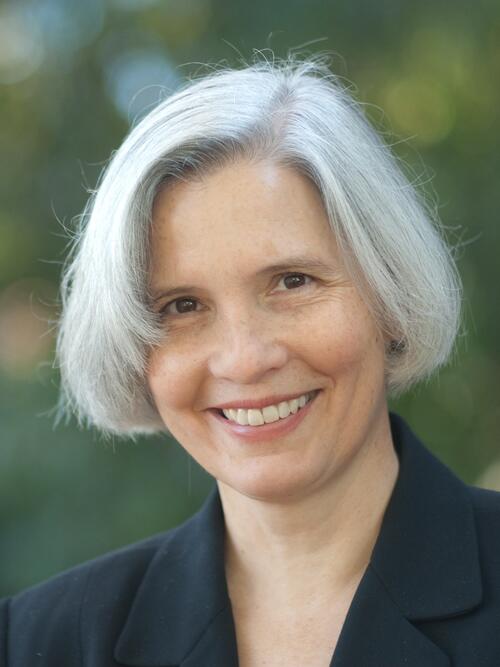
Shelley Rigger is the Brown Professor of East Asian Politics and Chair of Political Science at Davidson College in Davidson, North Carolina. She has a PhD in Government from Harvard University and a BA in Public and International Affairs from Princeton University. She has been a visiting researcher at National Chengchi University in Taiwan (2005) and a visiting professor at Fudan University in Shanghai (2006). Rigger is the author of two books on Taiwan’s domestic politics, Politics in Taiwan: Voting for Democracy (Routledge 1999) and From Opposition to Power: Taiwan’s Democratic Progressive Party(Lynne Rienner Publishers 2001). In 2011 she published Why Taiwan Matters: Small Island, Global Powerhouse, a book for general readers. She has published articles on Taiwan’s domestic politics, the national identity issue in Taiwan-China relations and related topics. Her current research studies the effects of cross-strait economic interactions on Taiwan and Mainland China. Her monograph, “Taiwan’s Rising Rationalism: Generations, Politics and ‘Taiwan Nationalism’” was published by the East West Center in Washington in November 2006.Image
Image

Eric Chen-hua Yu is an assistant research fellow of the Election Study Center and
jointly appointed as an assistant professor of political science at National Chengchi University in Taiwan. Before he returned to Taiwan to serve in his Alma mater in 2009, he has been a research fellow and program manager of Center on Democracy, Development, and the Rule of Law at Stanford’s Freeman Spogli Institute for International Studies since 2006. His research interests include public opinion, electoral politics, quantitative methods, and American politics. He also participates in a number of joint survey projects such as Taiwan Election and Democratization Studies (TEDS) and World Value Survey. Yu recently published academic articles on Taiwan’s domestic politics in Taiwan Political Science Review, Journal of Electoral Studies, Review of Social Sciences, and Japanese Journal of Electoral Studies. Yu received a MS (2000) in Public Policy Analysis from the University of Rochester, and a Ph.D. in political science (2006) from Columbia University.
CISAC Conference Room
Shelly Rigger
Professor of East Asian Politics and Chair of Political Science
Speaker
Davidson College
Eric Chen-hua Yu
616 Serra St.
Encina Hall
Stanford, CA 94305
1
3x4200dpi[2]_self.JPG
MS, PhD
Eric Yu was a research fellow and program manager for the Democracy in Taiwan program at CDDRL. His research interests included public opinion, electoral politics, federalism, and quantitative methods. He worked with Election Study Center at National Chengchi University (Taiwan) on a multi-year research project examining the relationship between public opinion and policy output at the local level in Taiwan. This project aimed to explore the extent to which local policy-makings respond to public opinions across a variety of policy dimensions. His recent studies also include the development of Taiwanese public attitudes toward cross-strait relations, the emergence of the third force under the new "single-district, two-ballot" electoral system for Taiwan's legislative elections, and mass policy preferences and their implications for political parties in Taiwan.
Yu received a BA (1995) in Political Science from the National Chengchi University in Taiwan, a MS (2000) in Public Policy Analysis from the University of Rochester, and a Ph.D. (2006) in Political Science from Columbia University.
Research Fellow and Program Manager for the Democracy in Taiwan Program
Panel Discussions
The Taiwan Presidential Election: Implications for Cross-Strait Relations and U.S. Policy
-
Abstract:
While the reelection of Taiwan’s president, Ma Ying-jeou, relieved concerns about an immediate deterioration in cross-Strait relations, the future of ties between Beijing and Taipei remain uncertain. Much will depend on the PRC’s policy. Moreover, calls in the United States either to abandon Taiwan or, conversely, to embrace it ever more closely as a hedge against the Mainland’s growing strength, have yet to play themselves out. Alan D. Romberg will address the implications of the election for these issues, as well as for Sino-American relations and for the region.
Speaker Bio:
Alan Romberg is the director of the East Asia program at Stimson.
Before joining Stimson in September 2000, he enjoyed a distinguished career working on Asian issues, both in and out of government, including twenty years as a US Foreign Service Officer. Romberg was the principal deputy director of the State Department's Policy Planning staff and deputy spokesman of the department. He served in various capacities dealing with East Asia, including director of the Office of Japanese Affairs, member of the Policy Planning staff for East Asia, and staff member at the National Security Council for China. He served overseas in Hong Kong and Taiwan.
Additionally, Romberg spent almost ten years as the CV Starr Senior Fellow for Asian Studies at the Council on Foreign Relations, and was special assistant to the Secretary of the Navy.
Romberg holds an MA from Harvard University, and a BA from the Woodrow Wilson School of Public and International Affairs at Princeton University.
CISAC Conference Room
Alan Romberg
Distinguished Fellow
Speaker
the Stimson Center
Seminars
Building Institutions under Foreign Occupation: Police Reform in Colonial Taiwan versus the Philippines
-
Abstract:
What explains the success and failure of institution-building under foreign occupations? Reo Matsuzaki, post-doctoral fellow at the Center on Democracy, Development, and the Rule of Law, examines this question by comparing the Japanese colonization of Taiwan and the American colonization of the Philippines, which produced contrasting institutional legacies despite the presence of similar initial conditions. He argues that two variables jointly play a significant role in determining variation in institution-building outcomes: the degree of discretionary power afforded to the occupational administration by its home government; and the strength of resistance to the institution-building effort by local elites in the occupied territory. He will present his research on foreign-imposed police reform in colonial Taiwan and the Philippines, and discuss the implications of his findings for contemporary state-building missions.
Speaker Bio:
Reo Matsuzaki is a 2011-2012 post-doctoral fellow at CDDRL with a PhD in political science from Massachusetts Institute of Technology. His dissertation examines variation in institution-building outcomes within foreign occupations, particularly in the areas of police and education, through a comparison of the Japanese occupation of Taiwan (1895-1945) and the American occupation of the Philippines (1898-1941). While at CDDRL, he will be working to turn his dissertation into a book manuscript, as well as on a project examining the role of community policing in counter-insurgency campaigns.
Encina Ground Floor Conference Room
Reo Matsuzaki
Post-doctoral Fellow, 2011-2012
Speaker
CDDRL
Seminars
Human rights curriculum for the 21st century
News Type
News
Date
Paragraphs
"The Stanford Report" covered the recently launched Stanford Human Rights Education Initiative, which brings human rights curriculum into the classrooms of California community colleges to transform students into globally-conscious citizens. Piloted in partnership with the Program on Human Rights, the Stanford Program on International and Cross-Cultural Education (SPICE), and the Division of International Comparative and Area Studies, the Initiative appoints human rights fellows to develop new curriculum for broader application in California and beyond.
Stanford helps bring human rights to community college classrooms
Globalization has meant that the whole world is connected to the whole world's problems. Yet most of today's students live in a world no bigger than a cell phone keypad.
So how do you explain to them that the clothes on their backs may be sewn by slave labor in Asia, or how international human trafficking may be behind an Internet porn site?
Tim Maxwell, an award-winning poet who teaches at the College of San Mateo, said the basic task of reading is becoming harder each year for the Facebook generation. "To bring unpleasant and challenging ideas into their world is really difficult," he said. He described "young people's increasing use of social media and other technologies that, rather [than] widening their worlds, effectively narrows them" to what is pleasurably entertaining.
The remedy? In an unusual move, Stanford is linking arms with educators in California community colleges for a four-year project called Stanford Human Rights Education Initiative. Following a conference last June on "Teaching Human Rights in an International Context," which launched the project, Stanford has named eight new "Human Rights Fellows" from California's community colleges. Maxwell is one of them.
For more than 12.4 million young Americans, teaching takes place in one of the nearly 1,200 community colleges across the nation – and about a quarter of those community colleges are in California. But few major universities have engaged these institutions.
The new initiative will train students to be engaged as global citizens, said William Hanson, another fellow, who holds a law degree from Columbia and teaches at Chabot College. "We have to find a way to wriggle in."
With a stipend and "visiting scholar" status, the human rights fellows will work with the Stanford Program on International and Cross-Cultural Education (SPICE) and the Division of International Comparative and Area Studies (ICA) to develop human rights curricula, plan human rights conferences and develop the initiative's website. The human rights curriculum they design could, they hope, seed similar programs across the country and the world.
My hope is that human rights will form a central part of every college curriculum – not only as a topic, but as a lens through which to see all topics. Helen Stacy
"My hope is that human rights will form a central part of every college curriculum" – not only as a topic, but as a lens through which to see all topics, said Helen Stacy, director of the program on human rights at the Center on Democracy, Development and the Rule of Law at Stanford's Freeman Spogli Institute for International Studies.
She said that human rights is typically pigeonholed as a "soft subject" in the social sciences or humanities, but such funneling "misses engineering students and IT students and math students."
For example, she said, students of computer science or statistics could be engaged in mapping human trafficking or drug smuggling. Young economists could study the supply-and-demand dynamics of crime.
The effort "to speak a language that speaks to all of the disciplines" could result in a human rights curriculum that extends into the high school and even the elementary school level, Stacy said. Moreover, the planned website with an online curriculum could help educators the world over – even an isolated educator sitting in Uzbekistan, she said.
For the Stanford faculty and staff who created the course, the beginnings go back a long way and are the fruition of years of experience, research and thought.
Gary Mukai's experience of human rights violations was firsthand: the director of SPICE recalls a childhood as a farm worker whose Japanese-American parents, also farm workers, had been detained by their country during World War II. "I grew up puzzled about many of their stories, and their stories certainly influenced my interest in developing educational materials about civil and human rights for young students," he said.
For instance, he recalled uncles and other relatives who volunteered or were drafted by the U.S. Army from behind barbed wire. Or stories about his relatives who received posthumous medals for their sons' service while they still lived behind barbed wire.
Richard Roberts, a Stanford professor of history, remembered reading William Hinton's Fanshen: A Documentary of Revolution in a Chinese Village, years ago. The questions it raised fascinated him: "Who will teach the teacher? Where do we learn? Who do we learn from? Who has the power to teach?"
He said universities typically teach an "isolated, really small segment" of the general population. Roberts, who studies domestic violence and human trafficking in Africa, said that when it comes to human rights, "That's not enough. We have to go beyond the rarefied segment."
One of the people on this frontline of teaching is Enrique Luna, a history instructor at Gilroy's Gavilan College. For him, Stanford represents something of a return: his father had been a cook at the university's dorms. Now Luna is an educator who looks for opportunities for students to participate with direct aid in their local communities and also with groups such as the Zapatistas of Chiapas and the Tarahumara of northern Mexico.
To reach his students, he said, he creates loops "back and forth between reading and doing." When students are doing, they have a reason to read, and when they read, they are able to fix their understandings through application. "They do their best work when they're doing something. That's where the other disciplines pour in," he said.
A lunchtime session last summer was popping with ideas: Hanson was enthusiastic about possibly broadcasting Stanford lectures on human rights on his college's television station.
Another human rights fellow, Sadie Reynolds from Cabrillo College in Aptos, was just happy for the time to think and reflect. "It's hard to articulate hopes this early in the planning. I have a selfish hope of learning about this model so I can apply it in the classroom." She said she will present what she's learned at Stanford to a workshop at Cabrillo.
Those on the frontline of teaching don't get such opportunities very often: "It's difficult to find time to develop this at community colleges," she said.
Hero Image

All News button
1