-

About the Seminar: Saumitra Jha and Steven Wilkinson's book project, Wars and Freedoms, makes the case that, throughout human history, external wars are common catalysts for political change at home, and they do so in large part because of their impact on the organizational capacity of the disenfranchised. It draws widely from across the social sciences and humanities: literature; history; biography; psychology; sociology; economics; and political science. The book draws upon these diverse ways of knowing to provide evidence from across time and around the world of the relevance of a simple framework for understanding which types of external wars are conducive to the emergence of broad-based freedoms, the building of states, and the shrinking of wealth inequalities on one hand, and when instead, others have led to the building of military castes, or an increased propensity for political polarization,  ethnic conflict, attempted coups, revolution and genocide on the other. In so doing, Wars and Freedoms provides a re-interpretation of the history of revolutions and political change, in order to make clear which lessons and episodes from history may be more germane for the future of democracy and freedoms in the twenty-first century.

Wars and Freedoms describes how there were historically three paths that connected organizational skills developed in external wars to the spread of democracy and democratic values: in the shadow of a crisis that threatened broad class conflict, through a more gradual process of state-building in response to ongoing external existential threats, and through the organizational efforts of committed military leaders. Of these, however, only the last, the most fragile and contingent, is still likely to emerge organically. Understanding the decline of other paths, however, can still help us understand both how political freedoms and democracy emerged, how our democracies may die, and what we may still be able to do about it.

Register Now

About the Speaker:

Image
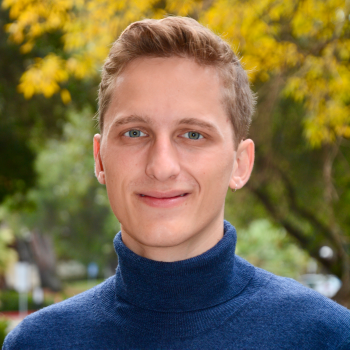
Headshot for Saumitra Jha
Saumitra Jha is Associate Professor of Political Economy at the Stanford Graduate School of Business, a Senior Fellow at the Center for Democracy, Development and the Rule of Law in Stanford's Freeman-Spogli Institute for International Affairs and convenes the Stanford Conflict and Polarization Lab. His work on the historical relationship between conflict and markets has been received the Michael Wallerstein Award for best article in political economy from the American Political Science Association, and has been published in the top journals in both Economics and Political Science, including The American Political Science Review, Econometrica, and The Quarterly Journal of Economics. His co-authored work on Heroes was awarded the Oliver Williamson Award from the Society for Institutional and Organizational Economics. Also an award-winning teacher, he has shown a particular interest in communicating the results of his research to broader audiences, in the press (such as the Indian Express and USA Today) and through online policy and social media outlets (VoxEU, VoxDev, Public Books, Broadstreet, Ideas for India, AOC), and to a range of student and practitioner audiences, including cadets at West Point, members of the US intelligence community, European Union diplomats, and entrepreneurs in Africa, India and the United States.  His work has been featured in the Economist, Financial Times and the Washington Post, among others, and he has provided commentary for television and radio news, including for the BBC, ABC and CBC.

Online, via Zoom.

Graduate School of Business 655 Knight Way Stanford, CA 94305
(650) 721 1298
0
Associate Professor of Political Economy, GSB
Associate Professor, by courtesy, of Economics and of Political Science
saumitra_jha.jpg

Along with being a Senior Fellow at the Freeman Spogli Institute for International Studies, Saumitra Jha is an associate professor of political economy at the Stanford Graduate School of Business, and convenes the Stanford Conflict and Polarization Lab. 

Jha’s research has been published in leading journals in economics and political science, including Econometrica, the Quarterly Journal of Economics, the American Political Science Review and the Journal of Development Economics, and he serves on a number of editorial boards. His research on ethnic tolerance has been recognized with the Michael Wallerstein Award for best published article in Political Economy from the American Political Science Association in 2014 and his co-authored research on heroes with the Oliver Williamson Award for best paper by the Society for Institutional and Organizational Economics in 2020. Jha was honored to receive the Teacher of the Year Award, voted by the students of the Stanford MSx Program in 2020.

Saum holds a BA from Williams College, master’s degrees in economics and mathematics from the University of Cambridge, and a PhD in economics from Stanford University. Prior to rejoining Stanford as a faculty member, he was an Academy Scholar at Harvard University. He has been a fellow of the Niehaus Center for Globalization and Governance and the Center for the Study of Democratic Politics at Princeton University, and at the Center for Advanced Study in the Behavioral Sciences at Stanford. Jha has consulted on economic and political risk issues for the United Nations/WTO, the World Bank, government agencies, and for private firms.


Senior Fellow at the Freeman Spogli Institute for International Studies
Dan C. Chung Faculty Scholar at the Freeman Spogli Institute for International Studies
Senior Fellow at the Stanford Institute for Economic Policy Research
Date Label
Associate Professor of Political Economy at the Stanford Graduate School of Business and Senior Fellow at the Center for Democracy, Development at the Rule of Law in the Freeman-Spogli Institute.
Seminars
-

About the Seminar: What are the defining traits of an autocracy? Leading works answer this question in negative terms: autocracies are non-democracies. We propose instead a substantive definition of autocracy, which we believe better captures what scholars actually mean when they invoke the term. We define autocracy as exclusive rule. Between substantive autocracy and electoral democracy, there is a residual space, of regimes that do not fit under either concept. We call these regimes “non-autocratic non-democracies” or NANDs.  A substantive understanding of autocracy has important theoretical and empirical implications. Theoretically, it ensures that claims about the population of autocratic regimes are ontologically coherent, and that we do not end up calling barely non-democratic regimes autocracies. Empirically, our measure reveals that the post-Cold War era has been even less autocratic than it is normally portrayed, and that concerns about a global turn toward "autocratization" are likely overblown.
 

Read the paper


About the Speakers:

Jason Brownlee

Image
Jason Brownlee

Jason Brownlee, a former post-doctoral fellow at CDDRL, is now a professor of Government at the University of Texas at Austin, where he researches and teaches about authoritarianism US foreign policy, and Southwest Asian politics.

Ashley Anderson

Image
ashley_anderson.jpg

Ashley Anderson is an Assistant Professor at the University of North Carolina - Chapel Hill. Her research interests are concentrated in the Middle East where she studies issues of contentious politics, political mobilization and regime change.

Killian Clarke

Image
Killian Clarke Headshot

Killian Clarke is an Assistant Professor at Georgetown University’s School of Foreign Service, where he is affiliated with the Center for Contemporary Arab Studies. His research and teaching focuses on protest, revolutions, and regime change in the Middle East.


Autocracy: A Substantive Approach
Download pdf

Online, via Zoom.

Jason Brownlee Professor, Department of Government, University of Texas at Austin
Ashley Anderson University of North Carolina, Chapel Hill
Killian Clarke Assistant Professor, Georgetown University, School of Foreign Service
Seminars
Paragraphs

A growing literature examines democratic backsliding, but there is little consensus on when, where, and why it occurs. Reviewing more than 100 recent articles and working papers, this research note argues that inattention to the measurement of backsliding and the underlying concept of democracy drives this disagreement. We propose three remedies. First, we outline several questions that help researchers navigate common measurement challenges. Second, we argue that conceptual confusion around backsliding is driven in large part by inconsistent definitions of democracy. We show how outlining a comprehensive concept of democracy enables researchers to better account for the diversity of instances of democratic backsliding. Our third contribution is drawing attention to a previously overlooked form of backsliding: when governments lose the effective power to govern or voters and elites increasingly disagree about truths and facts. The research note urges scholars to pay closer attention to the conceptualization and measurement of backsliding prior to empirical analysis.

All Publications button
1
Publication Type
Journal Articles
Publication Date
Subtitle

A growing literature examines democratic backsliding, but there is little consensus on when, where, and why it occurs.

Journal Publisher
Democratization
Authors
Hans Lueders
-

The REDI Task Force invites you to the next event in our Critical Conversations: Race in Global Affairs series; an exploration of colonialism and empire.

Capitalism and colonialism are often invoked in discussions in the social sciences and the humanities as the profound causes of racism, discrimination, human rights abuses, and the subaltern status of minority (and sometimes majority) groups in contemporary societies. These concepts are often useful more as a shorthand to describe deep historical processes. This panel seeks to elaborate on the specific mechanisms and accumulated social, political and economic events of colonialism that lead to particular outcomes of poverty, inequality or violence today. Comparative perspectives from history, political science and economics, from various regions of the world may advance our understanding of the deep forces that hinder racial equity, diversity, and inclusion.

About the Speakers:

Beatriz Magaloni is the Graham H. Stuart Professor of International Relations in the Department of Political Science, FSI Senior Fellow, and affiliated faculty at the Center on Global Poverty and Development at Stanford University. She is the current Chair of the REDI Task Force.

Her first book, Voting for Autocracy: Hegemonic Party Survival and its Demise in Mexico (Cambridge University Press, 2006), won the Best Book Award from the Comparative Democratization Section of the American Political Science Association and the 2007 Leon Epstein Award for the Best Book published in the previous two years in the area of political parties and organizations. Her second book, Strategies of Vote Buying: Democracy, Clientelism, and Poverty Relief in Mexico (co-authored with Alberto Diaz Cayeros and Federico Estévez), studies the politics of poverty relief. In 2010 she founded the Poverty, Violence and Governance Laboratory (POVGOV). The mission of  POVGOV is to develop action-oriented research through the elaboration of scientific knowledge that is anchored on state-of-the-art methodologies, multidisciplinary work, and innovative on-the-ground research and training. The Lab regularly incorporates undergraduate, masters, Ph.D. and post-doctoral students to pilot and evaluate interventions to reduce violence, combat human rights abuses and improve the accountability of law enforcement and justice systems.

Alberto Cayeros-Diaz joined the FSI faculty in 2013 after serving for five years as the director of the Center for US-Mexico studies at the University of California, San Diego. He earned his Ph.D at Duke University in 1997. He was an assistant professor of political science at Stanford from 2001-2008, before which he served as an assistant professor of political science at the University of California, Los Angeles. Diaz-Cayeros has also served as a researcher at Centro de Investigacion Para el Desarrollo, A.C. in Mexico from 1997-1999. His work has focused on federalism, poverty and violence in Latin America, and Mexico in particular. He has published widely in Spanish and English. His book Federalism, Fiscal Authority and Centralization in Latin America was published by Cambridge University Press in 2007 (reprinted 2016). His latest book (with Federico Estevez and Beatriz Magaloni) is: The Political Logic of Poverty Relief Electoral Strategies and Social Policy in Mexico. His work has primarily focused on federalism, poverty and economic reform in Latin America, and Mexico in particular, with more recent work addressing crime and violence, youth-at-risk, and police professionalization. 

Leonard Wantchekon is a Professor of Politics and International Affairs at Princeton University, as well as Associated Faculty in Economics. A scholar with diverse interests, Wantchekon has made substantive and methodological contributions to the fields of Political Economy, Economic History and Development Economics, and has also contributed significantly to the literatures on clientelism and state capture, resource curse and democratization. Wantchekon’s research includes groundbreaking studies on the long-term effects of historical events. For example, his paper “Slave Trade and the Origins of Mistrust in Africa” (AER, 2011, co-authored with Nathan Nunn) links current differences in trust levels within Africa to the transatlantic and Indian Ocean slave trade, and is widely regarded as one of the foundational papers in the emerging field of cultural economics. Similarly, his “Critical Junctures” paper (co-authored with Omar Garcia Ponce) finds that levels of democracy in post-Cold War Africa can be traced back to the nature of its anti-colonial independence movements. He is the Founder and President of the African School of Economics, which opened in Benin in 2014.


Online via Zoom

REGISTER

Encina Hall, C149
616 Jane Stanford Way
Stanford, CA 94305

(650) 725-0500
0
Senior Fellow, Freeman Spogli Institute for International Studies
Professor, by courtesy, of Political Science
alberto_diaz-cayeros_2024.jpg MA, PhD

Alberto Díaz-Cayeros is a Senior Fellow at Stanford University's Freeman Spogli Institute for International Studies (FSI), and co-director of the Democracy Action Lab (DAL), based at FSI's Center on Democracy, Development and Rule of Law (CDDRL). His research interests include federalism, poverty relief, indigenous governance, political economy of health, violence, and citizen security in Mexico and Latin America.

He is the author of Federalism, Fiscal Authority and Centralization in Latin America (Cambridge, reedited 2016), coauthored with Federico Estévez and Beatriz Magaloni, of The Political Logic of Poverty Relief (Cambridge, 2016), and of numerous journal articles and book chapters.

He is currently working on a project on cartography and the developmental legacies of colonial rule and governance in indigenous communities in Mexico.

From 2016 to 2023, he was the Director of the Center for Latin American Studies at Stanford University, and from 2009 to 2013, Director of the Center for US-Mexican Studies at UCSD, the University of California, San Diego.

Affiliated faculty at the Center on Democracy, Development and the Rule of Law
Co-director, Democracy Action Lab
Director of the Center for Latin American Studies (2016 - 2023)
CV
Date Label
Alberto Díaz-Cayeros FSI Senior Fellow Panelist CDDRL
Leonard Wantchekon Professor of Politics and International Affairs Panelist Princeton University

Dept. of Political Science
Encina Hall, Room 436
Stanford University,
Stanford, CA

(650) 724-5949
0
Senior Fellow at the Freeman Spogli Institute for International Studies
Graham H. Stuart Professor of International Relations
Professor of Political Science
beatriz_magaloni_2024.jpg MA, PhD

Beatriz Magaloni Magaloni is the Graham Stuart Professor of International Relations at the Department of Political Science. Magaloni is also a Senior Fellow at the Freeman Spogli Institute, where she holds affiliations with the Center on Democracy, Development and the Rule of Law (CDDRL) and the Center for International Security and Cooperation (CISAC). She is also a Stanford’s King Center for Global Development faculty affiliate. Magaloni has taught at Stanford University for over two decades.

She leads the Poverty, Violence, and Governance Lab (Povgov). Founded by Magaloni in 2010, Povgov is one of Stanford University’s leading impact-driven knowledge production laboratories in the social sciences. Under her leadership, Povgov has innovated and advanced a host of cutting-edge research agendas to reduce violence and poverty and promote peace, security, and human rights.

Magaloni’s work has contributed to the study of authoritarian politics, poverty alleviation, indigenous governance, and, more recently, violence, crime, security institutions, and human rights. Her first book, Voting for Autocracy: Hegemonic Party Survival and its Demise in Mexico (Cambridge University Press, 2006) is widely recognized as a seminal study in the field of comparative politics. It received the 2007 Leon Epstein Award for the Best Book published in the previous two years in the area of political parties and organizations, as well as the Best Book Award from the American Political Science Association’s Comparative Democratization Section. Her second book The Politics of Poverty Relief: Strategies of Vote Buying and Social Policies in Mexico (with Alberto Diaz-Cayeros and Federico Estevez) (Cambridge University Press, 2016) explores how politics shapes poverty alleviation.

Magaloni’s work was published in leading journals, including the American Political Science Review, American Journal of Political Science, Criminology & Public Policy, World Development, Comparative Political Studies, Annual Review of Political Science, Cambridge Journal of Evidence-Based Policing, Latin American Research Review, and others.

Magaloni received wide international acclaim for identifying innovative solutions for salient societal problems through impact-driven research. In 2023, she was named winner of the world-renowned Stockholm Prize in Criminology, considered an equivalent of the Nobel Prize in the field of criminology. The award recognized her extensive research on crime, policing, and human rights in Mexico and Brazil. Magaloni’s research production in this area was also recognized by the American Political Science Association, which named her recipient of the 2021 Heinz I. Eulau Award for the best article published in the American Political Science Review, the leading journal in the discipline.

She received her Ph.D. in political science from Duke University and holds a law degree from the Instituto Tecnológico Autónomo de México.

Director, Poverty, Violence, and Governance Lab
Co-director, Democracy Action Lab
CV
Date Label
Beatriz Magaloni FSI Senior Fellow REDI Task Force Chair REDI
-

On Friday, November 12, 2021, at 10:00 am PT, The World House Global Network is honored to host Saumitra Jha who will discuss: "Nonviolence: Lessons from India's Independence Struggle."

Register Now

Image
Saumitra Jha

Saumitra Jha is an associate professor of political economy at Stanford Graduate School of Business, and, by courtesy, of economics and of political science at Stanford School of Humanities and Sciences; and convenes the Stanford Conflict and Polarization Lab. He is also a senior fellow at the Center for Democracy, Development and Rule of Law within the Freeman-Spogli Institute for International Affairs.

Jha’s research has been published in leading journals in economics and political science, including EconometricaQuarterly Journal of EconomicsAmerican Political Science Review and Journal of Development Economics, and he serves on a number of editorial boards. His research on ethnic tolerance has been recognized with the Michael Wallerstein Award for best published article in political economy from the American Political Science Association in 2014 and his coauthored research on heroes with the Oliver Williamson Award for best paper by the Society for Institutional and Organizational Economics in 2020. Jha was honored to receive the Stanford MSx Teacher of the Year Award, voted by the students program in 2020.

Online via Zoom. Register Now 

Saumitra Jha Stanford University
-

Turkey-US relations have been going through the most turbulent episode since 2016. While occasional divergence of opinion between partners is natural, the frequency and the intensity of such disagreements have sharply increased over time, creating major trust issues between the allies. This talk will address the main causes behind the rift between Turkey and the US,  and warning against the path-dependent foreign policy behavior, will make specific policy recommendations to manage the bilateral tensions.
 

Register Now


Image
​Oya Dursun-Özkanca
Oya Dursun-Özkanca is the Endowed Chair of International Studies Professor of Political Science at Elizabethtown College and the author of Turkey–West Relations: The Politics of Intra-alliance Opposition (Cambridge University Press 2019), and The Nexus Between Security Sector Reform/Governance and Sustainable Development Goal-16: An Examination of Conceptual Linkages and Policy Recommendations (The Geneva Centre for Security Sector Governance 2021). Her edited volumes include The European Union as an Actor in Security Sector Reform (Routledge, 2014) and External Interventions in Civil Wars (with Stefan Wolff, Routledge, 2014).

In Fall 2021, she is a visiting scholar at the Weatherhead Center for International Affairs, Harvard University. 

Online via Zoom

Oya Dursun-Özkanca Professor Endowed Chair of International Studies and Professor of Political Science Elizabethtown College
Seminars
Authors
Nora Sulots
News Type
News
Date
Paragraphs

The Center on Democracy, Development and the Rule of Law (CDDRL) is delighted to share the news that Beatriz Magaloni has been named the Graham H. Stuart Professor of International Relations, an endowed professorship established at the Stanford School of Humanities and Sciences (H&S) most recently held by former CDDRL Director Steve Krasner since 1991. Professor Magaloni is a professor in the Department of Political Science and a Senior Fellow at the Freeman Spogli Institute for International Studies (FSI). She is also director of CDDRL’s Poverty, Violence and Governance Lab, which she founded in 2010. Most of her current work focuses on state repression, police, human rights, and violence.

“I am thrilled that my friend and colleague Beatriz Magaloni has been named the Graham Stuart Chair,” said Kathryn Stoner, Mosbacher Director of CDDRL. “I can think of no one more deserving to hold the chair following the retirement this year of Steve Krasner, who like Beatriz, is a giant in the field of international studies. We are extraordinarily lucky at CDDRL and Stanford to have them as colleagues.”

I can think of no one more deserving to hold the chair following the retirement this year of Steve Krasner, who like Beatriz, is a giant in the field of international studies. We are extraordinarily lucky at CDDRL and Stanford to have them as colleagues.
Kathryn Stoner
Moshbacher Director of CDDRL

The Graham H. Stuart Professorship in International Relations is named in honor of Stanford’s first faculty member in international relations. It was established in 1978 with a gift from Mrs. Flora Hewlett, a former Stanford trustee who died in 1977.

From the time he joined the Stanford political science faculty in 1923 until his retirement in 1952, Professor Stuart was one of the university’s most prominent scholars. His books include the classic Latin America and the United States, which has been reprinted many times since its publication in 1922; The Department of State; The International City of Tangier; and American Diplomatic and Consular Practice, which became the standard textbook for professional diplomats and college coursework in the field.

Professor Stuart administered the State Department’s war history unit during World War II and served the department in an advisory capacity for many years afterward. In 1952 his colleagues and former students established the Graham H. Stuart Award for outstanding seniors in political science, and in 1961 the Graham H. Stuart Fund was endowed to support the awards and the development of the political science library. Professor Stuart died in 1983 at the age of 97.

Mrs. Hewlett was born in Berkeley and received her degree from the University of California, Berkeley in 1935. In addition to serving on the Stanford Board of Trustees, she was a trustee of the San Francisco Theological Seminary and a member of the World Affairs Council of Northern California executive committee.

Reacting to her appointment, Professor Magaloni shared, “I feel deeply honored to be named to this chair held for 30 years by my colleague and friend Steve Krasner, whose scholarship and public service I have long admired and learned from.”

I feel deeply honored to be named to this chair held for 30 years by my colleague and friend Steve Krasner, whose scholarship and public service I have long admired and learned from.
Beatriz Magaloni
Graham H. Stuart Professor of International Relations

In June 2021, Professor Magaloni was awarded the Heinz I. Eulau Award for the best article published in American Political Science Review. The award-winning article entitled “Killing in the Slums: Social Order, Criminal Governance and Police Violence in Rio de Janeiro," co-authored with Edgar Franco-Vivanco and Vanessa Melo, explores the conditions that allow criminal organizations to establish local governance structures and the mechanisms that enable the police to regain territorial control and legitimacy.

Her first book, Voting for Autocracy: Hegemonic Party Survival and its Demise in Mexico (Cambridge University Press, 2006), won the Best Book Award from the Comparative Democratization Section of the American Political Science Association and the 2007 Leon Epstein Award for the Best Book published in the previous two years in the area of political parties and organizations. Her second book, The Political Logic of Poverty Relief (co-authored with Alberto Diaz Cayeros and Federico Estévez), also published by Cambridge University Press, studies the politics of poverty relief. Why clientelism is such a prevalent form of electoral exchange, how it distorts policies aimed at aiding the poor, and when it can be superseded by more democratic and accountable forms of electoral exchange are some of the central questions that the book addresses.

Prior to joining Stanford in 2001, Professor Magaloni was a visiting professor at UCLA and a professor of Political Science at the Instituto Tecnológico Autónomo de México (ITAM). She earned a Ph.D. in Political Science from Duke University. She also holds a law degree from ITAM.

Read More

Beatriz Magaloni
News

Professor Beatriz Magaloni Wins the 2021 Heinz I. Eulau Award for Best Article Published in American Political Science Review

The award-winning article is entitled “Killing in the Slums: Social Order, Criminal Governance and Police Violence in Rio de Janeiro.” Professor Magaloni coauthored the article with Edgar Franco-Vivanco, who earned his Ph.D. from Stanford and is now at the University of Michigan; and with Vanessa Melo, a graduate student in Anthropology at UCLA.
Professor Beatriz Magaloni Wins the 2021 Heinz I. Eulau Award for Best Article Published in American Political Science Review
gettyimages 836359310
News

Police Reform in Brazil and Mexico: What Works, What Doesn’t, and What the U.S. Can Learn

On the World Class Podcast, Beatriz Magaloni discusses how community-oriented policing and constitutional reform can impact violence committed by police.
Police Reform in Brazil and Mexico: What Works, What Doesn’t, and What the U.S. Can Learn
police brutality
News

New Research from the Poverty, Violence, and Governance Lab Examines Police Brutality

For the last 10 years, a team of social scientists at the Poverty, Violence, and Governance (PovGov) lab at the Freeman Spogli Institute for International Studies (FSI) have been developing action-oriented research to support human rights and inform policy on the root causes and devastating consequences of violence.
New Research from the Poverty, Violence, and Governance Lab Examines Police Brutality
Hero Image
Beatriz Magaloni
Professor Beatriz Magaloni
All News button
1
Subtitle

The professorship is named in honor of Stanford’s first faculty member in international relations and was previously held by former CDDRL Director Steve Krasner.

-

On Friday, October 29th, 2021 at 10am PT, The World House Global Network is honored to have Gerald and Marita Grudzen, founders of Global Ministries University who will discuss: "A Case Study in the Value of Interfaith Education for building Global Partnerships."
 

Register Now

		The World House Global Network  - Gerald and Marita Grudzen image

About Gerald Grudzen:

Gerald Grudzen, Ph.D. was one of the founders of Global Ministries University in 2001 shortly after the tragedy of 9/11. Grudzen has served as President of Global Ministries University since 2001 and has developed graduate interfaith education programs in collaboration with universities and research institutes in the United States, Africa, Turkey, India, and Thailand. Grudzen earned his Ph.D. in the history of Christianity and Islam from Columbia University.  He received a John Templeton award in 2003 for the development of the first scientific curriculum by Christian and Muslim scholars for the first major universities in Europe. He did this research in collaboration with the Ian Ramsey Center at Oxford University. In 2010 Grudzen co-led the largest American academic delegation ever sponsored by the US State Department for interfaith and intercultural dialogue with faculty members 'at several Egyptian Universities throughout Egypt including Al Azhar University in Cairo, the leading Sunni Muslim education center in the world.  

Beginning in 2012, Grudzen and Global Ministries Universities undertook a major effort to combat religious extremism in the coastal areas of Kenya where there had been frequent terrorist incidents.  The project brought together religious leaders and educators from both the coastal region and throughout Kenya to train these leaders in interfaith dialogue and methods of conflict resolution.  The success of this program led to its integration  with the Tangaza University Institute for Interreligious Dialogue and Islamic Studies in 2019. In 2021 Grudzen and his wife, Marita Grudzen,  co-chaired the US Hub for a three-day interfaith conference on Pope Francis' encyclical, Fratelli Tutti, co-sponsored with Tangaza Univesity and other Christian and Muslim universities in Kenya and Indonesia in collaboration with the Pontifical Council for Interreligious Dialogue at the Vatican.  Over 3000 participants took part in this conference from 15 different countries. A second international, interfaith conference is scheduled for February of 2023. Grudzen has authored or co-authored several books on the role of interfaith dialogue and collaboration in promoting peace and reconciliation across the world.

About Marita Grudzen:

Marita Grudzen, MHS, is Associate Director Emerita and a founding member of the Stanford Geriatric Education Center, a national center in ethnogeriatrics within Stanford University School of Medicine. Ms. Grudzen was co-recipient with Chaplain Bruce Feldstein, MD, of the Templeton Award(2001-06) for the medical school required curriculum they developed, Spirituality and Meaning in Medicine. Ms. Grudzen chaired a qualitative study of diverse healing practices in six ethnic minority populations in the Bay Area which was translated into health professional educational programming. She also developed a relationship of trust with the Afghan leadership in Fremont, CA during a series of three focus groups she co-led with the Afghan elder women’s community. Most recently, Marita co-developed the curriculum for the Fremont Community Ambassador Program for Seniors, and 25 hour Hospital to Home Transition training for volunteers from the Ethnic Minority Senior Services Consortium of San Jose, CA. Marita has received an international award from the Prime Minister of Turkey for her contribution to the First International Care Congress in Istanbul from May 2-8, 2005.

Since August of 2011, every year Ms. Grudzen with her husband have co-developed, implemented, evaluated and revised a 40 hour Interfaith Leadership Program in partnership with Christian, Muslim and African Indigenous Religious leaders in Kenya. Recruiting local expert and community leaders as co-presenters they returned every August until the current Covid era and maintain communication through the year with their interfaith partners through Skype and email.

Online via Zoom. Register Now 

Gerald and Marita Grudzen Global Ministries University 
-

*For fall quarter 2021, CISAC will be hosting hybrid events. Many events will offer limited-capacity in-person attendance for Stanford faculty, staff, fellows, visiting scholars, and students in accordance with Stanford’s health and safety guidelines, and be open to the public online via Zoom. All CISAC events are scheduled using the Pacific Time Zone.


REGISTRATION


Seminar Recording

About the Event: As relations between the West and Russia plunge to a post-Cold War nadir, how strong a competitor will the Kremlin prove? Will constraints on Putin's autocracy hinder his ability to have Russia play a great power role, or has Russia alrealdy successfully resurrected itself and is now able to exercise significant influence on the global stage? On November 10, Timothy Frye (author of Weak Strongman: The Limits of Power in Putin's Russia) and Kathryn Stoner (author of Russia Resurrected: Its Power and Purpose in a New Global Order) will discuss the nature and depth of the Russian challenge to the West.


About the Speakers: 

Timothy Frye is the Marshall D. Shulman Professor of Post-Soviet Foreign Policy at Columbia University. Professor Frye received a B.A. in Russian language and literature from Middlebury College, an M.A. from Columbia's School of International and Public Affairs, and a Ph.D. in Political Science from Columbia. His research and teaching interests are in comparative politics and political economy with a focus on the former Soviet Union and Eastern Europe. His most recent book is Weak Strongman: The Limits of Power in Putin’s Russia (Princeton University Press, 2021). He co-directs the International Center for the Study of Institutions and Development at the Higher School of Economics in Moscow and edits Post-Soviet Affairs.

Kathryn Stoner is the Deputy Director at the Freeman Spogli Institute for International Studies (FSI) at Stanford University and a Senior Fellow at the Center on Democracy, Development, and the Rule of Law, and at the Center on International Security and Cooperation at FSI. She teaches in the Department of Political Science at Stanford, and in the Program on International Relations, as well as in the Ford Dorsey Master's in International Policy Program. Prior to coming to Stanford in 2004, she was on the faculty at Princeton University for nine years, jointly appointed to the Department of Politics and the Princeton School for International and Public Affairs (formerly the Woodrow Wilson School). At Princeton she received the Ralph O. Glendinning Preceptorship awarded to outstanding junior faculty. She also served as a Visiting Associate Professor of Political Science at Columbia University, and an Assistant Professor of Political Science at McGill University. She has held fellowships at Harvard University as well as the Woodrow Wilson Center in Washington, DC. In addition to many articles and book chapters on contemporary Russia, she is the author or co-editor of six books: "Transitions to Democracy: A Comparative Perspective," written and edited with Michael A. McFaul (Johns Hopkins 2013); "Autocracy and Democracy in the Post-Communist World," co-edited with Valerie Bunce and Michael A. McFaul (Cambridge, 2010); "Resisting the State: Reform and Retrenchment in Post-Soviet Russia" (Cambridge, 2006); "After the Collapse of Communism: Comparative Lessons of Transitions" (Cambridge, 2004), coedited with Michael McFaul; and "Local Heroes: The Political Economy of Russian Regional" Governance (Princeton, 1997). Her most recent book is Russia Resurrected: Its Power and Purpose in a New Global Order" (Oxford University Press, 2021). She received a BA (1988) and MA (1989) in Political Science from the University of Toronto, and a PhD in Government from Harvard University (1995). In 2016 she was awarded an honorary doctorate from Iliad State University, Tbilisi, Republic of Georgia.

Virtual Only. This event will not be held in person.

Timothy Frye

FSI
Stanford University
Encina Hall C140
Stanford, CA 94305-6055

(650) 736-1820 (650) 724-2996
0
Satre Family Senior Fellow, Freeman Spogli Institute for International Studies
kathryn_stoner_1_2022_v2.jpg MA, PhD

Kathryn Stoner is the Mosbacher Director of the Center on Democracy, Development, and the Rule of Law (CDDRL), and a Senior Fellow at CDDRL and the Center on International Security and Cooperation at FSI. From 2017 to 2021, she served as FSI's Deputy Director. She is Professor of Political Science (by courtesy) at Stanford and she teaches in the Department of Political Science, and in the Program on International Relations, as well as in the Ford Dorsey Master's in International Policy Program. She is also a Senior Fellow (by courtesy) at the Hoover Institution.

Prior to coming to Stanford in 2004, she was on the faculty at Princeton University for nine years, jointly appointed to the Department of Politics and the Princeton School for International and Public Affairs (formerly the Woodrow Wilson School). At Princeton she received the Ralph O. Glendinning Preceptorship awarded to outstanding junior faculty. She also served as a Visiting Associate Professor of Political Science at Columbia University, and an Assistant Professor of Political Science at McGill University. She has held fellowships at Harvard University as well as the Woodrow Wilson Center in Washington, DC. 

In addition to many articles and book chapters on contemporary Russia, she is the author or co-editor of six books: "Transitions to Democracy: A Comparative Perspective," written and edited with Michael A. McFaul (Johns Hopkins 2013);  "Autocracy and Democracy in the Post-Communist World," co-edited with Valerie Bunce and Michael A. McFaul (Cambridge, 2010);  "Resisting the State: Reform and Retrenchment in Post-Soviet Russia" (Cambridge, 2006); "After the Collapse of Communism: Comparative Lessons of Transitions" (Cambridge, 2004), coedited with Michael McFaul; and "Local Heroes: The Political Economy of Russian Regional" Governance (Princeton, 1997); and "Russia Resurrected: Its Power and Purpose in a New Global Order" (Oxford University Press, 2021).

She received a BA (1988) and MA (1989) in Political Science from the University of Toronto, and a PhD in Government from Harvard University (1995). In 2016 she was awarded an honorary doctorate from Iliad State University, Tbilisi, Republic of Georgia.

Download full-resolution headshot; photo credit: Rod Searcey.

Mosbacher Director, Center on Democracy, Development and the Rule of Law
Professor of Political Science (by courtesy), Stanford University
Senior Fellow (by courtesy), Hoover Institution
CV
Date Label
Seminars
-

Image
The American Passport in Turkey
The American Passport in Turkey explores the diverse meanings and values that people outside of the United States attribute to U.S. citizenship, specifically those who possess or seek to obtain U.S. citizenship while residing in Turkey. Özlem Altan-Olcay and Evren Balta interviewed more than one hundred individuals and families and, through their narratives, shed light on how U.S. citizenship is imagined, experienced, and practiced outside of the United States. Offering a corrective to citizenship studies where discussions of inequality are largely limited to domestic frames, Altan-Olcay and Balta argue that the relationship between inequality and citizenship regimes can only be fully understood if considered transnationally. Additionally, The American Passport in Turkey demonstrates that U.S. global power not only reveals itself in terms of foreign policy but also manifests in the active desires people have for U.S. citizenship, even when they do not live in the United States. These citizens, according to the authors, create a new kind of empire with borders and citizen-state relations that do not map onto recognizable political territories.

The American Passport in Turkey has recently won the American Sociological Association, Global and Transnational Sociology Section, Best Book by an International Scholar Award.
 

Register Now


ABOUT THE AUTHORS

Image
Özlem Altan-Olcay
Özlem Altan-Olcay is an associate professor in the Department of International Relations and the associate director of the Graduate School of Social Sciences and Humanities at Koç University in Istanbul, Turkey. She is also an editor of Gender, Place, and Culture as well as an assistant editor of Citizenship Studies. She has a Ph.D. degree from New York University, Department of Politics. Her primary research interests include citizenship studies and gender and development. Her research has been supported by the New York University International Center for Advanced Studies, the UN Population Council, the Middle East Research Competition, the Scientific and Technological Research Council of Turkey, the Turkish Science Academy, and the EU Marie Curie Individual Fellowship Program. Some of her recent articles have appeared in Development and Change, Ethnic and Racial Studies, Feminist Economics, Gender, Place and Culture, International Feminist Journal of Politics, Sociology, Social Politics, and Women’s Studies International Forum. She has recently co-authored (with E. Balta) The American Passport in Turkey: National Citizenship in the Age of Transnationalism, published by the University of Pennsylvania Press (2020).
 

Image
Evren Balta
Evren Balta is a Professor of International Relations and the chair of the International Relations Department at  Özyeğin University. She holds a Ph.D. in Political Science from The Graduate Center, CUNY. Her articles have appeared in journals such as Party Politics, Ethnic and Racial Studies, Sociology, Gender Place & Culture. She is the author of The American Passport in Turkey: National Citizenship in the Age of Transnationalism (with O Altan-Olcay, University of Pennsylvania, 2020), Age of Uneasiness (İletisim, 2019), and Global Security Complex (İletisim, 2012). She is the editor of Neighbors with Suspicion: Dynamics of Turkish-Russian Relations (with G. Ozcan and B. Besgul, İletisim, 2017); Introduction to Global Politics (Iletisim, 2014) and Military, State and Politics in Turkey (with I. Akca, Bilgi University, 2010). Her research has been supported by the American Association for the University Women, Mellon Foundation, Bella Zeller Scholarship Trust Fund, the Scientific and Technological Research Council of Turkey, and the Fulbright Scholar Program. In 2018, she received the Distinguished Alumni Award of the Political Science Program at the CUNY-The Graduate Center. Balta is a senior scholar at Istanbul Policy Center, a member of Global Relations Forum, and co-editor of International Relations Journal. She is appointed as the academic coordinator of the TÜSİAD Global Politics Forum in 2021.

Online via Zoom. Register here.

Özlem Altan-Olcay Koç University
Evren Balta Özyeğin University
Seminars
Subscribe to The Americas