-
Margaret Levi seminar

Our empirical and theoretical focus is on what constitutes political equality as "equal consideration" in advanced capitalist democracies. We claim that political inequality is a distinctive type of inequality. First, although affected by the factors that routinely go into thinking about social, economic and power inequality, it cannot be reduced to those factors. Second, its currency is performative, not only distributive. To make our case, we focus on three broad dimensions of political equality: participation, representation, and responsiveness. Although there is some research on each of these dimensions, influential commentators on political equality have tended to focus almost exclusively on political participation. We develop concepts and measurement for all three and then weigh the trade-offs among these dimensions.

ABOUT THE SPEAKER

Image
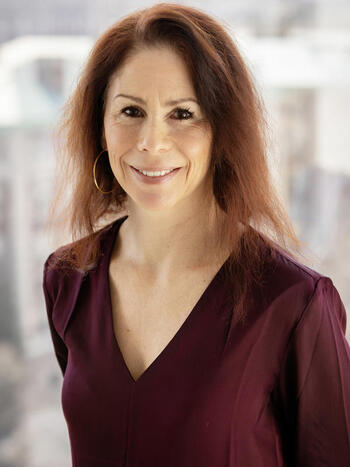
Margaret Levi
Margaret Levi is a Professor of Political Science and Senior Fellow at the Center for Democracy, Development and Rule of Law (CDDRL) at the Freeman Spogli Institute (FSI) at Stanford University. She is the former Sara Miller McCune Director of the Center for Advanced Study in the Behavioral Sciences (CASBS) Levi is currently a faculty fellow at CASBS and Senior Fellow at the Woods Institute for the Environment, co-director of the Stanford Ethics, Society and Technology Hub, and the Jere L. Bacharach Professor Emerita of International Studies at the University of Washington. She is the winner of the 2019 Johan Skytte Prize and the 2020 Falling Walls Breakthrough. She is a member of the National Academy of Sciences, the British Academy, the American Academy of Arts and Sciences, the American Philosophical Society, and the American Association of Political and Social Sciences. She served as president of the American Political Science Association from 2004 to 2005. In 2014 she received the William H. Riker Prize in Political Science, in 2017 gave the Elinor Ostrom Memorial Lecture, and in 2018 received an honorary doctorate from Universidad Carlos III de Madrid.

She earned her BA from Bryn Mawr College in 1968 and her PhD from Harvard University in 1974, the year she joined the faculty of the University of Washington. Levi is the author or coauthor of numerous articles and seven books, including Of Rule and Revenue; Consent, Dissent, and Patriotism; Analytic Narratives; Cooperation Without Trust?; In the Interest of Others; and A Moral Political Economy.

Virtual to Public. Only those with an active Stanford ID with access to E008 in Encina Hall may attend in person.

Didi Kuo

Virtual to Public. Only those with an active Stanford ID with access to E008 in Encina Hall may attend in person.

Encina Hall West, Room 306
417 Galvez Mall
Stanford, CA 94305

206.849.8222
0
Professor Emerita of Political Science
Jere L. Bacharach Professor Emerita of International Studies, University of Washington
margaret_levi.jpg

Margaret Levi is professor of Political Science, Senior Fellow of the Freeman Spogli Institute for International Studies, a faculty fellow and former Sara Miller McCune Director of the Center for Advanced Study in the Behavioral Sciences (CASBS), and Senior Fellow at the Woods Institute for the Environment, Stanford University. She is the winner of the 2019 Johan Skytte Prize and the 2020 Falling Walls Breakthrough. She is a member of the National Academy of Sciences, the British Academy, the American Academy of Arts and Sciences, and the American Philosophical Society and served as president of the American Political Science Association.

The most recent of her many books are In the Interest of Others (Princeton, 2013), co-authored with John Ahlquist, and A Moral Political Economy: Present, Past, Future (Cambridge University Press, 2021), co-authored with Federica Carugati. She writes about what makes for trustworthy governance in states and organizations and what evokes citizen compliance, consent, and dissent.

Senior Fellow, Freeman Spogli Institute for International Studies
Faculty Fellow, Center for Advanced Study in the Behavioral Sciences at Stanford
Senior Fellow, Stanford Woods Institute for the Environment
Co-director, Stanford Ethics, Society and Technology Hub
Date Label
Seminars
Date Label
-
Brandon de la Cuesta seminar

The use of machine learning for causal inference has become increasingly popular in the social sciences. But relatively less attention has been paid to how machine learning (ML) algorithms can be used to generate novel measures in data-sparse environments like those that prevail in many developing countries, particularly those in sub-Saharan Africa.

Here, I present results from a suite of projects that utilize high-resolution measures of economic development generated by a convolutional neural net trained on satellite imagery. I show that, in addition to superior spatial and temporal coverage, this ML-generated data resolves serious inferential shortcomings in existing national and sub-national estimates of wealth, alters influential findings in African political economy, and opens up several promising avenues of research. I demonstrate one such avenue by discussing ongoing work that investigates the impact of climate change on political behavior, an emerging area of scholarship that demands accurate, high-resolution data in places where such data rarely exist. 

ABOUT THE SPEAKER

Image
Brandon de la Cuesta
Brandon Miller-de la Cuesta is a postdoctoral fellow at CDDRL and the Center on Food Security and the Environment (FSE). He received his PhD in Politics from Princeton University in 2020. He has a strong regional focus in sub-Saharan Africa with a special interest in applied methods and political accountability. His current work utilizes machine learning in both dataset generation and causal inference to estimate the impact of infrastructure investments on economic well-being and to investigate how climate change is altering the strength and substance of accountability demands.

Virtual to Public. Only those with an active Stanford ID with access to E008 in Encina Hall may attend in person.

Didi Kuo
Didi Kuo

Virtual to Public. Only those with an active Stanford ID with access to E008 in Encina Hall may attend in person.

0
screenshot_2025-07-15_at_3.09.56_pm.png

Brandon is a research scholar in the Center on Food Security and the Environment, working primarily with Marshall Burke and other members of the Environmental Change and Human Outcomes (ECHO) lab to estimate the impact of climate change on various measures of political accountability. He specializes in comparative political economy and causal inference with a strong regional focus on sub-Saharan Africa. Many of his current projects involve the use of machine learning algorithms, particularly convolutional neural nets, to create global, high-resolution data that can be used for downstream inference tasks. A development economics application was recently featured as the cover article in Nature.

Brandon received his PhD in Politics from Princeton University in August 2019. Prior to coming to Princeton, he earned an MPhil in International Relations from Cambridge University. He completed his undergraduate education at the University of California, Irvine, where he received a B.A. in Political Science.

Research Scholar
Date Label
Brandon Miller-de la Cuesta
Seminars
Date Label
-
Alison Post seminar

According to U.N. projections, 86% of global population growth over the next two decades will occur in cities of low and middle-income countries. While social science scholarship typically focuses on megacities, most population growth will occur in small- and medium-sized urban centers. Meanwhile, many countries have decentralized significant policy responsibilities to municipal governments over the last three decades. Expectations derived from the literature on fiscal federalism suggest that this is a cause for concern, as larger cities are thought to deliver public goods more effectively than smaller ones owing to economics of scale. This book project examines the relationship between city size and the types of political demands citizens make of local governments, the ways in which local elected officials respond to these demands, and public service access and quality. Analysis focuses on four large, highly decentralized democracies: Argentina, Brazil, India, and Indonesia. 

ABOUT THE SPEAKER

Image
Alison Post
Alison Post is Associate Professor of Political Science and Global Metropolitan Studies at the University of California, Berkeley. Her research examines urban politics and policy and other political economy themes, including environmental politics and policy, regulation, and business-government relations. She works principally in Latin America, and recently in India and the United States as well. Post is the author of Foreign and Domestic Investment in Argentina: The Politics of Privatized Infrastructure (Cambridge University Press, 2014) and numerous articles. She is a former President of the Urban and Local Politics section of the American Political Science Association, former Co-Director of the Global Metropolitan Studies Program at U.C. Berkeley, and currently Chair of the Steering Committee for the Red de Economía Política de America Latina.

Virtual to Public. Only those with an active Stanford ID with access to E008 in Encina Hall may attend in person.

Didi Kuo

Virtual to Public. Only those with an active Stanford ID with access to E008 in Encina Hall may attend in person.

Alison Post Associate Professor, University of California Berkeley and Hoover National Fellow Associate Professor, University of California Berkeley and Hoover National Fellow
Seminars
Date Label
Authors
News Type
Blogs
Date
Paragraphs

The Leadership Network for Change (LNC) is an expansive group that encompasses over 2,100 up-and-coming leaders and change-makers from all corners of the globe. This diverse and widespread network is comprised of alumni of three practitioner programs based at the Stanford Center on Democracy, Development and the Rule of Law (CDDRL): the Draper Hills Summer Fellows Program, Leadership Academy for Development, and the Strengthening Ukrainian Democracy and Development Program (formerly the Ukrainian Emerging Leaders Program). These practitioner-based training programs engage emerging civic leaders and social entrepreneurs who are working to achieve or deepen democracy and social justice in some of the most challenging environments around the world.

Reunions are always marked by the distinct nostalgia of your most memorable moments with people whom you shared lengths of time with. No doubt that the Leadership Network for Change reunion held this past summer at Stanford was one such event for me. Right from walking back into Munger residence, I immediately remembered how, with newly made friends in the Draper Hills class of 2018, we chatted as we walked back and forth to our classes or spent many hours sitting on the benches talking about global events or sharing personal stories – almost always with a bottle of wine (the famous room 555 of the class of 2018 comes to mind). For most of the people I spoke to during this reunion, there was a shared sense despite our different cohorts, of how ‘not long ago’ it was since leaving (not even the occurrence of the pandemic made it seem like it was a long time ago). It felt like we’d just been there months earlier. It speaks to how impactful our time together was and the deep connections made in and out of class experiences. 

Seeing the familiar faces of Larry Diamond, Francis Fukuyama, Michael McFaul, Kathryn Stoner, and Erik Jensen reminded me how fortunate I was to have had access to legendary global democracy shaping minds. What is always humbling, however, is when they each tell you that it is an honor for them to meet us.

Over a weekend of thought-provoking panels and lectures, we had tough conversations about the global state of democracy since COVID and more recently since Russian troops had attacked Ukraine. With the depressing reality of rising authoritarianism staring us in the face, one could only marvel at the moments of inspiration that brewed during this reunion. There was a spontaneous and very somber time when during one of the sessions fellows stood up and celebrated the alumni (by name) who were no longer with us and some who languish in prisons under the grip of dictatorships. Michael McFaul followed that by asking us to share stories of hope from our regions — igniting a crackling bonfire of hope with both tears and laughter that lifted our spirits.

Honoring the life and work of Carl Gershman, the former president of the National Endowment for Democracy, at this reunion was a moment to reflect on my own journey. Carl is a giant of his era and as he recounted his years of service in support of global democracy, it felt like a challenge to serve humanity’s fragile freedom with strategy, determination, and whatever resources are at our disposal. And that, in my humble opinion, is the enduring legacy of the CDDRL Draper Hills Summer Fellows Program. It was good to be back again.

Applications for the 2023 Draper Hills Summer Fellows Program and the Strengthening Ukrainian Democracy and Development Program are open now through 5:00 pm PT on January 15, 2023. Visit each program's web page to learn more and apply.

Read More

Ukrainian flag on a blue background with SU-DD logo
News

CDDRL Launches Program Aimed at Strengthening Ukrainian Democracy and Development

The Strengthening Ukrainian Democracy and Development (SU-DD) Program, formerly the Ukrainian Emerging Leaders Program, is a 10-week training program for Ukrainian practitioners and policymakers.
CDDRL Launches Program Aimed at Strengthening Ukrainian Democracy and Development
LAD Tunisia 2018
News

Local Democracy in Action: Stories from the Field

CDDRL's Leadership Network for Change and the Center for International Private Enterprise awarded collaboration grants to six teams of alumni to foster cooperation and strengthen democratic development on a regional and global scale.
Local Democracy in Action: Stories from the Field
Larry Diamond, Kathryn Stoner, Erik Jensen and Francis Fukuyama at the opening session of the 2022 Draper Hills Fellows Program
News

Stanford summer fellowship crafts next generation of global leaders

The Draper Hills Summer Fellows Program reconvened in person for the first time, bringing budding leaders together with the world’s most influential democracy scholars.
Stanford summer fellowship crafts next generation of global leaders
Hero Image
LNC reunion
Evan Mawarire, center left, poses for a photo next to Francis Fukuyama with fellow alumni during the LNC reunion, August 13-15, 2022. | Rod Searcey
All News button
1
Subtitle

Over the weekend of August 13-15, 2022, CDDRL hosted a reunion for the LNC community on campus at Stanford. It was the first global meeting and an exciting opportunity to bring together all generations of our fellows to connect, engage, and envision ways of advancing democratic development. 2018 Draper Hills alum Evan Mawarire (Zimbabwe) reflects on the experience.

-
Honors students with the Washington Monument in the background

The Center on Democracy, Development and the Rule of Law (CDDRL) will be accepting applications from eligible juniors from any university department who are interested in writing their senior thesis on a subject touching upon democracy, economic development, and rule of law (DDRL). 

On Wednesday, January 17 at 12:00 pm PT, join CDDRL faculty and current honors students to discuss the program and answer questions.

The application period opens on January 8, 2024, and runs through February 9, 2024.

For more information on the Fisher Family CDDRL Honors Program, please click here.

CDDRL
Encina Hall, C152
616 Jane Stanford Way
Stanford, CA 94305-6055

(650) 725-2705 (650) 724-2996
0
Senior Fellow at the Freeman Spogli Institute for International Studies
Professor, by courtesy, of Political Science
Stedman_Steve.jpg PhD

Stephen Stedman is a Senior Fellow at the Freeman Spogli Institute for International Studies (FSI) and the Center on Democracy, Development and the Rule of Law (CDDRL), an affiliated faculty member at CISAC, and professor of political science (by courtesy) at Stanford University. He is director of CDDRL's Fisher Family Honors Program in Democracy, Development and Rule of Law, and will be faculty director of the Program on International Relations in the School of Humanities and Sciences effective Fall 2025.

In 2011-12 Professor Stedman served as the Director for the Global Commission on Elections, Democracy, and Security, a body of eminent persons tasked with developing recommendations on promoting and protecting the integrity of elections and international electoral assistance. The Commission is a joint project of the Kofi Annan Foundation and International IDEA, an intergovernmental organization that works on international democracy and electoral assistance.

In 2003-04 Professor Stedman was Research Director of the United Nations High-level Panel on Threats, Challenges and Change and was a principal drafter of the Panel’s report, A More Secure World: Our Shared Responsibility.

In 2005 he served as Assistant Secretary-General and Special Advisor to the Secretary- General of the United Nations, with responsibility for working with governments to adopt the Panel’s recommendations for strengthening collective security and for implementing changes within the United Nations Secretariat, including the creation of a Peacebuilding Support Office, a Counter Terrorism Task Force, and a Policy Committee to act as a cabinet to the Secretary-General.

His most recent book, with Bruce Jones and Carlos Pascual, is Power and Responsibility: Creating International Order in an Era of Transnational Threats (Washington DC: Brookings Institution, 2009).

Director, Fisher Family Honors Program in Democracy, Development and Rule of Law
Director, Program in International Relations
Affiliated faculty at the Center for International Security and Cooperation
Date Label

Encina Hall, C150
616 Jane Stanford Way
Stanford, CA 94305

0
Center Fellow, Freeman Spogli Institute for International Studies
didi_kuo_2023.jpg

Didi Kuo is a Center Fellow at the Freeman Spogli Institute for International Studies (FSI) at Stanford University. She is a scholar of comparative politics with a focus on democratization, corruption and clientelism, political parties and institutions, and political reform. She is the author of The Great Retreat: How Political Parties Should Behave and Why They Don’t (Oxford University Press) and Clientelism, Capitalism, and Democracy: the rise of programmatic politics in the United States and Britain (Cambridge University Press, 2018).

She has been at Stanford since 2013 as the manager of the Program on American Democracy in Comparative Perspective and is co-director of the Fisher Family Honors Program at CDDRL. She was an Eric and Wendy Schmidt Fellow at New America and is a non-resident fellow with the Carnegie Endowment for International Peace. She received a PhD in political science from Harvard University, an MSc in Economic and Social History from Oxford University, where she studied as a Marshall Scholar, and a BA from Emory University.

Date Label
Authors
Gabrielle Crooks
Sarah Lee
News Type
Blogs
Date
Paragraphs

From walking down the same hallways as Vice President Kamala Harris to watching a stunning performance of Hamilton at the Kennedy Center, our second day of Honors College was unforgettable.

We kicked off our morning with a visit to the National Security Council (NSC) at one of our nation’s most esteemed buildings: the White House. There, we met Tarun Chhabra ‘02, Senior Director Directorate for Technology & National Security. It was incredible getting to meet and chat with Tarun, who generously shared both his experiences working in government and his expertise on the constantly evolving security challenges we’re facing today. While we’ve learned about national security, economic power, and foreign policy to some degree in our classrooms, it was an immense privilege to hear from someone immersed in these critical decision-making processes on a day-to-day basis. 

CDDRL honors students at the National Security Council
CDDRL honors students visit the National Security Council in Washington, D.C.

In the afternoon, we headed to the International Foundation for Electoral Systems, or IFES, where we heard from the president and CEO Anthony Banbury, and Dr. Cassandra Emmons, their Democracy Data Analysis. IFES works to advance and strengthen democracy around the world and has worked in over 145 countries since its founding in 1987. During the visit, the students learned about the Election Integrity program and the different ways that IFES helps to secure safe and effective elections as a pathway to democracy. Additionally, the visit touched on how IFES and its goals have evolved over time and how they have learned through field experience and data how to best serve these new goals, especially when the risks posed to democracy around the world are at their highest. Learning how this organization works to support democracy was definitely one of the highlights of the trip so far!

How does a ragtag group of honors students spend their nights in the nation's capitol? On Tuesday evening, after resting and getting dressed up, we headed to the Kennedy Center to watch the critically acclaimed musical, Hamilton. Witnessing the (nearly accurate) historical recount of the birth of our nation through the lens of one of our founding fathers, Alexander Hamilton, is always a treat, especially in the heart of Washington D.C. Amid visits to think tanks and government agencies, Hamilton gave us the sing-along footnotes version of how democracy came to be here in the U.S. and the efforts that went into protecting it. Though the days in Honors College are long, this musical (and the overpriced snacks we grabbed during intermission) was a wonderful way to close out a fascinating day. 

CDDRL honors students attend Hamilton at the Kennedy Center

Day 2 clearly was action-packed. We both returned to our hotel rooms with full hearts, tired feet, and of course, the Hamilton soundtrack stuck in our heads. But looking back, perhaps our favorite part of the day was simply getting to go full nerd-mode with everyone—whether it was over whose office we were passing by in the Eisenhower Executive Office Building or which musical number ultimately stole the show. It’s hard to come across a more caffeinated, strangely passionate group of Gen-Z’ers who are willing to unapologetically geek out about these sorts of things—we’re very glad we found this one.

Hero Image
CDDRL honors students the the White House
All News button
1
Subtitle

This is the second in a series of blog posts written by the Fisher Family Honors Program class of 2023 detailing their experiences in Washington, D.C. for CDDRL's annual Honors College.

Herbert Hoover Memorial Building 107
434 Galvez Mall
Stanford, CA 94305-6003

650.721.1780
0
Affiliated Scholar, Deliberative Democracy Lab
Kleinheinz Fellow, Hoover Institution
valentin_bolotnyy_-_valentin_bolotnyy.jpg

Valentin Bolotnyy is a Kleinheinz Fellow at the Hoover Institution, where he is a member of the State and Local Governance Initiative and the Working Group on Civics and American Citizenship.

His core research aims to generate and inform innovative policies that improve economic and health outcomes, especially for society’s most vulnerable populations. The research is often done in partnership with state and local agencies, including departments of transportation, human services, and public safety. His objective is to build a culture of collaboration across academia and America’s laboratories of democracy, so policymakers can deliver the best possible results for their constituents.

Bolotnyy’s ongoing work utilizes administrative data, quasi-experimental methods, and randomized controlled trials to study the effectiveness of involuntary hospitalization practices, deinstitutionalization, and ways to improve the lives of people who cycle through our hospitals, jails, and streets. Other work analyzes the effectiveness of prison education and workforce development programs.

Bolotnyy’s research affiliations include J-PAL North America, the Institute of Labor Economics (IZA), and the Deliberative Democracy Lab at Stanford’s Center on Democracy, Development and the Rule of Law (CDDRL). He is a member of the Faculty Steering Committee of the Haas Center for Public Service and an advisor to the Stanford Democracy Hub. He serves as Vice Chair on the California Governor’s Council of Economic Advisors (GCEA).

Bolotnyy received a BA in economics and international relations, with honors and distinction, from Stanford University and a PhD in economics from Harvard University. His work has been recognized by the Padma Desai Prize, the Upjohn Institute Early Career Research Award, and major grants from Stanford Impact Labs and Arnold Ventures.

Date Label
-
CDDRL 20th Anniversary event

A celebration on the occasion of CDDRL's 20th Anniversary of research, training, and education:

The Autocratic Challenge to Liberal Democracy 
and the Future of Global Development

The Center on Democracy, Development and the Rule of Law (CDDRL) was established in 2002 — a more optimistic time for the spread of democracy, development, and good governance. In the wake of the end of the Cold War democratic governance was on the rise, buoyed by economic growth and technological advancements.

Twenty years later, however, the world looks very different. Democracy is under threat globally by populism, authoritarianism, and inequality. Technological change has proven to be both a force for positive change and a tool in the hands of leaders seeking to enhance social control rather than enable freedom. The research, education, and training programs at CDDRL have addressed this trajectory of global change.

4:30 - 6:00 PM  —  Reflections on Two Decades of Challenges in Global Development: A Roundtable with CDDRL Directors Past and Present

This panel of current and former CDDRL directors will reflect on two decades of global transformation and discuss strategies to fight democratic decline.

Coit Blacker
Senior Fellow Emeritus & Director, Emeritus, Freeman-Spogli Institute for International Studies 

Larry Diamond
Mosbacher Senior Fellow in Global Democracy, Freeman-Spogli Institute for International Studies and Senior Fellow, Hoover Institution

Francis Fukuyama
Olivier Nomellini Senior Fellow, Freeman-Spogli Institute for International Studies and Director of the Master’s in International Policy Program

Michael McFaul
Director, Freeman Spogli Institute for International Studies; Ken Olivier and Angela Nomellini Professor of International Studies, Department of Political Science; Peter and Helen Bing Senior Fellow, Hoover Institution

Kathryn Stoner
Mosbacher Director, Center on Democracy, Development and the Rule of Law; Senior Fellow, Freeman Spogli Institute for International Studies; Professor of Political Science and Senior Fellow, Hoover Institution (both by courtesy)

Chair: Didi Kuo
Associate Director for Research, Senior Research Scholar, Center for Democracy, Development and the Rule of Law


Thursday Keynote: 4:30 - 6:00 pm
Free and open to the public. Registration is required.

Bechtel Conference Center
Encina Hall, First floor, Central, S150
616 Jane Stanford Way, Stanford, CA 94305

Friday attendance is by invitation only.

Conferences
-
Defining Bureaucratic Autonomy

One of the most undertheorized issues in all of government today is the question of bureaucratic autonomy, that is, the degree of discretion that political principals should grant to bureaucratic agents. This article reviews the literature on bureaucratic autonomy both in US administrative law and in political science. It uses the American experience to define five mechanisms by which political principals grant and limit autonomy, then goes on to survey the comparative literature on other democratic systems using the American framework as a baseline. Other democracies use different mixtures of these mechanisms, for example by substituting stronger ex post review for ex ante procedures or using appointment and removal power in place of either. We find that the administrative law and social science literatures on this topic approach it very differently, and that both would profit from greater awareness of the other discipline. 

ABOUT THE SPEAKERS 


Image
Katherine Bersch

Katherine Bersch is a Kellogg Fellow at the University of Notre Dame (2022-23) and the Nancy Akers and J. Mason Wallace Assistant Professor of Political Science at Davidson College. A research affiliate of the CDDRL Stanford Governance Project, she is also a co-founder of the Global Survey of Public Servants. Her research focuses on democratic quality in developing countries, with an emphasis on governance reform and state capacity in Latin America. She is the author of When Democracies Deliver: Governance Reform in Latin America (Cambridge University Press, 2019), which won the Van Cott Best Book Prize from LASA, the Levine Book Prize from IPSA, and the ASPA Prize for the Best Book Published in Public Administration. 


Image
Frank

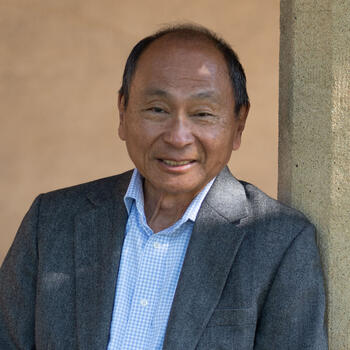
Francis Fukuyama has written widely on issues in development and international politics. His 1992 book, The End of History and the Last Man, has appeared in over twenty foreign editions. His most recent book, Identity: The Demand for Dignity and the Politics of Resentment, was published in September 2018. His latest book, Liberalism and Its Discontents, was published in the spring of 2022.

Dr. Fukuyama received his B.A. from Cornell University in classics, and his Ph.D. from Harvard in Political Science. He was a member of the Political Science Department of the RAND Corporation, and of the Policy Planning Staff of the US Department of State. From 1996-2000 he was Omer L. and Nancy Hirst Professor of Public Policy at the School of Public Policy at George Mason University, and from 2001-2010 he was Bernard L. Schwartz Professor of International Political Economy at the Paul H. Nitze School of Advanced International Studies, Johns Hopkins University. He served as a member of the President’s Council on Bioethics from 2001-2004.

Dr. Fukuyama holds honorary doctorates from Connecticut College, Doane College, Doshisha University (Japan), Kansai University (Japan), Aarhus University (Denmark), and the Pardee Rand Graduate School. He is a non-resident fellow at the Carnegie Endowment for International Peace and at the Center for Global Development. He is a member of the Board of Trustees of the Rand Corporation, the Board of Governors of the Pardee Rand Graduate School, and the Volcker Alliance. He is a member of the American Political Science Association and the Council on Foreign Relations. He is married to Laura Holmgren and has three children. 

Virtual to Public. Only those with an active Stanford ID with access to E008 in Encina Hall may attend in person.

Didi Kuo

Virtual to Public. Only those with an active Stanford ID with access to E008 in Encina Hall may attend in person.

0
kateb02_-_katherine_bersch.jpeg

Katherine Bersch is a Kellogg Fellow at the University of Notre Dame (2022-23) and the Nancy Akers and J. Mason Wallace Assistant Professor of Political Science at Davidson College. A research affiliate of the CDDRL Stanford Governance Project, she is also a co-founder of the Global Survey of Public Servants. Her research focuses on democratic quality in developing countries, with an emphasis on governance reform and state capacity in Latin America. She is the author of When Democracies Deliver: Governance Reform in Latin America (Cambridge University Press, 2019), which won the Van Cott Best Book Prize from LASA, the Levine Book Prize from IPSA, and the ASPA Prize for the Best Book Published in Public Administration.


CDDRL Postdoctoral Fellow, 2015-16

Encina Hall, C148
616 Jane Stanford Way
Stanford, CA 94305

0
Olivier Nomellini Senior Fellow at the Freeman Spogli Institute for International Studies
Director of the Ford Dorsey Master's in International Policy
Research Affiliate at The Europe Center
Professor by Courtesy, Department of Political Science
yff-2021-14290_6500x4500_square.jpg

Francis Fukuyama is the Olivier Nomellini Senior Fellow at Stanford University's Freeman Spogli Institute for International Studies (FSI), and a faculty member of FSI's Center on Democracy, Development and the Rule of Law (CDDRL). He is also Director of Stanford's Ford Dorsey Master's in International Policy, and a professor (by courtesy) of Political Science.

Dr. Fukuyama has written widely on issues in development and international politics. His 1992 book, The End of History and the Last Man, has appeared in over twenty foreign editions. His book In the Realm of the Last Man: A Memoir will be published in fall 2026.

Francis Fukuyama received his B.A. from Cornell University in classics, and his Ph.D. from Harvard in Political Science. He was a member of the Political Science Department of the RAND Corporation, and of the Policy Planning Staff of the US Department of State. From 1996-2000 he was Omer L. and Nancy Hirst Professor of Public Policy at the School of Public Policy at George Mason University, and from 2001-2010 he was Bernard L. Schwartz Professor of International Political Economy at the Paul H. Nitze School of Advanced International Studies, Johns Hopkins University. He served as a member of the President’s Council on Bioethics from 2001-2004. He is editor-in-chief of American Purpose, an online journal.

Dr. Fukuyama holds honorary doctorates from Connecticut College, Doane College, Doshisha University (Japan), Kansai University (Japan), Aarhus University (Denmark), the Pardee Rand Graduate School, and Adam Mickiewicz University (Poland). He is a non-resident fellow at the Carnegie Endowment for International Peace. He is a member of the Board of Trustees of the Rand Corporation, the Board of Trustees of Freedom House, and the Board of the Volcker Alliance. He is a fellow of the National Academy for Public Administration, a member of the American Political Science Association, and of the Council on Foreign Relations. He is married to Laura Holmgren and has three children.

(October 2025)

CV
Date Label
Seminars
Date Label
-
Election panel

This November, Americans will vote in midterm elections for Congressional and state offices.

Join CDDRL's Bruce Cain, Hakeem Jefferson, and Didi Kuo in a discussion on the midterms. This panel will delve into the issues at stake in these elections, including the economy, abortion rights, and President Biden's policy agenda. It will discuss the ongoing influence of President Trump in the Republican Party, and the role of the Big Lie in campaigns for state offices. The panel will also discuss the implications of these elections for democracy, both at home and abroad. 

ABOUT THE SPEAKER

Image
Bruce E. CAIN
Bruce E. Cain is a Professor of Political Science at Stanford University and Director of the Bill Lane Center for the American West. He received a BA from Bowdoin College (1970), a B Phil. from Oxford University (1972) as a Rhodes Scholar, and a Ph D from Harvard University (1976). He taught at Caltech (1976-89) and UC Berkeley (1989-2012) before coming to Stanford. Professor Cain was Director of the Institute of Governmental Studies at UC Berkeley from 1990-2007 and Executive Director of the UC Washington Center from 2005-2012. He was elected the American Academy of Arts and Sciences in 2000 and has won awards for his research (Richard F. Fenno Prize, 1988), teaching (Caltech 1988 and UC Berkeley 2003) and public service (Zale Award for Outstanding Achievement in Policy Research and Public Service, 2000). His areas of expertise include political regulation, applied democratic theory, representation and state politics. Some of Professor Cain’s most recent publications include “Malleable Constitutions: Reflections on State Constitutional Design,” coauthored with Roger Noll in University of Texas Law Review, volume 2, 2009; “More or Less: Searching for Regulatory Balance,” in Race, Reform and the Political Process, edited by Heather Gerken, Guy Charles and Michael Kang, CUP, 2011; “Redistricting Commissions: A Better Political Buffer?” in The Yale Law Journal, volume 121, 2012; and Democracy More or Less (CUP, 2015). He is currently working on problems of environmental governance.

Image
Hakeem Jefferson
Hakeem Jefferson is an assistant professor of political science at Stanford University where he also is a faculty affiliate with the Center for Comparative Studies in Race and Ethnicity and the Stanford Center for American Democracy. He received his PhD in political science from the University of Michigan and a Bachelor of Arts degree in political science and African American Studies from the University of South Carolina.

His research focuses primarily on the role identity plays in structuring political attitudes and behaviors in the U.S. He is especially interested in understanding how stigma shapes the politics of Black Americans, particularly as it relates to group members’ support for racialized punitive social policies. In other research projects, Hakeem examines the psychological and social roots of the racial divide in Americans’ reactions to officer-involved shootings and work to evaluate the meaningfulness of key political concepts, like ideological identification, among Black Americans.

Hakeem’s dissertation, "Policing Norms: Punishment and the Politics of Respectability Among Black Americans," was a co-winner of the 2020 Best Dissertation Award from the Political Psychology Section of the American Political Science Association.

Image
Didi Kuo
Didi Kuo is Senior Research Scholar and Associate Director for Research at the Center on Democracy, Development, and the Rule of Law at Stanford University. Her research interests include democratization, political parties, and political reform. She oversees the Program on American Democracy in Comparative Perspective, which seeks to bridge academic and policy research on American democracy. She was an Eric and Wendy Schmidt Fellow at New America, and is the author of Clientelism, Capitalism, and Democracy: the Rise of Programmatic Politics in the United States and Britain (Cambridge University Press 2018). 

Virtual to Public. Only those with an active Stanford ID with access to the Philippines Room C330 in Encina Hall may attend in person.

Larry Diamond

Virtual to Public. Only those with an active Stanford ID with access to the Philippines Room C330 in Encina Hall may attend in person.

Jerry Yang & Akiko Yamazaki
Environment & Energy Building
473 Via Ortega, First Floor
Stanford University
Stanford, CA 94305-4225

0
Charles Louis Ducommun Professor, Humanities and Sciences
Director, Bill Lane Center for the American West
Professor, Political Science
CDDRL Affiliated Faculty
bruce_cain.jpg

Bruce E. Cain is a Professor of Political Science at Stanford University and Director of the Bill Lane Center for the American West. He received a BA from Bowdoin College (1970), a B Phil. from Oxford University (1972) as a Rhodes Scholar, and a Ph D from Harvard University (1976). He taught at Caltech (1976-89) and UC Berkeley (1989-2012) before coming to Stanford. Professor Cain was Director of the Institute of Governmental Studies at UC Berkeley from 1990-2007 and Executive Director of the UC Washington Center from 2005-2012. He was elected the American Academy of Arts and Sciences in 2000 and has won awards for his research (Richard F. Fenno Prize, 1988), teaching (Caltech 1988 and UC Berkeley 2003) and public service (Zale Award for Outstanding Achievement in Policy Research and Public Service, 2000). His areas of expertise include political regulation, applied democratic theory, representation and state politics. Some of Professor Cain’s most recent publications include “Malleable Constitutions: Reflections on State Constitutional Design,” coauthored with Roger Noll in University of Texas Law Review, volume 2, 2009; “More or Less: Searching for Regulatory Balance,” in Race, Reform and the Political Process, edited by Heather Gerken, Guy Charles and Michael Kang, CUP, 2011; and “Redistricting Commissions: A Better Political Buffer?” in The Yale Law Journal, volume 121, 2012. He is currently working on a book about political reform in the US.

CV
0
Assistant Professor, Political Science
HakeemJefferson_Headshot2023.png

Hakeem Jefferson is an assistant professor of political science at Stanford University where he is also a faculty affiliate with the Center for Comparative Studies in Race and Ethnicity and the Stanford Center for American Democracy. During the 2021-22 academic year he was also the SAGE Sara Miller McCune Fellow at the Center for Advanced Study in the Behavioral Sciences.

Hakeem’s work focuses primarily on the role identity plays in structuring political attitudes and behaviors in the U.S. His in-progress book project builds on his award-winning dissertation to consider how Black Americans come to support punitive social policies that target members of their racial group.

In other projects, Hakeem examines the causes of the racial divide in Americans’ reactions to officer-involved shootings; works to evaluate the meaningfulness of key political concepts, like ideological identification among Black Americans; and considers how white Americans navigate an identity that many within the group perceive as increasingly stigmatized. In these and other projects, Hakeem sets out to showcase and clarify the important and complex ways that identity matters across all domains of American life.

A public-facing, justice-oriented scholar, Hakeem is an academic contributor at FiveThirtyEight and his writings and commentary have been featured in places like the New York Times, The Washington Post, NPR, and other major outlets. He is also active on Twitter, and you can follow him @hakeemjefferson.

CDDRL Affiliated Faculty
CV

Encina Hall, C150
616 Jane Stanford Way
Stanford, CA 94305

0
Center Fellow, Freeman Spogli Institute for International Studies
didi_kuo_2023.jpg

Didi Kuo is a Center Fellow at the Freeman Spogli Institute for International Studies (FSI) at Stanford University. She is a scholar of comparative politics with a focus on democratization, corruption and clientelism, political parties and institutions, and political reform. She is the author of The Great Retreat: How Political Parties Should Behave and Why They Don’t (Oxford University Press) and Clientelism, Capitalism, and Democracy: the rise of programmatic politics in the United States and Britain (Cambridge University Press, 2018).

She has been at Stanford since 2013 as the manager of the Program on American Democracy in Comparative Perspective and is co-director of the Fisher Family Honors Program at CDDRL. She was an Eric and Wendy Schmidt Fellow at New America and is a non-resident fellow with the Carnegie Endowment for International Peace. She received a PhD in political science from Harvard University, an MSc in Economic and Social History from Oxford University, where she studied as a Marshall Scholar, and a BA from Emory University.

Date Label
Seminars
Date Label
Subscribe to The Americas