-

Abstract:

Although peace operations are the main policy instrument for directly protecting civilians from severe violence, only a few are designed to reflect threatened civilians’ security needs. In a forthcoming book, Humanitarian Hypocrisy: Civilian Protection and the Design of Peace Operations, I examine how four major democracies – the US, UK, France, and Australia – contribute to this situation by facilitating gaps between a force’s ambitions to protect civilians and its resources for doing so. Although missions affected by these gaps gesture toward protecting civilians, they can actually worsen their suffering. I describe these gaps as a form of organized hypocrisy and argue that their attraction lies in their ability to help leaders balance competing normative and material pressures to protect civilians while also limiting associated costs. The argument has implications both for when these gaps are most likely and for how leaders can benefit from them politically. I support it with diverse evidence based on quantitative analysis of original data and four in-depth case studies.


Speaker Bio:

Image
everett
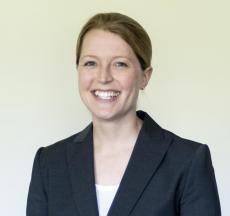
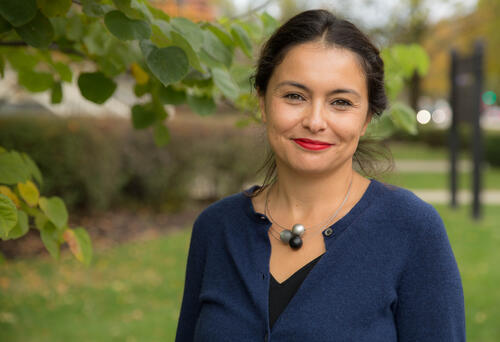
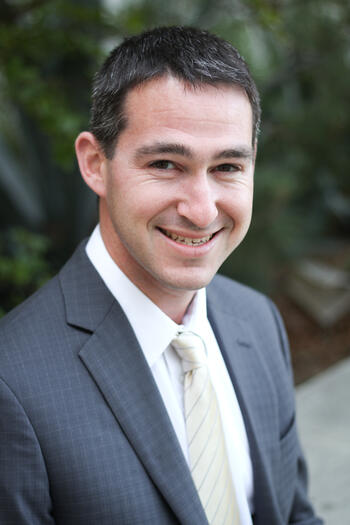
Andrea Everett is a Visiting Scholar at CDDRL. Her research focuses on humanitarian politics and policy. Her first book, Humanitarian Hypocrisy, is forthcoming with Cornell University Press in December 2017, and her work has also been published in Security Studies and Conflict Management and Peace Science. She received her PhD from the Department of Politics at Princeton University in 2012 and has previously worked as a Visiting Assistant Professor in the Politics Department at UC, Santa Cruz and as an Assistant Professor in the Department of International Affairs at the University of Georgia. She also holds a B.A. from Stanford and studied in Berlin as a Fulbright Scholar.

Visiting Scholar at CDDRL
Seminars
-

Abstract:

Modernization theory, institutional capacity, and rational choice institutionalism are the three candidate theories that explain how rich democratic states got to be rich and democratic. External development efforts will only be successful if he objectives or external and internal elites are complementary. This is only likely to be the case for 30-40 countries in the world. For the other 130 poorer countries the best that can be hoped for is good enough governance.


Speaker Bio:

Image
StephenKrasner
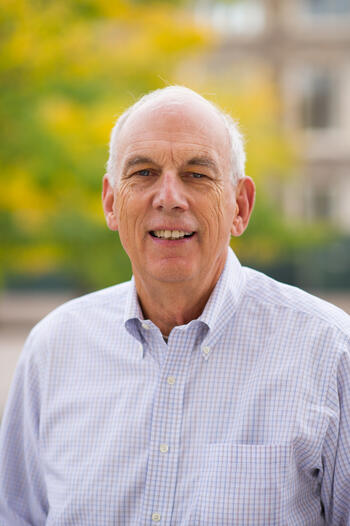
Stephen D. Krasner is the Graham H. Stuart Professor of International Relations at Stanford, and a Senior Fellow at the Freeman Spogli Institute, and the Hoover Institution. From February 2005 to April 2007 he was Director of the Policy Planning Staff at the Department of State. He is a member of the Board of Directors of the United States Institute of Peace, and was a member of the Foreign Policy Advisory Board of the Department of State from 2012 to 2014. He edited International Organization from 1986 to 1992. Professor Krasner is a Fellow of the American Academy of Arts and Sciences and a member of the Council on Foreign Relations. He is a Mercator Fellow at the Free University and was a Fellow at the Wissenschaftskolleg in 2000-2001. He has written or edited eight books and more than eighty articles.

CDDRL
Stanford University
Encina Hall
Stanford, CA 94305-6055

(650) 723-0676 (650) 724-2996
0
Senior Fellow at the Freeman Spogli Institute for International Studies, Emeritus
Graham H. Stuart Professor of International Relations
Senior Fellow at the Hoover Institution, Emeritus
krasner.jpg MA, PhD

Stephen Krasner is the Graham H. Stuart Professor of International Relations. A former director of CDDRL, Krasner is also an FSI senior fellow, and a fellow of the Hoover Institution.

From February 2005 to April 2007 he served as the Director of Policy Planning at the US State Department. While at the State Department, Krasner was a driving force behind foreign assistance reform designed to more effectively target American foreign aid. He was also involved in activities related to the promotion of good governance and democratic institutions around the world.

At CDDRL, Krasner was the coordinator of the Program on Sovereignty. His work has dealt primarily with sovereignty, American foreign policy, and the political determinants of international economic relations. Before coming to Stanford in 1981 he taught at Harvard University and UCLA. At Stanford, he was chair of the political science department from 1984 to 1991, and he served as the editor of International Organization from 1986 to 1992.

He has been a fellow at the Center for Advanced Studies in the Behavioral Sciences (1987-88) and at the Wissenschaftskolleg zu Berlin (2000-2001). In 2002 he served as director for governance and development at the National Security Council. He is a fellow of the American Academy of Arts and Sciences and a member of the Council on Foreign Relations.

His major publications include Defending the National Interest: Raw Materials Investment and American Foreign Policy (1978), Structural Conflict: The Third World Against Global Liberalism (1985), Sovereignty: Organized Hypocrisy (1999), and How to Make Love to a Despot (2020). Publications he has edited include International Regimes (1983), Exploration and Contestation in the Study of World Politics (co-editor, 1999),  Problematic Sovereignty: Contested Rules and Political Possibilities (2001), and Power, the State, and Sovereignty: Essays on International Relations (2009). He received a BA in history from Cornell University, an MA in international affairs from Columbia University and a PhD in political science from Harvard.

CV
Professor of International Relations at Stanford, and a Senior Fellow at the Freeman Spogli Institute, and the Hoover Institution
Seminars
News Type
Q&As
Date
Paragraphs

Stanford University’s Center on Democracy, Development and the Rule of Law (CDDRL) is proud to announce our three incoming fellows who will be joining us in the 2017-2018 academic year to develop their research, engage with faculty and tap into our diverse scholarly community. 

The pre- and postdoctoral program will provide fellows the time to focus on research and data analysis as they work to finalize and publish their dissertation research, while connecting with resident faculty and research staff at CDDRL. 

Fellows will present their research during our weekly research seminar series and an array of scholarly events and conferences.

Topics of the incoming cohort include policing and sectarian conflict in Iraq and Israel, global health and safety regulations and taxation in Southeast Asia.

Learn more in the Q&A below.


Image
screen shot 2017 09 22 at 2 58 37 pm
Matthew Nanes

CDDRL Postdoctoral Fellow


Hometown: Dunwoody, GA

Academic Institution: University of California San Diego

Discipline & Graduation Date:  Political Science, June 2017

Research Interests: Middle East Politics, sectarian conflict, policing and domestic security, comparative institutions

Dissertation Title: From the Bottom-Up: Policing and Sectarian Conflict in Divided Societies

What attracted you to the CDDRL Postdoctoral Fellowship program? I was drawn to the post-doctoral program at CDDRL by the broad range of experts at FSI and across the entire Stanford community. My research interests touch on a wide range of substantive and methodological issues, and I'm very excited to work with experts on a similarly broad range of areas. I was also attracted to CDDRL's focus on bridging the gap between academic scholarship and real-world policy applications.

What do you hope to accomplish during your nine-month residency at the CDDRL? My primary goal is to make progress in converting my dissertation, which is about policing and sectarian conflict in Iraq and Israel, into a publishable academic book. To this end, I intend to spend time honing my theoretical argument about the incentives and constraints generated by sectarian inclusiveness in the police and testing this argument using new and existing data. I also intend to continue progress on ongoing research on policing under low state legitimacy in the Philippines, and to lay the groundwork for follow-up research on the Iraqi police. 

Fun fact: During college, I rode a bicycle from Providence, RI to Seattle, WA


Image
screen shot 2017 09 22 at 2 59 00 pm
Rebecca Louise Perlman

CDDRL Pre-doctoral Fellow

Hometown: Newton, MA

Academic Institution: Stanford University 

Discipline & Expected Graduation Date:  Political Science, 2018

Research interests: Regulation, Trade, International institutions

Dissertation Title: For Safety or Profit? The Determinants of Global Health and Safety Regulations

What attracted you to the CDDRL Pre-doctoral Fellowship program? CDDRL brings together an amazing group of scholars, with a diverse set of research interests. I was eager for the opportunity to work with and learn from these individuals, through workshops and day-to-day interactions. 

What do you hope to accomplish during your nine-month residency at the CDDRL? I'm looking forward to completing my dissertation and hopefully embarking on some collaborative projects with other CDDRL fellows and/or faculty.

Fun fact: I have a cat named Khaleesi.


CDDRL Postdoctoral Fellow


Hometown: Anchorage, AK

Academic Institution: Emory University

Discipline & Graduation Date: Political Science, August 4, 2017

Research Interests: political economy of development, decentralization, taxation, local politics, Southeast Asia

Dissertation Title: Decentralization and the Politics of Local Taxation in Southeast Asia

What attracted you to the CDDRL Postdoctoral Fellowship program? I share CDDRL's concern for the links among multiple dimensions of development, and emphasize the interplay between political and economic institutions in my own research. In addition, the members of the CDDRL community combine disciplinary approaches, technical expertise, and area knowledge to address substantively important and theoretically interesting questions. I am very excited to learn from the community.

What do you hope to accomplish during your nine-month residency at the CDDRL? I will revise and expand my dissertation as I prepare it for publication. The dissertation highlights the role of strong local business associations as key institutions for resolving the distributional and monitoring challenges posed by taxation. Yet, it does not explain the origins of those associations. I will address this question by exploring the histories of local business associations in Southeast Asia, particularly those which exhibit surprising strength or weakness despite expectations to the contrary. 

Fun fact: My summer job in college was to umpire American Legion baseball.


All News button
1
-

Abstract:

In the year 1200, many of the largest cities in Western Europe were inhabited by just tens of thousands of individuals while Middle Eastern and Central Asia cities had upwards to 100,000 residents each. By 1800, however, this pattern had reversed. This paper explores the importance of historical trade in explaining patterns of urban growth and decline in the run-up to the Industrial Revolution. To address the issue of the endogenous development of trade routes, the paper’s empirical analysis is focused on trade networks which connected historical cities located near natural harbors, maritime choke points and desert oases. These findings speak to why Middle Eastern and Central Asian cities – long beneficiaries of locational centrality between Europe and Asia – declined as Europeans found alternative routes to the East and opened new trade opportunities in the New World.


Speaker Bio:

Image
lisa blades
Lisa Blaydes is an Associate Professor of Political Science. She is the author of Elections and Distributive Politics in Mubarak’s Egypt (Cambridge University Press, 2011). Her articles have appeared in the American Political Science Review, the Annual Review of Political Science, International Organization, International Studies Quarterly, Journal of Theoretical Politics, Middle East Journal, and World Politics.

William J. Perry Conference Room, Encina Hall, 2nd Floor, 616 Serra St, Stanford, CA 94305

Encina Hall West, Room 408
Stanford, CA 94305-6044

(650) 723-0649
0
Senior Fellow at the Freeman Spogli Institute for International Studies
Professor of Political Science
lisa_blaydes_108_vert_final.jpg

Lisa Blaydes is a Professor of Political Science at Stanford University. She is the author of State of Repression: Iraq under Saddam Hussein (Princeton University Press, 2018) and Elections and Distributive Politics in Mubarak’s Egypt (Cambridge University Press, 2011). Professor Blaydes received the 2009 Gabriel Almond Award for best dissertation in the field of comparative politics from the American Political Science Association for this project.  Her articles have appeared in the American Political Science Review, International Studies Quarterly, International Organization, Journal of Theoretical Politics, Middle East Journal, and World Politics. During the 2008-2009 and 2009-2010 academic years, Professor Blaydes was an Academy Scholar at the Harvard Academy for International and Area Studies. She holds degrees in Political Science (PhD) from the University of California, Los Angeles, and International Relations (BA, MA) from Johns Hopkins University.


Affiliated faculty at the Center on Democracy, Development and the Rule of Law
Affiliated faculty at the Center for International Security and Cooperation
Date Label
Associate Professor of Political Science
Seminars
-

Copies of the book will be available for purchase at the event. 


Abstract:

Over the past decades, there has been a revolution in terms of who controls knowledge and information. This rapid change has imperiled the way we think. Without pausing to consider the cost, the world has rushed to embrace the products and services of four titanic corporations. Franklin Foer, a correspondent at the Atlantic and former editor of the New Republic, has written a polemic against the monopolistic practices of Google, Facebook, Amazon, and Apple. He argues they have ushered in a new, dangerous age of conformism. A threat to the very foundations of the republic. In the words of Steve Coll—the Pulitzer Prize-winner—his book is “an argument in the spirit of those brave democracy protesters who stand alone before tanks."


Speaker Bio:

Image
franklin foer

Franklin Foer is a national correspondent for The Atlantic and fellow at the New America Foundation. For seven years, he served as editor of The New Republic. Foer has written for Slate and New York magazine. His previous book How Soccer Explains the World has been translated into 27 languages and was the winner of a National Jewish Book Award.

Franklin Foer Correspondent, Atlantic
Seminars
-

Abstract:

Few Ideas are as sacred in American politics as sovereignty. From the founding of the republic through the rejection of the League of Nations to the present day, Americans have grappled with how to reconcile their desire for independence with the need for effective international cooperation. Unfortunately, contemporary debates over how to defend and exercise that sovereignty are confused and overheated. Such polemics distract us from what is really at stake in the sovereignty debate: namely, the ability to shape America’s destiny in a global age. Contrary to common assertions, the United States is in little danger of subordinating its Constitution and system of government to international law and organizations. What globalization does require is for Americans to think more clearly about sovereignty’s different dimensions—and to consider “sovereignty bargains”, whereby the nation voluntarily trades off a measure of its freedom of action to cooperate with other countries in exploiting the shared opportunities and mitigating the common risks of interdependence.


Speaker Bio:

Image
stewart patrick
Dr. Stewart Patrick is the James H. Binger senior fellow in global governance and the director of the program on international institutions and global governance at the Council on Foreign Relations (CFR). His areas of expertise include multilateral cooperation, international institutions, and the challenges posed by fragile, failing, and post-conflict states.

From September 2002 to January 2005, Dr. Patrick served on the secretary of state’s policy planning staff, with lead staff responsibility for U.S. policy toward Afghanistan and a range of transnational issues. Following government service, he was Research Fellow at the Center for Global Development. Dr. Patrick is the author of The Sovereignty Wars: Reconciling America with the World (Brookings Institution Press, October 2018), as well as of Weak Links: Fragile States, Global Threats, and International Security, and The Best Laid Plans: The Origins of American Multilateralism and the Dawn of the Cold War. He also writes the CFR blog “The Internationalist.”

Dr. Patrick graduated from Stanford University (with a B.A. in human biology and honors in humanities) and received his doctorate in international relations and two masters degrees (in international relations and modern European history) from Oxford University, where he was a Rhodes Scholar. He has three children.

Stewart Patrick James H. Binger Senior Fellow in Global Governance, Council on Foreign Relations
Seminars
-

Abstract:

This paper provides evidence that innovative multinational firms attempt to use health and safety regulations to eliminate cheaper, generic products from the market, even when they themselves produce those products. Stricter regulations on generic products allow innovative firms to shift the market to patented alternatives while forcing out generic producers. Firms are able to win these preferential regulatory outcomes at both national and international levels of governance, despite the fact that these outcomes create trade barriers and tilt the playing field in favor of companies in developed nations. I utilize original data from the agrochemical sector to provide evidence that agrochemical producers request stricter standards on their own products when it could help them sell patented alternatives. Using longitudinal data on actual regulatory change at both national and international levels I find that regulatory institutions seemingly set up to protect consumers also appear to have helped innovative firms win preferential outcomes.


Speaker Bio:

Image
rebecca perlam
Rebecca is a Ph.D. candidate in political science at Stanford University and a Pre-doctoral Fellow at CDDRL. She studies international political economy with a focus on regulation, trade, and the role of international institutions. She received a Master of Arts in Law and Diplomacy from the Fletcher School of Law and Diplomacy at Tufts University. Her undergraduate degree is from Princeton University, where she majored in politics and graduated summa cum laude and phi beta kappa.

Rebecca Perlman PhD Candidate, Political Science, Stanford University
Seminars
-

Abstract:

Duncan Green, Oxfam Strategic Adviser and LSE Professor of Practice in International Development, introduces the arguments of his new book, How Change Happens (OUP, October 2016). How Change Happens explores how political and social change takes place, and the role of individuals and organizations in influencing that change. He discusses the challenges that 'systems thinking' creates for traditional aid practices, and how a 'power and systems approach' requires activists, whether in campaigns, companies or governments, to fundamentally rethink the way they understand the world and try to influence it.

Praise for How Change Happens:

• A splendid treatise on how to change the actual world - in reality, not just in our dreams’ Amartya Sen

• ‘An indispensable guide for activists and change-makers everywhere’ Francis Fukuyama


Speaker Bio:

Image
duncan green
Dr.Duncan Green is Senior Strategic Adviser at Oxfam GB, Professor in Practice in International Development at the London School of Economics, Honorary Professor of International Development at Cardiff University and a Visiting Fellow at the Institute for Development Studies. He is the author of How Change Happens (OUP, October 2016) and From Poverty to Power: How Active Citizens and Effective States can Change the World (Oxfam International, 2008, second edition 2012). His daily development blog can be found on http://www.oxfamblogs.org/fp2p/. He was previously Oxfam’s Head of Research, a Visiting Fellow at Notre Dame University, a Senior Policy Adviser on Trade and Development at the Department for International Development (DFID), a Policy Analyst on trade and globalization at CAFOD, the Catholic aid agency for England and Wales and Head of Research and Engagement at the Just Pensions project on socially responsible investment. He is the author of several books on Latin America including Silent Revolution: The Rise and Crisis of Market Economics in Latin America (2003, 2nd edition), Faces of Latin America (2012, 4th edition) and Hidden Lives: Voices of Children in Latin America and the Caribbean (1998).

Duncan Green Oxfam Strategic Adviser and LSE Professor of Practice in International Development Oxfam Strategic Adviser and LSE Professor of Practice in International Development
Seminars
News Type
News
Date
Paragraphs

"New laws in democratic countries that force social media platforms to remove disinformation will encourage autocratic countries to do the same, with devastating effects on human rights," writes Global Digital Policy Incubator Director Eileen Donahoe in her op-ed "Protecting Democracy from Online Disinformation Requires Better Algorithms, Not Censorship." Read here

Hero Image
bundestag 1329911 1920
All News button
1
News Type
Commentary
Date
Paragraphs

Across the world, many democracies are sliding further and further toward authoritarianism. NPR's Ari Shapiro talks with Larry Diamond of Stanford University about this "global democratic recession." Listen here.

Hero Image
Larry Diamond speaking in the Bechtel Conference Center in Encina Hall
Larry Diamond, the Mosbacher Senior Fellow in Global Democracy at FSI, speaks in the Bechtel Conference Center at the Freeman Spogli Institute for International Studies at Stanford University.
CDDRL
All News button
1
Subscribe to The Americas