-

Abstract:

In Navigation by Judgment (Oxford University Press, 2018) I argue that high-quality implementation of foreign aid programs often requires contextual information that cannot be seen by those in distant headquarters. Tight controls and a focus on reaching pre-set measurable targets often prevent front-line workers from using skill, local knowledge, and creativity to solve problems in ways that maximize the impact of foreign aid. Drawing on a novel database of over 14,000 discrete development projects across nine aid agencies and eight paired case studies of development projects, I argue that aid agencies will often benefit from giving field agents the authority to use their own judgments to guide aid delivery. This “navigation by judgment” is particularly valuable when environments are unpredictable and when accomplishing an aid program’s goals is hard to accurately measure.


Speaker Bio:

Image
honig daniel
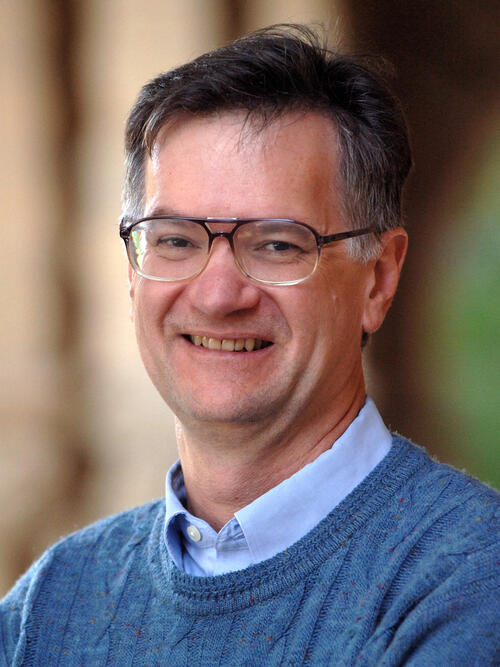
Dan is an Assistant Professor of International Development at Johns Hopkins School of Advanced International Studies (SAIS). His research focuses on the relationship between organizational structure, management practice, and performance in developing country governments and organizations that provide foreign aid. Dan has also held a variety of positions outside the academy. He was special assistant, then advisor, to successive Ministers of Finance (Liberia); ran a local nonprofit focused on helping post-conflict youth realize the power of their own ideas to better their lives and communities through agricultural entrepreneurship (East Timor); and has worked in a wider range of countries (longer stints in India, Israel, Thailand; shorter in Somalia, South Sudan) for international NGOs, local NGOs, aid agencies, and developing country governments. A proud Detroiter, Dan holds a BA from the University of Michigan and a Ph.D. from Harvard's Kennedy School of Government.

Daniel Honig Assistant Professor of International Development at Johns Hopkins School of Advanced International Studies (SAIS)
Seminars
News Type
Commentary
Date
Paragraphs

One of our Fisher Family Honors students Lina Hidalgo has been featured on the Time Magazine cover for her public service. Lina is running for Harris County judge in Texas to improve flood management in the Houston area. In CCDDRL, Lina was working on the "Tiananmen or Tahrir? A Comparative Study of Military Intervention Against Popular Protest" theses. Read the Times article here

Hero Image
screen shot 2018 01 24 at 3 17 47 pm
All News button
1
News Type
Commentary
Date
Paragraphs

"As 2018 unfolds, the domestic and international dimensions of Trump’s crisis-ridden presidency are beginning to intersect in wildly unpredictable and potentially disastrous ways. There are signs of preparations for a U.S. military attack on North Korea by mid-year, and a new report by a leading Russian expert on North Korea indicates that the Pyongyang regime “is convinced that the U.S. is preparing to strike.” This would likely be not a full-scale military assault to terminate the North Korea’s tyrannical regime but rather a punishing “bloody nose” strike, either to send a message about American resolve to halt further testing and development of Kim Jong Un’s nuclear weapons program or to actually destroy as much of its existing infrastructure as possible," writes Larry Diamond in The American Interest. Read here

Hero Image
gettyimages 890990714
All News button
1
-

Sponsored by: Stanford University Libraries, Hoover Institution,

Center on Democracy, Development, and the Rule of Law


Even before the 2016 election campaign, political polarization and filter bubbles in social media and revelations of foreign meddling, Francis Fukuyama raised his concerns about the decline and decay of democracy in the U.S. and elsewhere. Today we live in a new environment where Americans and others get up to two-thirds of their news — real and otherwise — on Facebook, where Twitter bots magnify propaganda, and where foreigners posing as Americans even organize demonstrations and counter-demonstrations on social media. Yet even without these technological developments, from Eastern Europe to the U.S., we observe the re-emergence of demons we thought we left behind after World War II: the rise of blood and soil nationalism, the decline in rule of law and the institutions that uphold democratic governance: parliaments, courts, a free and unfettered press. We believed that through NATO, the WTO, and the EU democracy and peace would be firmly grounded. What happens when these international organizations begin to unravel? Where are we headed? What have we learned so we can avoid the disasters of the 1930s? What are the fundamental institutional reforms we need to make? How do we accommodate the new superpower China, with its alternative model of governance, not only domestically, but increasingly in the international sphere? These questions will be discussed in a conversation by Toomas Hendrik Ilves and Francis Fukuyama.


Speakers:

Toomas Hendrik Ilves is the former President of Estonia (2006–2016). He has previously also served as Estonian foreign minister, member of European Parliament, and the ambassador of Estonia in Washington. In 2017 Ilves joined Stanford University as a Bernard and Susan Liautaud Visiting Fellow at the Freeman Spogli Institute’s Center for International Security and Cooperation, Stanford’s hub for researchers tackling some of the world’s most pressing security and international cooperation problems. He is currently Distinguished Visiting Fellow at Hoover Institution.


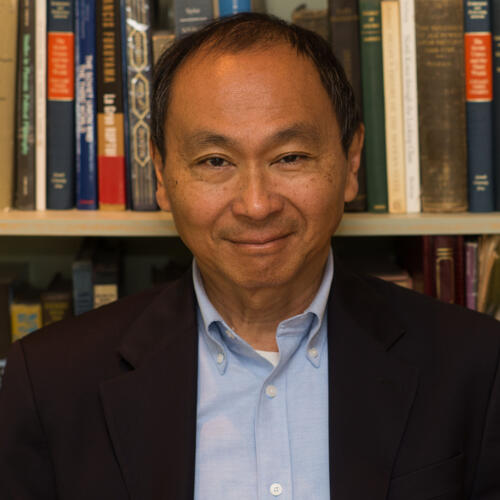
Francis Fukuyama is the Olivier Nomellini Senior Fellow at the Freeman Spogli Institute for International Studies (FSI) and the Mosbacher Director of FSI's Center on Democracy, Development, and the Rule of Law (CDDRL). He is also a professor by courtesy in the Department of Political Science. Dr. Fukuyama has written widely on issues relating to questions concerning democratization and international political economy. His book, The End of History and the Last Man, was published by Free Press in 1992 and has appeared in over twenty foreign editions. His most recent book is Political Order and Political Decay: From the Industrial Revolution to the Globalization of Democracy.

Bender Room
Green Library
 
 
Toomas Hendrik Ilves The former President of Estonia (2006–2016).

Encina Hall, C148
616 Jane Stanford Way
Stanford, CA 94305

0
Olivier Nomellini Senior Fellow at the Freeman Spogli Institute for International Studies
Director of the Ford Dorsey Master's in International Policy
Research Affiliate at The Europe Center
Professor by Courtesy, Department of Political Science
yff-2021-14290_6500x4500_square.jpg

Francis Fukuyama is the Olivier Nomellini Senior Fellow at Stanford University's Freeman Spogli Institute for International Studies (FSI), and a faculty member of FSI's Center on Democracy, Development and the Rule of Law (CDDRL). He is also Director of Stanford's Ford Dorsey Master's in International Policy, and a professor (by courtesy) of Political Science.

Dr. Fukuyama has written widely on issues in development and international politics. His 1992 book, The End of History and the Last Man, has appeared in over twenty foreign editions. His book In the Realm of the Last Man: A Memoir will be published in fall 2026.

Francis Fukuyama received his B.A. from Cornell University in classics, and his Ph.D. from Harvard in Political Science. He was a member of the Political Science Department of the RAND Corporation, and of the Policy Planning Staff of the US Department of State. From 1996-2000 he was Omer L. and Nancy Hirst Professor of Public Policy at the School of Public Policy at George Mason University, and from 2001-2010 he was Bernard L. Schwartz Professor of International Political Economy at the Paul H. Nitze School of Advanced International Studies, Johns Hopkins University. He served as a member of the President’s Council on Bioethics from 2001-2004. He is editor-in-chief of American Purpose, an online journal.

Dr. Fukuyama holds honorary doctorates from Connecticut College, Doane College, Doshisha University (Japan), Kansai University (Japan), Aarhus University (Denmark), the Pardee Rand Graduate School, and Adam Mickiewicz University (Poland). He is a non-resident fellow at the Carnegie Endowment for International Peace. He is a member of the Board of Trustees of the Rand Corporation, the Board of Trustees of Freedom House, and the Board of the Volcker Alliance. He is a fellow of the National Academy for Public Administration, a member of the American Political Science Association, and of the Council on Foreign Relations. He is married to Laura Holmgren and has three children.

(October 2025)

CV
Date Label
the Olivier Nomellini Senior Fellow at the Freeman Spogli Institute for International Studies (FSI) and the Mosbacher Director of FSI's Center on Democracy, Development, and the Rule of Law (CDDRL).
Panel Discussions
-

Abstract:

Fukuyama (1989) was right: a centuries-old argument about government should be over. Liberal democracy is the best regime known to us. It isn’t close: for life’s important aspects, including health, wealth, liberty, and peace, democracy dominates all known alternatives. Empirically, however, the argument is not over. Indeed, there is widespread concern that many citizens (and, sadly, some academics) are less enthusiastic about democracy than the evidence warrants. I argue that when we search for solutions to complex problems (e.g., the design of governments) we often make a serious error in our mental representation of the choice problem: instead of using the criterion of the best feasible option, we ignore important constraints and look for an alternative that satisfies certain value-standards. When these standards are unrealistic, as they often are, we can become disillusioned with the best possible option. Robert Michels was wrong; Voltaire, and Henny Youngman, were right.


Speaker Bio:

Image
bendor jonathan
Jonathan Bendor is the Walter and Elise Haas Professor of Political Economy and Organizations at the Graduate School of Business, Stanford University.His research focuses on models of adaptive behavior and bounded rationality, evolutionary analyses of norms and preferences, organizational decision making under uncertainty, and the modernization of bureaucracy. Most of his current research is on organizational problem solving, with a particular focus on institutional methods for easing or finessing the cognitive constraints faced by individual decision makers. He is working on a book on the evolution of modern problem solving in military organizations.Bendor was a Fellow of the Center for Advanced Study in the Behavioral Sciences in 1999-2000 and in 2004-2005.  He is a member of the American Academy of Arts and Sciences.    

Jonathan Bendor Walter and Elise Haas Professor of Political Economy and Organizations at the Graduate School of Business
Seminars
-

Abstract:

Foreign intervention sometimes enters by domestic invitation. Recently, the Malian government asked international actors to send troops to help stabilize and strengthen its rule of law, specifically as it faltered after the country’s coup. In this case, explanations for the intervention by invitation tend to revolve around the relative strength of the government, which was weak compared to the somewhat sophisticated militants that opposed it. Such an explanation, however, is unlikely shed much light on the situation since there are many weak governments with faltering or failing rule of law that do not request or receive such governance assistance, at least as far as reporting on these cases suggests. As the United States and its allies withdraw from the major conflicts of the past decade, the focus of international intervention in conflict and post-conflict contexts is likely to occur in cooperation with host states. This project examines an important set of arrangements for weak states: it identifies and explains when states invite other states to intervene for governance assistance—agreements between sovereign entities—specifically with regard to the security sector. These illustrations and tests draw on new quantitative and qualitative data.


Speaker Bio:

Image
aila matancok
Aila M. Matanock is an Assistant Professor of Political Science at the University of California, Berkeley. Her research addresses the ways in which international actors engage in conflicted and weak states. She uses case studies, survey experiments, and cross-national data in this work. She has conducted fieldwork in Colombia, Central America, the Pacific, Southeast Asia, and elsewhere. She has received funding for these projects from many sources, including the National Science Foundation (NSF), the Minerva Research Initiative, the National Center for the Study of Terrorism and the Response to Terrorism (START), and the Center for Global Development (CGD). Her 2017 book, Electing Peace: From Civil Conflict to Political Participation, was published by Cambridge University Press. It is based on her dissertation research at Stanford University, which won the 2013 Helen Dwight Reid award from the American Political Science Association. Her work has also been published by Governance, International Security, the Journal of Politics, and elsewhere. She has worked at the RAND Corporation before graduate school, and she has held fellowships at the Hoover Institution at Stanford University and the Institute on Global Conflict and Cooperation at UCSD since. She received her Ph.D. in political science from Stanford University and her A.B. magna cum laude from Harvard University.

Aila Matanock Assistant Professor of Political Science, UC Berkeley
Seminars
-

Abstract:

While populism takes different forms in different countries, the success of populist parties and leaders comes from their ability to represent grievances. Current analyses emphasize the personality, background and rhetoric of populist leaders, but, often neglect the intermediary mechanisms that help populists not only address and represent but also generate “the people” from a diverse set of constituencies. By focusing on the authoritarian populist context of Turkey, this paper examines the role of pro- government and government-organized NGOs in helping the ruling Justice and Development Party connect with, represent, and shape the youth public in the aftermath of the uprisings across the wider Middle East. The paper argues that the making of authoritarian Turkey and the resilience of President Erdoğan should be traced as much to the mechanisms of consent-building as to the mechanisms of coercion.


Speaker Bio:

Image
ayca alemdaroglu
Ayça Alemdaroğlu is a research assistant professor of sociology and the associate director of the Keyman Modern Turkish Studies Program at Northwestern University. She previously worked as a postdoctoral researcher in the Department of Anthropology and a teaching fellow in the Thinking Matters Program at Stanford. Her research engages with a broad range of theoretical and ethnographic issues including youth culture and politics, gender and sexuality, constructions of space and place, nationalism, eugenics, and higher education. She has B.Sc. and M.A. in Political Science and Public Administration from the Middle East Technical University and Bilkent University, and Ph.D. in sociology from the University of Cambridge.

Ayça Alemdaroğlu Visiting Scholar, CDDRL
Seminars
Authors
News Type
News
Date
Paragraphs

The Freeman Spogli Institute for International Studies is proud to congratulate Stanford’s 2018 Rhodes and Schwarzman Scholars. In today’s climate, our scholarly work on foreign policy and international issues can feel ominous, so FSI is especially pleased to share the good news that four of the Rhodes and three of the Schwarzman Scholars studied with us.

Among the newly-appointed Rhodes scholars are Jelani Munroe, Alexis Kallen and Qitong “Tom” Cao, all current or former honors students in the Fisher Family Undergraduate Honors Program at FSI’s Center for Democracy, Development, and the Rule of Law (CDDRL). Madeleine Chang, co-president of the FSI-sponsored American Middle Eastern Network for Dialogue at Stanford (AMENDS), joins them as well. The Rhodes Scholarships provide all expenses for study at Oxford University; all four will commence in October 2018.

The Schwarzman Scholarships fund one-year master's degrees in global affairs at Beijing’s distinguished Tsinghua University. Scholars include Claire Colberg and Daniel Kilimnik, alumni of the Center for International Security and Cooperation (CISAC) Honors Program, and Lucienne “Lucy” Oyer, a current Fisher Family honors student at CDDRL. They will begin study in August 2018.

“We are very proud of these terrific students in the FSI family and our exceptional faculty who have mentored them,” said FSI Director Michael McFaul. “These seven have exhibited extraordinary ideas and leadership here at FSI, and we look forward to seeing the great contributions they will make in their fields.”

While working on his honors thesis on the role of the armed forces in German security policy, Daniel Kilimnik relied on an FSI research grant that enabled him to interview legislators, government officials and academics in Berlin. Once he heads to Beijing, Kilimnik will investigate relationships between China, the U.S. and Europe.

“I can't imagine my undergraduate experience without the professors, mentors, friends and peers I got to know through FSI,” he said. “Without support from CISAC and FSI, I would not have been able to write my thesis.”

One CISAC mentor is Donald Emmerson, an emeritus senior fellow at FSI. As honors student Claire Colberg explored Vietnam’s policies toward China, Emmerson advised her to challenge conventional wisdom.

“All I did for Claire was to encourage her to be intellectually less respectful and more creative,” he said. “I would like to believe that merely by giving her free rein, I helped her develop her own voice.”

Madeleine Chang found her voice by embracing creative problem-solving. With help from FSI Student Programs, Chang was able to do the seemingly impossible: work around President Trump’s travel ban to hold a conference with undergraduates from all over the world, including students affected by the ban.

“The irony of being an American-Middle Eastern group unable to meet in America itself spoke to why we needed to meet: to remind ourselves and others of the incredible potential of young people connecting across borders,” Chang told Stanford News.

Unable to bring all students to the United States, Chang looked across the pond and was able to hold the AMENDS conference at Oxford. FSI senior fellow Larry Diamond and academic program manager Gina Gonzales provided support on- and off-the-ground to keep things moving, even outside the Stanford realm.

“It was incredible to see Maddie leverage her connections at Oxford to turn the challenge of overcoming the travel ban into a fantastic opportunity,” said Gonzales.

Diamond believes interactions with international students are particularly valuable to the academic community. He has advised several Rhodes-bound students who grew up outside the United States.

“It is always a particular joy working with foreign students,” he said. “They teach us so much about their countries, the development challenges they face, and how other parts of the world view the United States.

“You know when you are teaching students like Qitong and Jelani that you are engaging, in some way, future leaders in their fields.”

Hero Image
rhodes schwarzman 2017 wide
All News button
1
-

Abstract:

My presentation will not be of an academic paper but of a proposal for a research project. The Balzan Prize for International Relations, which I was recently awarded, provides funding that I intend to use to stimulate the development of a subfield in which political science has lagged: the comparative politics of climate change policy. The project is designed to be comparative in method, simultaneously theoretical and empirical, and deeply collaborative. I also hope that the project will stimulate new thinking in comparative politics and international relations. Causal inference on the basis of observational data is weak in contemporary comparative politics, but new methodological innovations have not consistently been focused on substantively important issues. Perhaps innovating in an understudied field will also facilitate a combination of rigor and relevance. My presentation will be designed to stimulate theoretical, empirical, and methodological suggestions.


Speaker Bio:

Image
robert keohane
Robert O. Keohane (PhD Harvard 1966) is Professor of Public and International Affairs (Emeritus) in the Woodrow Wilson School at Princeton University. He has served as Editor of International Organization and as President of the International Studies Association and the American Political Science Association. He is a member of the American Academy of Arts and Sciences, the American Academy of Political and Social Science, the American Philosophical Society, and the National Academy of Sciences; and he is a Corresponding Fellow of the British Academy. He has been a recipient of the Balzan Prize: International Relations: History Theory, 2016; the James Madison Award, American Political Science Association, 2014, for lifetime achievement; the Centennial Medal, Harvard Graduate School of Arts and Sciences, 2012; the Skytte Prize from the Johan Skytte Foundation, Uppsala Sweden, 2005; the Grawemeyer Award for Ideas Improving World Order, 1989, and two honorary doctorates. His publications include Power and Interdependence (with Joseph S. Nye, Jr., originally published in 1977), After Hegemony: Cooperation and Discord in the World Political Economy (1984), Designing Social Inquiry (with Gary King and Sidney Verba, 1994), and Power and Governance in a Partially Globalized World (2002). His current work focuses on the international and comparative politics of climate change policy.

Robert O Keohane Visiting Fellow at CDDRL
Seminars
Subscribe to The Americas