News Type
News
Date
Paragraphs

Stanford’s Center on Democracy, Development and the Rule of Law is proud to announce our 2018 Draper Hills Summer Fellows who were selected from among hundreds of applicants for their path-breaking work to defend democracy. These 27 leaders drawn from 23 countries around the world are pioneering new approaches and models to advance social and political change in some of the most challenging global contexts. Learn more here

Hero Image
dh
All News button
1
-

TITLE:  The China Wide Web:  The information Dilemma and the Domestsication of  Cyberspace


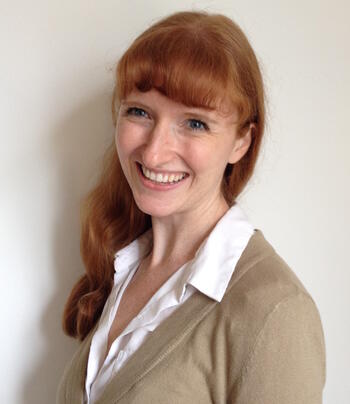
Qitong Tom Cao
Major:  Political Science; Computer Science (minor); MS&E (Computational Social Science) (coterm)


Abstract:


In order to preempt severe public discontent, an authoritarian government needs its citizens to convey their true political attitudes. But it does not want their attitudes to be communicated among themselves, which may trigger protests or even subversion in case widespread dissatisfaction exists and becomes citizens common knowledge. This information dilemma thus poses a fundamental threat to the stability and governance of all authoritarian regimes. This thesis, however, argues that the Chinese government is resolving the information dilemma through an innovative approach  by domesticating its internet. On this domestic cyberspace, social media companies delete unfavorable content and report user data to the regime, which can be analyzed to reveal citizens true political attitudes. As such, the government manages both to restrict communication of discontent and to gain knowledge of the political inclination of the public. I will demonstrate formally that this domestic cyberspace presents an optimal solution for authoritarian regimes, and that the Chinese government could attract the bulk of their internet users to the domestic cyberspace despite its inability to fully block access to foreign websites. Finally, I will show empirically that domestic social media also helps increase propaganda efficacy, which reduces perceived level of discontent and further consolidates regime stability. Together, this strategy may potentially afford the regime an information advantage enormous enough to secure its stability without fear of overthrow.


TITLE:  Whose California?  Power, Property Rights, and the Legacy of the 1851 California Land Act


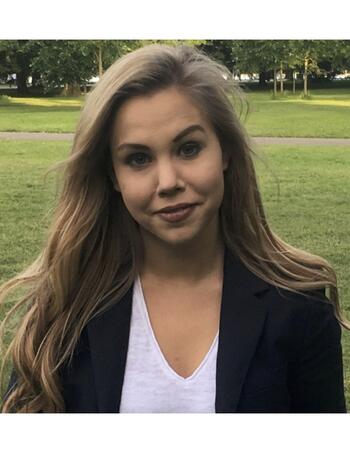
Marin Callaway
Major: International Relations; Spanish (minor)
 

Abstract:


In 1848, the Treaty of Guadalupe Hidalgo ended the Mexican-American War and ceded over half of Mexico's territory to the United States. But, the valuable new lands gained by the United States were not empty. With the changing border, the country gained a sizable Mexican and Native American population. The Treaty of Guadalupe Hidalgo guaranteed the protection of property rights and civil rights of Mexican nationals living on the newly acquired lands. But, in California, the much-delayed California Land Act of 1851 put the burden of proof on Mexican landowners to receive a formal U.S. patent to their land. Landowners, who had received private land grants or ranchos from the Mexican government, underwent lengthy litigation. This thesis evaluates the Land Act's impact on Mexican land ownership, measures the extent to which original grantees were able to retain their lands, and describes the contentious evolution of land and power in California in the nineteenth century. In an effort to add empirical evidence to the historical literature, I find that 58% of patented ranchos remained in the name of the original grantees by the patent date with greater retention in Southern California than Northern California. However, the finding that less than 20% of ranchos in Los Angeles County were owned even in part by original grantees by 1888 reveals that land loss became even more pronounced after patents were issued. The findings of this thesis both support and contradict traditional claims about the fate of Mexican land grant ownership in California throughout the nineteenth century. By determining what the rates of land grant retention were for original grantees throughout California and in individual counties, it is possible to better understand the legacy of the Land Act and how it interacted simultaneously with other social, economic, and political phenomena to ultimately result in significant loss of Mexican land ownership in the state. This thesis treats nineteenth century California as a case study of minority rights in annexed land. It ultimately argues that Mexicans and Mexican-Americans suffered most under a lack of rule of law and uncertainly surrounding property rights and citizenship. The California Land Act of 1851 upheld property rights but was too little too late for a group that was by 1851 the minority in the state.


Qitong Tom Cao
Marin Callaway
Seminars
News Type
News
Date
Paragraphs

"Scholars and pundits in the West have become increasingly alarmed that China’s planned Belt and Road Initiative (B&R) could further shift the global strategic landscape in Beijing’s favor, with infrastructure lending as its primary lever for global influence. The planned network of an infrastructure project—financed by China’s bilateral lenders, the China Development Bank (CDB) and the Export-Import Bank of China (CEXIM), along with the newly formed and multilateral Asian Infrastructure Investment Bank—is historically unprecedented in scope. But the B&R is only the natural progression of a global sea change in developing economy infrastructure finance that has already been underway for more than two decades." Read the whole article by Bushra BatainehMichael Bennon, and Francis Fukuyama here

Hero Image
stadium 458859 1920
All News button
1
News Type
Commentary
Date
Paragraphs

Of the current climate of political polarization, CDDRL's Didi Kuo writes, "we can hope that citizen dissatisfaction fosters political engagement through activities such as protest, mobilization and pressure on public officials. Democratic institutions are the best, and only, way to resolve crises of democracy." Read the full article here.

Hero Image
people 2575608 1280
All News button
1
News Type
News
Date
Paragraphs

Congratulations to Paul Wise, the Richard E. Behrman Professor of Child Health and Society, professor of pediatrics, and a Senior Fellow in the Freeman Spogli Institute for International Studies - CDDRL affiliated faculty, for being elected as a member of American Academy of Arts and Sciences, one of the country’s oldest and most prestigious honorary learned societies! Dr. Wise is also Stanford Health Policy and Center for International Security and Cooperation (CISAC) faculty.

Hero Image
paul
All News button
1
News Type
News
Date
Paragraphs

“When you see something wrong, don’t be a bystander,” Annan responded. “You are never too young to lead. Don’t let my generation tell you, ‘Shut up and wait your turn.’ If there’s something you feel that you can do something about, do it. Work across racial, religious and other lines. Don’t accept divisions you see in society,” said former United Nations (UN) Secretary-General Kofi Annan in conversation with CDDRL Mosbacher Director Francis Fukuyama. Read the article here and watch the video here.

Hero Image
dsc 7920a Rod Searcey
All News button
1
Date Label
-

Co-sponsor: WSD HANDA Center

Speaker(s) Bio:

Image
kofi annan300x300

Kofi Annan is the Chair of the Kofi Annan Foundation which mobilizes political will to overcome threats to peace, development and human rights. Mr. Annan was the 7th Secretary-General of the United Nations and the first to emerge from within its own ranks. In 2001, Mr. Annan was, together with the United Nations, awarded the Nobel  Prize for Peace for having revitalized the organization and prioritizing human rights.  

With the Kofi Annan Foundation, which this year marks its 10th anniversary, Mr. Annan works for fair and legitimate elections, for peace processes that deliver, for agriculture that serves the poorest and for youth leadership in the fight against violent extremism. In addition, Mr. Annan and the Foundation engage in preventive diplomacy and mediation activities to safeguard peace.


Image
francis fukuyama

Francis Fukuyama is the Olivier Nomellini Senior Fellow at the Freeman Spogli Institute for International Studies (FSI) and the Mosbacher Director of FSI's Center on Democracy, Development, and the Rule of Law (CDDRL). He is also a professor by courtesy in the Department of Political Science. He was previously at the Paul H. Nitze School of Advanced International Studies (SAIS) of Johns Hopkins University, where he was the Bernard L. Schwartz Professor of International Political Economy and director of SAIS' International Development program.

Kofi Annan Chairman of the Kofi Annan Foundation and the seventh Secretary-General of the United Nations

Encina Hall, C148
616 Jane Stanford Way
Stanford, CA 94305

0
Olivier Nomellini Senior Fellow at the Freeman Spogli Institute for International Studies
Director of the Ford Dorsey Master's in International Policy
Research Affiliate at The Europe Center
Professor by Courtesy, Department of Political Science
yff-2021-14290_6500x4500_square.jpg

Francis Fukuyama is the Olivier Nomellini Senior Fellow at Stanford University's Freeman Spogli Institute for International Studies (FSI), and a faculty member of FSI's Center on Democracy, Development and the Rule of Law (CDDRL). He is also Director of Stanford's Ford Dorsey Master's in International Policy, and a professor (by courtesy) of Political Science.

Dr. Fukuyama has written widely on issues in development and international politics. His 1992 book, The End of History and the Last Man, has appeared in over twenty foreign editions. His book In the Realm of the Last Man: A Memoir will be published in fall 2026.

Francis Fukuyama received his B.A. from Cornell University in classics, and his Ph.D. from Harvard in Political Science. He was a member of the Political Science Department of the RAND Corporation, and of the Policy Planning Staff of the US Department of State. From 1996-2000 he was Omer L. and Nancy Hirst Professor of Public Policy at the School of Public Policy at George Mason University, and from 2001-2010 he was Bernard L. Schwartz Professor of International Political Economy at the Paul H. Nitze School of Advanced International Studies, Johns Hopkins University. He served as a member of the President’s Council on Bioethics from 2001-2004. He is editor-in-chief of American Purpose, an online journal.

Dr. Fukuyama holds honorary doctorates from Connecticut College, Doane College, Doshisha University (Japan), Kansai University (Japan), Aarhus University (Denmark), the Pardee Rand Graduate School, and Adam Mickiewicz University (Poland). He is a non-resident fellow at the Carnegie Endowment for International Peace. He is a member of the Board of Trustees of the Rand Corporation, the Board of Trustees of Freedom House, and the Board of the Volcker Alliance. He is a fellow of the National Academy for Public Administration, a member of the American Political Science Association, and of the Council on Foreign Relations. He is married to Laura Holmgren and has three children.

(October 2025)

CV
Date Label
The Mosbacher Director of FSI's Center on Democracy, Development, and the Rule of Law (CDDRL)
Panel Discussions
Subscribe to The Americas