-

Protest, street demonstrations and social unrest have been increasingly prevalent across the European Union. European citizens appear ever more discontent with their national governments and with ‘Europe'. Reforms and policies aimed at countering the challenges of the economic crises and increased global competition are met by strong public opposition. Recent student movements protesting against educational reforms, strikes and massive anti-austerity demonstrations in many European capitals, protest votes for extreme right or left political parties are just some of these manifestations. What translates dissatisfaction to protest and drives these collective actions? How is protest expressed in European politics and in the public sphere today? Who is protesting and against what? Is this growing opposition the result of socio-economic insecurity felt by European citizens due to Europe's increasingly strained economic security and prosperity? Or, has Europe hit the limits of how much integration and diversity it can digest? As the current model of European economic liberalism is attacked by protest groups and populists from both left and right, how does this affect European democracy and the future of the European project?  

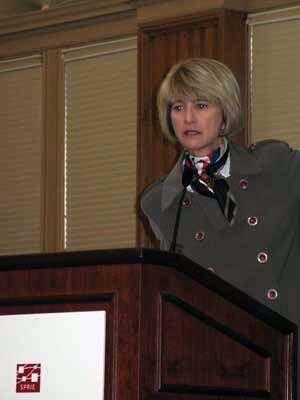
Ruby Gropas is Lecturer in International Relations at the Law Faculty of the Democritus University of Thrace, and Research Fellow at the Hellenic Foundation for European and Foreign Policy (ELIAMEP) in Athens, Greece. She studied political science and international relations at ULB (Belgium), management at the State University of Maryland, and holds a PhD from Cambridge University.

Her main research interests lie in European integration and foreign policy, human rights, migration and multiculturalism. She has taught at the University of Athens and was Managing Editor of the Journal of Southeast European and Black Sea Studies (2006-2009). She was Southeast Europe Policy Scholar at the Woodrow Wilson International Center for Scholars in Washington DC (2007, 2009) and a Member of the Organizing Committee of the 3rd Global Forum on Migration and Development (2009). Ruby is Vice-President of the Alexander S. Onassis Public Benefit Foundation Scholars' Association and is currently working on an EU-funded research project on history, identities and modernity.

Encina Ground Floor Conference Room

Ruby Gropas Lecturer in International Relations at the Law Faculty of the Democritus University of Thrace (Komotini) and Visiting Scholar Speaker FSI
Seminars
Authors
Larry Diamond
News Type
Commentary
Date
Paragraphs

Each president of the United States enters office thinking he will be able to define the agenda and set the course of America's relations with the rest of the world. And, almost invariably, each confronts crises that are thrust upon him-wars, revolutions, genocides, and deadly confrontations. Neither Woodrow Wilson nor FDR imagined having to plunge America into world war. Truman had to act quickly, and with little preparation, to confront the menace of Soviet expansion at war's end. JFK, for all his readiness to "bear any burden" in the struggle for freedom, did not expect his struggle to contain Soviet imperial ambitions would come so close to the brink of nuclear annihilation. Nixon was tested by a surprise war in the Middle East. Carter's presidency was consumed by the Shah's unraveling and the Iranian revolution. George H.W. Bush rose to the challenge of communism's collapse and Saddam Hussein's invasion of Kuwait. Clinton squandered the opportunity to stop a genocide in Rwanda and waited tragically too long before stopping one in Bosnia. George W. Bush mobilized the country to strike back after September 11, but, in the view of many, he put most of his chips in the wrong war.

In the eye of the historical storm, and in the absence of a challenge as immediate and overpowering as September 11, Pearl Harbor, or the Nazis' march across Europe, it is risky to identify any set of world events as game-changing. Yet that is what many analysts, including myself, believe the Arab revolutions of 2011 are. And a surprising number of specialists-including hard-eyed realists like Fareed Zakaria-have seized upon the crisis in Libya as a defining moment not just for the United States in the region but for the foreign policy presidency of Barack Obama as well.

To date, one could say that Obama has had a surprisingly good run for a foreign policy neophyte. He has revived the momentum for arms control with a new START treaty with Russia, while pressing the issue of human rights within Russia. He has managed the meteoric rise of China decently, while improving relations with India. He has not cut and run from Iraq-as most Republicans were convinced he would. And he has ramped up but at least set limits to our involvement in Afghanistan. As the Arab revolutions have gathered momentum, he has increasingly positioned the United States on the side of democratic change. His statements and actions have not gone as far as democracy promotion advocates (like myself) would have preferred, but they have overridden cautionary warnings of the foreign policy establishment in the State Department, the Pentagon, think tanks, and so on. Without Obama's artful choreography of public statements and private messages and pressures, Hosni Mubarak might still be in power today.

All of this, however, may appear in time only a prelude to the fateful choice that Obama will soon have to make-and, one fears, is already making by default in a tragically wrong way-in Libya. Why is Libya-with its six million people and its significant but still modest share of global oil exports-so important? Why must the fight against Muammar Qaddafi-a crazy and vicious dictator, but by now, in his capacity for global mischief, a largely defanged one-be our fight?

When presidents are tested by crisis, the world draws their measure, and the impressions formed can have big consequences down the road. After watching Jimmy Carter's weak and vacillating posture on Iran, the Soviets figured he'd sit on the sidelines if they invaded and swallowed Afghanistan. They misjudged, but Afghanistan and the world are still paying the price for that misperception. In the face of mixed messages and a long, cynical game of balance-of-power, Saddam too, misjudged that he could get away with swallowing up Kuwait in 1991. When the United States did not prepare for war as naked aggression swept across Asia and Europe, the Japanese thought a quick strike could disable and knock out the slumbering American giant across the Pacific. When Slobodan Milosevic and his Bosnian Serb allies launched their war of "ethnic cleansing," while "the West"-which is always to say, first and foremost, the United States-wrung its hands, many tens of thousands of innocent people were murdered and raped before President Bill Clinton finally found the resolve to mix air power and diplomacy to bring the genocidal violence to a halt.

If Muammar Qaddafi succeeds in crushing the Libyan revolt, as he is well on his way to doing, the U.S. foreign policy establishment will heave a sad sigh of regret and say, in essence, "That's the nasty business of world politics." In other words: nasty, but not our business. And so: not their blood on our hands. But, when we have encouraged them to stand up for their freedom, and when they have asked for our very limited help, it becomes our business. On February 23, President Obama said: "The United States ... strongly supports the universal rights of the Libyan people. That includes the rights of peaceful assembly, free speech, and the ability of the Libyan people to determine their own destiny. These are human rights. They are not negotiable. ... And they cannot be denied through violence or suppression." Yet denying them through murderous violence and merciless suppression-with a massacre of semi-genocidal proportions likely waiting as the end game in Benghazi-is exactly what Qaddafi is in the process of doing.

Barack Obama has bluntly declared that Qaddafi must go. The Libyan resistance, based in Benghazi, has appealed urgently for the imposition of a no-fly zone. Incredibly, the Arab League has endorsed the call, as has the Gulf Cooperation Council. France has recognized the rebel provisional government based in Benghazi as Libya's legitimate government-while Obama studies this all. Can anyone remember a time when France and the Arab League were ahead of the United States on a question of defending freedom fighters?

There is much more that can be done beyond imposing a no-fly zone. No one in their right mind is calling for putting American boots on the ground in Libya. But we can jam Qaddafi's communications. We can, and urgently should, get humanitarian supplies and communications equipment, including satellite modems for connection to the Internet, to the rebels in Benghazi, where they can be supplied by sea. And we should find a way to get them arms as well. Benghazi is not a minor desert town. It is Libya's second largest city, a major industrial and commercial hub, and a significant port. Through it, a revolt can be supplied. If Benghazi falls to Qaddafi, it will fall hard and bloodily, and the thud will be heard throughout the world.

Time may be running out. As the Los Angeles Times reported yesterday, "All that stands between Kadafi and rebel headquarters in Benghazi are disorganized volunteers and army defectors spread thinly along the coastal highway." They have passion and courage, but they lack weaponry, strategy, and training. Like so many rebel movements, they need time to pull these all together. Time is what a no-fly zone and an emergency supply line can buy them.

Libya's rebels are pleading for our help. "Where is America?" asked one of them, quoted in the L.A. Times, who was manning a checkpoint in Port Brega. "All they do is talk, talk, talk. They need to get rid of these planes killing Libyan people." The "they" he was referring to was the Americans, beginning with their leader-one would hope, still the leader of the "free world"-President Obama.

Many prudent reasons have been offered for doing nothing. It is not our fight. They might lose anyway. We don't know who these rebels really are. We have too many other commitments. And so on. The cautions sound reasonable, except that we have heard them all before. Think Mostar and Srebrenica. And we had a lot of commitments in World War II as well, when we could have and should have bombed the industrial infrastructure of the Holocaust. As for the possibility that the rebels might lose-a prospect that is a possibility if we aid them and a near certainty if we do not-which would be the greater ignominy: To have given Libya's rebels the support they asked for while they failed, or to have stood by and done absolutely nothing except talk while they were mowed down in the face of meek American protests that the Qaddafi's violence is "unacceptable"?

Oh yes. There is also the danger that China will veto a U.N. Security Council Resolution calling for a no-fly zone. Part of us should hope they do. Let the rising superpower-more cynical than the reigning one ever was-feel the first hot flash of hatred by Arabs feeling betrayed. Go ahead, make our day.

Presidents do not get elected to make easy decisions, and they certainly never become great doing so. They do not get credit just because they go along with what the diplomatic and military establishments tell them are the "wise and prudent" thing to do. This is not Hungary in 1956. There is no one standing behind Qaddafi-not the Soviet Union then, not the Arab League now, not even the entirety of his own army. That is why he must recruit mercenaries to save him. Qaddafi is the kind of neighborhood bully that Slobodan Milosevic was. And he must be met by the same kind of principled power. For America to do less than that now-less than the minimum that the Libyan rebels and the Arab neighbors are requesting-would be to shrink into global vacillation and ultimately irrelevance. If Barack Obama cannot face down a modest thug who is hated by most of his own people and by every neighboring government, who can he confront anywhere?

For the United States-and for Barack Obama-there is much more at stake in Libya than the fate of one more Arab state, or even the entire region. And the clock is ticking.

Hero Image
Larry Diamond website pic
All News button
1
Authors
News Type
News
Date
Paragraphs

On February 25 and 26, the Center on Democracy, Development, and the Rule of Law at Stanford University, in partnership with the Canadian Department of Foreign Affairs and International Trade, hosted a symposium titled, "Addressing the Accountability Gap in Statebuilding: The Case of Afghanistan." This event brought together leading experts, government officials, diplomats, practitioners, and academics to examine the problems of accountability, corruption, and election fraud that have risen in the wake of international statebuilding efforts in Afghanistan.

This unique forum allowed participants-both Afghan actors and members of the international community- who are heavily involved in building the institutions of the Afghan state, to participate in an honest exchange with their peers to surface challenges and generate recommendations to improve the practice of statebuilding moving forward. 

Panels were designed around the following questions: how to establish accountability in statebuilding, address electoral fraud evidenced in 2009 and 2010, manage powerbrokers who monopolize informal governance networks, coordinate anti-corruption efforts, and develop a political strategy for Afghanistan's future. What surfaced throughout these presentations and discussion was the issue of the "double compact" in Afghanistan-the failure of Afghans to self-govern and the failure of the international community to construct the institutions of a functioning state.

Participants proposed a new framework for governance that adopts a more participatory approach with the international community, Afghan government, and the public as equal partners in statebuilding endeavors. While challenges emerged there were also a number of key recommendations and strategies proposed  that can be pioneered by this influential group of policymakers and practitioners to ease the transition of responsibility to the Afghan government in 2014.  

The keynote address was delivered by former Afghan Minster of Finance and 2009 presidential candidate Dr. Ashraf Ghani, to an audience of more than 100 students and members of the local community. Dr. Ghani provided an honest and pragmatic account of the parallel and conflicting systems driven by the international community, which have given rise to systemic failure and corruption in Afghanistan.

"We are dealing with a crooked playing field," Dr. Ghani said recognizing that both the Afghan and international community were jointly responsible for this outcome. "When the field itself is crooked the nature of reform and change that we must initiate are very different. "

Dr. Ghani spent considerable time discussing the outsourcing of development to Washington-based firms that manage million dollar contracts and outsource technical work to foreign technocrats. This in Dr. Ghani's opinion does little to strengthen the internal capacities of the state, provide training opportunities to Afghans or allocate resources effectively to the general public.

Dr. Ghani stressed the importance of speaking honestly about these dysfunctions in the development system, "We need to start talking truth to each other if we are going to deal with this phenomenon. This double failure now is the genesis of the present."

Dr. Ghani channeled the sentiments of the Afghan public into the room by emphasizing the uncertainty that defines their lives. "Today it is the sense of injustice that drives conflict," Dr. Ghani said. "The level of conflict is driven by injustice. What Afghans yearn for is normalcy-the sense that the lives of our children and grandchildren will be better and what my generation endured will not be repeated."

The level of conflict is driven by injustice. What Afghans yearn for is normalcy-the sense that the lives of our children and grandchildren will be better and what my generation endured will  not be repeated.                    -Dr. Ashraf Ghani 

 Looking forward, Dr. Ghani advised that accountability mechanisms and feedback loops must be implemented to ensure that the necessary auditing and accounting mechanisms are in place to control corruption and ensure transparency. In addition, he called for one coherent system of rules that must be developed and agreed upon to govern development and prevent parallel systems from circumventing these rules. Finally, he advised adopting national programs that model the success of the National Solidarity Program, which reduced child mortality rates by 16%.

Dr. Ghani commented on the unique position that Afghanistan occupies at the crossroads of Asia, in the middle of "four huge hubs of change," China, India, Russia, and the Gulf. "A new regional era has to be created, if France and Germany could overcome hundreds of years of conflict we must create another sense of opportunity."

Dr. Ghani concluded by placing the hope and responsibility for Afghanistan's future in the hands of its younger generation, "We must talk about the generation compact in Afghanistan, our sons and daughters-both literal and figurative-are the source of growth and the source of dynamism...The women of Afghanistan, the youth of Afghanistan, and the poor of Afghanistan are the three numerical majorities that have been reduced to political and economic minority. Without investing in women, investing in youth and tackling the challenge of poverty, we are not going to have stability."

At the end of the two day symposium, participants collectively called for a comprehensive political strategy to facilitate the peaceful and legal transfer of power in 2014, which marks the end of President Karzai's term in office. With this important milestone in the near future, the international community remains committed to working with their Afghan counterparts to introduce political reform measures that will strengthen accountability mechanisms between the Afghan state and society. 

As Dr. Ghani eloquently stated at the end of his presentation, "We have to have an agenda of the future, we must engage in writing the history of the future."

All News button
1

Image
This two-day international forum at Stanford University brought together experts from academia, government, and industry to analyze leading cases of current institutional models for innovation in smart and green industries. Cases included multi-company collaborations, public-private partnerships, and government-funded consortia. To enable more focus and comparative analysis, sectors selected for focus included the built environment and intelligent transportation.

FORUM Speakers & DISCUSSANTS (listed in alphabetical order)

  • Rohit T. Aggarwala, Special Advisor to the Chair, C40 Cities Climate Leadership Group
  • Alan Beebe, Managing Director, China Greentech Initiative
  • Sven Beiker, Executive Director, Center for Automotive Research at Stanford (CARS)
  • Ann Bordetsky, North America Market Development, Better Place
  • Dennis Bracy, cEO, US-China Clean Energy Forum
  • Curtis R. Carlson, President and CEO, SRI International
  • Jaching Chou, Senior Transportation Analyst, Institute of Transportation
  • Stephen J. Eglash, Executive Director, Energy and Environment Affiliates Program, Stanford University
  • Henry Etzkowitz, President of Triple Helix Association; Senior Researcher, Human Sciences and Technology Advanced Research Institute (H-STAR), Stanford University; Visiting Professor at University of Edinburgh Business School
  • Gordon Feller, Director of Urban Innovation, Cisco Systems
  • TJ Glauthier, President, TJG Energy Associates, LLC
  • Russell Hancock, President & Chief Executive Officer, Joint Venture: Silicon Valley Network
  • Ted Howes, Business for Social Responsibility
  • Asim Hussain, Director of Product Marketing, Bloom Energy
  • Paul Chao-Chia Huang, Deputy General Director, Service Systems Technology Center, Industrial Technology Research Institute, Taiwan
  • Kristina M. Johnson, Former Under Secretary of Energy, U.S. Department of Energy
  • Jeffrey Heller, President, Heller Manus Architects
  • Allan King, Senior Manager, Institute for Information Industry, Taiwan
  • Michael Marlaire, Director, NASA Research Park
  • David Nieh, General Manager, Shui On Land Limited
  • Jon Sandelin, Senior Associate Emeritus, Office of Technology and Licensing, Stanford University
  • Gerald Sanders, CEO & Chairman, SkyTran
  • Tim Schweikert, President & CEO, China Region for GE Technology Infrastructure, GE
  • Jonathan Thorpe, Senior Vice President, Gale International
  • Kung Wang, Professor, China University of Technology
  • Sean Wang, President, ITRI International Inc.
  • Jonathan Woetzel, Director, McKinsey & Co; Co-Chair, Urban China Initiative

Questions for presentations and discussion included:

  • What roles are public-private partnerships and other forms of collaboration playing to advance innovations in smart green industries, such as in the built environment or intelligent transportation?
  • What innovations - not only in technologies and products but also in processes, models and platforms - are leading the way?
  • What results are emerging from living labs, leading cities, or other outstanding examples of public-private partnerships around the world?
  • How do results stack up against economic, energy and social metrics, e.g. economic productivity, quality of life, energy impact, financial payback, user response, etc.?
  • What are implications for business strategies?
  • What government policies are effectively nurturing advancement in these areas?

Outcomes will include policy recommendations as well as highlights to be included in a book published by SPRIE at Stanford.

Workshops
-

Dr. Farrell earned a Ph.D. in Government from Georgetown University in 2000. He also holds a B.A. and M.A. in Politics from University College Dublin. Previously, he served as Assistant Professor at the University of Toronto, and was a senior research fellow at the Max Planck Institute on Common Goods in Bonn, Germany. He has taught courses on the political economy of European integration, the politics of the Internet, and the comparative political economy of Europe at the University of Toronto and Georgetown University.

Dr. Farrell's publications include: "Constructing the International Foundations of E-Commerce: The EU-US Safe Harbor Agreement," in International Organization, 57,2 (2003); "Trust, Distrust, and Power," in Distrust, ed. Russell Hardin (Russell Sage Foundation, forthcoming); and "Trust and Political Economy: Comparing the Effects of Institutions on Inter-Firm Cooperation," in Comparative Political Studies (forthcoming). Dr. Farrell is a member of the American Political Science Association, the International Society for the New Institutional Economics, the International Studies Association, and the European Union Studies Association

Graham Stuart Lounge

Henry Farrell Associate Professor of Political Science and International Affairs Speaker George Washington University
Workshops
Authors
Larry Diamond
News Type
Commentary
Date
Paragraphs

After the peaceful mass uprising that toppled one of the world's oldest autocracies, it is now possible to imagine the emergence of a genuine democracy in Egypt-the most important country in the Arab world. The very possibility of it marks an historic turning point for the entire region. However, there is a long and often treacherous distance between the demise of an authoritarian regime and the rise of a democracy.

With no experience of democracy in recent decades, and no apparent government leadership that is committed to bringing it about, Egypt's transition faces more formidable challenges than the transitions that led to democracy in recent decades in countries like Spain, Greece, Argentina, Brazil, Chile, the Philippines, Poland, South Africa, Indonesia, and Ukraine. (Which isn't to say these were easy: We forget how difficult each of these transitions seemed at the time, and how fraught they were with dangers and uncertainties.) With an energized civil society and deep resources of youthful talent, creativity, and mobilizing skill, Egypt has a real chance to get to democracy in the next few years. But doing so will require a keen analysis of the numerous potential traps that could sandbag the process.

The first trap is the Machiavellian opaqueness of the aging generals who are now running the country. Beginning with the Defense Minister (and now junta leader) Mohamed Tantawi, until a few days ago a close ally of the deposed President Mubarak, Egypt's new military rulers cannot be trusted to structure the political process and emergent rules in a way that will favor genuine democracy. Their principal goal, it appears, is to preserve as much of the old order as possible-Mubarakism without Mubarak (the father or the son). This means another round of the old shell game of Arab regimes-what Daniel Brumberg has called "liberalized autocracy." The process of liberalization-which runs in cycles, and which countries like Morocco and Jordan have seen many iterations of-institutes just enough change in the rules and faces to give the appearance of movement toward democracy without any of the dangers (for the ruling elite). But the changes, imposed from above, stop well short of the sweeping institutional transformations that would open wide the political arena (and the functioning of government) while leveling the playing field.

In their initial "communiqués," Egypt's ruling generals show signs of treading down this duplicitous path. Their initial choices have evinced the seductive veneer of democratic change but the closure and control of authoritarian continuity. To begin with, there appears so far to be little consultation with democratic forces in determining the character and pace of transition. Despite opposition demands, emergency rule remains in place, and so do many political prisoners. The military's initial decisions have been unilateral and preemptory. We learn there will be a constitution drafted within two months, followed by a referendum. A respected retired judge will head the process. This will produce "amendments" to the now-suspended authoritarian constitution. But what will be the role for Egyptian opposition and civil society in this process? What will be the scope down the road to draft a completely new, more democratic and legitimate constitution with broad popular participation and support? Will the president to be elected later this year serve another imperial six-year term, or be a caretaker heading a neutral government until a new constitution can be adopted and fresh elections held? At this point, if anyone knows the answers to these questions, it is only the junta.

The military is talking about early presidential and legislative elections, within six months. What could be more democratic than that? But, in fact, after the fall of a longstanding autocracy, it typically takes a lot longer than six months to organize competitive, free, and fair elections. Think of the steps. A neutral and independent electoral administration must be established. This requires not just legal authorization but also new leadership, and recruitment, training, funding, and deployment of new staff and equipment. If Egypt's generals intend to have elections administered by the same Ministry of Interior that shamelessly rigged the vote for Mubarak and his ruling National Democratic Party (NDP), that will be a sure sign that they do not intend to deliver democracy-or are too incompetent and cavalier to care. Then, the next step must be to produce a new register of voters. Experts believe only a quarter of eligible Egyptians are registered to vote today. The exclusion was very useful to perpetuating autocracy but could be deadly for an emerging democracy. That will take months, money, and far-reaching organization to do even reasonably well.

It will be one thing to elect a new president and quite another to choose a new parliament in Egypt's transitional flux. The military now suggests the two elections can be held together within six months. But they will have very different logics and requirements. A presidential election will be much simpler. The old order will no doubt throw up a somewhat more palatable face, perhaps the former Foreign Minister Amr Moussa. The democratic opposition may well rally behind a single candidate (though the regime, no longer able to exclude a democratic alternative, will probably try to fragment the field with as many opposition candidates as possible). Still, voters will be faced with a few principal choices for national leadership, and it won't matter where people vote, so long as they are of voting age and only vote once. This kind of election can be done more roughly and quickly, tossing aside the voter register and just dipping every forefinger in indelible ink after it has marked a ballot for one presidential candidate or another. It will be important in this election-and every future one-to ensure transparency and citizen monitoring of the vote, as well as to have Egypt's judiciary oversee the balloting (as it did in previous elections until the judges got too good at it and Mubarak cut them out). But, otherwise, a presidential election won't be a complicated affair.

By contrast, new parliamentary elections present formidable challenges. First, Egyptians (and hopefully not just the military) must decide what electoral system will be used. This choice can invoke arcane debate, but it may be one of the most important that Egypt makes in pursuit of democracy. If the electoral rules are "majoritarian," in that they make it hard for small minorities to get elected, they will work to the disadvantage of not just small ideological tendencies but also the welter of new, emerging parties and political forces-many of them liberal and secular-that will just be taking shape and starting to test their strength. This will inflate the strength of the only two political forces that now have effective political organizations on the ground-the old ruling party and the Muslim Brotherhood (with a smattering of some of the other older opposition parties). If Egypt retains the current electoral system of two-member districts (with each voter getting two votes), these two established political forces could sweep most of the seats between them, marginalizing the moderates, polarizing the parliament and political system, and dooming democracy from the start. Creating a liberal center in democratic politics requires more than moral and technical support for these parties to function; it also requires rules that enable them to get traction.

A much better-and fairer-alternative would be to elect the new parliament using some form of proportional representation, so that parties would win seats roughly in proportion to their vote shares. That way, new parties could begin to gain a foothold in the political process. Perhaps ironically, the best way to do this might be the way Iraq now does, by using the existing governorates (29 in Egypt) as multimember districts, and having each district then elect a share of seats equivalent to its share of the population. This would allow for very proportional results, with districts generally containing ten to 25 seats, while still enabling some accountability and candidate familiarity at the local level.

A truly democratic parliamentary election in Egypt cannot be pulled off in six months. In fact, it might require well over a year to prepare. But the alternative would be to rush to a vote with a flawed system that would leave Egypt's new democratic forces on the margins not just of legislating but of constitution-making as well.

How a new permanent constitution will be drafted-if it is even intended by the military-also remains a mystery at this point. The worst option would be to have a closed and hurried process dominated from above by the military. But that seems to be what the junta intends for the transitional period. Successful democratic transitions either use an expert but broadly representative constitutional drafting commission, and then a popular referendum to confirm the draft, or an elected constitutional assembly (often acting simultaneously as a parliament), possibly followed also by a popular referendum (as in Iraq). Some have used all of these methods combined. Experience of recent decades underscores the importance for future democratic legitimacy and stability of eliciting extensive public dialogue and broad popular participation in the constitution-making process, with adequate preparation and civic education and widespread media exposure, as in South Africa. A thorough, inclusive, and deliberate process of constitutional drafting and debate can also help to breed a more democratic culture at both the elite and mass levels. A rushed and closed process perpetuates authoritarian mentalities (and, often, authoritarian rules as well).

Prior to all of this is the most basic question of who writes the rules, the timetable, and the mode of transition. Egypt has now entered a classic transition game where the authoritarian regime and the democratic opposition have sharply different interests and little basis for cooperation and trust. As an institution, Egypt's military may not be hated the way Mubarak and his cronies were, but many of the generals were Mubarak's cronies. And the military's core interests are not freedom and democracy for the people, but preserving their own power, wealth, privilege, and impunity. The core lesson of numerous prior transitions is the need for a negotiated way out of this potentially fatal impasse. Democrats want democracy with no guarantees to autocrats. Autocrats want guarantees, with no real democracy.

There is an obvious generic compromise, and every successful negotiated transition-from Spain and Brazil to Poland, South Africa, and Indonesia-has settled on a version of it. The old order gets to hang on to most of its wealth and privilege, along with military autonomy at least for a time. Few, if any, henchmen of the old order are prosecuted for their past crimes, unless it is for the last, desperate excesses of a few diehards trying to hang on during the transition. Real accountability waits for a later day. Democrats get democracy. Autocrats (mostly) retain their wealth and influence, but they cannot bid for power unless they play the democratic game. The Yale political scientist Robert Dahl coined a term for this type of bargain. He called it "mutual security." From the Spanish transition on, the generic bargain became known as a political pact.

Only a negotiated pact between Egypt's surviving authoritarian regime and its emergent democratic forces can steer the transition through the current treacherous straits to calmer and freer waters. For that to happen, Egypt's disparate democratic forces must unify in a broad negotiating front that unites the "outside" opposition of the youthful movements with the "inside" opposition of the "wise persons" and established parties who have so far dominated, on an ad hoc basis, the discussions with the old order.

Opposition unity will give Egypt's democrats strategic leverage; if negotiations stall due to regime intransigence, then the unified opposition can more credibly threaten to turn out people by the millions again in protest. But, if negotiations move forward to ensure the essential conditions for a democratic transition-an end to emergency rule; freedom of organization, expression, and assembly; judicial independence; and new and fair electoral administration-then a unified opposition can guarantee social peace and political stability. Opposition coherence enables clear negotiating priorities to level the playing field and ensure a democratic transition. It will also give the old order a clear set of interlocutors who can credibly commit to deliver popular support behind a difficult compromise agreement. No condition is more important for a successful transition.

The role for the United States and other international actors is not to dictate terms for the transition or structures for the new political order. That is not our place, and Egyptians of every political stripe will resent it. But international actors should offer training to political parties and technical and financial assistance to the new civil society organizations and state institutions needed to make democracy work. For the United States., this will mean millions of dollars in new assistance for democracy in Egypt-but that is a trifle compared to the $68 billion we have invested in dictatorship (even if it was to buy peace). No less importantly, other democracies (including leaders of recent democratic transitions) can encourage Egypt's opposition groups to coalesce and share lessons of the strategies and choices that have led to democratic outcomes. And the Obama administration can make it clear to Egypt's military rulers that nothing less than a real transition to democracy-with broad consultation, serious negotiations, and a new climate of freedom-will return Egypt to stability and a lasting partnership with the United States.

Hero Image
Larry Diamond website pic
All News button
1
Authors
Larry Diamond
News Type
Commentary
Date
Paragraphs

Two decades after the fall of Soviet-bloc dictatorships, popular movements for democracy are erupting in the last regional bastion of authoritarianism: the Arab world.

So far, only Tunisia's dictator, Zine el-Abidine Ben Ali, has been toppled, while Egypt's President Hosni Mubarak - who has ruled that ancient land longer than many pharaohs - announced Tuesday that he will step down in September. But other Arab autocrats are bound to go. From Algeria to Syria to Jordan, people are fed up with stagnation and injustice, and are mobilizing for democratic change.

So, what happens when the autocrat is gone? Will the end of despotism give way to chaos - as happened when Mobutu Sese Seko was toppled in 1997 after more than 30 years in power in Zaire? Will the military or some civilian strongman fill the void with a new autocracy - as occurred after the overthrow of Arab monarchs in Egypt and Iraq in the 1950s, and as has been the norm in most of the world until recently? Or can some of the Arab nations produce real democracy - as we saw in most of Eastern Europe and about half the states of sub-Saharan Africa? Regime transitions are uncertain affairs. But since the mid-1970s, more than 60 countries have found their way to democracy. Some have done so in circumstances of rapid upheaval that offer lessons for reformers in Tunisia, Egypt and other Arab countries today.

Unite the democratic opposition.

When a dictatorship is on the ropes, one thing that can rescue it is a divided opposition. That is why autocrats so frequently foster those divisions, secretly funding a proliferation of opposition parties. Even extremely corrupt rulers may generate significant electoral support - not the thumping majorities they claim, but enough to steal an election - when the opposition is splintered.

In the Philippines in 1986, Nicaragua in 1990 and Ukraine in 2004, the opposition united around the candidacies of Corazon Aquino, Violeta Chamorro and Viktor Yushchenko, respectively. Broad fronts such as these - as well as the Concertacion movement that swept Christian Democrat Patricio Aylwin to power in Chile in 1989 after the departure of Gen. Augusto Pinochet - often span deep personal and ideological differences. But the time for democratic forces to debate those matters is later, once the old order is defeated and democratic institutions have been established.

Egypt is fortunate - it has an obvious alternative leader, Mohamed ElBaradei, whom disparate opposition elements seem to be rallying around. Whether the next presidential election is held on schedule in September or moved up, ElBaradei, or anyone like him leading a broad opposition front, will probably win a resounding victory over anyone connected to Mubarak's National Democratic Party.

Make sure the old order really is gone.

The exit of a long-ruling strongman, such as Ben Ali, does not necessarily mean the end of a regime. Fallen dictators often leave behind robust political and security machines. No autocrat in modern times met a more immediate fate than Romania's Nicolae Ceausescu, who was executed by a firing squad of his own soldiers in 1989 just three days after a popular revolution forced him to flee the capital. Yet his successor, Ion Iliescu, was a corrupt former communist who obstructed political reform. Most of the former Soviet states, such as Georgia and Kazakhstan, had similar experiences.

Countries are much more likely to get to democracy quickly if they identify and embrace political leaders who are untainted by the old order and are ready to roll it back.

But also come to an understanding with the old order.

Victorious democrats won't be able to completely excise the pillars of the authoritarian order. Instead, for their country to turn toward democracy, those pillars must be neutralized or co-opted. This old order may descend into violence when, as in Iraq, broad classes of elites are stigmatized and ousted from their positions. In a successful bargain, most old-regime elites retain their freedom, assets and often their jobs but accept the new rules of the democratic game.

Unless the military collapses in defeat, as it did in Greece in 1974 and in Argentina after the Falklands War, it must be persuaded to at least tolerate a new democratic order. In the short run, that means guaranteeing the military significant autonomy, as well as immunity from prosecution for its crimes. Over time, civilian democratic control of the military can be extended incrementally, as was done masterfully in Brazil in the 1980s and in Chile during the 1990s. But if the professional military feels threatened and demeaned from the start, the transition is in trouble.

The same principle applies to surviving elements of the state security apparatus, the bureaucracy and the ruling party. In South Africa, for example, old-regime elements received amnesty for their human rights abuses in exchange for fully disclosing what they had done. In this and other successful transitions, top officials were replaced, but most state bureaucrats kept their jobs.

Rewrite the rules.

A new democratic government needs a new constitution, but it can't be drawn up too hastily. Meanwhile, some key provisions can be altered expeditiously, either by legislation, interim executive fiat or national consensus.

In Spain, the path to democratization was opened by the Law for Political Reform, adopted by the parliament within a year of dictator Francisco Franco's death in 1975. Poland adopted a package of amendments in 1992, only after it had elected a new parliament and a new president, Lech Walesa; a new constitution followed in 1997. South Africa enacted an interim constitution to govern the country while it undertook an ambitious constitution-writing process with wide popular consultation - which is the ideal arrangement.

An urgent priority, though, is to rewrite the rules so that free and fair elections are possible. This must happen before democratic elections can be held in Egypt and Tunisia. In transitions toward democracy, there is a strong case for including as many political players as possible. This requires some form of proportional representation to ensure that emerging small parties can have a stake in the new order, while minimizing the organizational advantage of the former ruling party. In the 2005 elections in Iraq, proportional representation ensured a seat at the table for smaller minority and liberal parties that could never have won a plurality in individual districts.

Isolate the extremes.

That said, not everyone can or should be brought into the new democratic order. Prosecuting particularly venal members of a former ruling family, such as those tied to the Philippines' Ferdinand Marcos, Indonesia's fallen strongman Suharto or now Tunisia's Ben Ali, can be part of a larger reconciliation strategy. But the circle of punishment must be drawn narrowly. It may even help the transition to drive a wedge between a few old-regime cronies and the bulk of the establishment, many of whom may harbor grievances against "the family."

A transitional government should aim for inclusion, and should test the democratic commitment of dubious players rather than inadvertently induce them to become violent opponents. However, groups that refuse to renounce violence as a means of obtaining power, or that reject the legitimacy of democracy, have no place in the new order. That provision was part of the wisdom of the postwar German constitution.

Transitions are full of opportunists, charlatans and erstwhile autocrats who enter the new political field with no commitment to democracy. Every democratic transition that has endured - from Spain and Portugal to Chile, South Africa and now hopefully Indonesia - has tread this path.

Fragile democracies become stable when people who once had no use for democracy embrace it as the only game in town.

Hero Image
Larry Diamond website pic
All News button
1
Subscribe to Western Europe