News Type
Commentary
Date
Paragraphs

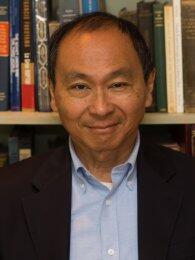
"There is growing consensus that populism constitutes a grave threat to liberal democracy, and to the liberal international order on which peace and prosperity have rested for the past two generations," writes Francis Fukuyama in the World Economic Forum. The fate of the global liberal order could be jeopardized due to rising populist powers and movements. Read the full article here

Hero Image
hands 600497 1280
All News button
1
-

Co-sponsor: Center for African Studies


Abstract:

Join the Center on Democracy, Development, and the Rule of Law (CDDRL) in partnership with the Center for Africa Studies for a rare opportunity to hear from one of Kenya’s leading human rights activists and the former United Nations Special Rapporteur on the Rights to Freedom of Peaceful Assembly and of Association (2011-2017) - Maina Kiai - in conversation with Larry Diamond on Kenya’s 2017 disputed presidential election. This discussion will also reflect on the growing democratic recession in Africa and how Kenya’s recent election has undermined the country's electoral democracy. Maina Kiai is a visiting practitioner at the Levin Center at Stanford Law School this quarter and was a 2007 Draper Hills Summer Fellow at CDDRL.


Speaker Bio:

Image
maina kai
Mr. Maina Kiai was the United Nations Special Rapporteur on the rights to freedom of peaceful assembly and of association from May 2011 until April 2017. A lawyer trained at Nairobi and Harvard Universities, Mr. Kiai has spent the last twenty years campaigning for human rights and constitutional reform in Kenya – notably as founder and Executive Director of the unofficial Kenya Human Rights Commission, and then as Chairman of Kenya’s National Human Rights Commission (2003-2008), where he won a national reputation for his courageous and effective advocacy against official corruption, in support of political reform, and against impunity following the violence that convulsed Kenya in 2008, causing thousands of deaths. From July 2010 to April 2011, Mr. Kiai was the Executive Director of the International Council on Human Rights Policy, a Geneva-based think-tank which used to produce research reports and briefing papers with policy recommendations. Mr. Kiai was also the Director of Amnesty International’s Africa Programme (1999-2001), and the Africa Director of the International Human Rights Law Group (now Global Rights, 2001-2003). He held research fellowships at the Danish Institute for Human Rights (Copenhagen), the Woodrow Wilson International Center for Scholars (Washington), and the TransAfrica Forum (Washington). Mr. Kiai has regularly been an advocate informing and educating Kenyans through various media about their human rights.


Speaker Bio:

Image
larry diamond 1
Larry Diamond is a senior fellow at the Hoover Institution and at the Freeman Spogli Institute for International Studies. For more than six years, he directed FSI’s Center on Democracy, Development, and the Rule of Law, and he continues to lead its programs on Arab Reform and Democracy and Democracy in Taiwan. He is the founding co-editor of the Journal of Democracy and also serves as Senior Consultant at the International Forum for Democratic Studies of the National Endowment for Democracy. His sixth and most recent book, In Search of Democracy (Routledge, 2016), explores the challenges confronting democracy and democracy promotion, gathering together three decades of his work on democratic development, particularly in Africa and Asia.  He has also edited or co-edited more than 40 books on democratic development around the world.


Maina Kiai Human Rights Activist, former United Nations Special Rapporteur on the rights to freedom of peaceful assembly and of association

CDDRL
Stanford University
Encina Hall, C147
616 Jane Stanford Way
Stanford, CA 94305-6055

(650) 724-6448 (650) 723-1928
0
Mosbacher Senior Fellow in Global Democracy at the Freeman Spogli Institute for International Studies
William L. Clayton Senior Fellow at the Hoover Institution
Professor, by courtesy, of Political Science and Sociology
diamond_encina_hall.png MA, PhD

Larry Diamond is the William L. Clayton Senior Fellow at the Hoover Institution, the Mosbacher Senior Fellow in Global Democracy at the Freeman Spogli Institute for International Studies (FSI), and a Bass University Fellow in Undergraduate Education at Stanford University. He is also professor by courtesy of Political Science and Sociology at Stanford, where he lectures and teaches courses on democracy (including an online course on EdX). At the Hoover Institution, he co-leads the Project on Taiwan in the Indo-Pacific Region and participates in the Project on the U.S., China, and the World. At FSI, he is among the core faculty of the Center on Democracy, Development and the Rule of Law, which he directed for six and a half years. He leads FSI’s Israel Studies Program and is a member of the Program on Arab Reform and Development. He also co-leads the Global Digital Policy Incubator, based at FSI’s Cyber Policy Center. He served for 32 years as founding co-editor of the Journal of Democracy.

Diamond’s research focuses on global trends affecting freedom and democracy and on U.S. and international policies to defend and advance democracy. His book, Ill Winds: Saving Democracy from Russian Rage, Chinese Ambition, and American Complacency, analyzes the challenges confronting liberal democracy in the United States and around the world at this potential “hinge in history,” and offers an agenda for strengthening and defending democracy at home and abroad.  A paperback edition with a new preface was released by Penguin in April 2020. His other books include: In Search of Democracy (2016), The Spirit of Democracy (2008), Developing Democracy: Toward Consolidation (1999), Promoting Democracy in the 1990s (1995), and Class, Ethnicity, and Democracy in Nigeria (1989). He has edited or coedited more than fifty books, including China’s Influence and American Interests (2019, with Orville Schell), Silicon Triangle: The United States, China, Taiwan the Global Semiconductor Security (2023, with James O. Ellis Jr. and Orville Schell), and The Troubling State of India’s Democracy (2024, with Sumit Ganguly and Dinsha Mistree).

During 2002–03, Diamond served as a consultant to the US Agency for International Development (USAID) and was a contributing author of its report, Foreign Aid in the National Interest. He has advised and lectured to universities and think tanks around the world, and to the World Bank, the United Nations, the State Department, and other organizations dealing with governance and development. During the first three months of 2004, Diamond served as a senior adviser on governance to the Coalition Provisional Authority in Baghdad. His 2005 book, Squandered Victory: The American Occupation and the Bungled Effort to Bring Democracy to Iraq, was one of the first books to critically analyze America's postwar engagement in Iraq.

Among Diamond’s other edited books are Democracy in Decline?; Democratization and Authoritarianism in the Arab WorldWill China Democratize?; and Liberation Technology: Social Media and the Struggle for Democracy, all edited with Marc F. Plattner; and Politics and Culture in Contemporary Iran, with Abbas Milani. With Juan J. Linz and Seymour Martin Lipset, he edited the series, Democracy in Developing Countries, which helped to shape a new generation of comparative study of democratic development.

Download full-resolution headshot; photo credit: Rod Searcey.

Former Director of the Center on Democracy, Development and the Rule of Law
Faculty Chair, Jan Koum Israel Studies Program
Date Label
Senior fellow at the Hoover Institution and at the Freeman Spogli Institute for International Studies
Panel Discussions
News Type
News
Date
Paragraphs

"The problems with our democracy—ever-deepening polarization, incivility, gridlock, dysfunction, conflicts of interest, and disregard for democratic norms—are not just problems of political culture and behavior. Politicians are driven by incentives, especially the desire to get re-elected. Institutions heavily shape these incentives, and our institutions are in need of reform. Unless we reform our democracy, we will be increasingly hard-pressed to improve the health of democracy globally." Listen to Larry Diamond, Senior Fellow at the Freeman Spogli Institute for International Studies, explains in this podcast what are the options from here, by Hoover Institution. 

Hero Image
tank 832810 1920
All News button
1
News Type
Commentary
Date
Paragraphs

In this three-parts article on populism, CDDRL Mosbacher Director Francis Fukuyama writes about different forms of populist nationalism. Read "What Is Populism?" here, "Why Populist Nationalism Now?" here and "The Future of Populism at Home and Abroad" here.  

Hero Image
gettyimages 621950502
All News button
1
Date Label
-

THIS EVENT IS AT THE CAPACITY AND CLOSED. 


Conference Program

FRIDAY, NOVEMBER 3

8:45-10:30  Panel 1: Populism as a Threat — Chaired by Anna Grzymala-Busse

  • Sheri Berman, Professor of Political Science, Barnard College | Columbia University, "Populism Is a Symptom Rather Than a Cause: The Decline of the Center-life and Rise of Threats to Liberal Democracy"
  • John Carey, Professor of Government, Dartmouth College, "The People Versus the Elites: What Do They Value and How Much Do Their Judgments of Democracy Differ?”
  • Larry Diamond, Senior Fellow, Freeman Spogli Institute and Hoover Institution, Stanford University, "When Does Populism Become a Threat to Democracy?"
  • Niall Ferguson, Senior Fellow, Hoover Institution, Stanford University, "The Cultural Dimensions of Populism”
  • Rick Perlstein, Journalist and bestselling author, "Why Populism Should Not Be an Epithet."

— 10:30-10:45: Coffee break —

10:45-12:30  Panel 2: American Populism — Chaired by Didi Kuo

  • Julia Azari, Associate Professor of Political Science, Marquette University, "Populism, Polarization and American Political Parties” 
  • David Kennedy, Donald J. McLachlan Professor of History, Emeritus, Stanford University, “The Paradoxes of American Populism”
  • Kirk Hawkins, Associate Professor of Political Science, Brigham Young University, "Populism in Comparative Perspective: America and the 2016 Presidential Election”
  • Rob Mickey, Associate Professor of Political Science, University of Michigan — Ann Arbor, “Anti-anti Populism, or: The Threat of Populism to U.S. Democracy Is Exaggerated”
  • Rick Valelly, Claude C. Smith '14 Professor of Political Science, Swarthmore College, “The Populist Scare of the 1890s -- And the Aftermath that Changed American Populism"

— 12:30-1:30: Lunch —

1:30-3:15  Panel 3: Comparative Perspectives  — Chaired by Matthias Matthijs

  • Anna Grzymala-Busse, Michelle and Kevin Douglas Professor of International Studies and Senior Fellow, Freeman Spogli Institute, “Populist or Authoritarian: The Erosion of Democracy in Poland and Hungary”
  • Steve Levitsky, Professor of Government, Harvard University, “Populism and Competitive Authoritarianism in Latin America”
  • Kenneth Roberts, Richard J. Schwartz Professor of Government, Cornell University, "Bipolar Disorders: Partisan Alignments and Populist Out-flanking in the Post-liberal Order”
  • Milada Vachudova: Associate Professor of Political Science, University of North Carolina Chapel Hill, "From Competition to Polarization: How Populists Change Party Systems to Concentrate Power”
  • Julie Lynch, University of Pennsylvania, “Populism, Partisan Convergence, and Redistribution in Western Europe”

— 3:15-3:30: Coffee break —

3:30-5:00  Panel 4: International Linkages  — Chaired by Michael McFaul

  • Valerie Bunce, Aaron Binenkorb Professor of International Studies and Professor of Government, Cornell University, "The Putin Regime, Populism Promotion, and the 2016 US Presidential Election"
  • Francis Fukuyama, Olivier-Nomellini Senior Fellow, Freeman Spogli Institute, Stanford University "Immigration and Citizenship as Factors in the Rise of Populism"
  • Kathleen McNamara, Professor of Government and Foreign Service, Georgetown University, "When the Banal Becomes Political: the EU in the Age of Populism”
  • Kathryn Stoner, Senior Fellow, Freeman Spogli Institute and Hoover Institution, Stanford University, "Is Putin a Populist and Why Does It Matter?”
  • Lucan Way, Professor, Munk School of Global Affairs, University of Toronto, "Is Russia a Threat to Western Democracy?"


SATURDAY, NOVEMBER 4

 9:00-11:00  Panel 5: Inequality, Investment and Economic Strain — Chaired by Francis Fukuyama

  • Kathy Cramer, Professor of Political Science, University of Wisconsin — Madison, "The Views of Populists: What Trump Voters’ Perspectives and Perceptions of Trump Voters Tell Us about the Threat of Populism to U.S. Democracy"
  • Didi Kuo, Research Scholar, Freeman Spogli Institute, Stanford University, “Parties and Policy Convergence”
  • Margaret Levi, Professor of Political Science, Stanford University, "Populism and the Decline of Labor Unions”
  • Pia Malaney, Senior Economist, Institute for New Economic Thinking"Economic Nationalism as a Driving Force of Populism in the U.S.”
  • Kenneth Scheve, Professor of Political Science and Senior Fellow, Freeman Spogli Institute, Stanford University "The Economic Origins of Authoritarian Values: Evidence from Local Trade Shocks in the United Kingdom”

— 11-1 pm Lunch and concluding discussion —


CISAC Central, 2nd Floor, Encina Hall at Stanford University, 616 Serra Street, Stanford, CA 94305

Conferences
News Type
News
Date
Paragraphs

Draper Hills Summer Fellowship Program at CDDRL is now accepting applications. Deadline is 5:00 pm PST on Wednesday, November 15, 2017.

Launched in 2005, the Draper Hills Summer Fellowship on Democracy and Development Program (DHSFDD) is a three-week academic training program that is hosted annually at Stanford University's Center on Democracy, Development, and the Rule of Law. The program brings together a group of 25 to 30 mid-career practitioners in law, politics, government, private enterprise, civil society, and international development from transitioning countries. This training program provides a unique forum for emerging leaders to connect, exchange experiences, and receive academic training to enrich their knowledge and advance their work.

For three weeks during the summer, fellows participate in academic seminars that expose them to the theory and practice of democracy, development, and the rule of law. Delivered by leading Stanford faculty from the Stanford Law School, the Graduate School of Business, and the departments of economics and political science, these seminars allow emerging leaders to explore new institutional models and frameworks to enhance their ability to promote democratic change in their home countries.

Guest speakers from private foundations, think tanks, government, and the justice system provide a practitioners viewpoint on such pressing issues in the field. Summer Fellows also visit Silicon Valley technology firms such as Benetech, Google and Twitter to explore how technology tools and social media platforms are being used to catalyze democratic practices on a global scale. 

The  program is funded  by the generous support from Bill and Phyllis Draper and Ingrid von Mangoldt Hills.

Learn more here.

Hero Image
rsd17 063 0508a
All News button
1
News Type
Commentary
Date
Paragraphs

Across the world, many democracies are sliding further and further toward authoritarianism. NPR's Ari Shapiro talks with Larry Diamond of Stanford University about this "global democratic recession." Listen here.

Hero Image
Larry Diamond speaking in the Bechtel Conference Center in Encina Hall
Larry Diamond, the Mosbacher Senior Fellow in Global Democracy at FSI, speaks in the Bechtel Conference Center at the Freeman Spogli Institute for International Studies at Stanford University. | CDDRL
All News button
1
Subscribe to Sub-Saharan Africa