Migration and Citizenship (Society)
1
Postdoctoral Fellow at Stanford Impact Labs (SIL), affiliated with PovGov at CDDRL, 2021-22
External Collaborator, PovGov
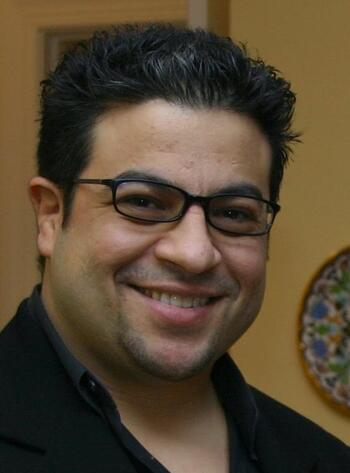
Carlos Schmidt-Padilla

I received my PhD in Political Science from the University of California, Berkeley, where I was also a Research Associate at the Center on the Politics of Development. Broadly, my research interests encompass the political economy of development of Latin America and of sub-Saharan Africa. In particular, I study questions concerning crime, human capital, immigration, and policing in developing countries. I am from San Salvador, El Salvador.

1
Hoover Fellow, Hoover Institution
CDDRL Affiliated Scholar
CDDRL Postdoctoral Scholar, 2021-22
hans_lueders.jpg

I hold a PhD in Political Science from Stanford University. My research seeks to understand the causes and consequences of inequality in political representation across different political contexts. I am currently working on a book project that links inequality in representation and rising societal and political polarization to domestic migration. The book project focuses on contemporary Germany and combines household surveys with comprehensive data on domestic migration, voting in national and local elections, civil society organizations, political campaigning, and political recruitment. In a separate, co-authored book project, I research inequality in political participation among domestic migrants in sub-Saharan Africa. My other research asks how citizens can influence policy-making in non-democratic regimes, where political inequality is extreme by construction, and how unauthorized immigrants in the United States navigate life while being marginalized. My work has been published in the American Political Science Review, Proceedings of the National Academy of Sciences (PNAS), the Journal of Politics, Democratization, the Journal of Economics, Race, and Policy, and the European Political Science Review, among others. Before coming to Stanford, I spent two years as Visiting Assistant in Research at Yale University and obtained BA and MA degrees in Political Science from Heidelberg University in Germany.

Date Label
-

ABSTRACT

While the phenomenon of Egyptians leaving their homeland in search for work abroad has been ongoing for decades, a new trend has emerged since 2011, namely thousands have expatriated for political reasons. Some have left based on a general sense that the political climate has become hazardous for them, while others left because of specific fears due to court convictions, lawsuits, loss of employment, attacks in the media, or direct physical threats related to their political, journalistic, or civil society activities. In contrast to waves of politically motivated Egyptian migration into exile in the 1950s–1970s, migrants now have highly diverse identities, motives, destinations, and experiences in exile. While specific data are hard to locate, post-2011 Egyptian exiles generally appear to be greater in numbers, younger, and enjoying higher educational attainment than those of the past. One reason for this diversity is that far more groups are at serious risk in Egypt—Islamists as well as Christians, liberals as well as leftists, artists as well as businesspeople, prominent intellectuals as well as underground activists—compared to the past, when fewer groups faced political or social persecution at any given time.

SPEAKER BIO

Image
amr hamzawy cropped
Amr Hamzawy is a Senior Research Scholar at CDDRL. He studied political science and developmental studies in Cairo, The Hague, and Berlin. He was previously an associate professor of political science at Cairo University and a professor of public policy at the American University in Cairo. Between 2016 and 2017, he served as a senior fellow in the Middle East program and the Democracy and Rule of Law program at the Carnegie Endowment for International Peace, Washington, DC. 

His research and teaching interests as well as his academic publications focus on democratization processes in Egypt, tensions between freedom and repression in the Egyptian public space, political movements and civil society in Egypt, contemporary debates in Arab political thought, and human rights and governance in the Arab world. He is currently writing a new book on contemporary Egyptian politics, titled Egypt’s New Authoritarianism.

Hamzawy is a former member of the People’s Assembly after being elected in the first Parliamentary elections in Egypt after the January 25, 2011 revolution. He is also a former member of the Egyptian National Council for Human Rights. Hamzawy contributes a weekly op-ed to the Egyptian independent newspaper al-Shorouk and a weekly op-ed to the London based newspaper al-Quds al-Arabi.

0
amr.jpg

Amr Hamzawy is the director of the Carnegie Middle East Program. He studied political science and developmental studies in Cairo, The Hague, and Berlin. He was previously an associate professor of political science at Cairo University and a professor of public policy at the American University in Cairo.

His research and teaching interests as well as his academic publications focus on democratization processes in Egypt, tensions between freedom and repression in the Egyptian public space, political movements and civil society in Egypt, contemporary debates in Arab political thought, and human rights and governance in the Arab world. His new book On The Habits of Neoauthoritarianism – Politics in Egypt Between 2013 and 2019 appeared in Arabic in September 2019.

Hamzawy is a former member of the People’s Assembly after being elected in the first Parliamentary elections in Egypt after the January 25, 2011 revolution. He is also a former member of the Egyptian National Council for Human Rights. Hamzawy contributes a weekly op-ed to the Arab daily al-Quds al-Arabi.


Former Senior Research Scholar, CDDRL
Amr Hamzawy Senior Research Scholar Senior Research Scholar, CDDRL, Stanford University
Seminars
-

This event is co-sponsored with The Abbasi Program in Islamic Studies.

ABSTRACT

How can we make sense of the tragedy in Syria? Wendy Pearlman has conducted open-ended interviews with more than 300 displaced Syrians across the Middle East and Europe from 2012 to 2017. She has brought together these personal stories in the acclaimed new book, We Crossed a Bridge and It Trembled: Voices from Syria (HarperCollins 2017). In this talk, Pearlman will share a selection of voices from the book, along with her own commentary and analysis, to explain the origins and evolution of the Syrian conflict, as well as what it has been like for the ordinary people who have lived its unfolding. Her talk will paint a portrait of silence and intimidation under an oppressive authoritarian regime before 2011, expresses the euphoric experience of participating in protest against that regime, conveys the resilience of communities enduring unspeakable violence thereafter, and offers a window into the challenge of becoming and being a refugee. This talk will offer a humanistic interpretation of the current conflict in Syria and how it has transformed those who have experienced it.


SPEAKER BIO

Image
img 1069

Wendy Pearlman is the Martin and Patricia Koldyke Outstanding Teaching Associate Professor of Political Science at Northwestern University, where she specializes in the comparative politics of the Middle East. She is the author of three books, We Crossed A Bridge and It Trembled: Voices from Syria (HarperCollins 2017), Violence, Nonviolence, and the Palestinian National Movement (Cambridge University Press, 2011) and Occupied Voices: Stories of Everyday Life from the Second Intifada (Nation Books, 2003), as well as dozens of essays, academic articles, or book chapters. Pearlman holds a BA from Brown University, an MA from Georgetown, and a PhD from Harvard. She speaks Arabic and has studied or conducted research in Spain, Germany, Morocco, Egypt, Lebanon, Jordan, Turkey, Israel, and the West Bank and Gaza Strip.


[[{"fid":"229638","view_mode":"crop_870xauto","fields":{"format":"crop_870xauto","field_file_image_description[und][0][value]":"Wendy Pearlman poster","field_file_image_alt_text[und][0][value]":false,"field_file_image_title_text[und][0][value]":false,"field_credit[und][0][value]":"","field_caption[und][0][value]":"","thumbnails":"crop_870xauto","alt":"","title":""},"type":"media","field_deltas":{"5":{"format":"crop_870xauto","field_file_image_description[und][0][value]":"Wendy Pearlman poster","field_file_image_alt_text[und][0][value]":false,"field_file_image_title_text[und][0][value]":false,"field_credit[und][0][value]":"","field_caption[und][0][value]":"","thumbnails":"crop_870xauto","alt":"","title":""}},"link_text":null,"attributes":{"class":"media-element file-crop-870xauto","data-delta":"5"}}]]


William J. Perry Conference Room,
Encina Hall (Central), 2nd Floor, 616 Serra St,
Stanford, CA 94305

Wendy Pearlman Associate Professor of Political Science Northwestern University
Seminars
(650) 723 4862
0
Bing Professor of Human Biology
Associate Professor, Political Science
Senior Fellow, Stanford Institute for Economic Policy Research
Faculty Research Fellow at NBER
vicky_fouka_093_-_vasiliki_fouka.jpg PhD

Vicky Fouka is an Associate Professor of Political Science at Stanford University, a Faculty Research Fellow at the NBER, and a Research Affiliate at CEPR. She is a political economist with interests in group identity and intergroup relations, culture, and historical social dynamics. Her articles are published in journals such as the American Political Science Review, the Review of Economic Studies, the Journal of Politics, the Economic Journal, Public Opinion Quarterly, and Nature Human Behaviour. Her work has received the Joseph L. Bernd award for best paper published in the Journal of Politics, the Economic Journal Austin Robinson prize, and the best article award of the APSA Migration and Citizenship section. She holds a PhD in Economics from Pompeu Fabra University.

Fouka's research was featured in The Europe Center April 2018 Newsletter.

Affiliated faculty at The Europe Center
CDDRL Affiliated Faculty
Date Label
-

Image
Accidental State

Abstract

The existence of two Chinese states—one controlling mainland China, the other controlling the island of Taiwan—is often understood as a seemingly inevitable outcome of the Chinese civil war. Defeated by Mao Zedong, Chiang Kai-shek’s Nationalists fled to Taiwan to establish a rival state, thereby creating the “Two Chinas” dilemma that vexes international diplomacy to this day. Accidental State challenges this conventional narrative to offer a new perspective on the founding of modern Taiwan.

Hsiao-ting Lin marshals extensive research in recently declassified archives to show that the creation of a Taiwanese state in the early 1950s owed more to serendipity than careful geostrategic planning. It was the cumulative outcome of ad hoc half-measures and imperfect compromises, particularly when it came to the Nationalists’ often contentious relationship with the United States.

Taiwan’s political status was fraught from the start. The island had been formally ceded to Japan after the First Sino–Japanese War, and during World War II the Allies promised Chiang that Taiwan would revert to Chinese rule after Japan’s defeat. But as the Chinese civil war turned against the Nationalists, U.S. policymakers reassessed the wisdom of backing Chiang. The idea of placing Taiwan under United Nations trusteeship gained traction. Cold War realities, and the fear of Taiwan falling into Communist hands, led Washington to recalibrate U.S. policy. Yet American support of a Taiwan-based Republic of China remained ambivalent, and Taiwan had to eke out a place for itself in international affairs as a de facto, if not fully sovereign, state.


Biography

Hsiao-ting Lin is a research fellow and curator of the East Asia Collection at the Hoover Institution. He holds a BA in political science from National Taiwan University (1994) and an MA in international law and diplomacy from National Chengchi University in Taiwan (1997). He received his DPhil in oriental studies in 2003 from the University of Oxford, where he also held an appointment as tutorial fellow in modern Chinese history. In 2003–4, Lin was a postdoctoral fellow at the Institute of East Asian Studies, University of California at Berkeley. In 2004, he was awarded the Kiriyama Distinguished Fellowship by the Center for the Pacific Rim, University of San Francisco. In 2005–7, he was a visiting fellow at the Hoover Institution, where he participated in Hoover’s Modern China Archives and Special Collections project. In April 2008, Lin was elected a fellow of the Royal Asiatic Society of Great Britain and Ireland for his contributions to the studies of modern China’s history.

Lin’s academic interests include ethnopolitics and minority issues in greater China, border strategies and defenses in modern China, political institutions and the bureaucratic system of the Chinese Nationalist Party (Kuomintang), and US-Taiwan military and political relations during the Cold War. He has published extensively on modern Chinese and Taiwanese politics, history, and ethnic minorities, including Accidental State: Chiang Kai-shek, the United States, and the Making of Taiwan (Harvard University Press, 2016); Modern China’s Ethnic Frontiers: A Journey to the West (Routledge, 2011); Breaking with the Past: The Kuomintang Central Reform Committee on Taiwan, 1950–52 (Hoover Press, 2007); Tibet and Nationalist China’s Frontier: Intrigues and Ethnopolitics, 1928–49 (UBC Press, 2006), nominated as the best study in the humanities at the 2007 International Convention of Asia Scholars; and over a hundred journal articles, book chapters, edited volumes, reviews, opinion pieces, and translations. He is currently at work on a manuscript that reevaluates Taiwan’s relations with China and the United States during the presidency of Harry Truman to that of Jimmy Carter.


This event is sponsored by the Taiwan Democracy Project in the Center on Democracy, Development, and the Rule of Law. It is free and open to the public, and lunch will be served. Please RSVP by November 28.

Reuben Hills Conference Room

2nd Floor, Encina Hall East

Hsiao-ting Lin Librarian, East Asian Archives, Hoover Institution
Lectures
-

Abstract

In this talk Farah Al-Nakib will discuss her recently released book Kuwait Transformed: A History of Oil and Urban Life (Stanford University Press, 2016), in which she traces the relationships between the urban landscape, patterns and practices of everyday life, and social behaviors and relations in Kuwait, from its settlement in 1716 through the bridge of oil discovery to the twenty-first century. The history that emerges reveals how decades of urban planning, suburbanization, and privatization have eroded an open, tolerant society and given rise to the insularity, xenophobia, and divisiveness that characterize Kuwaiti social relations today. However, over the past decade several social forces and youth-based movements—from political protesters to architects and small entrepreneurs—have been staking claims to the city and demanding a different kind of urban experience. Beyond simply reviving the declined urban center, Al-Nakib argues, their efforts have the potential to restore Kuwaiti society’s lost urbanity.


Speaker Bio

Image
farah al nakib color 2

Farah Al-Nakib is Assistant Professor of History and Director of the Center for Gulf Studies at the American University of Kuwait.  She obtained her PhD (2011) and MA (2006) in history from the School of Oriental and African Studies in London. Her research primarily focuses on the urban history of Kuwait City before and after oil, on which she has written her first book. She also writes about memory and forgetting in relation to the built environment. Her latest research analyzes the 1990-91 Iraqi invasion and occupation of Kuwait from a social historical perspective. Al-Nakib is currently a Carnegie Centennial Fellow at American University in Washington, DC. She is also a co-editor of Jadaliyya’s Cities Page.


[[{"fid":"222585","view_mode":"crop_870xauto","fields":{"format":"crop_870xauto","field_file_image_description[und][0][value]":"Farah Al-Nakib flyer","field_file_image_alt_text[und][0][value]":"","field_file_image_title_text[und][0][value]":"","field_credit[und][0][value]":"","field_caption[und][0][value]":"","field_related_image_aspect[und][0][value]":"","thumbnails":"crop_870xauto"},"type":"media","attributes":{"width":"870","style":"width: 870px;","class":"media-element file-crop-870xauto"}}]]


Reuben Hills Conference Room
2nd Floor East Wing E207
Encina Hall
616 Serra Street
Stanford, California 94305

Farah Al-Nakib Assistant Professor American University of Kuwait
Seminars
Authors
News Type
Commentary
Date
Paragraphs

As part of the Program on Arab Reform and Democracy speaker series, Director of The Markaz: Resource Center Mona Damluji examined the impact of the US-led occupation of Iraq on sectarian-based urban segregation in Baghdad. In a talk held on February 3, 2016, she argued that the sectarian-based segregation that has shaped urbanism in Baghdad is a direct outcome of the 2003 U.S.-led invasion and occupation of Iraq. The "post"-occupied city is characterized by the normalization of concrete “security” blast-walls that choke urban circulation and sever communities. The notorious blast walls -- or "Bremer Walls" -- perpetuate and intensify conditions of urban segregation. As the summer's surge of anti-government protests in Baghdad demonstrate, the short-sighted nature of this militarized solution to sectarian-based violence has proven to be a superficial and unsustainable fix to the deep dilemma of sectarian segregation codified in Iraq’s political system. The presentation also examined the context for recent public dissent on the streets of Baghdad through the story of the capital city's fragmentation between 2006 and 2007.


Hero Image
12647237 10101342091025635 2202684786991914228 n
All News button
1
-

Abstract

After nearly five years since the start of the uprising, Syria finds itself divided and embattled, with no end in sight. More significantly, more than half of the Syrian population is displaced and the death toll surpassed 300,000 by all counts. The Syrian tragedy persists and, more than any other case of mass uprising in the region, continues to be shrouded in political power-plays and contradictions at the local, regional, and international levels. Defined increasingly by an absence of a clear favorable outcome, considering existing parties to the conflict, the logic of the lesser evil reigns supreme. This lecture is an attempt to understand the roots and dynamics of the tragic Syrian uprising, with particular attention to its background and to the recent Russian intervention.

Speaker Bio

Image
unnamed
Bassam Haddad is Director of the Middle East Studies Program and Associate Professor in the Department of Public and International Affairs at George Mason University, and is Visiting Professor at Georgetown University. He is the author of Business Networks in Syria: The Political Economy of Authoritarian Resilience (Stanford University Press, 2011). Haddad is currently editing a volume on Teaching the Middle East After the Arab Uprisings, a book manuscript on pedagogical and theoretical approaches. His most recent books include two co-edited volumes: Dawn of the Arab Uprisings: End of an Old Order? (Pluto Press, 2012) and Mediating the Arab Uprisings (Tadween Publishing, 2013). Haddad serves as Founding Editor of the Arab Studies Journal a peer-reviewed research publication and is co-producer/director of the award-winning documentary film, About Baghdad, and director of the critically acclaimed film series, Arabs and Terrorism, based on extensive field research/interviews. More recently, he directed a film on Arab/Muslim immigrants in Europe, titled The "Other" Threat. Haddad is Co-Founder/Editor of Jadaliyya Ezine and serves on the Editorial Committee of Middle East Report. He is the Executive Director of the Arab Studies Institute, an umbrella for five organizations dealing with knowledge production on the Middle East and Founding Editor of Tadween Publishing.


This event is co-sponsored by The Markaz: Resource Center at Stanford University.


[[{"fid":"221861","view_mode":"crop_870xauto","fields":{"format":"crop_870xauto","field_file_image_description[und][0][value]":"Bassam Haddad January 21","field_file_image_alt_text[und][0][value]":"","field_file_image_title_text[und][0][value]":"","field_credit[und][0][value]":"","field_caption[und][0][value]":"","field_related_image_aspect[und][0][value]":"","thumbnails":"crop_870xauto"},"type":"media","attributes":{"width":"870","class":"media-element file-crop-870xauto"}}]]


CISAC Central Conference Room
Encina Hall, 2nd Floor
616 Serra St
Stanford, CA 94305

Bassam Haddad Associate Professor George Mason University
Seminars
Subscribe to Migration and Citizenship (Society)