The Civic Culture Transformed: From Allegiant to Assertive Citizens
Related Multimedia

Presentation

Center on Democracy, Development and the Rule of Law is part of the Freeman Spogli Institute for International Studies
Screening of the award winning documentary 'Dancing in Jaffa' starring Pierre Dulaine who will be in attendance and will participate in a Q&A session following the film. Free and open to the public. Dinner provided. Preceded by short performance by the Stanford Middle East Ensemble.
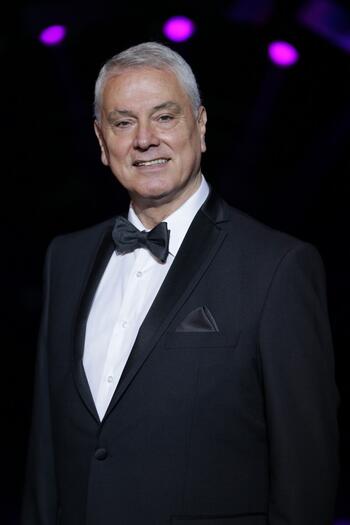
Pierre Dulaine was born in Jaffa, Palestine in 1944 to an Irish father and a Palestinian mother--both of whom fled the area in 1948. After eight months of moving several times, Dulaine's family settled in Amman, Jordan. In 1956, the Suez Crisis forced Dulaine's parents to flee the country, eventually resettling in Birmingham, England. In 1994 Dulaine founded the Dancing Classrooms program in New York City's public schools in which he encouraged children from various backgrounds to dance together. He later traveled to the city of his birth, Jaffa, to visit his childhood home and to make a film, 'Dancing in Jaffa,' where he brought Israeli Arabs and Jews together through dance and music. His life was also fictionalized in the film Take the Lead starring Antonio Banderas. More recently, Pierre Duaine has gained much acclaim in the Arab world for his role as Judge on the Arabic version of the TV show 'So You Think You Can Dance' where he encouraged young Arab men and women to pursue dance as way of dealing with difficult circumstances and certain outdated social
(See flyer for list of co-sponsors)
Note: Pierre Dulaine will give a lunchtime lecture on campus on May 29. For more information, click here.
[[{"fid":"218684","view_mode":"crop_870xauto","fields":{"format":"crop_870xauto","field_file_image_description[und][0][value]":"PD flyer","field_file_image_alt_text[und][0][value]":"","field_file_image_title_text[und][0][value]":"","field_credit[und][0][value]":"","field_caption[und][0][value]":"","field_related_image_aspect[und][0][value]":"","thumbnails":"crop_870xauto","pp_lightbox":false,"pp_description":false},"type":"media","attributes":{"height":1344,"width":870,"class":"media-element file-crop-870xauto"}}]]
Building 206-113
Stanford, CA
Ballroom dancing legend Pierre Dulaine will discuss his 'Dancing Classrooms' method which he applied in his award winning documentary 'Dancing in Jaffa' to bring Arab and Jewish children together through dance. Mr. Dulaine will speak about the film, his journey into the world of dance and his experience as a Judge on the Arabic version of the TV show 'So You Think You Can Dance.' Talk features audio-visual presentation and free lunch.
Pierre Dulaine was born in Jaffa, Palestine in 1944 to an Irish father and a Palestinian mother--both of whom fled the area in 1948. After eight months of moving several times, Dulaine's family settled in Amman, Jordan. In 1956, the Suez Crisis forced Dulaine's parents to flee the country, eventually resettling in Birmingham, England. In 1994 Dulaine founded the Dancing Classrooms program in New York City's public schools in which he encouraged children from various backgrounds to dance together. He later traveled to the city of his birth, Jaffa, to visit his childhood home and to make a film, 'Dancing in Jaffa,' where he brought Israeli Arabs and Jews together through dance and music. His life was also fictionalized in the film Take the Lead starring Antonio Banderas. More recently, Pierre Duaine has gained much acclaim in the Arab world for his role as Judge on the Arabic version of the TV show 'So You Think You Can Dance' where he encouraged young Arab men and women to pursue dance as way of dealing with difficult circumstances and certain outdated social
(See flyer for a list of the co-sponsors)
Note: A screening of 'Dancing in Jaffa' will take place on campus on May 29. For more information, click here.
[[{"fid":"218684","view_mode":"crop_870xauto","fields":{"format":"crop_870xauto","field_file_image_description[und][0][value]":"PD flyer","field_file_image_alt_text[und][0][value]":"","field_file_image_title_text[und][0][value]":"","field_credit[und][0][value]":"","field_caption[und][0][value]":"","field_related_image_aspect[und][0][value]":"","thumbnails":"crop_870xauto","pp_lightbox":false,"pp_description":false},"type":"media","attributes":{"height":1344,"width":870,"class":"media-element file-crop-870xauto"}}]]
Stanford Language Center,
Building 30-102,
Stanford, CA
Abstract
Latin America has gone through a major transformation in the past two decades. According to the United Nations, with the discovery of new oil and mineral deposits and increases in energy exports, manufacturing, and tourism, Latin America's economic growth and development will increase, and the region's global influence will become greater and greater.
In The Shared Society, Alejandro Toledo, whose tenure as president of Peru helped spur the country's economic renaissance, develops a plan for a future Latin America in which not only is its population much better off economically than today but the vast 40 percent of its poor and marginalized are incorporated into a rising middle class, democratic institutions work more effectively, and the extraordinary ecosystem of Latin America is preserved.

Alejandro Toledo served as the President of Peru from 2001 to 2006 and has been honored by the U.S. Senate for his policies during that tenure. He has held positions at the World Bank and the United Nations and was a Visiting Scholar in International Affairs at Harvard University as well as at Johns Hopkins University and a Senior Fellow and Distinguished Visiting Lecturer at Stanford University and the Brookings Institution. Toledo founded and continues to serve as the President of the Global Center for Development and Democracy in Washington, DC.
This event is sponsored by CDDRL, FSI, the Center for Latin American Studies and Redwood Press.
[[{"fid":"218581","view_mode":"crop_870xauto","fields":{"format":"crop_870xauto","field_file_image_description[und][0][value]":"","field_file_image_alt_text[und][0][value]":"","field_file_image_title_text[und][0][value]":"","field_credit[und][0][value]":"","field_caption[und][0][value]":"","field_related_image_aspect[und][0][value]":"","thumbnails":"crop_870xauto","pp_lightbox":false,"pp_description":false},"type":"media","attributes":{"height":1433,"width":870,"class":"media-element file-crop-870xauto"}}]]
Convened by Professor Joel Beinin and Professor Robert Crews, this one-day conference will explore the global history of the Middle East and North Africa. The conference is chronologically delimited by two New York-centered financial panics that had substantial consequences for the Middle East and North Africa. While the region has long been engaged in global circuits of commerce, culture, and migration, this choice of chronological frame highlights the renewed salience of political economy in several academic disciplines.
8:45 -9:00 Welcoming Remarks
9:00 -10:30 Political Economy
Chair: Robert Crews (Stanford University)
Toby Jones (Rutgers University) “Energy and War in the Persian Gulf” (Abstract)
Brandon Wolfe-Honnicutt (California State University, Stanislaus) “Oil, Guns, and Dollars: U.S. Arms Transfers and the Breakdown of Bretton Woods” (Abstract)
10:45-12:15 Ideas and Institutions
Chair: Aishwary Kumar (Stanford University)
Yoav Di-Capua (University of Texas at Austin) “An Iconic Betrayal: Jean Paul Sartre and the Arab World” (Abstract)
Omnia El Shakry (University of California, Davis) “The Arabic Freud: Psychoanalysis and the Psyche in postwar Egypt” (Abstract)
1:30-3:30 Global Palestine
Chair: Hesham Sallam (Stanford University)
Laleh Khalili (University of London, SOAS) “Palestine and Circuits of Coercion” (Abstract)
Ilana Feldman (George Washington University) “Humanitarianism and Revolution: Samed, the Palestinian Red Crescent Society, and the work of liberation” (Abstract)
3:15-4:45 Circulation of Popular Culture
Chair: Alexander Key (Stanford University)
Hisham Aidi (Columbia University) “Frantz Fanon and Judeo-Arab Music” (Abstract)
Paul A. Silverstein (Reed College) “A Global Maghreb: Crossroads, Borderlands, and Frontiers in the Rethinking of Area Studies” (Abstract)
5:00 pm Concluding Remarks
Chair: Joel Beinin (Stanford University)
For more information, please contact The Sohaib and Sara Abbasi Program in Islamic Studies abbasiprogram@stanford.edu
*Organized by the The Sohaib and Sara Abbasi Program in Islamic Studies and co-sponsored by the History Department, CDDRL's Program on Arab Reform and Democracy, The Mediterranean Studies Forum, Stanford Global Studies, and the Stanford Humanities Center*
[[{"fid":"217988","view_mode":"crop_870xauto","fields":{"format":"crop_870xauto","field_file_image_description[und][0][value]":"Abbasi annual conference 2015","field_file_image_alt_text[und][0][value]":"","field_file_image_title_text[und][0][value]":"","field_credit[und][0][value]":"","field_caption[und][0][value]":"","field_related_image_aspect[und][0][value]":"","thumbnails":"crop_870xauto","pp_lightbox":false,"pp_description":false},"type":"media","attributes":{"width":870,"class":"media-element file-crop-870xauto"}}]]
The Buddhist Compassion Relief Tzu Chi (Ciji) Foundation from Taiwan is perhaps one of the largest Buddhist charities in the Chinese world today. This talk traces how Tzu Chi developed under the “regime of civility” in Taiwan. The same regime also contributed to the recent controversies between Tzu Chi and the Aborigines. I argue that the tension between the Buddhist non-governmental organization and the Christian Aborigines has to do with the inequality under the regime of civility: on the one hand, the Aborigines have been marginalized as the “subject” of the civility campaign by the state; and, on the other hand, the same regime of civility is what allows the Buddhist charity to thrive in civil society. This talk raises the question whether civility could turn against civil society.
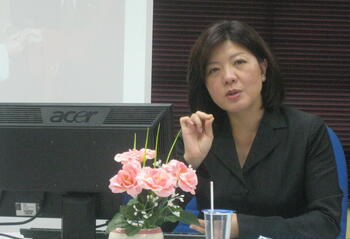
C. Julia Huang is a Professor of Anthropology at National Tsing Hua University, Taiwan, and currently a Visiting Scholar at the Ho Center for Buddhist Studies at Stanford University. Huang has published articles in the Journal of Asian Studies, Ethnology, Positions, Nova Religio, the Eastern Buddhist, and the European Journal for East Asian Studies. Her book, Charisma and Compassion: Cheng Yen and the Buddhist Tzu Chi Movement (Harvard University Press, 2009) is an ethnography of a lay Buddhist movement that began as a tiny group in Taiwan and grew into an organization with ten million members worldwide. Huang has recently completed a book manuscript, The Social Life of Goodness: Religious Philanthropy in Chinese Societies (with Robert P. Weller and Keping Wu). She is currently working on a project on the Buddhist influences on cadaver donations for medical education in Taiwan.
This event is part of the Taiwan Democracy Project.
Abstract
Cross-Strait relations play an important role in electoral politics in Taiwan. Increasing economic exchange together with warming political engagements make today’s cross-Strait relations a very unique case in the study of public opinion in Taiwan. Because of the economic prosperity of China, people in Taiwan might consider the expansion of trade and other forms of cross-Strait exchanges beneficial to the prosperity of Taiwan. However, growing trade ties also mean that Taiwan’s economic reliance on the mainland increases day by day, and it could eventually result in political unification—an outcome that the majority of people in Taiwan do not want. The long-standing antagonism across the Strait, especially visible in their different governing systems and ideological attitudes, has produced something close to two separate countries and contrasting national identities. Dr. Chen was former Director of Election Study Center of National Chengchi University in Taiwan, and he will present long-term polling tracks to demonstrate how cross-Strait relations have affected electoral politics in Taiwan.
Bio
Lu-huei Chen is Distinguished Research Fellow at the Election Study Center and Professor of Political Science at National Chengchi University in Taiwan. He is currently a visiting scholar of Top University Strategic Alliance (TUSA) at MIT. Professor Chen received his Ph. D. in political science from Michigan State University. His research focuses on political behavior, political socialization, research methods, and cross-Strait relations. He has published articles in Issues and Studies, Journal of Electoral Studies (in Chinese), Social Science Quarterly, and Taiwan Political Science Review (in Chinese). He is the editor of Continuity and Change in Taiwan's 2012 Presidential and Legislative Election (in Chinese, 2013), Public Opinion Polls (in Chinese, 2013), and co-edited The 2008 Presidential Election: A Critical Election on Second Turnover (in Chinese, with Chi Huang and Ching-hsin Yu, 2009).


