The Spoiled Identity of Smoking, Smokers and the Tobacco Industry
Anthropology, Building 50, Room 51A
450 Serra Mall
(Inner Quad, next to Memorial Church)
Center on Democracy, Development and the Rule of Law is part of the Freeman Spogli Institute for International Studies
FSI researchers work to understand continuity and change in societies as they confront their problems and opportunities. This includes the implications of migration and human trafficking. What happens to a society when young girls exit the sex trade? How do groups moving between locations impact societies, economies, self-identity and citizenship? What are the ethnic challenges faced by an increasingly diverse European Union? From a policy perspective, scholars also work to investigate the consequences of security-related measures for society and its values.
The Europe Center reflects much of FSI’s agenda of investigating societies, serving as a forum for experts to research the cultures, religions and people of Europe. The Center sponsors several seminars and lectures, as well as visiting scholars.
Societal research also addresses issues of demography and aging, such as the social and economic challenges of providing health care for an aging population. How do older adults make decisions, and what societal tools need to be in place to ensure the resulting decisions are well-informed? FSI regularly brings in international scholars to look at these issues. They discuss how adults care for their older parents in rural China as well as the economic aspects of aging populations in China and India.
Anthropology, Building 50, Room 51A
450 Serra Mall
(Inner Quad, next to Memorial Church)
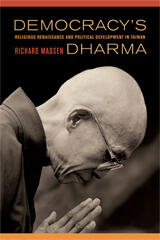
This is a CDDRL's Special Event within our Democracy in Taiwan Program. It is also co-sponsored by the Public Diplomacy/Emerging Publics Project of the Center for the Pacific Rim at University of San Francisco. In this seminar, Dr. Richard Madsen will talk about his new book that explores the religious renaissance that has reformed, revitalized, and renewed the practices of Buddhism and Daoism in Taiwan and how this religious renaissance embraces democracy modernity.
Richard Madsen received an MA in Asian studies and a Ph.D. in sociology from Harvard.
"Madsen is a genial and well-informed guide, both to social-political change in Taiwan and to the ins and outs of religious movements. His engaging writing skillfully interweaves profound insights and themes into the descriptive analytical narrative. Democracy's Dharma presents new material based on recent research while offering a fresh spin on thinking about Asian religions."–Thomas Gold, editor of Social Connections in China: Institutions, Culture, and the Changing Nature of Guanxi
Philippines Conference Room
Lant Pritchett is Professor of the Practice of Economic Development at the Kennedy School of Government at Harvard University (as of July 1, 2007).
In addition he works as a consultant to Google.org, is a non-resident fellow of the Center for Global Development, and is a senior fellow of BREAD. He is also co-editor of the Journal of Development Economics.
He graduated from Brigham Young University in 1983 with a B.S. in Economics and in 1988 from MIT with a PhD in Economics.
After finishing at MIT Lant joined the World Bank, where he held a number of positions in the Bank's research complex between 1988 and 1998, including as an adviser to Lawrence Summers when he was Vice President 1991-1993. From 1998 to 2000 he worked in Indonesia. From 2000 to 2004 Lant was on leave from the World Bank as a Lecturer in Public Policy at the Kennedy School of Government at Harvard University. In 2004 he returned to the World Bank and moved to India where he worked until May 2007.
He has been part of the team producing many World Bank reports, including: World Development Report 1994: Infrastructure for Development, Assessing Aid: What Works, What Doesn't and Why (1998), Better Health Systems for Indias Poor: Findings, Analysis, and Options (2003), World Development Report 2004: Making Services Work for the Poor, Economic Growth in the 1990s: Learning from a Decade of Reforms (2005).
In addition he has authored (alone or with one of his 22 co-authors) over 50 papers published in refereed journals, chapters in books, or as articles, as least some of which are sometimes cited. In addition to economics journals his work has appeared in specialized journals in demography, education, and health. In 2006 he published his first solo authored book Let Their People Come.
Lant, an American national, was born in Utah in 1959 and raised in Boise Idaho. Perhaps because of this, he has worked in, or traveled to, over forty countries and has lived in three other countries: Argentina (1978-80), Indonesia (1998-2000), and India (2004-2007).
CISAC Conference Room
"These projects have great potential to advance academic knowledge, social capital and human development around the world, and to create a healthier, more promising future for hundreds of millions of people," President John Hennessy said. "When we launched The Stanford Challenge, we committed to marshal university resources to address the great challenges of the 21st century in human health, the environment and international affairs, and it is gratifying to see the response from our remarkable faculty."
The 2008 projects and their principal investigators follow:
Enhancing Health Security Through Infrastructure and Behavioral Intervention: Water, Sanitation and Child Survival in Africa. Alexandria Boehm and Jenna Davis, Civil and Environmental Engineering; Abby King, Health Research and Policy and Medicine; Gary Schoolnik, Medicine and Microbiology and Immunology. The project seeks to improve the health and well-being of the 1.2 billion people in low-income countries who lack access to clean water and the 2.6 billion who lack access to sanitation services, with a focus on mortality reduction in children. It will be carried out in sub-Saharan Africa, where the toll of water- and sanitation-related illness on health is severe, and will investigate the extent to which information and education about water and sanitation at the household level motivates behavior changes that result in reduced morbidity. Results will inform international efforts to design and implement effective water supply and sanitation interventions for more than 400 million Africans currently lacking access.
Why Are Indian Firms Poorly Managed? A Survey and Randomized Field Intervention. Nicholas Bloom and Aprajit Mahajan, Economics; Thomas C. Heller and Erik Jensen, Law School; John Roberts, Graduate School of Business. The biggest single reduction in poverty in the history of mankind was achieved by the industrialization of China since 1978, which lifted almost 500 million people out of poverty. India has not experienced this level of poverty reduction because its manufacturing firms have not achieved the productivity gains seen in China. Recent evidence suggests one key factor is the poor management practices adopted by Indian firms. This project examines why poor management practices persist in India and are much more common there. It focuses in particular on evaluating the relative importance of informational, legal and development barriers. The project will undertake a field survey of Indian firms to evaluate their knowledge of modern management techniques and a field intervention aimed at upgrading management practices in a randomized sample of Indian firms, comparing their progress to a control group of untouched firms.
Courts, Politics and Human Rights. Joshua Cohen, Philosophy, Political Science, and Law School; Terry L. Karl, Political Science; Jenny S. Martinez, Law School; Helen Stacy, Law School. This project examines the role of courts as the centerpiece of strategies for promoting human rights by asking if courts should be a preferred human rights venue or if there are other more accessible and effective ways to secure human rights. It addresses three broad themes: the interplay between national, regional and international courts in the protection of human rights; the role of governments and nongovernmental organizations in influencing legal proceedings; and how courts construct historical truth and shape public opinion, memory, attitudes and discourse about human-rights abuses. The multidisciplinary project will span countries, regions, issue areas and historical timeframes to ask what reasonably can be expected from international, regional and domestic courts in safeguarding human rights.
The Middle East and the World Economy. Matthew Harding, Economics; Lisa Blaydes, Political Science. This project examines why the Middle East has lagged in economic progress compared to much of the developing world and the implications of this underdevelopment for two overarching trends in Middle Eastern politics today: authoritarian government and Islamic fundamentalism. The researchers also will examine how political instability originating in the Middle East has affected world oil prices and world markets by constructing economic models of the world economy. The project seeks broadly to understand the macro- and microeconomic determinants of Islamic fundamentalism and authoritarian rule, and the extent to which these two outcomes have affected the stability and prosperity of the world economy. It measures global factors resulting from increased globalization and quantifies their impact on the development of economies in the Middle East.
The $3 million Presidential Fund for Innovation in International Studies was first established in 2005 by the Office of the President and the Stanford International Initiative to support new cross-campus, interdisciplinary research and teaching among Stanford's seven schools on three overarching global challenges: pursuing peace and security, reforming and improving governance at all levels of society, and advancing human well-being.
The first $1 million in interdisciplinary grants was awarded in February 2006; the second round of grants was awarded in February 2007.
"In all three rounds of funding, it has been heartening to see the imaginative and innovative ways that Stanford faculty are combining intellectual forces across disciplines to tackle some of the most pressing and persistent problems of our day," said Coit D. Blacker, chair of the International Initiative Executive Committee and director of Stanford's Freeman Spogli Institute for International Studies. "It is especially gratifying to see the younger faculty competing for these grants, eager to generate new knowledge and new solutions and help train a new generation of leaders."
Priority in funding has been given to teams of faculty who do not typically work together, who represent multiple disciplines and who address issues falling broadly within the three central research areas of the Stanford International Initiative. Projects are to be based on collaborative research and teaching involving faculty from two or more disciplines and, where possible, from two or more of the university's seven schools.
Jon Pevehouse, an associate professor at the Harris School, has written widely on international organizations and international political economy issues in the field of international relations. His most recent work focuses on American foreign policy and how domestic political institutions constrain the president's ability to exercise military force abroad. He also is involved in an ongoing project on the political implications of regional trade integration.
Pevehouse's previous work has examined reciprocity within regional political conflicts, democratization and regional organizations, the political-military implications of international organizations, and economic interdependence. He is the author of Democracy from Above? Regional Organizations and Democratization (Cambridge University Press, 2005) and (with William Howell) While Dangers Gather: Congressional Checks on Presidential War Powers (Princeton University Press, 2007). He is also the author (with Joshua Goldstein) of International Relations (Longman Press), the leading undergraduate text on international relations.
Prior to arriving at University of Chicago, Pevehouse was in the political science department at the University of Wisconsin, where he received the Chancellor's Distinguished Teaching Award. Pevehouse received his B.A. in political science, with honors and highest distinction, from the University of Kansas and received his Ph.D. in political science from Ohio State University.
Encina Ground Floor Conference Room
Clare Lockhart is co-founder and Director of the Institute for State Effectiveness, advising a number of countries on their approaches to state-building. Between 2001 and 2005, she worked as UN adviser to the Bonn Agreement in Afghanistan and advised the Government of Afghanistan, where she led a number of national initiatives. She returned in 2006-7 as Adviser to NATO and ISAF. Previously she managed a World Bank program on institutional and organizational analysis, designing governance and legal reform approaches, adapting techniques from the private sector and military domains to public sector management, designing toolkits, training seminars and operational guidelines.
Fixing Failed States: A Framework for Rebuilding a Fractured World
Ashraf Ghani and Clare Lockhart, Apr 2008
Encina Ground Floor Conference Room
She also served as the Director of the Minerva Center for Human Rights (2000-2001) and the Deputy Dean of the Faculty of Law (2000-2002) and currently serves as a member of Israel's Council of Higher Education (since 2007). She was awarded several prizes, including the Rector's Prize for Excellence in Teaching (twice), the Zeltner Prize, the Woman of the City Award (by the City of Tel-Aviv) and the Women in Law Award (by the Israeli Bar). She is the author and editor of several books and has many articles published in journals in the United States, Canada, England, and Israel.
Encina Ground Floor Conference Room
Sohail Hashmi has received numerous awards and fellowships, including the National Resource Fellowship, the Social Science Research Council-MacArthur Foundation Collaborative Research Grant, and the W. Alton Jones Fellowship on the Nuclear Threat. He is the author and editor of numerous publications on Islam, international relations, and comparative ethics.
Hashmi earns high praise from his students and colleagues for his dedication to teaching participants to form opinions about contemporary issues and current events using a wide range of publications and data. He teaches a wide variety of classes, including an introductory world politics course and seminars such as Just War and Jihad: Comparative Ethics of War and Peace; Comparative Politics of North Africa; and International Relations.
This workshop is also sponsored by CISAC.
CISAC Conference Room