World Trade Organization
Authors
Soraya Johnson
News Type
Q&As
Date
Paragraphs

The "Meet Our Researchers" series showcases the incredible scholars at Stanford’s Center on Democracy, Development and the Rule of Law (CDDRL). Through engaging interviews conducted by our undergraduate research assistants, we explore the journeys, passions, and insights of CDDRL’s faculty and researchers.

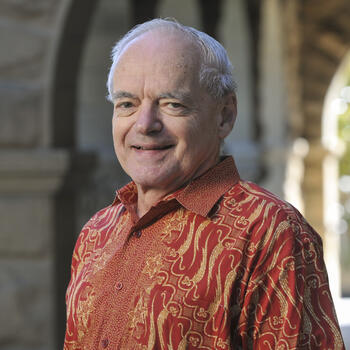
Michael Bennon is a Research Scholar and program manager of CDDRL’s Global Infrastructure Policy Research Initiative. Having served as a Captain in the US Army and US Army Corps of Engineers, he now teaches Global Project Finance at Stanford University. His research focuses on infrastructure development, specifically on the importance of restructuring incentives, public-private partnerships, legal regulation, and the shifting landscape of foreign investment in infrastructure.

What inspired you to pursue research in your current field, and how did your journey lead you to CDDRL?


I used to work for the federal government as an engineer. We were constantly running into hurdles, unnecessary red tape, and misaligned incentives — I felt there had to be a better way to do infrastructure development. So, I went to graduate school at Stanford, studying under Dr. Raymond Levitt, who focused on the cross-disciplinary intersection of engineering, international relations, finance, and law. We worked to address gaps in the research world regarding infrastructure development from a project finance perspective.

After graduate school, I continued working with Dr. Levitt and began teaching about the financing of large infrastructure projects. I began collaborating with CDDRL when researching China’s Belt and Road Initiative (BRI) and international infrastructure development more broadly. The throughline of my journey, from focusing on engineering to organization management to law, has been to follow the biggest challenges in infrastructure.

How do you visualize the creation of more effective incentive structures to motivate private companies to further global development? How can the public-private partnership work more effectively?


There's a myriad of flaws in the infrastructure development sector with incentives. The basic disconnect is that in a democracy, elected officials rely on bureaucracy and various agencies to develop complex infrastructure projects, which can lead to a convoluted system. When a government infrastructure project goes over budget, the many groups involved often don’t bear the costs — taxpayers do.

However, effective public-private partnerships can help solve these broken incentives. For example, if a project is structured so that the companies building the infrastructure are also responsible for maintaining it, then they are incentivized to create projects that last.

Internationally, in the old pre-BRI paradigm of development, there were two ways for a developing country to fund its infrastructure: either by borrowing money or financing projects through foreign direct investment. For the latter, there’s a form of private-public partnership, as international investors invest directly into the project instead of through the government.


Effective public-private partnerships can help solve broken incentives. For example, if a project is structured so that the companies building the infrastructure are also responsible for maintaining it, then they are incentivized to create projects that last.
Michael Bennon


How has infrastructure development been used to gain influence in diplomacy? How has our understanding of that tool changed since BRI, and how successful has it been for China?


Infrastructure development has always been a problematic tool for amassing geopolitical influence; it builds friendships when loans are going out, then creates enemies once they’re issued. A recent example is the 1997 Asian financial crisis when Western countries had invested in power plants throughout the continent, only for many countries to default and expropriate. This has happened repeatedly throughout history.

While China’s done quite well at protecting its economic interests in infrastructure projects, it's a mixed bag due to the prevalence of moral hazard, public backlash, and the tarnishing of diplomatic ties. With the state being so heavily involved in BRI, China intervenes when countries want to default or expropriate, protecting its interests and those of state-owned enterprises effectively. However, this can lead to a moral hazard problem because these enterprises feel too protected by China and act without the appropriate caution while building risky projects.

Today, many countries that have received BRI lending have serious relational problems with China, if not at the government level, then among the public. People tend to push back and feel taken advantage of when a foreign country comes in and builds projects, especially with rumor mills churning out narratives about China’s 'debt-trap diplomacy.' These diplomatic challenges were true long before the BRI and persist today.

Why do countries, through BRI or other means, decide to take on infrastructure projects they obviously can’t afford?


Countries often don’t behave rationally — politics, corrupt officials, and conflicting interests all affect policymaking. Also, everyone builds infrastructure projects that may bankrupt them, partly due to an ingrained optimism bias in the infrastructure sector.

We’re in the worst developing country debt crisis in modern history, and countries are having a difficult time navigating a changing infrastructure lending landscape. China is now the largest bilateral lender, and its absence from international organizations like the Paris Club prevents the unified action needed to allow countries to emerge from debt crises. Even the International Monetary Fund (IMF) is struggling to help them, as it is cautious about issuing aid to countries with murky BRI loans to pay back.

Funding for infrastructure development can be used as an incentive for democratization through conditionality on loans. However, many countries are turning away from traditional Western lending institutions in favor of alternative lenders with fewer conditions. How can we balance the importance of conditionality and incentivizing democratization while preventing the decreased reliance on Western institutions?

Conditionality can be positive in promoting democratization, but there have to be limits to it, especially because it becomes less effective when alternative lenders like China exist. Conditionality began as limited to policies that promote democratization, development, and liberalization but has metastasized to the point where lenders are pushing a wide range of policies on borrower countries. Many of these conditions, such as environmental or social protections, are good policies but can be viewed as a manifestation of Western imperialism within these countries. These programs also become futile when countries become simply incentivized to seek Chinese loans instead, which have virtually no conditionality.

Is the turn away from Western lending institutions an inevitable shift, or can policy changes encourage its prodominance again, if that’s something that we want?


Western institutions are better for infrastructure development, as organizations like the World Bank are the best at protecting human rights and preventing environmental disasters. There are also strategic and security reasons for promoting Western institutions — for example, we don’t want Chinese technology companies building telecommunications grids in other countries.

The bigger question is, what would a return to a Western-dominated model of investment look like? Pre-BRI, there was an open, liberal system of direct investment from private companies. BRI represented a pivot to more state-driven investment. Should the US shift to a similar model, or return to private direct investment fueling infrastructure development? The Biden administration’s alternative to BRI for state-driven investment was the Partnership for Global Infrastructure and Investment (PGII). Despite mutual investment in telecommunications and renewable energy, PGII focuses on developing very different sectors than BRI, building social impact projects like healthcare infrastructure.

What is the most exciting or impactful finding from your research, and why do you think it matters for democracy, development, or the rule of law?


I’m focusing on how liberal democracies can get building again, so I researched flaws in domestic infrastructure projects within the US. It revealed how the judicial system was an engine fueling how infrastructure projects are conducted; I realized the extent to which permitting regulation and environmental litigation had been driving my own incentives when I was a bureaucrat. Decisions are often made in response to case law and to ‘litigation-proof’ projects, which can incentivize inefficient and expensive project management. I believe democracies are perfectly capable of building infrastructure projects well, but problems in current building initiatives, from the California High-Speed Rail to our housing crisis, are rooted in the outsized effects of the threat of lawsuits.


I believe democracies are perfectly capable of building infrastructure projects well, but problems in current building initiatives, from the California High-Speed Rail to our housing crisis, are rooted in the outsized effects of the threat of lawsuits.
Michael Bennon


How do you see your research influencing policy or contributing to real-world change?


I do research on practical public-private partnership policy in the United States, working with the Build America Center and the Department of Transportation to directly supply the government with research when needed.

There are policy changes that must occur to promote effective infrastructure development. The US will have to reform institutions that predated BRI to adapt to today’s post-BRI world. The three key institutions are the World Bank, the IMF, and the World Trade Organization (WTO). I hope that my ideas can influence their restructuring. For domestic development, I’m continuing my work with the Build America Center on how governments can more efficiently procure infrastructure projects and help public officials adopt best practices.

Lastly, what book would you recommend for students interested in a research career in your field?


The first book, which is extraordinarily boring but crucial to infrastructure development, is The Strategic Management of Large Engineering Projects: Shaping Institutions, Risks, and Governance. Written by Miller, Lessard, Michaud, and Floricel, it includes the perspectives of MIT engineers on infrastructure project case studies to understand why so many have failed. For some great history, the economist Raymond Vernon’s book Sovereignty at Bay develops the idea that relationships sour over international investment and that it’s not an effective diplomatic tool.

Read More

Launching viaduct bridge in progress for Pune metro rail project in Pune city, Maharashtra, India.
News

CDDRL’s Leadership Academy for Development Announces New Public-Private Partnerships Program with the International Finance Corporation

The Center on Democracy, Development and the Rule of Law’s (CDDRL) Leadership Academy for Development (LAD) is embarking on a new partnership with the International Finance Corporation to educate senior leaders on infrastructure policy, governance, and public-private partnerships.
CDDRL’s Leadership Academy for Development Announces New Public-Private Partnerships Program with the International Finance Corporation
Construction on a building in Sri Lanka
Q&As

Stanford Researchers Explore the Challenges Created By and Reforms Needed to Improve China’s Belt and Road Initiative

Francis Fukuyama and Michael Bennon share their insights on the potential implications of the Belt and Road Initiative (BRI) on global development finance, as well as suggestions for reforms that could bolster international stakeholders’ ability to manage any potential debt crises arising from BRI projects.
Stanford Researchers Explore the Challenges Created By and Reforms Needed to Improve China’s Belt and Road Initiative
Governance in California
News

Stanford’s Center on Democracy, Development and the Rule of Law Releases Policy and Scenario Report on the Future of California's Governance

The research team led by Francis Fukuyama and Michael Bennon examined where California has been, where it’s at, and where it’s headed when it comes to possible scenarios and policy alternatives for the future.
Stanford’s Center on Democracy, Development and the Rule of Law Releases Policy and Scenario Report on the Future of California's Governance
Hero Image
Meet Our Researchers: Michael Bennon
All News button
1
Subtitle

Investigating how infrastructure project financing has changed amidst global geopolitical competition and how democracies can more effectively build in the future with CDDRL research scholar Michael Bennon.

Date Label

Encina Hall
616 Jane Stanford Way
Stanford, CA 94305-6055

0
Research Scholar
mike_bennon_2022.jpg

Michael Bennon is a Research Scholar at CDDRL for the Global Infrastructure Policy Research Initiative. Michael's research interests include infrastructure policy, project finance, public-private partnerships and institutional design in the infrastructure sector. Michael also teaches Global Project Finance to graduate students at Stanford. Prior to Stanford, Michael served as a Captain in the US Army and US Army Corps of Engineers for five years, leading Engineer units, managing projects, and planning for infrastructure development in the United States, Iraq, Afghanistan and Thailand. 

Program Manager, Global Infrastructure Policy Research Initiative
0
CDDRL Predoctoral Scholar, 2017-18
rebeccaperlman022620_0011.jpeg

Rebecca was a 2017-18 Pre-doctoral Fellow at the Center on Democracy, Development and the Rule of Law in the Freeman Spogli Institute for International Studies, as well as a Dissertation Fellow at the Institute for Research in the Social Sciences. She studies international political economy with a focus on regulation, trade, and the role of international institutions. Rebecca is working on a book project that explores the origins of health and safety regulations. She develops a theory specifying the conditions under which firms are able to use health and safety regulations in order to block international competition. The theory produces the surprising conclusion that innovative firms benefit from and actively seek regulations that rule some of their own products unsafe. Rebecca has received funding from the Horowitz Foundation and Stanford’s Europe Center. She also received a Stanford Graduate Research Opportunity Grant. She holds a Master of Arts in Law and Diplomacy from the Fletcher School of Law and Diplomacy at Tufts University. Her undergraduate degree is from Princeton University, where she majored in politics and graduated summa cum laude and phi beta kappa.

CV
Authors
News Type
News
Date
Paragraphs


Negotiators from 12 Pacific Rim countries recently reached an agreement on the Trans-Pacific Partnership (TPP), a sweeping trade pact that has been promoted by the Obama administration as a high-quality, next-generation deal that will set standards for international trade for years to come. While noting the agreement still requires ratification by each member state, Stanford scholars believe that the TPP will be approved and reshape not only trade but also security relations in the Asia-Pacific region and beyond.


The TPP negotiations originally began as an expansion of the Trans-Pacific Economic Partnership Agreement signed by Brunei, Chile, New Zealand and Singapore in 2005, and then took on broader significance in 2008 when the United States expressed interest. The number of members eventually grew to include the other North American Free Trade Agreement (NAFTA) economies of Canada and Mexico, as well as Australia, Peru, Vietnam, Malaysia and Japan. Even before the agreement was finalized, leaders of many other Asia-Pacific countries expressed interest in joining the next round of negotiations, including South Korea, Taiwan, the Philippines, Colombia, Thailand and most recently, Indonesia.


leaders of tpp member states A summit with leaders of the member states of the Trans-Pacific Strategic Economic Partnership Agreement (TPP). Pictured, from left, are Naoto Kan (Japan), Nguyễn Minh Triết (Vietnam), Julia Gillard (Australia), Sebastián Piñera (Chile), Lee Hsien Loong (Singapore), Barack Obama (United States), John Key (New Zealand), Hassanal Bolkiah (Brunei), Alan García (Peru), and Muhyiddin Yassin (Malaysia). Six of these leaders represent countries that are currently negotiating to join the group.

The appeal of the TPP in the region is twofold. First, the repeated failure of new trade talks at the World Trade Organization (WTO) has forced countries seeking greater trade liberalization to pursue it through other bilateral or regional multilateral negotiations. Second, in the Asia-Pacific region, the number of these agreements has rapidly multiplied, creating myriad different standards, procedures and tariff rates that raise the costs of doing business across state borders and inhibit international trade and investment.


The TPP offers the prospect of a common set of rules governing investment, production and exchange across all member states, with significant improvements in economic efficiency. In addition, the danger of being excluded from a new trade regime that includes a huge share of the region’s economic activity has created a sense of urgency to seek membership from those countries not in the initial round of negotiations. By far the most conspicuous absence among the TPP members is China, which is now the world’s second-largest economy and a significant trading partner of all current member states.


The Trans-Pacific Partnership has been a research focus at the Freeman Spogli Institute for International Studies.


The Walter H. Shorenstein Asia-Pacific Research Center has organized several events exploring aspects of the TPP, and the Taiwan Democracy Project in the Center on Democracy, Development, and the Rule of Law held a conference in 2013 that examined the TPP from a Taiwanese perspective. The conference produced a comprehensive report on the topic, and an audio recording of an earlier Shorenstein APARC panel event was made available online. Now that negotiations have concluded, the Taiwan Democracy Project will revisit the topic in an upcoming conference on Feb. 9.


With the public release of the agreement in early October, three noted experts from Stanford University, Thomas Fingar, Michael Armacost, and Donald Emmerson, offered their analysis of the TPP’s prospects for ratification and its impact on the Asia-Pacific region.


Now that the agreement has been published, what is significant about the TPP? What does it mean for China?


Image
tom fingar2
The TPP is a big deal for many reasons, perhaps the most important of which is that it will provide the impetus and the template for concluding the Trans-Atlantic Trade and Investment Partnership (TTIP) and myriad other regional and mini-lateral trade negotiations initiated in response to the failure of the Doha Round of WTO reform. As with all trade agreements, there will be winners and losers, pain will be local and benefits diffuse, and critics will find much to criticize. But the agreement is likely to be ratified and its provisions will affect corporate strategies, investment decisions and globalized production chains. The fact that North America (the United States, Canada and Mexico) are parties to the TPP virtually assures that the globally important NAFTA group will not accept terms in TTIP or other negotiations that are incompatible with the TPP because NAFTA governments and companies do not want to cope with multiple standards, requirements, and procedures. The same is true of other major trading states and international firms, so the TPP will quickly become the new standard for “everyone” wishing to take advantage of opportunities in a globalized world.

This means that the TPP will serve as a—the—decisive building block for beyond-WTO trade arrangements. Without success in the TPP (or TTIP, which also has the size and importance to have become the new global standard if it had been concluded before the TPP) negotiations, there was a danger that the advantages of an integrated global trading system would be degraded by adoption of multiple and partially incompatible sub-regional agreements. Now those negotiating bilateral and mini-lateral agreements are likely to strive for consistency with the requirements adopted by key trading nations and the firms based in them.

The TPP is often but erroneously described as part of a U.S. effort to contain or constrain China. It isn’t. The United States should and will seek to bring China into the TPP, not to exclude it. I anticipate that Beijing will join together with South Korea, Indonesia, and possibly other states that are not yet members.


Thomas Fingar is a Shorenstein APARC Distinguished in the Freeman Spogli Institute for International Studies. He served previously as assistant secretary of the State Department’s Bureau of Intelligence and Research, principal deputy assistant secretary, deputy assistant secretary for analysis, director of the Office of Analysis for East Asia and the Pacific, and chief of the China Division.


Does the TPP carry security benefits? What are possible consequences for the U.S.-Japan relationship?


Image
armacost 2
The TPP is a trade agreement, not a security pact. Security is generally a predicate for growth and trade. It does not thrive amidst turmoil, let alone conflict. But with greater economic interdependence, the incentives for avoiding conflict increase. And fortuitously Asia remains an unusually peaceful region despite some growing tensions between China and its neighbors.

The TPP agreement is certainly an integral feature of the Obama administration’s effort to “rebalance” toward the Asia-Pacific region. It embeds the United States in a new institution whose membership, I believe, is destined to grow. America’s engagement in the region is a source of reassurance to our friends and allies there. The United States has been bolstering its alliance with Japan, and this agreement will add a broader framework to the U.S. alliance, which was established through the Treaty of Mutual Cooperation and Security, and which contains a specific clause encouraging expanded economic collaboration.

I regret that selling the agreement publicly has included some explicitly anti-Chinese features such as the claim that if the United States and others don’t write the rules of trade, China will. The TPP is and should be open to new members who are prepared to live up to its requirements and that includes China.


Michael H. Armacost is a Shorenstein APARC Distinguished Fellow in the Freeman Spogli Institute for International Studies. He held a 24-year career in the public service, including having served as U.S. ambassador to Japan and the Philippines.


How does the TPP fit into the context of Southeast Asia and its possible alternative arrangements for economic cooperation in the Asia-Pacific region?


Image
don emmerson 2
In strictly economic terms, there is no exact alternative to the distinctively comprehensive and intrusive TPP. In loosely economic but mainly geopolitical terms, however, a competitor does exist: the Regional Comprehensive Economic Partnership (RCEP). The United States is in the TPP. China is not. In the RCEP, the reverse is true. The United States has propelled the TPP. China and the Association of Southeast Asian Nations (ASEAN) are driving the formation of RCEP by all ten ASEAN states plus Australia, China, India, Japan, New Zealand and South Korea.

Compared with the TPP, RCEP is far less robust. RCEP is mainly about straightening the overlapping and sometimes inconsistent free trade agreements that already complicate Asian regionalism—the tangled contents of Asia’s “noodle bowl” of overlapping FTAs. (Trade agreements in the Asia-Pacific have burgeoned from around 60 ten years ago to some 300 today.) Under pressure from the more detailed and thoroughgoing TPP, RCEP’s would-be progenitors have been trying to expand their agenda to include more intrusive proposals. Partly for that reason, observers are pessimistic that RCEP’s negotiators will be able to proclaim its successful completion before the end of 2015.

ASEAN is divided. Myanmar, Cambodia, Indonesia, Laos, the Philippines, and Thailand are inside RCEP but outside the TPP. The other four ASEAN members—Brunei, Malaysia, Singapore, and Vietnam—enjoy the advantage of sitting at both negotiating tables. If only one of the two projected partnerships fails, these four states would still have the other arrangement to fall back on, and so much the better for them if both schemes succeed. It is partly for this reason that varying degrees of interest in joining the TPP have been expressed by five of the six non-TPP states in Southeast Asia. The exception is Myanmar, but once the structure and character of its new government have been clarified, its leaders too may wish to consider the TPP. Even China’s initially hostile view of the TPP has softened.

Given the market-favoring and regulation stipulations of the TPP, new entrants may be unwilling to accept its detailed, full-spectrum rules. But the Doha Round is dead, and the proposal to replace it with a scaled-down “Global Recovery Round” has gone nowhere. For the time being, the best one can hope for in the Asia-Pacific region is a successful TPP that China could eventually join, or a successful RCEP that could someday welcome the United States, or the birth of both arrangements followed by effective steps to render them complementary rather than competitive.


Donald K. Emmerson is director of the Southeast Asia Program at the Walter H. Shorenstein Asia-Pacific Research Center in the Freeman Spogli Institute for International Studies, where he is also affiliated with the Center for Democracy, Development, and the Rule of Law and the Abbasi Program in Islamic Studies.


Interested in joining the conversation? The Taiwan Democracy Project will revisit this topic on Feb. 9. The one-day symposium will bring together scholars and practitioners to reconsider Taiwan's prospects for entry into the Trans-Pacific Partnership. RSVP here today.


Image
img 6130

Listen to the audio from the event "The Trans-Pacific Partnership (TPP) -- A New Order for the Asia-Pacific?" with Stanford scholars Donald Emmerson, Thomas Fingar, Daniel Sneider and Kathleen Stephens.


Hero Image
16762169536 80a0c68f25 o
President Barack Obama participates in a trilateral meeting with Prime Minister Tony Abbott of Australia and Prime Minister Shinzo Abe of Japan, right, at the Brisbane Convention and Exhibition Center, Brisbane, Queensland, Australia, Nov. 16, 2014.
Official White House Photo by Pete Souza
All News button
1
-

This half-day symposium will bring together scholars and practitioners to reconsider Taiwan's prospects for entry into the Trans-Pacific Partnership in light of the conclusion of negotiations in October 2015 and the election of a new president and legislature in Taiwan in January 2016. It will revisit the themes and conclusions of the Taiwan Democracy Project's 2013 annual conference.

9:00-9:15am: Introductions

9:15-11:00am. Panel 1: The Politics of Trade and Development in Taiwan

Stephen Tan, Vice President of the Cross-Strait Policy Association, Taipei

Kristy Hsu, Director, Taiwan ASEAN Studies Center, Chung Hua Institution for Economic Research, Taipei

Chung-ming Kuan, Chair Professor, Department of Finance and Director of CRETA at National Taiwan University, and former Minister of the National Development Council

Hung-mao Tien, President of the Institute for National Policy Research, and former Minister of Foreign Affairs, Taiwan

11:00-11:15. Break

11:15-12:45. Panel 2: International Perspectives on the TPP: Implications for Regional Development and Geopolitics

Vinod Aggarwal, Professor of Political Science and Faculty Affiliate of the Center for East Asian Studies, UC Berkeley

Nicholas Hope, Director of the China Program at the Stanford Center for International Development

Thomas Gold, Professor of Sociology and Faculty Affiliate of the Center for East Asian Studies, UC Berkeley


Audio Recording


CISAC Central Conference Room

Conferences
-

Abstract

The Trans-Pacific Partnership (TPP) is widely regarded as the economic component of the US strategy of “rebalance” to Asia. As a major trading partner of many of the founding members, Taiwan has obvious economic and security interests at stake and is therefore seeking to join the TPP in the next round. But an overlooked aspect of the TPP for Taiwan is its potential impact on sovereignty. Trade agreements provide a revealing window into the evolving conceptions of modern sovereignty. The way Taiwan’s unique form of statehood and international status is defined in trade agreements could strengthen its position under international law and contribute to its national security. This talk will consider how Taiwan was defined as a sui generis legal entity in its application to join the World Trade Organization (WTO) and as a party to the Cross-Straits Economic Cooperation Framework Agreement (ECFA), with lessons for future negotiations to join the TPP.   


Speaker Bio

Image
Joseph Yen-ching Chao
Joseph Yen-ching Chao is an Executive Officer in the Department of International Cooperation and Economic Affairs. A member of Taiwan’s Ministry of Foreign Affairs (MOFA) diplomatic corps since 2005, he has previously served as a German-language interpreter for the Presidential Office, an officer in the Department of Treaty and Legal Affairs, and as a deputy secretary of Taiwan’s permanent mission to the World Trade Organization in Geneva, Switzerland.  He holds an LL.M. from Ruprecht-Karls University in Heidelberg and a Doctor juris from Albert-Ludwige University, Frieberg, Germany. Dr. Chao is in residence at Stanford from May-July 2015, where his research examines Taiwan’s prospects for entry into the Trans-Pacific Partnership (TPP).


This event is hosted by the Taiwan Democracy Project.

TPP and Taiwan
Download pdf
Joseph Yen-ching Chao Visiting Fellow Ministry of Foreign Affairs, Republic of China (Taiwan)
Seminars
-

[[{"fid":"209960","view_mode":"crop_870xauto","fields":{"format":"crop_870xauto","field_file_image_description[und][0][value]":"","field_file_image_alt_text[und][0][value]":false,"field_file_image_title_text[und][0][value]":false,"field_credit[und][0][value]":"Arlene Hsu","field_caption[und][0][value]":"Taipei at night with Taipei 101. 28 February 2009.","field_related_image_aspect[und][0][value]":"0","thumbnails":"crop_870xauto"},"type":"media","field_deltas":{"1":{"format":"crop_870xauto","field_file_image_description[und][0][value]":"","field_file_image_alt_text[und][0][value]":false,"field_file_image_title_text[und][0][value]":false,"field_credit[und][0][value]":"Arlene Hsu","field_caption[und][0][value]":"Taipei at night with Taipei 101. 28 February 2009.","field_related_image_aspect[und][0][value]":"0","thumbnails":"crop_870xauto"}},"link_text":null,"attributes":{"width":"870","class":"media-element file-crop-870xauto","data-delta":"1"}}]]


Over the past year and more, Taiwan’s political elite has been deadlocked over the question of deepening economic relations with the People’s Republic of China. This controversial issue has led to a standoff between the executive and legislative branches, sparked a frenzy of social activism and a student occupation of the legislature, and contributed to President Ma Ying-jeou’s deep unpopularity.

On October 17-18, the Taiwan Democracy Project at CDDRL, with the generous support of the Taipei Economic and Culture Office, will host its annual conference at Stanford University to examine the politics of polarization in Taiwan.

This conference will bring together specialists from Taiwan, the U.S., and elsewhere in Asia to examine the sources and implications of this political polarization in comparative perspective. It will include a special case study of the Trade in Services Agreement with China that triggered this past year’s protests, as well as a more general overview of the politics of trade liberalization in Taiwan, prospects for Taiwan’s integration into the Trans-Pacific Partnership and other regional trade agreements, and a consideration of the implications for Taiwan’s long-term democratic future.

Conference speakers will include: Chung-shu Wu, the president of the Chung-hwa Institute of Economic Research (CIER) in Taipei; Steve Chan of the University of Colorado; Roselyn Hsueh of Temple University; Yun-han Chu, the president of the Chiang Ching-kuo Foundation; and Thitinan Pongsudhirak of Chulalongkorn University in Bangkok.


Panels will examine the following questions:

1. What are the sources and implications of political polarization in Taiwan, and how have these changed in recent years?

2. How does Taiwan’s recent experience compare to political polarization in other countries in Asia (e.g. South Korea, Thailand) and elsewhere (the US)?

3. To what extent does the latest political deadlock in Taiwan reflect concern over the specific issue of trade with the People’s Republic of China, versus a deeper, systemic set of problems with Taiwan’s democracy?

4. How are globalization and trade liberalization reshaping Taiwan’s domestic political economy, and what are the prospects for forging a stronger pro-trade coalition in Taiwan that transcends the current partisan divide?


The conference will take place October 17-18 in the Bechtel Conference Room in Encina Hall at Stanford University. It is free and open to the public. 


Conference Resources


Agenda

Speaker Bios

Presentations

Conference Report

Conference Flyer


Conference Papers


How Cross-Strait Trade and Investment Is Affecting Income and Wealth Inequality in Taiwan by Chien-Fu Lin, National Taiwan University


Generational Differences in Attitudes towards Cross-Straits Trade by Ping-Yin Kuan, Department of Sociology & International Program in Asia-Pacific Studies, National Chengchi University


Change and the Unchanged of Polarized Politics in Taiwan by Min-Hua Huang, National Taiwan University; Center for East Asia Policy Studies, The Brookings Institution


Social Media, Social Movements and the Challenge of Democratic Governability by Boyu Chen, National Sun Yat-sen University, Institute of Political Science 


Coping with the Challenge of Democratic Governance under Ma Ying-jeou by Yun-han Chu, National Taiwan University


Taiwan’s Bid for TPP Membership and the Potential Impact on Taiwan-U.S. Relations by Kwei-Bo Huang, National Chengchi University, Department of Diplomacy


In the Wake of the Sunflower Movement: Exploring the Political Consequences of Cross-Strait Integration by Pei-shan Lee, National Chung Cheng University, Political Science Department 


The Roots of Thailand’s Political Polarization in Comparative Perspective by Thitinan Pongsudhirak, Chulalongkorn University; The Institute of Security and International Studies


The Role of the United States in Cross-Strait Economic Integration by Chen-Dong Tso, National Taiwan University


The China Factor and the Generational Shift over National Identity by Mark Weatherall, Taiwan Foundation for Democracy


Taiwan’s Strategy for Regional Economic Integration by Chung-Shu Wu, Chung-Hua Institution for Economic Research


Polarized Electorates in South Korea and Taiwan: The Role of Political Trust under Conservative Governments by Hyunji Lee, Institute of Asian Research, University of British Columbia


Polarization in Taiwan Politics by Steve Chan, University of Colorado, Boulder


Agenda
Conference Biographies
Taiwan Polarization Conference Flyer
Politics of Polarization in Taiwan: Conference Report
Conferences

Encina Hall
616 Serra Street
Stanford, CA 94305-6055

0
Visiting Scholar

Jessie Jin-Jen Leu a government official from the Republic of China (Taiwan), was a visiting scholar at the Stanford Center on Democracy, Development, and the Rule of Law (CDDRL) in 2012-13. 

Ms. Leu is a senior economic officer who worked in various positions at the Ministry of Economic Affairs of R.O.C. She is experienced on the import management and multilateral trade related to the World Trade Organization (WTO) and Asia-Pacific Economic Cooperation (APEC). Currently she is working as an associate researcher to the National Security Advisor for economic affairs.

Ms. Leu graduated from Taiwan’s Tam-Kang University with a Bachelor's degree of International Trade in 1989. She continued her Master’s degree at University of Wyoming, United States in 1995. Ms. Leu also participated in the WTO negotiation and leadership Program at the Harvard University’s Kennedy School of Government in 2003.

-

Richard Steinberg is Professor of Law at UCLA and the Director of the Sanela Diana Jenkins Human Rights Project. In addition to his UCLA appointment, Professor Steinberg is currently a Visiting Scholar at the Stanford Department of Political Science.

Professor Steinberg has written over forty articles on international law.  His most recent books are Assessing the Legacy of the ICTY (forthcoming 2010, Martinus Nijhoff), International Institutions (co-edited, 2009, SAGE), International Law and International Relations (co-edited, 2007, Cambridge University Press), and The Evolution of the Trade Regime: Economics, Law, and Politics of the GATT/WTO (co-authored, 2006, Princeton University Press).

Helen Stacy is Senior Fellow at the Freeman Spogli Institute for International Studies (FSI) and Director of the Program on Human Rights at CDDRL

As a scholar of international and comparative law, legal philosophy, and human rights, Helen Stacy has produced works analyzing the efficacy of regional courts in promoting human rights, differences in the legal systems of neighboring countries, and the impact of postmodernism on legal thinking. Her recent scholarship has focused on how international and regional human rights courts can improve human rights standards while also honoring social, cultural, and religious values.

Bechtel Conference Center

Helen Stacy Speaker
Richard Steinberg Director, Sanela Diana Jenkins Human Rights Project; Professor of Law Speaker UCLA
Lectures
Subscribe to World Trade Organization