The sectarian-based segregation that has shaped urbanism in Baghdad is a direct outcome of the 2003 U.S.-led invasion and occupation of Iraq. The "post"-occupied city is characterized by the normalization of concrete “security” blast-walls that choke urban circulation and sever communities. The notorious blast walls -- or "Bremer Walls" -- perpetuate and intensify conditions of urban segregation. As the summer's surge of anti-government protests in Baghdad demonstrate, the short-sighted nature of this militarized solution to sectarian-based violence has proven to be a superficial and unsustainable fix to the deep dilemma of sectarian segregation codified in Iraq’s political system. This presentation will examine the context for recent public dissent on the streets of Baghdad through the story of the capital city's fragmentation between 2006 and 2007.
Speaker Bio
Image
Mona Damluji is Associate Dean and Director of The Markaz: Resource Center at Stanford University. She is a liberal arts educator, cultural activist and scholar with expertise in the Arab Middle East and broader Muslim World. Mona received her PhD from the University of California, Berkeley and was the Mellon Postdoctoral Fellow in Asian & Islamic Visual Culture at Wheaton College in Massachusetts. Mona regularly curates and organizes exhibits and programs featuring the work of artists and activists linked to Muslim and Arab communities and countries. Major recent projects have included "Open Shutters Iraq" at UC Berkeley and "Arab Comics: 90 Years of Popular Visual Culture" at Brown University. Mona has worked as the educational outreach director for the Arab Film Festival, organizing an annual festival screening for students and teachers in San Francisco, Oakland and Berkeley. Her exhibition and book reviews appear in Jadaliyya, AMCA and the International Journal of Islamic Architecture. Mona's publications also appear in the Journal of Urban History, Comparative Studies of South Asia, Africa and the Middle East, and Subterranean Estates: the Life Worlds of Oil and Gas.
Katherine Bersch is a Kellogg Fellow at the University of Notre Dame (2022-23) and the Nancy Akers and J. Mason Wallace Assistant Professor of Political Science at Davidson College. A research affiliate of the CDDRL Stanford Governance Project, she is also a co-founder of the Global Survey of Public Servants. Her research focuses on democratic quality in developing countries, with an emphasis on governance reform and state capacity in Latin America. She is the author of When Democracies Deliver: Governance Reform in Latin America (Cambridge University Press, 2019), which won the Van Cott Best Book Prize from LASA, the Levine Book Prize from IPSA, and the ASPA Prize for the Best Book Published in Public Administration.
Both South Korea and Taiwan are considered consolidated democracies, but the two countries have developed very different sets of electoral campaign regulations. While both countries had highly restrictive election laws during their authoritarian eras, they have diverged after democratic transition. South Korea still restricts campaigning activities, including banning door-to-door canvassing, prohibiting pre-official period campaigning, and restricting the quantity and content of literature. Taiwan has removed most campaigning restrictions, except for finance regulations. This study explores the causes of these divergent trajectories through comparative historical process tracing, using both archival and secondary sources. The preliminary findings suggest that the incumbency advantage and the containment of the leftist or opposition parties were the primary causes of regulation under the soft and hard authoritarian regimes of South Korea and Taiwan. The key difference was that the main opposition party as well as the ruling party in South Korea enjoyed the incumbency advantage but that opposition forces in Taiwan did not. As a result, the opposition in Taiwan fought for liberalization of campaign regulations, but that in South Korea did not. Democratization in Taiwan was accompanied by successive liberalizations in campaign regulation, but in South Korea the incumbent legislators affiliated with the ruling and opposition parties were both interested in limiting campaigning opportunities for electoral challengers.
Bio:
Dr. Jong-sung You is a senior lecturer in the Department of Political and Social Change, Australian National University. His research interests include comparative politics and the political economy of inequality, corruption, social trust, and freedom of expression. He conducts both cross-national quantitative studies and qualitative case studies, focusing on Korea and East Asia. He recently published a book entitled Democracy, Inequality and Corruption: Korea, Taiwan and the Philippines Compared with Cambridge University Press. His publications have appeared at American Sociological Review, Political Psychology, Journal of East Asian Studies, Journal of Contemporary Asia, Asian Perspective, Trends and Prospects, and Korean Journal of International Studies. He obtained his Ph.D. in Public Policy from Harvard University and taught at UC San Diego. Before pursuing an academic career, he fought for democracy and social justice in South Korea.
Jong-sung You
Senior Lecturer
College of Asia and the Pacific, Australia National University
The University of Cape Town’s Graduate School of Development Policy and Practice (GSDPP), in collaboration with the Leadership Academy for Development (LAD), an affiliate of Stanford University, will be offering a course in April 2015 that addresses some of the challenges faced by public sector leaders as they foster economic growth in politically-charged environments.
This course was run successfully in both 2011 and 2013. The 2015 version – updated with new case studies – will also be facilitated by international and national trainers and experts.
The course is a 5-day, intensive programme for a small number of high level government officials and business leaders from South Africa and other African countries (25-30 in total). It will explore how government can encourage and enable the private sector to play a more effective, productive role in economic growth and development. The curriculum is designed to reinforce and illustrate three critically important hypotheses about the role of public policy in private sector development.
The year was 1909, and Gifford Pinchot, Chief Forester of the United States, faced a terrible personal dilemma. He had discovered a pattern of corruption in the sale of public lands to developers and other private interests. But the new president, William Howard Taft, depended on support from western Republicans and had placed a gag order on the whole affair. Pinchot was outraged at this evidence of corruption reaching the White House, but he wanted to give Taft a fair hearing. The new president had, after all, vowed to support conservation and strong control over federal lands. Taft invited Pinchot to the White House, where he alternately implored Pinchot not to go public with the matter and threatened him with dismissal if he violated the gag order. Pinchot had in his pocket a letter that could expose the scandal. This case explores the dilemma of Pinchot, a mid-level bureaucrat dependent on a president’s good will, and the strategies available to him. It shows the power of a single leader and the similarities the United States once had with many developing nations struggling with widespread corruption.
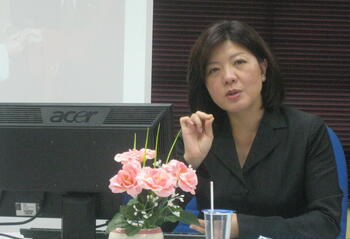
The Buddhist Compassion Relief Tzu Chi (Ciji) Foundation from Taiwan is perhaps one of the largest Buddhist charities in the Chinese world today. This talk traces how Tzu Chi developed under the “regime of civility” in Taiwan. The same regime also contributed to the recent controversies between Tzu Chi and the Aborigines. I argue that the tension between the Buddhist non-governmental organization and the Christian Aborigines has to do with the inequality under the regime of civility: on the one hand, the Aborigines have been marginalized as the “subject” of the civility campaign by the state; and, on the other hand, the same regime of civility is what allows the Buddhist charity to thrive in civil society. This talk raises the question whether civility could turn against civil society.
SPEAKER BIO
Image
C. Julia Huang is a Professor of Anthropology at National Tsing Hua University, Taiwan, and currently a Visiting Scholar at the Ho Center for Buddhist Studies at Stanford University. Huang has published articles in the Journal of Asian Studies, Ethnology, Positions, Nova Religio, the Eastern Buddhist, and the European Journal for East Asian Studies. Her book, Charisma and Compassion: Cheng Yen and the Buddhist Tzu Chi Movement (Harvard University Press, 2009) is an ethnography of a lay Buddhist movement that began as a tiny group in Taiwan and grew into an organization with ten million members worldwide. Huang has recently completed a book manuscript, The Social Life of Goodness: Religious Philanthropy in Chinese Societies (with Robert P. Weller and Keping Wu). She is currently working on a project on the Buddhist influences on cadaver donations for medical education in Taiwan.
Abstract: Why and how do elite arrangements vary across authoritarian regimes? Why do some arrangements persist, while others are dissolved through coup d’état, failed coup attempts, and extensive purges? Existing political science explanations of authoritarian stability broadly emphasize three factors: individual members’ attributes, material payoffs, and formal institutions. Yet historians and country experts emphasize the centrality of social and informal ties between actors. I argue that, to understand the variation in the source and extent of coalitional breakdown, scholars must situate the holders of political and military office in their organizational and social context. Authoritarian coalitions differ in systematic ways in their members’ patterns of organizational and social relationships; these different relational configurations have distinct implications for coalitional trajectories. This paper employs original archival and interview evidence to trace the emergence and evolution of authoritarian networks in Iraq and Syria. It demonstrates that the extent of overlap between organizational and social networks explains the type of elite breakdown (and its breadth) over time.
About the Speaker: Julia Choucair-Vizoso is a joint predoctoral fellow at the Center on Democracy, Development and the Rule of Law (CDDRL) and the Center for International Security and Cooperation (CISAC) for 2014-2015. She is a doctoral candidate in Political Science at Yale University.
Choucair-Vizoso studies coalitional politics and elite networks in nondemocratic settings. Her dissertation examines how elites organize to enforce authoritarian rule, and how and why these organizational structures evolve. Drawing on network theory and analysis, her study examines ruling coalitions in Iraq and Syria.
Her research has been supported by fellowships from the United States Institute of Peace and Yale University’s MacMillan Center for International and Area Studies. She holds a B.S. in International Politics and an M.A. in Arab Studies from Georgetown University, and was an associate at the Carnegie Endowment for International Peace.
This event is sponsored by the Center for International Security and Cooperation, the Center on Democracy, Development, and the Rule of Law and the Program on Arab Reform and Democracy.
CISAC Central Conference Room Encina Hall, 2nd Floor 616 Serra St Stanford, CA 94305
Julia Choucair-Vizoso
Predoctoral Fellow
Speaker
CISAC/CDDRL
Please note that this CDDRL seminar will be held on Wednesday.
Abstract:
Recent estimates place half of the world’s poorest people in fragile and conflict-affected states by 2015. As the world moves towards the next phase of global development goals, which includes a central emphasis on eradicating extreme poverty, it will be necessary to understand the challenges for countries in the most difficult contexts. Is addressing and resolving fragility a condition (or precondition) for successfully addressing poverty? Or, are there ways to significantly and sustainably reduce poverty even while countries remain fragile?
USAID is seeking to answer these questions as it recommits to working with its partners to end extreme poverty by 2030. And while we acknowledge that ending extreme poverty will not be easy, progress and gains already achieved over the past couple of decades have made us certain that it is possible. As the global community coalesces around this goal, USAID seeks to increase shared understanding of the nature of extreme poverty, where there has been success and why, and what we are already doing and will need to do differently to catalyze and invest in global solutions.
Speaker Bio:
Alex Thier
Alex Thier is USAID’s assistant to the Administrator for Policy, Planning, and Learning (PPL). The PPL Bureau is USAID’s center for policy development, strategic planning, learning and evaluation, and partner engagement. From June 2010‐ June 2013, Thier served as assistant to the administrator for Afghanistan and Pakistan affairs, overseeing USAID’s two largest missions in the world.
Before joining USAID, Thier served with the U.S. Institute of Peace as senior rule of law adviser and director for Afghanistan and Pakistan from 2005‐ 2010. While at the Institute, he co‐authored The Future of Afghanistan (2009) as well as The Next Chapter: The United States and Pakistan, the 2008 report of the Pakistan Working Group. Thier also served as director of the Institute’sConstitution Making, Peacebuilding, and National Reconciliation project, during which he advised numerous governments and civil society organizations engaged in ongoing constitutional drafting and national reconciliation exercises. Thier was also a principal staffer on the Institute’s Genocide Prevention Task Force, and a coauthor of its final report, Preventing Genocide: A Blueprint for U.S. Policymakers. The recommendations from this report formed the backbone of President Barack Obama’s 2011 Directive on Mass Atrocities.
Thier previously served as director of the Project on Failed States at Stanford University’s Center on Democracy, Development, and the Rule of Law. From 2002 to 2004, he was legal adviser to Afghanistan’s Constitutional and Judicial Reform Commissions in Kabul, where he assisted in the development of a new constitution and judicial system. He has also worked as a senior analyst for the International Crisis Group, a legal and constitutional expert to the British Department for International Development, and as an adviser to the Constitutional Commission of Southern Sudan.
From 1993 to 1996, Thier worked as a U.N. and NGO official in Afghanistan and Pakistan during the Afghan civil war. He also served as coordination officer for the U.N. Iraq Program in New York.
An attorney, Thier was a Skadden fellow and a graduate fellow at the U.S. National Security Council’s Directorate for Near‐East and South Asia. He received the Richard S. Goldsmith award for outstanding work on dispute resolution from Stanford University in 2000.
Thier has a J.D. from Stanford Law School, a master’s degree in law and diplomacy from the Fletcher School of Law and Diplomacy at Tufts University, and a Bachelor’s Degree from Brown University.
Discussion Paper: Ending extreme poverty in fragile contexts
Encina Hall, 3nd Floor 616 Serra St Stanford, CA 94305
Alex Thier
Assistant to the Administrator for Policy, Planning, and Learning
United States Agency for International Development