News Type
Commentary
Date
Paragraphs

"One mistake was to discount Russia’s importance in international affairs. The U.S. became engrossed in wars in Iraq and Afghanistan, thinking that Russia was weak, and generally unimportant. Under President George W. Bush, the U.S. assumed that the world was unipolar after the Cold War, and that it would always be so," writes Kathryn Stoner, a senior fellow at the Freeman Spogli Institute for International Studies and faculty director of the Ford Dorsey Program on International Policy Studies at Stanford for the New York Times "Room for Debate". Read the article here.

Hero Image
gettyimages 472411866 ALEXANDER NEMENOV/AFP/Getty Images
All News button
1
News Type
News
Date
Paragraphs

Larry Diamond, Senior Fellow at the Freeman Spogli Institute for International Studies, touched base on why democracy is important, revisited events in Iraq, spoke about Russia and other issues in the Q&A with Jay Nordlinger. Listen to the podcast here

Hero Image
22180983539 914c19c323 k 1
All News button
1
News Type
News
Date
Paragraphs

"Since the end of World War II, the most crucial underpinning of freedom in the world has been the vigor of the advanced liberal democracies and the alliances that bound them together. Through the Cold War, the key multilateral anchors were NATO, the expanding European Union, and the U.S.-Japan security alliance. With the end of the Cold War and the expansion of NATO and the EU to virtually all of Central and Eastern Europe, liberal democracy seemed ascendant and secure as never before in history. Under the shrewd and relentless assault of a resurgent Russian authoritarian state, all of this has come under strain with a speed and scope that few in the West have fully comprehended, and that puts the future of liberal democracy in the world squarely where Vladimir Putin wants it: in doubt and on the defensive" writes Larry Diamond, Senior Fellow at the Freeman Spogli Institute for International Studies, for The Atlantic. Read the whole article here.

Hero Image
gettyimages 542908842 Photo by Lintao Zhang/Getty Images
All News button
1
News Type
News
Date
Paragraphs

"In Silicon Valley, where I live, the word “disruption” has an overwhelmingly positive valence: Thousands of smart, young people arrive here every year hoping to disrupt established ways of doing business — and become very rich in the process. For almost everyone else, however, disruption is a bad thing," writes CDDRL Mosbacher Director, Francis Fukuyama for New York Times. Read the article here.

Hero Image
gettyimages 627104940 Photo by Ty Wright/Getty Images
All News button
1
News Type
Commentary
Date
Paragraphs


p.p1 {margin: 0.0px 0.0px 0.0px 0.0px; font: 18.0px Arial}

"With Russia’s domestic politics and renewed international ambitions as a backdrop, Trump must think hard about what he wants to prevent in dealing with Putin’s Russia, and what he wants to achieve. Presumably, he wants to prevent outright war with Russia over Ukraine, Syria, or America’s NATO allies in the Baltics." - writes Kathryn Stoner, Director of the Ford Dorsey Program in International Policy Studies, in The Atlantic. Read the article here

Hero Image
gettyimages 621749556 KIRILL KUDRYAVTSEV/AFP/Getty Images
All News button
1
News Type
Commentary
Date
Paragraphs

Kathryn Stoner, Director of the Ford Dorsey Program in International Policy Studies and a Senior Fellow at the Freeman Spogli Institute for International Studies, debates for the New York Times with Matthew Rojansky, the Director of the Kennan Institute at the Wilson Center, about the U.S. foreign policy challenges, arguing that there is no natural conflict between two powers.  "As the long history of cooperation demonstrates, there is no structural reason Russia and the U.S. cannot get along. They have and did for over 30 years. It was Putin’s offer of asylum to rogue U.S. security contractor Edward Snowden in 2013, followed by his unanticipated demand that the U.S. Agency for International Development leave Russia the same year, harassment of the U.S. ambassador and other embassy officials since, and finally his seizure of Crimea in Ukraine in 2014 and support of a low boil conflict in eastern Ukraine that ended cooperation. The next U.S. president will inherit not a “Russia problem” but a Putin problem, which makes Trump’s position not only odd, but dangerous." Read more here

Hero Image
gettyimages 623631418 SAVO PRELEVIC/AFP/Getty Images
All News button
1
-

**We are no longer accepting RSVPs. This event is at capacity. Please join us via Facebook Live.**


The Presidential Election of 2016 has been unlike any in modern American history. How will voters decide between Donald J. Trump and Hillary Clinton on Election Day? What issues dominated the election in the final days of each campaign, and what consequences will this campaign have on the Republican and Democratic parties? What does this election mean for political polarization, campaign finance reform, and the rise of social media? 

Join a panel discussion with Larry Diamond, Francis Fukuyama, Bruce Cain, and Nate Persily of the Program on American Democracy in Comparative Perspective at Stanford's Center on Democracy, Development, and the Rule of Law after the election. The panel will discuss  the candidates, the campaigns, and the implications for American democracy. 

And join the conversation on Twitter: @StanfordCDDRL #CDDRLrecap

Speaker(s) Bio:

Image
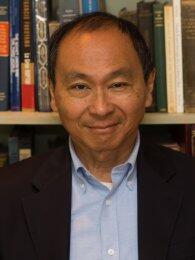
francis fukuyama

Francis Fukuyama is the Olivier Nomellini Senior Fellow at the Freeman Spogli Institute for International Studies (FSI) and the Mosbacher Director of FSI's Center on Democracy, Development, and the Rule of Law (CDDRL).  He is also a professor by courtesy in the Department of Political Science. He was previously at the Paul H. Nitze School of Advanced International Studies (SAIS) of Johns Hopkins University, where he was the Bernard L. Schwartz Professor of International Political Economy and director of SAIS' International Development program.


Image
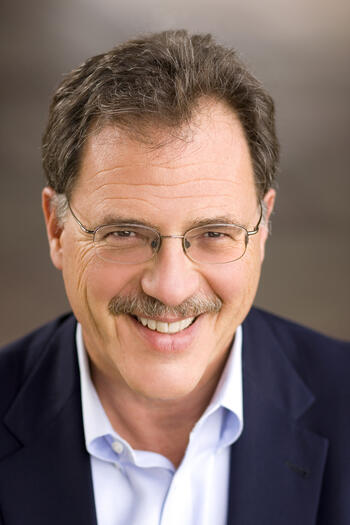
diamond larry smile

Larry Diamond is a senior fellow at the Hoover Institution and at the Freeman Spogli Institute for International Studies. He also serves as the Peter E. Haas Faculty Director of the Haas Center for Public Service at Stanford. For more than six years, he directed FSI’s Center on Democracy, Development, and the Rule of Law, and he continues to lead its programs on Liberation Technology, Arab Reform and Democracy, and Democracy in Taiwan.  He is the founding co-editor of the Journal of Democracy and also serves as Senior Consultant at the International Forum for Democratic Studies of the National Endowment for Democracy.


Image
bruce cain

Bruce E. Cain is a Professor of Political Science at Stanford University and Director of the Bill Lane Center for the American West. He received a BA from Bowdoin College (1970), a B Phil. from Oxford University (1972) as a Rhodes Scholar, and a Ph D from Harvard University (1976). He taught at Caltech (1976-89) and UC Berkeley (1989-2012) before coming to Stanford. Professor Cain was Director of the Institute of Governmental Studies at UC Berkeley from 1990-2007 and Executive Director of the UC Washington Center from 2005-2012.


Image
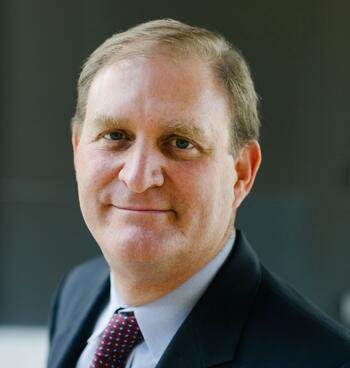
nate persily


Nathaniel Persily is a James B. McClatchy Professor and Professor, by courtesy, of Political Science and of Communication at Stanford Law School.  He received J.D. from Stanford Law School in 1998 and M.A. in 1994; PhD in Political Science in 2002 from U.C. Berkeley.  He served as Senior Research Director at the Presidential Commission on Election Administration June 2013-2014.


CDDRL
Stanford University
Encina Hall, C147
616 Jane Stanford Way
Stanford, CA 94305-6055

(650) 724-6448 (650) 723-1928
0
Mosbacher Senior Fellow in Global Democracy at the Freeman Spogli Institute for International Studies
William L. Clayton Senior Fellow at the Hoover Institution
Professor, by courtesy, of Political Science and Sociology
diamond_encina_hall.png MA, PhD

Larry Diamond is the William L. Clayton Senior Fellow at the Hoover Institution, the Mosbacher Senior Fellow in Global Democracy at the Freeman Spogli Institute for International Studies (FSI), and a Bass University Fellow in Undergraduate Education at Stanford University. He is also professor by courtesy of Political Science and Sociology at Stanford, where he lectures and teaches courses on democracy (including an online course on EdX). At the Hoover Institution, he co-leads the Project on Taiwan in the Indo-Pacific Region and participates in the Project on the U.S., China, and the World. At FSI, he is among the core faculty of the Center on Democracy, Development and the Rule of Law, which he directed for six and a half years. He leads FSI’s Israel Studies Program and is a member of the Program on Arab Reform and Development. He also co-leads the Global Digital Policy Incubator, based at FSI’s Cyber Policy Center. He served for 32 years as founding co-editor of the Journal of Democracy.

Diamond’s research focuses on global trends affecting freedom and democracy and on U.S. and international policies to defend and advance democracy. His book, Ill Winds: Saving Democracy from Russian Rage, Chinese Ambition, and American Complacency, analyzes the challenges confronting liberal democracy in the United States and around the world at this potential “hinge in history,” and offers an agenda for strengthening and defending democracy at home and abroad.  A paperback edition with a new preface was released by Penguin in April 2020. His other books include: In Search of Democracy (2016), The Spirit of Democracy (2008), Developing Democracy: Toward Consolidation (1999), Promoting Democracy in the 1990s (1995), and Class, Ethnicity, and Democracy in Nigeria (1989). He has edited or coedited more than fifty books, including China’s Influence and American Interests (2019, with Orville Schell), Silicon Triangle: The United States, China, Taiwan the Global Semiconductor Security (2023, with James O. Ellis Jr. and Orville Schell), and The Troubling State of India’s Democracy (2024, with Sumit Ganguly and Dinsha Mistree).

During 2002–03, Diamond served as a consultant to the US Agency for International Development (USAID) and was a contributing author of its report, Foreign Aid in the National Interest. He has advised and lectured to universities and think tanks around the world, and to the World Bank, the United Nations, the State Department, and other organizations dealing with governance and development. During the first three months of 2004, Diamond served as a senior adviser on governance to the Coalition Provisional Authority in Baghdad. His 2005 book, Squandered Victory: The American Occupation and the Bungled Effort to Bring Democracy to Iraq, was one of the first books to critically analyze America's postwar engagement in Iraq.

Among Diamond’s other edited books are Democracy in Decline?; Democratization and Authoritarianism in the Arab WorldWill China Democratize?; and Liberation Technology: Social Media and the Struggle for Democracy, all edited with Marc F. Plattner; and Politics and Culture in Contemporary Iran, with Abbas Milani. With Juan J. Linz and Seymour Martin Lipset, he edited the series, Democracy in Developing Countries, which helped to shape a new generation of comparative study of democratic development.

Download full-resolution headshot; photo credit: Rod Searcey.

Former Director of the Center on Democracy, Development and the Rule of Law
Faculty Chair, Jan Koum Israel Studies Program
Date Label
Senior Fellow Hoover Institution

Encina Hall, C148
616 Jane Stanford Way
Stanford, CA 94305

0
Olivier Nomellini Senior Fellow at the Freeman Spogli Institute for International Studies
Director of the Ford Dorsey Master's in International Policy
Research Affiliate at The Europe Center
Professor by Courtesy, Department of Political Science
yff-2021-14290_6500x4500_square.jpg

Francis Fukuyama is the Olivier Nomellini Senior Fellow at Stanford University's Freeman Spogli Institute for International Studies (FSI), and a faculty member of FSI's Center on Democracy, Development and the Rule of Law (CDDRL). He is also Director of Stanford's Ford Dorsey Master's in International Policy, and a professor (by courtesy) of Political Science.

Dr. Fukuyama has written widely on issues in development and international politics. His 1992 book, The End of History and the Last Man, has appeared in over twenty foreign editions. His book In the Realm of the Last Man: A Memoir will be published in fall 2026.

Francis Fukuyama received his B.A. from Cornell University in classics, and his Ph.D. from Harvard in Political Science. He was a member of the Political Science Department of the RAND Corporation, and of the Policy Planning Staff of the US Department of State. From 1996-2000 he was Omer L. and Nancy Hirst Professor of Public Policy at the School of Public Policy at George Mason University, and from 2001-2010 he was Bernard L. Schwartz Professor of International Political Economy at the Paul H. Nitze School of Advanced International Studies, Johns Hopkins University. He served as a member of the President’s Council on Bioethics from 2001-2004. He is editor-in-chief of American Purpose, an online journal.

Dr. Fukuyama holds honorary doctorates from Connecticut College, Doane College, Doshisha University (Japan), Kansai University (Japan), Aarhus University (Denmark), the Pardee Rand Graduate School, and Adam Mickiewicz University (Poland). He is a non-resident fellow at the Carnegie Endowment for International Peace. He is a member of the Board of Trustees of the Rand Corporation, the Board of Trustees of Freedom House, and the Board of the Volcker Alliance. He is a fellow of the National Academy for Public Administration, a member of the American Political Science Association, and of the Council on Foreign Relations. He is married to Laura Holmgren and has three children.

(October 2025)

CV
Date Label
Director Center on Democracy, Development, and the Rule of Law

Jerry Yang & Akiko Yamazaki
Environment & Energy Building
473 Via Ortega, First Floor
Stanford University
Stanford, CA 94305-4225

0
Charles Louis Ducommun Professor, Humanities and Sciences
Director, Bill Lane Center for the American West
Professor, Political Science
CDDRL Affiliated Faculty
bruce_cain.jpg

Bruce E. Cain is a Professor of Political Science at Stanford University and Director of the Bill Lane Center for the American West. He received a BA from Bowdoin College (1970), a B Phil. from Oxford University (1972) as a Rhodes Scholar, and a Ph D from Harvard University (1976). He taught at Caltech (1976-89) and UC Berkeley (1989-2012) before coming to Stanford. Professor Cain was Director of the Institute of Governmental Studies at UC Berkeley from 1990-2007 and Executive Director of the UC Washington Center from 2005-2012. He was elected the American Academy of Arts and Sciences in 2000 and has won awards for his research (Richard F. Fenno Prize, 1988), teaching (Caltech 1988 and UC Berkeley 2003) and public service (Zale Award for Outstanding Achievement in Policy Research and Public Service, 2000). His areas of expertise include political regulation, applied democratic theory, representation and state politics. Some of Professor Cain’s most recent publications include “Malleable Constitutions: Reflections on State Constitutional Design,” coauthored with Roger Noll in University of Texas Law Review, volume 2, 2009; “More or Less: Searching for Regulatory Balance,” in Race, Reform and the Political Process, edited by Heather Gerken, Guy Charles and Michael Kang, CUP, 2011; and “Redistricting Commissions: A Better Political Buffer?” in The Yale Law Journal, volume 121, 2012. He is currently working on a book about political reform in the US.

CV
Director Bill Lane Center for the American West
Nathaniel Persily Professor of Law Stanford Law School
Panel Discussions
Authors
Francis Fukuyama
News Type
News
Date
Paragraphs


In the July/August edition of Foreign Affairs, Francis Fukuyama, the Mosbacher director of CDDRL, analyzes the rising tide of populism as represented by the current candidates for the US Presidential elections. According to Fukuyama, the real story of the election is that American democracy is finally responding to the rise of inequality and economic stagnation experienced by most of the population. 


Click here to read the full article. 

Hero Image
gettyimages 500349430
Republican presidential candidate Donald Trump speaks to the crowd at a Pearl Harbor Day Rally at the U.S.S. Yorktown December 7, 2015 in Mt. Pleasant, South Carolina.
Sean Rayford / Stringer - Getty Images
All News button
1
Subscribe to North America