-

About the Seminar: US response to 9/11 included a major focus on peace building through democracy promotion. The seminar examines the rationale and milestones for American engagement in distant lands. How will such an approach work in future foreign policy implementation is also discussed with some conclusions about future engagement.


For Fall Quarter 2021, we will be hosting a hybrid weekly Research Seminar Series. All events will be open to the public online via Zoom, and a limited-capacity in-person element for Stanford affiliates may be added in accordance with the County's health and safety guidelines.


Image
Shirin Tahir-Kheli
About the Speaker: Dr. Shirin Tahir-Kheli is a Senior Fellow and Founding Director of the South Asia Program at the Foreign Policy Institute of the Johns Hopkins University School of Advanced International Studies (SAIS). In 2011, Tahir-Kheli was named by Newsweek as one of the "150 Women Who Shake the World." She specializes in South Asia, nuclear non-proliferation, United Nations and U.S. foreign policy, and women's empowerment.

She is the author and editor of several monographs, including Pakistan Today: The Case for U.S.-Pakistan Relations (with Shahid Javed Burki, Foreign Policy Institute, 2017); Manipulating Religion for Political Gain in Pakistan: Consequences for the U.S. and the Region (Foreign Policy Institute, 2015); and India, Pakistan and the United States: Breaking with the Past (Council on Foreign Relations, 1997).

Democracy Promotion in U.S. Foreign Policy: Looking Back, Looking Forward
Download pdf

Online, via Zoom

Shirin Tahir-Kheli Ambassador & Senior Fellow, Foreign Policy Institute, Johns Hopkins School of Advanced International Studies, Washington DC Organization
Seminars
Authors
Nora Sulots
News Type
News
Date
Paragraphs

This week we launched the long-awaited 17th year of the Center on Democracy, Development and the Rule of Law's Draper Hills Summer Fellowship Program. Founded in 2005 with generous support from Bill and Phyllis Draper and Ingrid von Mangoldt Hills, Draper Hills is an executive training program for world leaders striving to promote democracy. For the next two weeks, Fellows will participate in workshops led by an interdisciplinary team of faculty to study new theories and approaches to democratic development.

Fellows in the class of 2021 were selected from among thousands of applicants for their ground-breaking work to defend democracy. These 34 leaders drawn from 30 countries around the world are pioneering new approaches and models to advance social and political change in some of the most challenging global contexts. Representing business, government, and the nonprofit sector, our fellows are working on the frontlines of democratic change to combat the global rise of authoritarianism and populism. In countries moving towards democracy, our fellows are working to institutionalize new systems and practices to support democratic transitions.

An Unconventional Year


Traditionally, Fellows would travel from their home countries to the U.S. and spend three weeks on campus at Stanford learning together. However, due to the ongoing COVID-19 pandemic, the program is currently taking place virtually for the first time (for the same reasons, the program did not run in 2020). The shift to online programming posed a number of logistical obstacles – from what time to run virtual sessions when participants span over a dozen time zones to how to foster the sense of belonging and personal connections that occur more naturally in in-person settings.

To begin addressing the latter, Fellows were sent welcome packages to build excitement and foster community both within the program and at Stanford. Upon receiving hers, Aisha Yesufu of Nigeria shared, "I am so excited at the different people I'll be meeting from all over the world, and also learning from different people, lecturers, professors... It's going to be quite interesting, and, for me, that is what I am most looking forward to."

"One of the most important things I have ever been involved with."


Opening against the backdrop of the fall of Kabul to the Taliban in Afghanistan, the importance of the Draper Hills program and the need to promote democratic change is now more evident than ever.

The inaugural session for the 2021 cohort began with Francis Fukuyama introducing the fellows to several of the esteemed faculty they will be learning from over the next two weeks, including Larry Diamond, Erik Jensen, and Michael McFaul. McFaul shared that not only did he found the program, but "it is one of the most important things I have ever been involved with." Jensen later added that "participating in this program is one of the great pleasures I have every year."

More to Come


Throughout the next two weeks, our Draper Hills Fellows will examine the political development, democratic transitions, and the relationship of law to economic development, public administration, administrative law, transitional justice, food security, and global health policy, among others. The group is eager to learn, and we look forward to seeing the many great things the training they receive here will enable them to do in their home countries and beyond.

Hero Image
Screenshot of Draper Hills 2021 opening session
All News button
1
Subtitle

For the next two weeks, Fellows will participate in workshops led by an interdisciplinary team of faculty to study new theories and approaches to democratic development.

Date Label
-

About the Event: Do programmatic policies always yield electoral rewards? A growing body of research attributes the adoption of programmatic policies in African states to increased electoral competition. However, these works seldom explore how the specifics of policy implementation condition voters’ electoral responses to programmatic policies over time, or changes in electoral effects throughout policy cycles. We analyze the electoral effects of both the promise and implementation of a programmatic policy designed to increase secondary school enrollment in Tanzania over three election cycles. We find that the incumbent party benefited from a campaign promise to increase access to secondary schooling, but incurred an electoral penalty following implementation of the policy. We do not find any significant electoral effects by the third electoral cycle. Our findings illuminate temporal dynamics of policy feedback, the conditional electoral effects of programmatic policies, and the need for more studies of entire policy cycles over multiple electoral periods.


Image
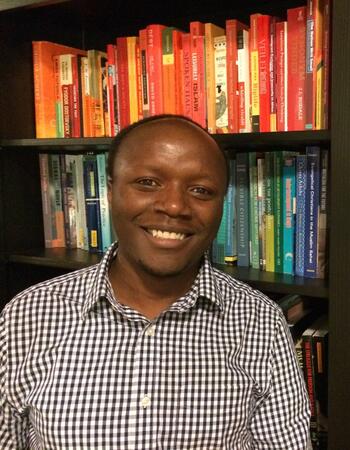
Opalo, Ken
About the Speaker:  Dr. Ken Opalo is an Assistant Professor at Georgetown University’s School of Foreign Service. His research interests include the political economy of development, legislative politics, and electoral accountability in African states. Ken’s current research projects include studies of political reform in Ethiopia, the politics of education sector reform in Tanzania, and electoral accountability under devolved government in Kenya. His works have been published in Governance, the British Journal of Political Science, the Journal of Democracy, and the Journal of Eastern African Studies. His first book, titled Legislative Development in Africa: Politics and Post-Colonial Legacies (Cambridge University Press, 2019) explores the historical roots of contemporary variation in legislative institutionalization and strength in Africa. Ken earned his BA from Yale University and PhD from Stanford University.

Online, via Zoom: REGISTER

Ken Opalo Assistant Professor at Georgetown University’s School of Foreign Service
Seminars
-

**Please note all CDDRL events are scheduled using the Pacific Time Zone

About the Event: This book examines the creation and consequences of executive constraints in authoritarian regimes. How do some dictatorships become institutionalized ruled-based systems, while others remain heavily personalist? Once implemented, do executive constraints actually play an effective role in promoting autocratic stability? To understand patterns of regime institutionalization, I study the emergence of constitutional term limits and succession procedures, as well as elite power-sharing within presidential cabinets. This project employs a wide range of evidence, including an original time-series dataset of 46 countries in Sub-Saharan Africa from 1960 to 2010, formal theory, and case studies. Altogether this book paints a picture of how some dictatorships evolve from personalist strongman rule to institutionalized regimes. 


Image
Anne Meng
About the Speaker: Anne Meng is an Assistant Professor in the Politics Department at the University of Virginia. Her research centers on authoritarian politics, institutions, and elite powersharing. Her new book, Constraining Dictatorship: From Personalized Rule to Institutionalized Regimes, examines how executive constraints become established in dictatorships, particularly within constitutions and presidential cabinets. Her new work focuses on autocratic backsliding and executive aggrandizement in non-democracies. She has also published articles on authoritarian ruling parties, term limit evasion, and leadership succession. She received her Ph.D. in Political Science from the University of California, Berkeley. 

Online, via Zoom: REGISTER

Anne Meng Assistant Professor in the Politics Department at the University of Virginia
Seminars
Authors
News Type
News
Date
Paragraphs

On September 29, the APARC China Program hosted Thomas Fingar and Stephen Stedman for the program “Rebuilding International Institutions.” The program, which was moderated by China Program Director Jean Oi, examined the future of international institutions such as the United Nations (UN), World Trade Organization (WTO), and World Health Organization (WHO) in our evolving global political landscape. While Fingar and Stedman acknowledged that such institutions facilitated attainment of unprecedented peace and prosperity after WWII, they also asked difficult questions: Are these institutions still adequate? And if not, how will we change them?

Shorenstein APARC Fellow Thomas Fingar kicked off the session by asking whether or not US-China tensions would impede cooperation on major global challenges, or if those challenges were so serious as to render such rivalries immaterial. Perhaps the most obvious example of such a crisis is the current COVID-19 pandemic. The efforts to curb the virus’ spread not only by individual countries, but also by international organizations like the WHO, have proven largely inadequate. According to Fingar, our existing institutions need to be reformed or supplemented to deal with these types of threats. However, such an overhaul of our international systems will be difficult, he says.

How, then, will we go about such a massive project? Stephen Stedman, Deputy Director at Stanford’s Center on Democracy, Development, and the Rule of Law (CDDRL), responded by explaining that the current failure of international cooperation makes such undertakings tough. Globalization has been a double-edged sword: On one hand, more contact, perhaps inherently, leads to increased tension. The resurgence of traditional notions of sovereignty in 2010, kickstarted by the opposition of countries like Russia and China to what was seen as UN overreaching, has led to a reduction of international cooperation overall. On the other hand, Fingar posits that our interconnectedness may force us toward cooperation despite rivalries as we face more and more transnational threats. International institutions create rules to organize and manage our many interconnected relationships so that we can deal with our problems effectively and reduce friction.

Stedman also pointed to the upcoming US elections and the major impact their outcome will have on how these problems are addressed—or not. In the last four year, the United States has pulled back significantly from international institutions and agreements, leaving a gap that China has started to fill. Furthermore, despite the US’s retreat from international responsibility, the country still remains a critical actor in global initiatives. China’s embrace of a global leadership role is not inherently negative, but its future relationship with the US will need to be “managed in a way that you get greater cooperation and not just paralysis.” Stedman says that it is likely that progress will need to be made on a bilateral front in order to have productive conversations about international issues with China.

Concluding on an optimistic note, Fingar voiced his hope that the current tensions and negative perceptions between rivals might ultimately “be mitigated by success in dealing with a common problem,” because “experience does shape perceptions.”

A video recording of this program is available upon request. Please contact Callista Wells, China Program Coordinator at cvwells@stanford.edu with any inquiries.

Read More

Hero Image
Photograph of the UN building in Geneva, Switzerland
Image by Mat Reding on Unsplash
All News button
1
Subtitle

Fingar and Stedman spoke as part of the APARC program “Rebuilding International Institutions,” which examined the future of international institutions such as the United Nations (UN), World Trade Organization (WTO), and World Health Organization (WHO) in our evolving global political landscape.

Date Label
-

This event is open to Stanford undergraduate students only. 

Image
CDDRL Flyer 2021

The Center on Democracy, Development, and the Rule of Law (CDDRL) will be accepting applications from eligible juniors on who are interested in writing their senior thesis on a subject touching upon democracy, economic development, and rule of law (DDRL) from any university department.  The application period opens on January 11, 2021 and runs through February 12, 2021.   CDDRL faculty and current honors students will be present to discuss the program and answer any questions.

For more information on the Fisher Family CDDRL Honors Program, please click here.

**Please note all CDDRL events are scheduled using the Pacific Time Zone

 Online, via Zoom: REGISTER

CDDRL
Encina Hall, C152
616 Jane Stanford Way
Stanford, CA 94305-6055

(650) 725-2705 (650) 724-2996
0
Senior Fellow at the Freeman Spogli Institute for International Studies
Professor, by courtesy, of Political Science
Stedman_Steve.jpg PhD

Stephen Stedman is a Senior Fellow at the Freeman Spogli Institute for International Studies (FSI) and the Center on Democracy, Development and the Rule of Law (CDDRL), an affiliated faculty member at CISAC, and professor of political science (by courtesy) at Stanford University. He is director of CDDRL's Fisher Family Honors Program in Democracy, Development and Rule of Law, and will be faculty director of the Program on International Relations in the School of Humanities and Sciences effective Fall 2025.

In 2011-12 Professor Stedman served as the Director for the Global Commission on Elections, Democracy, and Security, a body of eminent persons tasked with developing recommendations on promoting and protecting the integrity of elections and international electoral assistance. The Commission is a joint project of the Kofi Annan Foundation and International IDEA, an intergovernmental organization that works on international democracy and electoral assistance.

In 2003-04 Professor Stedman was Research Director of the United Nations High-level Panel on Threats, Challenges and Change and was a principal drafter of the Panel’s report, A More Secure World: Our Shared Responsibility.

In 2005 he served as Assistant Secretary-General and Special Advisor to the Secretary- General of the United Nations, with responsibility for working with governments to adopt the Panel’s recommendations for strengthening collective security and for implementing changes within the United Nations Secretariat, including the creation of a Peacebuilding Support Office, a Counter Terrorism Task Force, and a Policy Committee to act as a cabinet to the Secretary-General.

His most recent book, with Bruce Jones and Carlos Pascual, is Power and Responsibility: Creating International Order in an Era of Transnational Threats (Washington DC: Brookings Institution, 2009).

Director, Fisher Family Honors Program in Democracy, Development and Rule of Law
Director, Program in International Relations
Affiliated faculty at the Center for International Security and Cooperation
Date Label
Deputy Director, CDDRL

Encina Hall, C150
616 Jane Stanford Way
Stanford, CA 94305

0
Center Fellow, Freeman Spogli Institute for International Studies
didi_kuo_2023.jpg

Didi Kuo is a Center Fellow at the Freeman Spogli Institute for International Studies (FSI) at Stanford University. She is a scholar of comparative politics with a focus on democratization, corruption and clientelism, political parties and institutions, and political reform. She is the author of The Great Retreat: How Political Parties Should Behave and Why They Don’t (Oxford University Press) and Clientelism, Capitalism, and Democracy: the rise of programmatic politics in the United States and Britain (Cambridge University Press, 2018).

She has been at Stanford since 2013 as the manager of the Program on American Democracy in Comparative Perspective and is co-director of the Fisher Family Honors Program at CDDRL. She was an Eric and Wendy Schmidt Fellow at New America and is a non-resident fellow with the Carnegie Endowment for International Peace. She received a PhD in political science from Harvard University, an MSc in Economic and Social History from Oxford University, where she studied as a Marshall Scholar, and a BA from Emory University.

Date Label
Associate Director for Research, CDDRL
-

**Please note all CDDRL events are scheduled using the Pacific Time Zone


About the event: Governments in sub-Saharan Africa face tough choices in COVID-19 policy response. They have scarce resources but are under intense pressure to balance pandemic control with ensuring people have basic necessities -- while also staving off violence and political instability among distrustful publics. Until a vaccine is widely available, the primary way to combat COVID-19 is encouraging cooperation with non-pharmaceutical interventions (NPIs). Our research provides African governments with evidence on how to increase voluntary cooperation with NPIs. I will present preliminary results from ongoing data collection efforts designed to provide policy-relevant information for government decision makers in Nigeria, Sierra Leone, and Uganda. Evidence from endorsement, list, and vignette experiments offer insights into citizen compliance with health policies, the gap between individual attitudes and perceptions of peers' behavior, and the dangers of COVID-related misinformation.


Leah R. Rosenzweig

About the speaker: Leah is a postdoctoral fellow at Stanford University’s Center on Democracy Development and Rule of Law (CDDRL) and the Graduate School of Business in the Golub Capital Social Impact Lab. She received her Ph.D. in Political Science from the Massachusetts Institute of Technology, where she was a National Science Foundation Graduate Research Fellow. Her research centers on topics in comparative politics and the political economy of development. Her focus on the micro-foundations of political behavior to gain leverage on macro-political questions. How do autocrats survive? How can citizen-state relations be improved and government accountability strengthened? Can shared identities mitigate out-group animosity? Adopting a multi-method approach, use lab-in-the-field and online experiments, surveys, and in-depth field research to examine these questions in sub-Saharan Africa and the US. Her current book project reexamines the role of elections in authoritarian endurance and explains why citizens vote in elections with foregone conclusions in Tanzania and Uganda. Moving beyond conventional paradigms, her theory describes how a social norm of voting and accompanying social sanctions from peers contribute to high turnout in semi-authoritarian elections. In other ongoing projects, Her study is how national and pan-African identification stimulated through national sports games influence attitudes toward refugees, the relationship between identity, emotions, and belief in fake news, and how researchers can use Facebook as a tool for social science research.


Online, via Zoom: REGISTER


0
CDDRL Postdoctoral Scholar, 2020-21
thumbnail_leah1_small.jpg

My research centers on topics in comparative politics and the political economy of development. I focus on the micro-foundations of political behavior to gain leverage on macro-political questions. How do autocrats survive? How can citizen-state relations be improved and government accountability strengthened? Can shared identities mitigate out-group animosity? Adopting a multi-method approach, I use lab-in-the-field and online experiments, surveys, and in-depth field research to examine these questions in sub-Saharan Africa and the US. My current book project reexamines the role of elections in authoritarian endurance and explains why citizens vote in elections with foregone conclusions in Tanzania and Uganda. Moving beyond conventional paradigms, my theory describes how a social norm of voting and accompanying social sanctions from peers contribute to high turnout in semi-authoritarian elections. In other ongoing projects, I study how national and pan-African identification stimulated through national sports games influence attitudes toward refugees, the relationship between identity, emotions, and belief in fake news, and how researchers can use Facebook as a tool for social science research.

Postdoctoral fellow at Center on Democracy, Development and the Rule of Law
Seminars
0
George G.C. Parker Professor of Finance and Economics, Stanford Graduate School of Business
Director of the Corporations and Society Initiative, Stanford Graduate School of Business
Director of the Program on Capitalism and Democracy, Center on Democracy, Development and the Rule of Law
Senior Fellow, Stanford Institute for Economic Policy Research
Senior Fellow (by courtesy), Freeman Spogli Institute for International Studies
anat_admati-stanford-2021.jpg

Anat R. Admati is the George G.C. Parker Professor of Finance and Economics at Stanford University Graduate School of Business (GSB), a Faculty Director of the GSB Corporations and Society Initiative, and a senior fellow at Stanford Institute for Economic Policy Research. She has written extensively on information dissemination in financial markets, portfolio management, financial contracting, corporate governance and banking. Admati’s current research, teaching and advocacy focus on the complex interactions between business, law, and policy with focus on governance and accountability.

Since 2010, Admati has been active in the policy debate on financial regulations. She is the co-author, with Martin Hellwig, of the award-winning and highly acclaimed book The Bankers’ New Clothes: What’s Wrong with Banking and What to Do about It (Princeton University Press, 2013; bankersnewclothes.com). In 2014, she was named by Time Magazine as one of the 100 most influential people in the world and by Foreign Policy Magazine as among 100 global thinkers.

Admati holds BSc from the Hebrew University, MA, MPhil and PhD from Yale University, and an honorary doctorate from University of Zurich. She is a fellow of the Econometric Society, the recipient of multiple fellowships, research grants, and paper recognition, and is a past board member of the American Finance Association. She has served on a number of editorial boards and is a member of the FDIC’s Systemic Resolution Advisory Committee, a former member of the CFTC’s Market Risk Advisory Committee, and a former visiting scholar at the International Monetary Fund.

Date Label
-

Abstract:

Do programmatic policies always yield electoral rewards? A growing body of research attributes the adoption of programmatic policies in African states to increased electoral competition. However, these works seldom explore how the specifics of policy implementation condition voters’ electoral responses to programmatic policies over time, or changes in electoral effects throughout policy cycles. We analyze the electoral effects of both the promise and implementation of a programmatic policy designed to increase secondary school enrollment in Tanzania over three election cycles. We find that the incumbent party benefited from a campaign promise to increase access to secondary schooling, but incurred an electoral penalty following implementation of the policy. We do not find any significant electoral effects by the third electoral cycle. Our findings illuminate temporal dynamics of policy feedback, the conditional electoral effects of programmatic policies, and the need for more studies of entire policy cycles over multiple electoral periods.


Speaker Bio:

Image
thumbnail opaloken
Dr. Ken Opalo is an Assistant Professor at Georgetown University’s School of Foreign Service. His research interests include the political economy of development, legislative politics, and electoral accountability in African states. Ken’s current research projects include studies of political reform in Ethiopia, the politics of education sector reform in Tanzania, and electoral accountability under devolved government in Kenya. His works have been published in Governance, the British Journal of Political Science, the Journal of Democracy, and the Journal of Eastern African Studies. His first book, titled Legislative Development in Africa: Politics and Post-Colonial Legacies (Cambridge University Press, 2019) explores the historical roots of contemporary variation in legislative institutionalization and strength in Africa. Ken earned his BA from Yale University and PhD from Stanford University.


Ken Opalo Assistant Professor at Georgetown University’s School of Foreign Service
Seminars
News Type
Q&As
Date
Paragraphs

A Q&A with Professor Stephen Stedman, who serves as the Secretary General of the Kofi Annan Commission on Elections and Democracy in the Digital Age.

Image
Stedman Steve
Stephen Stedman, a Senior Fellow at the Freeman Spogli Institute for International Studies (FSI) at Stanford, is the director of the Kofi Annan Commission on Elections and Democracy in the Digital Age, an initiative of the Kofi Annan Foundation. The Commission is focused on studying the effects of social media on electoral integrity and the measures needed to safeguard the democratic process.  

At the World Economic Forum in Davos, Switzerland, the Commission which includes FSI’s Nathaniel Persily, Alex Stamos, and Toomas Ilves, launched a new report, Protecting Electoral Integrity in the Digital Age. The report takes an in-depth look at the challenges faced by democracy today and makes a number of recommendations as to how best to tackle the threats posed by social media to free and fair elections. On Tuesday, February 25, professors Stedman and Persily will discuss the report’s findings and recommendations during a lunch seminar from 12-1:15 PM. To learn more and to RSVP, visit the event page.

Q: What are some of the major findings of the report? Are digital technologies a threat to democracy?

Steve Stedman: Our report suggests that social media and the Internet pose an acute threat to democracy, but probably not in the way that most people assume. Many people believe that the problem is a diffuse one based on excess disinformation and a decline in the ability of citizens to agree on facts. We too would like the quality of deliberation in our democracy to improve and we worry about how social media might degrade democratic debate, but if we are talking about existential threats to democracy the problem is that digital technologies can be weaponized to undermine the integrity of elections.

When we started our work, we were struck by how many pathologies of democracy are said to be caused by social media: political polarization; distrust in fellow citizens, government institutions and traditional media; the decline in political parties; democratic deliberation, and on and on. Social media is said to lessen the quality of democracy because it encourages echo chambers and filter bubbles where we only interact with those who share our political beliefs. Some platforms are said to encourage extremism through their algorithms.

What we found, instead, is a much more complex problem. Many of the pathologies that social media are said to create – for instance, polarization, distrust, and political sorting begin their trendlines before the invention of the Internet, let alone the smart phone. Some of the most prominent claims are unsupported by evidence, or are confounded by conflicting evidence. In fact, we say that some assertions simply cannot be judged without access to data held by the tech platforms.

Instead, we rely on the work of scholars like Yochai Benkler and Edda Humphries to argue that not all democracies are equally vulnerable to network propaganda and disinformation. It is precisely where you have high pre-existing affective polarization, low trust, and hyperpartisan media, that digital technologies can intensify and amplify polarization.

Elections and toxic polarization are a volatile mix. Weaponized disinformation and hate speech can wreak havoc on elections, even if they don’t alter the vote tallies. This is because democracies require a system of mutual security. In established democracies political candidates and followers take it for granted that if they lose an election, they will be free to organize and contest future elections. They are confident that the winners will not use their power to eliminate them or disenfranchise them. Winners have the expectation that they hold power temporarily, and accept that they cannot change the rules of competition to stay in power forever. In short, mutual security is a set of beliefs and norms that turn elections from being a one-shot game into a repeated game with a long shadow of the future.

In a situation already marred by toxic polarization, we fear that weaponized disinformation and hate speech can cause parties and followers to believe that the other side doesn’t believe in the rules of mutual security. The stakes become higher. Followers begin to believe that losing an election means losing forever. The temptation to cheat and use violence increases dramatically. 

Q: As far as political advertising, the report encourages platforms to provide more transparency about who is funding that advertising. But it also asks that platforms require candidates to make a pledge that they will avoid deceptive campaign practices when purchasing ads. It also goes as far as to recommend financial penalties for a platform if, for example, a bot spreading information is not labelled as such. Some platforms might argue that this puts an unfair onus on them. How might platforms be encouraged to participate in this effort?

SS: The platforms have a choice: they can contribute to toxic levels of political polarization and the degradation of democratic deliberation, or they can protect electoral integrity and democracy. There are a lot of employees of the platforms who are alarmed at the state of polarization in this country and don’t want their products to be conduits of weaponized disinformation and hate speech. You saw this in the letter signed by Facebook employees objecting to the decision by Mark Zuckerberg that Facebook would treat political advertising as largely exempt from their community standards. If ever there were a moment in this country that we should demand that our political parties and candidates live up to a higher ethical standard it is now. Instead Facebook decided to allow political candidates to pay to run ads even if the ads use disinformation, tell bald-faced lies, engage in hate speech, and use doctored video and audio. Their rationale is that this is all part of “the rough and tumble of politics.” In doing so, Facebook is in the contradictory position that it has hundreds of employees working to stop disinformation and hate speech in elections in Brazil and India, but is going to allow politicians and parties in the United States to buy ads that can use disinformation and hate speech.

Our recommendation gives Facebook an option that allows political advertisement in a way that need not enflame polarization and destroy mutual security among candidates and followers: 1.) Require that candidates, groups or parties who want to pay for political advertising on Facebook sign a pledge of ethical digital practices; 2.) Then use the standards to determine if an ad meets the pledge or not. If an ad uses deep fakes, if an ad grotesquely distorts the facts, if an ad out and out lies about what an opponent said or did, then Facebook would not accept the ad. Facebook can either help us raise our electoral politics out of the sewer or it can ensure that our politics drowns in it.

It’s worth pointing out that the platforms are only one actor in a many-sided problem. Weaponized disinformation is actively spread by unscrupulous politicians and parties; it is used by foreign countries to undermine electoral integrity; and it is often spread and amplified by irresponsible partisan traditional media. Fox News, for example, ran the crazy conspiracy story about Hilary Clinton running a pedophile ring out of a pizza parlor in DC. Individuals around the president, including the son of the first National Security Adviser tweeted the story. 

Q: While many of the recommendations focus on the role of platforms and governments, the report also proposes that public authorities promote digital and media literacy in schools as well as public interest programming for the general population. What might that look like? And how would that type of literacy help protect democracy? 

SS: Our report recommends digital literacy programs as a means to help build democratic resilience against weaponized disinformation. Having said that however, the details matter tremendously. Sam Wineburg at Stanford, who we cite, has extremely insightful ideas for how to teach citizens to evaluate the information they see on the Internet, but even he puts forward warnings: if done poorly digital literacy could simply increase citizen distrust of all media, good and bad; digital literacy in a highly polarized context begs the question of who will decide what is good and bad media. We say in passing that in addition to digital literacy we need to train citizens to understand biased assimilation of information. Digital literacy trains citizens to understand who is behind a piece of information and who benefits from it. But we also need to teach citizens to stand back and ask, “why am I predisposed to want to believe this piece of information?”

Q: Obviously access to data is critical for researchers and commissioners to do their work, analysis and reporting. One of the recommendations asks that public authorities compel major internet platforms to share meaningful data with academic institutions. Why is it so important for platforms and academia to share information?

SS: Some of the most important claims about the effects of social media can’t be evaluated without access to the data. One example we cite in the report is the controversy about whether YouTube’s algorithms radicalize individuals and send them down a rabbit hole of racist, nationalist content. This is a common claim and has appeared on the front pages of the New York Times. The research supporting the claim, however, is extremely thin, and other research disputes it. What we say is that we can’t adjudicate this argument unless YouTube were to share its data, so that researchers can see what the algorithm is doing. There are similar debates concerning the effects of Facebook. One of our commissioners, Nate Persily, has been at the forefront of working with Facebook to provide certified researchers with privacy protected data – Social Science One. Progress has been so slow that the researchers have lost patience. We hope that governments can step in and compel the platforms to share the data.

Q: This is one of the first reports to look at this problem in the Global South. Is the problem more or less critical there?

SS: Kofi Annan was very concerned that the debate about digital technologies and democracy was far too focused on Europe and the United States. Before Cambridge Analytica’s involvement in the United States and Brexit elections of 2016, its predecessor company had manipulated elections in Asia, Africa and the Caribbean. There is now a transnational industry in election manipulation.

What we found does not bode well for democracies in the rest of the world. The factors that make democracies vulnerable to network propaganda and weaponized disinformation are often present in the Global South: pre-existing polarization, low trust, and hyperpartisan traditional media. Many of these democracies already have a repertoire of electoral violence. 

On the other hand, we did find innovative partnerships in Indonesia and Mexico where Election Management Bodies, civil society organizations, and traditional media cooperated to fight disinformation during elections, often with success. An important recommendation of the report is that greater attention and resources are needed for such efforts to protect electoral integrity in the Global South. 

About the Commission on Elections and Democracy in the Digital Age

 As one of his last major initiatives, in 2018 Kofi Annan convened the Commission on Elections and Democracy in the Digital Age. The Commission includes members from civil society and government, the technology sector, academia and media; across the year 2019 they examined and reviewed the opportunities and challenges for electoral integrity created by technological innovations. Assisted by a small secretariat at Stanford University and the Kofi Annan Foundation, the Commission has undertaken extensive consultations and issue recommendations as to how new technologies, social media platforms and communication tools can be harnessed to engage, empower and educate voters, and to strengthen the integrity of elections. Visit  the Kofi Annan Foundation and the Commission on Elections and Democracy in the Digital Age for more on their work.

Hero Image
democracy stock image
All News button
1
Subscribe to Sub-Saharan Africa