Rule of Law
-

Abstract:

The 2012 Republic of China presidential and legislative elections to be held on January 14th mark the fifth presidential and seventh national legislative direct elections in Taiwan. Incumbent ROC President Ma Ying-jeou of the Kuomintang (KMT) enjoyed a landslide victory in 2008 over Democratic Progressive Party (DPP) candidate Hsieh Chang-ting, winning by over 2.2 million votes. Subsequent revelations of corruption by former President Chen Shui-bian of the DPP and various members of his administration further damaged the DPP's public image and electoral prospects.

In the intervening years, however, current DPP candidate Tsai Ing-wen and other members of the DPP have worked to revitalize their party's image, and as chairperson of the DPP Tsai established a special internal investigative committee to root out corruption in the party. A potentially complicating new factor in the race is the first-ever presidential bid by the People's First Party (PFP), led by candidate James Soong. Polling results to date have indicated the potential for a very close race between Ma and Tsai, with Soong also pulling a substantial portion of the vote that may affect the electoral outcome.

On the legislative side, the KMT won 81 out of 113 total seats in the Legislative Yuan in the 2008 elections, a circumstance that has facilitated the passage of various controversial measures supported by the Ma administration, including in particular the Economic Cooperation Framework Agreement (ECFA) with mainland China, and a significant shift in the composition of this body is likely to have a pronounced impact.

Regardless of the outcome, the results of the 2012 elections promise to offer much insight into the popular attitudes of the Taiwanese people and the prospects for future democratic consolidation and development in Taiwan. Ten days following the elections, Professors Shelly Rigger and Eric Chen-hua Yu will join us for a panel discussion to analyze the outcomes of these elections and discuss their relevance to the US and the world.

Speaker Bios:
Image
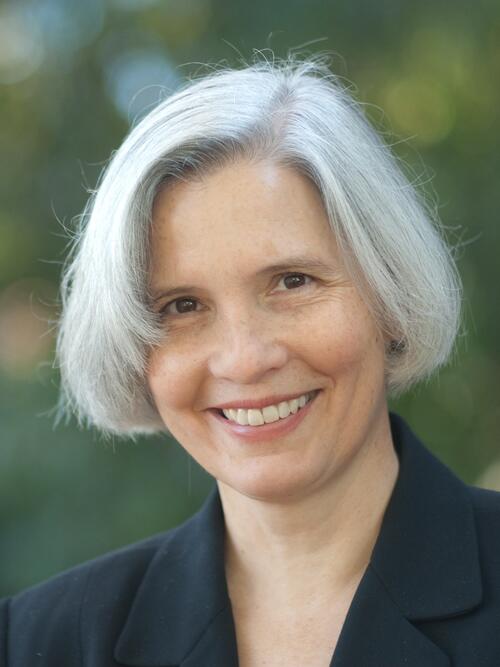
Shelley Rigger is the Brown Professor of East Asian Politics and Chair of Political Science at Davidson College in Davidson, North Carolina. She has a PhD in Government from Harvard University and a BA in Public and International Affairs from Princeton University. She has been a visiting researcher at National Chengchi University in Taiwan (2005) and a visiting professor at Fudan University in Shanghai (2006). Rigger is the author of two books on Taiwan’s domestic politics, Politics in Taiwan: Voting for Democracy (Routledge 1999) and From Opposition to Power: Taiwan’s Democratic Progressive Party(Lynne Rienner Publishers 2001). In 2011 she published Why Taiwan Matters: Small Island, Global Powerhouse, a book for general readers. She has published articles on Taiwan’s domestic politics, the national identity issue in Taiwan-China relations and related topics. Her current research studies the effects of cross-strait economic interactions on Taiwan and Mainland China. Her monograph, “Taiwan’s Rising Rationalism: Generations, Politics and ‘Taiwan Nationalism’” was published by the East West Center in Washington in November 2006.

Image

Eric Chen-hua Yu is an assistant research fellow of the Election Study Center and

jointly appointed as an assistant professor of political science at National Chengchi University in Taiwan. Before he returned to Taiwan to serve in his Alma mater in 2009, he has been a research fellow and program manager of Center on Democracy, Development, and the Rule of Law at Stanford’s Freeman Spogli Institute for International Studies since 2006. His research interests include public opinion, electoral politics, quantitative methods, and American politics. He also participates in a number of joint survey projects such as Taiwan Election and Democratization Studies (TEDS) and World Value Survey. Yu recently published academic articles on Taiwan’s domestic politics in
Taiwan Political Science Review, Journal of Electoral Studies, Review of Social Sciences, and Japanese Journal of Electoral Studies. Yu received a MS (2000) in Public Policy Analysis from the University of Rochester, and a Ph.D. in political science (2006) from Columbia University.

CISAC Conference Room

Shelly Rigger Professor of East Asian Politics and Chair of Political Science Speaker Davidson College

616 Serra St.
Encina Hall
Stanford, CA 94305

1
3x4200dpi[2]_self.JPG MS, PhD

Eric Yu was a research fellow and program manager for the Democracy in Taiwan program at CDDRL. His research interests included public opinion, electoral politics, federalism, and quantitative methods. He worked with Election Study Center at National Chengchi University (Taiwan) on a multi-year research project examining the relationship between public opinion and policy output at the local level in Taiwan. This project aimed to explore the extent to which local policy-makings respond to public opinions across a variety of policy dimensions. His recent studies also include the development of Taiwanese public attitudes toward cross-strait relations, the emergence of the third force under the new "single-district, two-ballot" electoral system for Taiwan's legislative elections, and mass policy preferences and their implications for political parties in Taiwan.

Yu received a BA (1995) in Political Science from the National Chengchi University in Taiwan, a MS (2000) in Public Policy Analysis from the University of Rochester, and a Ph.D. (2006) in Political Science from Columbia University.

Research Fellow and Program Manager for the Democracy in Taiwan Program
Eric Chen-hua Yu Assistant Research Fellow and Assistant Professor of Political Science Speaker Election Study Center; National Chengchi University
Panel Discussions
-

Abstract:

Since the very beginning of the state formation, Angolan political elites of the Popular Movement for the Liberation of Angola (MPLA), the National Front for the Liberation of Angola (FNLA) and the National Union for the Total Independence of Angola (UNITA) agreed that liberal democracy would be the form of government. However, in 1975 MPLA inaugurated a formal authoritarian regime that lasted until 1991. From 1991 to 2010, Angola had a democratic interim constitution and in 1992 had the first national multiparty elections as well as presidential ones of its history. In 2008, Angola held its second legislative elections and in 2010 a new and definite constitution was approved. Nevertheless, democratic development did not lead to the end of a successful democratic transition process started in 1991 or to the consolidation of democracy. The answer can probably be found in the politics of curbing democratic development, which constitutes the aim of this presentation by Professor Fernando Macedo of the Lusíada University of Angola.

Speaker Bio:

Fernando Macedo teaches political science and constitutional law at Law Faculty since 2007 and Angolan constitutional law and human rights in the department of international relations since 2006 at Lusíada University of Angola. He is currently the coordinator of the department of international relations of Lusíada University of Angola.

Fernando Macedo has co-authored with Pedro Franco Romão a book named Anotações à Lei da Prisão Preventiva em Angola, printed by Livraria Almedina of Portugal. He wrote three articles, the first one, Human Rights and Global Security, was published in Revista Brasileira de Estudos Constitucionais in 2008. The second, Civil Society and Political Power, in Sociedade Civil e Política em Angola, organized by Nuno Vidal and Justino Pinto de Andrade in 2008; and the third one, Advocacy and Citizenship, in Encontros, by the Angolan Bar Association in 2011.

Encina Ground Floor Conference Room

Fernando Macedo Professor, Political Science Speaker Luanda, Angola
Seminars
-

Abstract: 

India has been in the throes of four major transformations since the 1980s. They are in the arenas of foreign policy, economic development strategies, the process of social mobilization and the growing challenges to Indian secularism. Exogenous shocks, in considerable measure, explain the dramatic and closely linked changes in the realms of foreign and security policies. The spurt in social mobilization, however, stemmed from mostly domestic sources and specifically the deepening of adult franchise.  It represents one important facet of the maturation of India’s democracy. Finally, the very success of social mobilization, in part, accounts for the assault on Indian secularism. The first two, of course represent conscious policy choices. The second two, however, can be traced to a complex interplay of various social forces. The evolution of these four features of India’s democracy will, in large measure, shape the future of the country in this new century.

Speaker Bio: 

Sumit Ganguly is a professor of political science and holds the Rabindranath Tagore Chair in Indian Cultures and Civilizations at Indiana University, Bloomington. He has previously taught at James Madison College of Michigan State University, Hunter College and The Graduate Center of the City University of New York and the University of Texas at Austin. Professor Ganguly has been a Fellow at the Woodrow Wilson International Center for Scholars in Washington, DC, a Visiting Fellow at the Center for International Security and Cooperation and at the Center on Democracy, Development and the Rule of Law at Stanford University, a Guest Scholar at the Center for Cooperative Monitoring in Albuquerque and a Visiting Scholar at the German Institute for International and Area Studies in Hamburg.

He was also the holder of the Ngee Ann Chair in International Politics at the Rajaratnam School for International Studies at Nanyang Technological University in Singapore in the spring term of 2010.  Additionally, he is a Senior Fellow at the Foreign Policy Research Institute in Philadelphia. Professor Ganguly serves on the editorial boards of Asian Affairs, Asian Security, Asian Survey, Current History, the Journal of Democracy, International Security and Security Studies. A specialist on the contemporary politics of South Asia is the author, co-author, editor or co-editor of 20 books on the region.  

His most recent books are India Since 1980 (with Rahul Mukherji), published by Cambridge University Press and Asian Rivalries: Conflict, Escalation and Limitations on Two-Level Games (with William Thompson) published by Stanford University Press. He is currently at work on a new book, Deadly Impasse: India-Pakistan Relations at the Dawn of a New Century for Cambridge University Press.

His article on corruption in India was just published in the January 2012 issue of the Journal of Democracy, and he is currently writing a new book with Bill Thompson entitled The State of India (for Columbia University Press) which seeks to assess India's prospects and limitations of emerging as a great power.

CISAC Conference Room

Sumit Ganguly Professor of Political Science Speaker Indiana University, Bloomington
Seminars
-

Abstract:

What explains the success and failure of institution-building under foreign occupations? Reo Matsuzaki, post-doctoral fellow at the Center on Democracy, Development, and the Rule of Law, examines this question by comparing the Japanese colonization of Taiwan and the American colonization of the Philippines, which produced contrasting institutional legacies despite the presence of similar initial conditions. He argues that two variables jointly play a significant role in determining variation in institution-building outcomes: the degree of discretionary power afforded to the occupational administration by its home government; and the strength of resistance to the institution-building effort by local elites in the occupied territory. He will present his research on foreign-imposed police reform in colonial Taiwan and the Philippines, and discuss the implications of his findings for contemporary state-building missions. 

Speaker Bio:

Reo Matsuzaki is a 2011-2012 post-doctoral fellow at CDDRL with a PhD in political science from Massachusetts Institute of Technology. His dissertation examines variation in institution-building outcomes within foreign occupations, particularly in the areas of police and education, through a comparison of the Japanese occupation of Taiwan (1895-1945) and the American occupation of the Philippines (1898-1941). While at CDDRL, he will be working to turn his dissertation into a book manuscript, as well as on a project examining the role of community policing in counter-insurgency campaigns.

Encina Ground Floor Conference Room

Reo Matsuzaki Post-doctoral Fellow, 2011-2012 Speaker CDDRL
Seminars
-

Karl Eikenberry is the Payne Distinguished Lecturer at the Freeman Spogli Institute for International Studies at Stanford University (FSI).   Within FSI he is an affiliated faculty member with the Center for International Security and Cooperation and the Center on Democracy, Development, and the Rule of Law, and an affiliated researcher with the Europe Center.

Prior to his arrival at Stanford, he served as the U.S. Ambassador to Afghanistan from May 2009 until July 2011, where he led the civilian surge directed by President Obama to reverse insurgent momentum and set the conditions for transition to full Afghan sovereignty.

Before appointment as Chief of Mission in Kabul, Ambassador Eikenberry had a thirty-five year career in the United States Army, retiring in April 2009 with the rank of Lieutenant General.  His military operational posts included commander and staff officer with mechanized, light, airborne, and ranger infantry units in the continental U.S., Hawaii, Korea, Italy, and Afghanistan as the Commander of the American-led Coalition forces from 2005-2007.

He has served in various policy and political-military positions, including Deputy Chairman of the North Atlantic Treaty Organization (NATO) Military Committee in Brussels, Belgium; Director for Strategic Planning and Policy for U.S. Pacific Command at Camp Smith, Hawaii; U.S. Security Coordinator and Chief of the Office of Military Cooperation in Kabul, Afghanistan; Assistant Army and later Defense Attaché at the United States Embassy in Beijing, China; Senior Country Director for China, Taiwan, Hong Kong and Mongolia in the Office of the Secretary of Defense; and Deputy Director for Strategy, Plans, and Policy on the Army Staff.

He is a graduate of the U.S. Military Academy, has master’s degrees from Harvard University in East Asian Studies and Stanford University in Political Science, and was a National Security Fellow at the Kennedy School of Government at Harvard. 

Ambassador Eikenberry earned an Interpreter’s Certificate in Mandarin Chinese from the British Foreign Commonwealth Office while studying at the  United Kingdom Ministry of Defense Chinese Language School in Hong Kong and has an Advanced Degree in Chinese History from Nanjing University in the People’s Republic of China.

His military awards include the Defense Distinguished and Superior Service Medals, Legion of Merit, Bronze Star, Ranger Tab, Combat and Expert Infantryman badges, and master parachutist wings.  He has received the Department of State Distinguished, Superior, and Meritorious Honor Awards, Director of Central Intelligence Award, and the Chairman of the Joint Chiefs of Staff Joint Distinguished Civilian Service and Department of the Army Meritorious Civilian Service Awards.  His foreign and international decorations include the Canadian Meritorious Service Cross, French Legion of Honor, Czech Republic Meritorious Cross, Hungarian Alliance Medal, Afghanistan’s Ghazi Amir Amanullah Khan and Akbar Khan Medals, and NATO Meritorious Service Medal.

Ambassador Eikenberry serves as a Trustee for the International Institute for Strategic Studies, is a member of the Council on Foreign Relation, the American Academy of Diplomacy, and the Council of American Ambassadors, and was previously the President of the Foreign Area Officers Association.  He has published numerous articles on U.S. military training, tactics, and strategy, and on Chinese ancient military history and Asia-Pacific security issues.  He has a commercial pilot’s license and instrument rating, and also enjoys sailing and scuba diving.  He is married to Ching Eikenberry.

CISAC Conference Room

Karl Eikenberry Payne Distinguished Lecturer Speaker FSI
Seminars
-

The Program on Arab Reform and Democracy at Stanford University's Center on Democracy, Development and the Rule of Law,  The Safadi Foundation USA, The Center for International Private Enterprise (CIPE),

and the Middle East Program of the Woodrow Wilson Center

invite you to the launch of the


Safadi-Stanford Initiative for Policy Innovation


9:00-9:30 AM

Welcoming Remarks by Michael Van Dusen, Executive Vice President, Woodrow Wilson Center; and His Excellency, Mohammad Safadi, Minister of Finance, Republic of Lebanon


9:30-10:45 AM

PANEL I: Regional Arab Reform

Tamara Wittes, Deputy Assistant Secretary of State for Near Eastern Affairs

Mara Rudman, Assistant Administrator, Bureau for Middle East, USAID

Lina Khatib, Co-Founder, Program on Arab Reform and Democracy, CDDRL, Stanford

Miriam Allam, Safadi Scholar First Runner Up and Economist, OECD


10:45-11:00 AM

Coffee Break


11:00-12:15 PM

PANEL II: Energy Reform and Economic Development in the Arab World

Robert D. Hormats, Undersecretary of State for Economic, Energy, and Agricultural Affairs

Inger Andersen, Vice-President, MENA, The World Bank

John D. Sullivan, Executive Director, Center for International Private Enterprise

Katarina Uherova Hasbani, Safadi Scholar of the Year


12:30-2:00 PM

Keynote lunch with Christine Lagarde, Managing Director, International Monetary Fund introduced by Ambassador Joseph Gildenhorn, Chairman, Woodrow Wilson Center Board of Trustees,and His Excellency Mohammad Safadi, Minister of Finance, Republic of Lebanon introduced by Lara Alameh, Executive Director, Safadi Foundation USA


To watch the live webcast of the conference, please click here. 


6th Floor Flom Auditorium

Woodrow Wilson Center, Washington, DC

Conferences
-

Since 2006, more than 40,000 people in Mexico have died in drug-related homicides, and recent figures indicate that the pace and severity of drug-related violence is increasing. Experiencing a significant breakdown of its rule of law, the population of Ciudad Juárez alone suffered more than 3,000 homicides in 2010, making it the most dangerous city anywhere in the world. Dr. Poiré Romero will address the characteristics of the security situation in Mexico, the historical events and situations that made it what it is now, and the current strategy that the Federal Government is implementing to achieve security. Dr. Poiré’s talk will be completely off-the-record, and is by invitation only.


Speaker biography:

On September 9, 2011, Dr. Alejandro Poiré Romero was appointed as Director of Mexico´s National Security Agency by President Felipe Calderón. Prior to that, Dr. Poiré served as Secretary of the National Security Council and Cabinet, and has held a variety of cabinet-level positions since 2007. He also worked as an adviser to the National Institute of Statistics on the creation of the first National Survey on Political Culture and Citizenship Practices. He has published several academic pieces analyzing public opinion, campaign dynamics and voting behavior in Mexico, in addition to two books on Mexico’s democratic process, Towards Mexico’s Democratization: Parties, Campaigns, Elections, and Public Opinion and Mexico's Pivotal Democratic Election.

Dr. Poiré holds a PhD in Political Science from Harvard University, and a Bachelor’s degree in the same field from Mexico’s Autonomous Technological Institute (ITAM), where he has been a professor and the Political Science Department Chair. He has also been a visiting researcher and lecturer at several institutions in the USA, including MIT, and Latin America. 

CISAC Conference Room

Alejandro Poiré Romero Director of Mexico’s National Security Agency Speaker
Seminars
-

The Program on Liberation Technology at Stanford's Center on Democracy, Development, and the Rule of Law is building a ‘Constitution Explorer’ website that will host a structured database of constitutions to enable people to compare and contrast other countries' constitutions as they undergo their own national projects for constitutional change. For example, this interactive platform will allow users to learn how other emerging democracies have incorporated complex legal, political, and human rights clauses in their constitutions. Currently, most constitutions can be found online, but in order to understand how different constitutions have tackled a challenging issue (e.g. appointment of judges, role of religion, ect), one has to go through each constitution manually. Constitution Explorer will have a database where each article of each constitution is tagged by subject, allowing quick and meaningful searches.

When possible, Constitution Explorer will strive to provide translations of all text to lift the barrier of language and provide a discussion platform for our users to debate these important issues. The website will also host articles by legal and political experts on specific themes like empowerment of women or tackling corruption, helping to contextualize and unpack complex constitutional clauses and terminology for all to benefit from. All constitutional data from Constitution Explorer will be available in an open format for the wider community to contribute to this process.

How you can help: Participate in Constitution Day!

Saturday, November 12, 201

The Program on Liberation Technology is calling all legal enthusiasts, political scientists, and constitutional experts interested in contributing to a project that will aid activists, legal scholars, and the general public with the constitution writing process! Your participation in Constitution Day will help impact post-revolutionary states in the Arab world and beyond to have powerful information available to them as they undergo this historic process and begin to build the foundations of a democratic state.

Constitution Explorer is already a reality with a running prototype. However, it is still missing many constitutions, translations, and most of all categorization. In order for the search experience to be meaningful for our global users, we will "categorize" each article of a constitution by subject, allowing the user to browse not only by country but also by concept. We also want to provide notes that will clarify each article and the issues that it relates to. Many constitutions also require translations to be understandable by the largest number of people possible. And for all this, we need you!

The Program on Liberation Technology is organizing an international Constitution Day on Saturday November 12, 2011 when volunteers will gather in local groups - with computer in hand - to help categorize, translate and annotate. The team has already developed a tagging taxonomy and guidelines to facilitate the categorization process, but needs a little bit of your time to begin tagging articles of select constitutions.

Constitution Day will feature online sessions during the day, so you will be able to connect and talk to other participants internationally. There are no specific requirements, except a basic knowledge and interest in law (especially constitutional law), and an enthusiasm towards this endeavor. There are no specific computer skills required, the team just asks that you participate in a mock training session, follow the taxonomy, and most of all have fun!

The Program on Liberation Technology will be convening a group at Stanford University and there will be similar gatherings with international partners worldwide. This is also something that you can participate in virtually but the team encourages you to have a partner to work with as this is a deliberative process and it helps to work with a small team.

For more information on Constitution Day and how you can participate, please contact estelle.comment@gmail.com for more information. To participate, please fill out the form here.  

CISAC Conference Room

Encina Hall
Office C149

(650) 561-6039
0
picture-4171-1416339295.jpg PhD

I joined the Liberation Technology Program as the Manager in February 2011 after completing my Ph.D. in Social Sciences from the Maxwell School of Syracuse University. Prior to this, I worked with campaigns on various socio-economic rights in India, including the right to food, education and the right to information. Based on these experiences I have written (and co-authored) extensively on issues surrounding the right to food, including Notes from the right to food campaign: people's movement for the right to food (2003), Rights based approach and human development: An introduction (2008), Gender and the right to food: A critical re-examination (2006), Food Policy and Social Movements: Reflections on the Right to Food Campaign in India (2007).  

In working with these campaigns, I realised the widespread disparities in the provision of basic public services in India. This led me examine how Tamil Nadu, a southern Indian state, developed extensive commitment to providing such services to all its residents in my doctoral dissertation.  Oxford University Press published my book based on the dissertation entitled, "Delivering services effectively: Tamil Nadu and Beyond" in 2014.

As a full-time activist, I also experimented with various IT platforms to make the campaigns effective. This interest brought me to the Liberation Technology Program at Stanford. I am currently leading a research project entitled "Combating corruption with mobile phones".

Visiting Scholar
Former Academic Research & Program Manager, Liberation Technology
Vivek Srinivasan Program Manager Host Program on Liberation Technology
Sarina Beges Program Manager Host Center on Democracy, Development, and the Rule of Law
Estelle Comment Consultant Host Constitution Explorer Project
Conferences
-

Michael Albertus, post-doctoral fellow at the Center on Democracy, Development, and the Rule of Law will present a paper that details the first analysis of a distributive program – a Venezuelan land reform initiative known as Misión Zamora – at the individual level using data on revealed voter preferences and the receipt of particularistic benefits. Using data from a list of millions of voters that signed petitions to recall President Chávez, Albertus will match information on all recent land grant applicants to petition signers to measure the effect of political preferences on the likelihood of applying for land, receiving land, and being effectively rejected. He will present evidence for both strategic core voter targeting and punishment of opposition voters, although both of these effects are modified by local political actors. The lack of a complete property registry and ambiguity in key provisions of the Land Law have enabled considerable administrative discretion in the application of the program.

Encina Ground Floor Conference Room

0
CDDRL Visiting Scholar, Winter-Spring 2026
CDDRL Postdoctoral Fellow, 2011-2012
albertus_2024_-_mike_albertus.jpeg PhD

Michael Albertus is a Professor of Political Science at the University of Chicago and the author of five books. His newest book, Land Power: Who Has It, Who Doesn't, and How That Determines the Fate of Societies, was published by Basic Books in January 2025. It tells the story of how land came to be power within human societies, how it shapes power, and how its allocation determines the major social ills that societies grapple with.

Albertus studied math, electrical engineering, and political science at the University of Michigan and earned degrees in all three in 2005. He then did a PhD in political science at Stanford University, completing in 2011. After a postdoctoral fellowship at Stanford's Center on Democracy, Development and the Rule of Law, Albertus joined the University of Chicago faculty in 2012 and has since been on sabbatical twice back at Stanford, including as a Fellow at the Center for Advanced Study in the Behavior Sciences. In addition to his books, Albertus is also the author of over 30 peer-reviewed journal articles, including at flagship journals like the American Journal of Political Science, Journal of Politics, and World Politics. He has taught courses to undergraduate, Masters, and PhD students on topics including inequality and redistribution, democracy and dictatorship, comparative politics, and political and economic development and policy in Latin America and the Iberian Peninsula.

The defining features of Albertus' work are his engagement with big questions and puzzles and the ability to join big data and cutting-edge research methods with original, deep on-the-ground fieldwork everywhere from government offices to archives and farm fields. He has conducted fieldwork throughout the Americas, southern Europe, South Africa, and elsewhere. His books and articles have won numerous awards and shifted conventional understandings of democracy, authoritarianism, and the consequences of how humans occupy and relate to the land.

Date Label
Michael Albertus Postdoctoral Fellow - 2011-2012 Speaker CDDRL
Seminars
Subscribe to Rule of Law