FSI researchers work to understand continuity and change in societies as they confront their problems and opportunities. This includes the implications of migration and human trafficking. What happens to a society when young girls exit the sex trade? How do groups moving between locations impact societies, economies, self-identity and citizenship? What are the ethnic challenges faced by an increasingly diverse European Union? From a policy perspective, scholars also work to investigate the consequences of security-related measures for society and its values.
The Europe Center reflects much of FSI’s agenda of investigating societies, serving as a forum for experts to research the cultures, religions and people of Europe. The Center sponsors several seminars and lectures, as well as visiting scholars.
Societal research also addresses issues of demography and aging, such as the social and economic challenges of providing health care for an aging population. How do older adults make decisions, and what societal tools need to be in place to ensure the resulting decisions are well-informed? FSI regularly brings in international scholars to look at these issues. They discuss how adults care for their older parents in rural China as well as the economic aspects of aging populations in China and India.
When villages in China began to introduce local elections in the 1980s it was, for many, a moment of great optimism about the prospects for local democracy in the Peoples' Republic. Yet village self-government has not curbed the power of local officials in China to confiscate the wealth from the rural poor. Following the introduction of village elections, over 60 million villagers have had their land seized by their local governments. These land seizures amount to a redistribution of trillions of dollars of wealth from smallholders to the government. In this talk, I argue that local self-government in China is a strikingly effective tool for top-down authoritarian control. I focus on the consequences of including communal elites, like the leaders of lineages or religious groups, in village institutions of self-government. The view that local democracy nurtures accountability would suggest that the inclusion of communal elites in village government would strengthen villagers' land rights. After all, these communal elites face strong social expectations that they cooperate with their group and enact policies that benefit them. Drawing on case studies and a new dataset, I show that when communal elites join local institutions of self-government, the state is instead able to expropriate more land than when these elites remain outside of government. I argue that these communal elites are important intermediaries that help China's authoritarian state control and extract from their groups.
Speaker Bio:
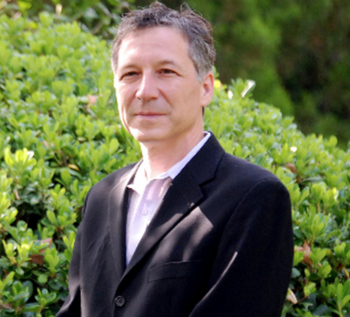
Image
Daniel Mattingly is a Postdoctoral Fellow at the Center on Democracy, Development, and the Rule of Law at Stanford University. He received a Ph.D. in political science from the University of California, Berkeley in 2016. Starting in summer 2017, he will join the department of political science at Yale as an assistant professor. Dan’s dissertation focuses on the sources of state power in China, and shows how the ruling party uses democratic institutions to strengthen its political control over rural China. More broadly he is interested in local governance, state-building, authoritarian rule, and political accountability. His work appears in Comparative Political Studies and World Politics.
Media censorship is considered as the hallmark of authoritarian regimes. Why don’t citizens acquire uncensored info despite the low cost availability? What does it take to expose citizens to uncensored information, and how does exposure affect their beliefs, attitudes, and behaviors? We conduct a field experiment directly varying the supply of uncensored information (by providing free access to uncensored internet to university students in China), and students’ demand for information (by providing informational and monetary incentives) over the course of 18 months. We measure and trace students’ media consumption, beliefs and attitudes regarding media, as well as a broad range of economic and political attitudes and behaviors. We find that censorship successfully prevents information consumption due to the combination of restricted supply of and low demand for uncensored information. The low demand is primarily driven by students’ skeptical beliefs regarding uncensored media outlets, and such beliefs can be persistently changed after a period of exposure. Having exposed to uncensored information makes students more knowledgeable, more pessimistic of the Chinese economy, more critical of the government, and more likely to plan on leaving China in the near future.
Speaker Bio:
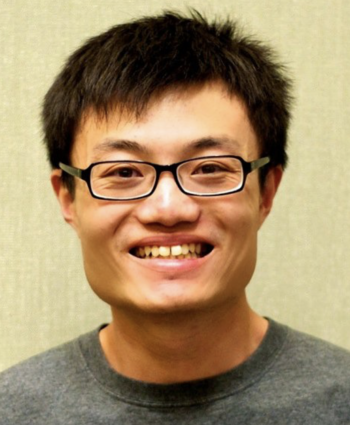
Image
David Y. Yang is a PhD candidate in Economics at Stanford University. He received B.A. in statistics and B.S. in business administration from University of California, Berkeley. His research interests center on political economy, behavioral and experimental economics, and economic history. In particular, he is interested in the causes and consequences of political beliefs, attitudes, and preferences.
David Y. Yang
PhD candidate in Economics at Stanford University
Property rights are important for economic exchange, but in much of the world they are not publicly provided. Private market organizations can fill this gap by providing an institutional structure to enforce agreements, but with this power comes the ability to extort from the group’s members. Under what circumstances will private organizations provide a stable environment for economic activity? Using survey data collected from 1,878 randomly sampled traders across 269 markets, 68 market leaders, and 55 government revenue collectors in Lagos, I find that strong markets maintain institutions to support trade not in the absence of government, but rather as a response to active interference. I argue that organizations develop pro-trade institutions when threatened by politicians they perceive as predatory, and when the organization can respond with threats of its own. Under this balance of power, the organization will not extort because it needs trader support to keep threats credible.
Speaker Bio:
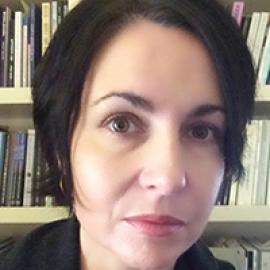
Image
Shelby Grossman is a Postdoctoral Fellow at Stanford University’s Center on Democracy, Development, and the Rule of Law. Her primary research interests are in comparative politics and political economy. Her book manuscript explores the politics of property rights in informal markets in Nigeria. Other research projects include a study on the political economy of diversified business groups, a project on casual inter-group interactions in the informal economy, and a paper on the politics of non-compliance with polio vaccination in northern Nigeria. Shelby received her Ph.D. from the Department of Government at Harvard University in 2016.
In this paper published by the International Journal of Educational Development, we investigate the impact of drug-related violence in Mexico on academic achievement. We use panel of elementary and lower secondary schools and locality-level firearm homicides from 2006 to 2011. We rely on school fixed-effects models to estimate the impact on math test scores of turf war exposure and turf war persistence (e.g. months of exposure) during the academic year. According to the results, both exposure and persistence of criminal violence reduces math test scores. The analysis of heterogeneous effects shows that schools located in poor urban settings experience the largest negative effects. Further, we find stronger negative effects of drug-related violence exposure in lower secondary schools with street gang presence nearby. Finally, we further examine potential mechanisms driving the effects of criminal violence on test scores. Our findings indicate that turf war exposure and persistence are associated with a loss of instructional time due to higher teacher absenteeism and turnover, as well as student absenteeism, tardiness, and propensity to leave school days early.
Lisa Blaydes and Christopher Paik explore the impact the Holy Land Crusaders in Cambridge International Organization, as the most significant forms of military mobilization during the medieval period, had important implications for European state formation. Their findings contribute to a scholarly debate regarding when the essential elements of the modern state first began to appear. Read more here.
Faculty from Anthropology, English and Political Science join Stanford students and staff for perspectives on the U.S. election and its implications for Mexico and Latin America, and for the prospects of immigrants living in the U.S.
(TBD) undergraduate (Centro Chicano and Latino Outreach and CORE Coordinator)
Lenica Morales-Valenzuela is a Masters in Latin American Studies student here at the Center of Latin American Studies. Her past research has focused on human rights advocacy for genocide survivors of the Guatemalan Civil War and studying root causes for Central American migration to the United States. Currently, her research is shifting towards issues of constitutionality of indigenous rights in Guatemala and how indigenous populations have been interacting (or not) with the Guatemalan state.
#LatinxsReact
Speakers:
Image
Professor Garcia’s work engages historical and institutional processes through which violence and suffering is produced and lived. A central theme is the disproportionate burden of addiction, depression and incarceration among poor families and communities. Her research is oriented toward understanding how attachments, affect, and practices of intimacy are important registers of politics and economy.
Professor Garcia is currently engaged in research in Mexico City that examines emerging social and discursive worlds related to the dynamics of extreme urban poverty, mental illness and drug addiction in Mexico City, particularly within its peripheral zones.
Image
Dr. Paula M. L. Moya is Professor of English and, by courtesy, of Iberian and Latin American Cultures and the Director of the Research Institute of Comparative Studies in Race and Ethnicity at Stanford University.
She was also a founding organizer and coordinating team member of The Future of Minority Studies research project (FMS), an inter-institutional, interdisciplinary, and multigenerational research project facilitating focused and productive discussions about the democratizing role of minority identity and participation in a multicultural society.
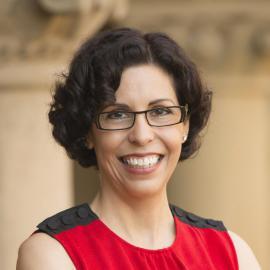
Beatriz Magaloni
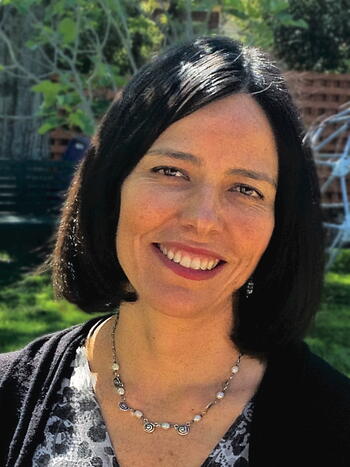
Beatriz Magaloni is an Associate Professor in the Department of Political Science and a Senior Fellow at the Freeman Spogli Institute for International Studies (FSI) at Stanford University. She is also an affiliated faculty member of the Woods Institute of the Environment (2011-2013), a Faculty Fellow at the Stanford Center for International Development, and became an affiliated faculty member at CISAC in 2014.
Moderator(s):
Image
Francisco Preciado, J.D., Executive Director SEIU Local 2007 at Stanford. Francisco has experience working in local and state politics. He has advised California State Assembly Members and State Senators, managed a non-profit, worked as a union organizer, and completed several legal externships. He is a graduate of UC Berkeley School of Law, where he was recognized for his work assisting low-income workers. Francisco has a Masters Degree in Mexican American Studies from San Jose State University, and a dual Bachelors Degree in Political Science and Chicano(a) Studies from Stanford University.
Image
Alberto Diaz-Cayeros Director of the Center for Latin American Studies. Alberto joined the FSI faculty in 2013 after serving for five years as the director of the Center for US-Mexico studies at the University of California, San Diego. He earned his Ph.D at Duke University in 1997. He was an assistant professor of political science at Stanford from 2001-2008, before which he served as an assistant professor of political science at the University of California, Los Angeles. Diaz-Cayeros has also served as a researcher at Centro de Investigacion Para el Desarrollo, A.C. from 1997-1999. His work has primarily focused on federalism, poverty and economic reform in Latin America, and Mexico in particular. He has published widely in Spanish and English.
Dept. of Political Science
Encina Hall, Room 436
Stanford University,
Stanford, CA
(650) 724-5949
0
magaloni@stanford.edu
Senior Fellow at the Freeman Spogli Institute for International Studies
Graham H. Stuart Professor of International Relations
Professor of Political Science
beatriz_magaloni_2024.jpg
MA, PhD
Beatriz Magaloni Magaloni is the Graham Stuart Professor of International Relations at the Department of Political Science. Magaloni is also a Senior Fellow at the Freeman Spogli Institute, where she holds affiliations with the Center on Democracy, Development and the Rule of Law (CDDRL) and the Center for International Security and Cooperation (CISAC). She is also a Stanford’s King Center for Global Development faculty affiliate. Magaloni has taught at Stanford University for over two decades.
She leads the Poverty, Violence, and Governance Lab (Povgov). Founded by Magaloni in 2010, Povgov is one of Stanford University’s leading impact-driven knowledge production laboratories in the social sciences. Under her leadership, Povgov has innovated and advanced a host of cutting-edge research agendas to reduce violence and poverty and promote peace, security, and human rights.
Magaloni’s work has contributed to the study of authoritarian politics, poverty alleviation, indigenous governance, and, more recently, violence, crime, security institutions, and human rights. Her first book, Voting for Autocracy: Hegemonic Party Survival and its Demise in Mexico (Cambridge University Press, 2006) is widely recognized as a seminal study in the field of comparative politics. It received the 2007 Leon Epstein Award for the Best Book published in the previous two years in the area of political parties and organizations, as well as the Best Book Award from the American Political Science Association’s Comparative Democratization Section. Her second book The Politics of Poverty Relief: Strategies of Vote Buying and Social Policies in Mexico (with Alberto Diaz-Cayeros and Federico Estevez) (Cambridge University Press, 2016) explores how politics shapes poverty alleviation.
Magaloni’s work was published in leading journals, including the American Political Science Review,American Journal of Political Science, Criminology & Public Policy, World Development, Comparative Political Studies, Annual Review of Political Science, Cambridge Journal of Evidence-Based Policing, Latin American Research Review, and others.
Magaloni received wide international acclaim for identifying innovative solutions for salient societal problems through impact-driven research. In 2023, she was named winner of the world-renowned Stockholm Prize in Criminology, considered an equivalent of the Nobel Prize in the field of criminology. The award recognized her extensive research on crime, policing, and human rights in Mexico and Brazil. Magaloni’s research production in this area was also recognized by the American Political Science Association, which named her recipient of the 2021 Heinz I. Eulau Award for the best article published in the American Political Science Review, the leading journal in the discipline.
She received her Ph.D. in political science from Duke University and holds a law degree from the Instituto Tecnológico Autónomo de México.
Encina Hall, C149
616 Jane Stanford Way
Stanford, CA 94305
(650) 725-0500
0
albertod@stanford.edu
Senior Fellow, Freeman Spogli Institute for International Studies
Professor, by courtesy, of Political Science
alberto_diaz-cayeros_2024.jpg
MA, PhD
Alberto Díaz-Cayeros is a Senior Fellow at Stanford University's Freeman Spogli Institute for International Studies (FSI), and co-director of the Democracy Action Lab (DAL), based at FSI's Center on Democracy, Development and Rule of Law (CDDRL). His research interests include federalism, poverty relief, indigenous governance, political economy of health, violence, and citizen security in Mexico and Latin America.
He is currently working on a project on cartography and the developmental legacies of colonial rule and governance in indigenous communities in Mexico.
Effective Law Enforcement Institutions and Democratic Accountability: Workshop Focuses on Regional Issues in Law Enforcement
The Stanford Program on Poverty and Governance delivered its five-day training course, “Effective Law Enforcement Institutions and Democratic Accountability,” to law enforcement professionals from the Planning Unit of the Mexican Comision Nacional de Seguridad (CNS). Held in Encina Hall October 11-15, 2016, the workshop was led by Professors Beatriz Magaloni and Alberto Diaz-Cayeros as part of their U.S. State Department-funded research project on police accountability and citizen trust in Mexico. Stanford political scientists and legal scholars participated in the week-long workshop to address a wide range of topics focused on the dynamics between criminal violence, police practices and citizen trust. Highlights of the unique curriculum included:
Design of police interventions by Beatriz Magaloni and Alberto Diaz Cayeros, with discussion of drug policy, fighting organized crime, what law enforcement looks like up close, and prevention of violence.
How to measure the success of police operations by Edgar Franco, a doctoral student in Political Science.
Use of empirical evidence to develop effective public policy by Gustavo Robles, Ph.D candidate in Political Science, with a discussion of methods for gathering and analyzing data and how to develop indicators for performance, results and impact.
Regional issues with a focus on Latin America, including anomie and law, by Stanford Law School visiting professor Rogelio Perez-Perdomo.
Roundtable moderated by Beatriz Magaloni featuring Francis Fukuyama, Erik Jensen and Stephen Stedman on accountability, anti-corruption practices, trust in public institutions, civil engagement, and the role of international organizations.
A lecture by legal scholar Mirte Posterna from the Stanford Law School on human Rights, security and anti-drug policy.
The Mexican delegation took afiled trip to the Stockton Police Department to meet with Chief of Police Eric Jones, an innovator in effective community policing and use of body-worn cameras. They also a visited Stanford's new David Rumsey Map Center, where scholars can work with digital mapping software to manipulate, enlarge, quantify, aggregate, and visualize geo-data in unique ways for research.
The final session of the workshop focused on developing collaborative approaches between scholars and law enforcement practitioners in Mexico on a CNS-sponsored "risk terrain" project currently underway in Acapulco, with an analysis of police patrolling data, the role of schools in mitigating risk for youth violence and gang activity, and the design of federal police surveys.
The workshop and site visits were instrumental in advancing key goals of U.S. State Department-funded research project on project police accountability and citizen trust, which include assessing the efficacy of new law enforcement approaches in coordinating policing between federal, states and municipal agencies, mapping criminal activity and drug trafficking routes in Mexico, and correlating socio-economic characteristics with levels of trust among Mexican citizens.
Encina Hall
616 Serra Street
Stanford, CA 94305-6055
0
The Governance Project Postdoctoral Fellow, 2013-15
Boittin_HS.jpg
Margaret Boittin has a JD from Stanford, and is completing her PhD in Political Science at UC Berkeley. Her dissertation is on the regulation of prostitution in China. She is also conducting research on criminal law policy and local enforcement in the United States, and human trafficking in Nepal.
The Governance Project Postdoctoral Fellow, 2013-15
This event is co-sponsored by the Center on Democracy, Development and the Rule of Law and the Haas Center for Public Service.
Abstract:
The peaceful transfer of power from one president to the next is a hallmark of American democracy, but this hand-off is often rushed and chaotic, leaving new presidents unprepared to govern. Executing a successful presidential transition requires establishing policy goals, understanding agency issues, preparing to manage a 4 million person organization with a budget of almost $4 trillion, finding capable people for 4,000 politically appointed jobs and being ready to handle a foreign or domestic crisis on day one. The Partnership for Public Service has assisted this year’s presidential candidates by providing information and guidance on organizing a transition, sharing a management strategy to implement policies, working with the White House and agencies to ensure coordination with the new president’s team, and establishing a program to help political appointees to succeed.
Speaker Bio:
Image
Max Stier is the founding president and CEO of the Partnership for Public Service. Under his leadership, the Partnership has been widely praised as a first-class nonprofit organization and thought leader on federal government management issues.
Max has worked previously in all three branches of the federal government. In 1982, he served on the personal staff of Congressman Jim Leach. Max clerked for Chief Judge James Oakes of the United States Court of Appeals for the Second Circuit in 1992 and clerked for Justice David Souter of the United States Supreme Court in 1994. Between these two positions, Max served as Special Litigation Counsel to Assistant Attorney General Anne Bingaman at the Department of Justice.
In 1995, Max joined the law firm of Williams & Connolly where he practiced primarily in the area of white collar defense. Max comes most recently from the Department of Housing and Urban Development, having served as the Deputy General Counsel for Litigation.
A graduate of Yale University and Stanford Law School, Max is a member of the National Academy of Public Administration, the Administrative Conference of the United States and the National Advisory Board for Public Service at Harvard College.
Max Stier
The Founding President and CEO of the Partnership for Public Service
Encina Hall
616 Jane Stanford Way
Stanford, CA 94305
(650) 723-4270
0
amgbusse@stanford.edu
Senior Fellow at the Freeman Spogli Institute for International Studies
Michelle and Kevin Douglas Professor of International Studies
Professor of Political Science
Senior Fellow, Hoover Institution
anna_gb_4_2022.jpg
Anna Grzymała-Busse is a professor in the Department of Political Science, the Michelle and Kevin Douglas Professor of International Studies, senior fellow at the Freeman Spogli Institute for International Studies and the director of The Europe Center. Her research interests include political parties, state development and transformation, informal political institutions, religion and politics, and post-communist politics.
In her first book, Redeeming the Communist Past, she examined the paradox of the communist successor parties in East Central Europe: incompetent as authoritarian rulers of the communist party-state, several then succeeded as democratic competitors after the collapse of these communist regimes in 1989.
Rebuilding Leviathan, her second book project, investigated the role of political parties and party competition in the reconstruction of the post-communist state. Unless checked by a robust competition, democratic governing parties simultaneously rebuilt the state and ensured their own survival by building in enormous discretion into new state institutions.
Anna's third book, Nations Under God, examines why some churches have been able to wield enormous policy influence. Others have failed to do so, even in very religious countries. Where religious and national identities have historically fused, churches gained great moral authority, and subsequently covert and direct access to state institutions. It was this institutional access, rather than either partisan coalitions or electoral mobilization, that allowed some churches to become so powerful.
Other areas of interest include informal institutions, the impact of European Union membership on politics in newer member countries, and the role of temporality and causal mechanisms in social science explanations.
Global Populisms
A new project examining the global surge in populist movements and what it means for established democratic rules and institutions.

 FSI researchers work to understand continuity and change in societies as they confront their problems and opportunities. This includes the implications of

 Beatriz Magaloni