This event will be livestreamed. Click here to access the livestreaming page.
ABSTRACT
The clampdown on political dissent inside the Kingdom of Saudi Arabia (KSA) has attracted intense attention in the wake of the recent murder of journalist and opinion-shaper Jamal Khashoggi in Turkey earlier this month. This panel analyzes the murder of Khashoggi in the context of the foreign and domestic policies of KSA’s de facto ruler, Crown Prince Mohammed bin Salman. It also seeks to understand the implications of this event for freedom of expression in the Arab world, U.S.-Saudi relations, and the future of stability inside the Kingdom.
PANELISTS
Moderator:
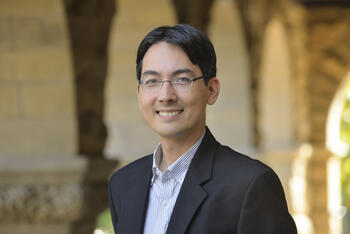
Larry Diamond
Senior Fellow, FSI;
Senior Fellow, Hoover Institution,
Stanford University
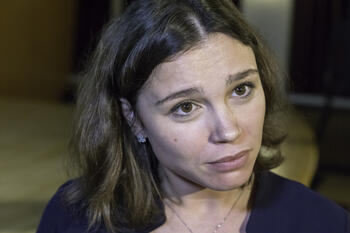
Janine Zacharia
Journalist;
Carlos Kelly McClatchy Visiting Lecturer, Communication,
Stanford University
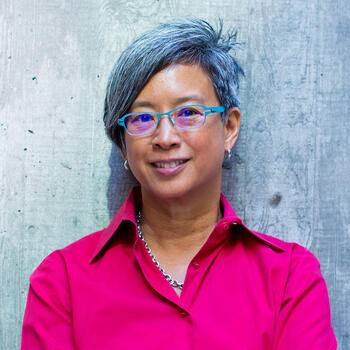
Hesham Sallam
Associate Director, ARD,
Stanford University
Larry Diamond is a senior fellow at the Hoover Institution and at the Freeman Spogli Institute for International Studies. For more than six years, he directed FSI’s Center on Democracy, Development, and the Rule of Law, where he now leads its Program on Arab Reform and Democracy and its Global Digital Policy Incubator. He is the founding co-editor of the Journal of Democracy and also serves as Senior Consultant at the International Forum for Democratic Studies of the National Endowment for Democracy. His research focuses on democratic trends and conditions around in the world, and on policies and reforms to defend and advance democracy. His 2016 book, In Search of Democracy, explores the challenges confronting democracy and democracy promotion, gathering together three decades of his writing and research, particularly on Africa and Asia. He has just completed a new book on the global crisis of democracy, which will be published in 2019, and is now writing a textbook on democratic development.
Janine Zacharia is the Carlos Kelly McClatchy Visiting Lecturer at Stanford University where she teaches journalism classes, including news reporting and writing fundamentals, and foreign correspondence. She was the Jerusalem Bureau Chief and Middle East Correspondent for the Washington Post from December 2009 through April 2011. During her time at the Washington Post, she reported widely throughout the Middle East beyond Israel, the West Bank and Gaza Strip, including assignments in Egypt, Jordan, Lebanon, Iraq, Bahrain, Saudi Arabia, the UAE and Turkey. She reported on the uprisings in Egypt and Bahrain as they began in early 2011. From 2005-2009, Ms. Zacharia worked as chief diplomatic correspondent for Bloomberg News based in Washington. During this period, she traveled to more than 40 countries with then U.S. Secretary of State Condoleezza Rice and other senior administration and military officials. Ms. Zacharia’s earlier career included five years as Washington bureau chief for the Jerusalem Post, and five years in Jerusalem working for various news outlets including the Reuters news agency. She was a regular contributor to the New Republic and has appeared routinely as a cable news analyst on MSNBC, CNN and other networks. She was also a regular panelist on Gwen Ifill’s Friday evening roundtable, Washington Week in Review. During the 2008-2009 academic year, Ms. Zacharia was awarded a Knight Journalism Fellowship at Stanford University. She earned her Bachelor’s of Arts degree in Literary Studies from Middlebury College and is originally from Long Island.
Hesham Sallam is a Research Associate at CDDRL and serves as the Associate-Director of the Program on Arab Reform and Democracy. He is also a co-editor of Jadaliyya ezine and a former program specialist at the U.S. Institute of Peace. His research focuses on Islamist movements and the politics of economic reform in the Arab World. Sallam’s research has previously received the support of the Social Science Research Council and the U.S. Institute of Peace. Past institutional affiliations include Middle East Institute, Asharq Al-Awsat, and the World Security Institute. He is editor of Egypt's Parliamentary Elections 2011-2012: A Critical Guide to a Changing Political Arena (Tadween Publishing, 2013). Sallam received a Ph.D. in Government (2015) and an M.A. in Arab Studies (2006) from Georgetown University, and a B.A. in Political Science from the University of Pittsburgh (2003).
*An earlier list of speakers included Nora Doaiji, who could not participate on the panel due to unforeseen scheduling conflicts.
[[{"fid":"233836","view_mode":"crop_870xauto","fields":{"format":"crop_870xauto","field_file_image_description[und][0][value]":"","field_file_image_alt_text[und][0][value]":false,"field_file_image_title_text[und][0][value]":false,"field_credit[und][0][value]":"","field_caption[und][0][value]":"","thumbnails":"crop_870xauto"},"link_text":null,"type":"media","field_deltas":{"10":{"format":"crop_870xauto","field_file_image_description[und][0][value]":"","field_file_image_alt_text[und][0][value]":false,"field_file_image_title_text[und][0][value]":false,"field_credit[und][0][value]":"","field_caption[und][0][value]":"","thumbnails":"crop_870xauto"}},"attributes":{"class":"media-element file-crop-870xauto","data-delta":"10"}}]]

 FSI researchers work to understand continuity and change in societies as they confront their problems and opportunities. This includes the implications of