
Didi Kuo
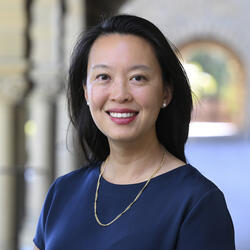
Didi Kuo
- Center Fellow, Freeman Spogli Institute for International Studies
Encina Hall, C150
616 Jane Stanford Way
Stanford, CA 94305
Biography
Didi Kuo is a Center Fellow at the Freeman Spogli Institute for International Studies (FSI) at Stanford University. She is a scholar of comparative politics with a focus on democratization, parties, and institutions. She is the author of The Great Retreat: How Political Parties Should Behave and Why They Don’t (Oxford University Press) and Clientelism, Capitalism, and Democracy: the rise of programmatic politics in the United States and Britain (Cambridge University Press, 2018). She has published in academic and general outlets, and engages in scholarly efforts to understand and advance democratic reforms.
At Stanford, she has been part of research programs including the Program on American Democracy in Comparative Perspective, the Project on Global Populisms, and the Program on Capitalism and Democracy. She was an Eric and Wendy Schmidt Fellow at New America and was a non-resident fellow with the Carnegie Endowment for International Peace. She received a PhD from Harvard University, an MSc in Economic and Social History from Oxford University, where she studied as a Marshall Scholar, and a BA from Emory University.

