Media
-
ARD You Have Not Yet Been Defeated event

In this talk, prominent political activist Sanaa Seif and award-winning journalist Sharif Abdel Kouddous will discuss the current political conditions in Egypt, the massive expansion of the carceral state under the rule of Abdel-Fattah Al-Sisi and the country’s role within the geopolitical shifts reshaping the region. At the heart of the conversation will be the newly released book, You Have Not Yet Been Defeated, authored by Seif's brother Alaa Abdel-Fattah, one of the most high-profile political prisoners in Egypt. The book will be available for purchase at the event.

ABOUT THE SPEAKERS

Image
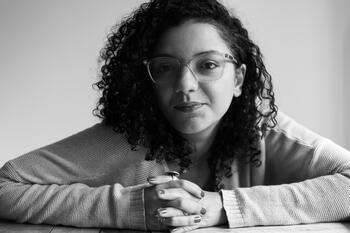
Sanaa Seif
Sanaa Seif is an Egyptian filmmaker, producer, and political activist. She has been imprisoned three times under the Sisi regime for her activism, most recently from the summer of 2020 until December 2021, when she was abducted by security forces after trying to get a letter in to her brother in prison. Hundreds of cultural figures and dozens of institutions campaigned for her release.

Image
Sharif Abdel-Kouddous
Sharif Abdel Kouddous is an independent journalist based in Cairo. For eight years he worked as a producer and correspondent for the TV/radio news hour Democracy Now! In 2011, he returned to Egypt to cover the revolution. Since then, he has reported for a number of print and broadcast outlets from across the region. He received an Izzy Award for outstanding achievement in independent media for his coverage of the Egyptian revolution and an Emmy award for his coverage of the Donald Trump administration’s Muslim travel ban. He is currently an editor and reporter at Mada Masr, Egypt's leading independent media outlet.

This event is co-sponsored by the Abbasi Program in Islamic Studies at Stanford University.​

Image
ARD and Abbasi Program logos

In-person and online via Zoom
Encina Commons Room 123
615 Crothers Way, Stanford, CA

Sanaa Seif Political Activist
Sharif Abdel Kouddous Journalist
Lectures
All Publications button
1
Publication Type
Conference Memos
Publication Date
Subtitle
The Project on Middle East Political Science partnered with Stanford University’s Center for Democracy, Development and the Rule of Law and its Global Digital Policy Incubator for an innovative two week online seminar to explore the issues surrounding digital activism and authoritarianism. This workshop was built upon more than a decade of our collaboration on issues related to the internet and politics in the Middle East, beginning in 2011 with a series of workshops in the “Blogs and Bullets” project supported by the United States Institute for Peace and the PeaceTech Lab. This new collaboration brought together more than a dozen scholars and practitioners with deep experience in digital policy and activism, some focused on the Middle East and others offering a global and comparative perspective. POMEPS STUDIES 43 collects essays from that workshop, shaped by two weeks of public and private discussion.
Authors
Larry Diamond
Authors
News Type
News
Date
Paragraphs

In a webinar dated, February 12, 2021, a panel of Stanford University scholars shared their reflections on the legacy of the January 25, 2011 Uprising in Egypt. Marking the 10-year anniversary of the uprising and the ouster of Hosni Mubarak, the panel examined the trajectory of authoritarianism in the country over the past decade. Moderated by ARD Associate-Director Hesham Sallam, the panel included former CDDRL Visiting Scholar Nancy Okail, Stanford Professor of History Emeritus Joel Beinin, and CDDRL Senior Research Scholar Amr Hamzawy. The panelists addressed a variety questions including: How have political developments in Egypt and elsewhere in recent years informed our understanding of the January 25 Uprising and its significance? In what ways have authoritarian institutions adapted in the aftermath of the 2011 uprising and how have they shaped the prospects for political change and/or stability? Where are the sites of political contestation and resistance in today’s Egypt?


Hero Image
Joel Beinin Nancy Okail Amr Hamzawy Hesham Sallam
All News button
1
-

ABSTRACT 

This talk is based on the speakers’ recently published edited volume The Unfinished Arab Spring: Micro-Dynamics of Revolts between Change and Continuity. Adopting an original analytical approach in explaining various dynamics at work behind the Arab revolts and giving voice to local dynamics and legacies rather than concentrating on debates about paradigms, we highlight micro-perspectives of change and resistance as well as of contentious politics that are often marginalized and left unexplored in favor of macro-analyses. First, we re-examine the stories of the uprisings in Tunisia, Egypt, Syria, Morocco and Algeria through diverse and novel perspectives, looking at factors that have not yet been sufficiently underlined but carry explanatory power for what has occurred. Second, rather than focusing on macro-comparative regional trends – however useful they might be – we focus on the particularities of each country, highlighting distinctive micro-dynamics of change and continuity. ​

SPEAKERS BIO

Image
Fatima el Issawi
Fatima el Issawi is a Reader in Journalism and Media Studies at the University of Essex. Her research focuses on the intersection between media, politics and conflicts in transitional contexts to democracy in North Africa. She is the Principal Investigator for the research project “Media and Transitions to Democracy: Journalistic Practices in Communicating Conflicts- the Arab Spring” funded by the British Academy Sustainable Development Programme, looking at media’s impact on communicating political conflicts in post uprisings in North Africa. Since 2012, el Issawi has been leading empirical comparative research projects on the interplay between media and political change, funded by Open Society Foundation and the Middle East Centre/LSE, covering Egypt, Tunisia, Morocco, Libya and Algeria. El Issawi’s expertise crosses journalism, public communication, policy and academia. She has over fifteen years of experience as international correspondent in conflict zones in the MENA region. She is the author of “Arab National Media and Political Change” investigating the complex intersections between traditional journalists and politics in uncertain times of transitions to democracy.

Image
Francesco Cavatorta
Francesco Cavatorta is full professor of political science and director of the Centre Interdisciplinaire de Recherche sur l’Afrique et le Moyen Orient (CIRAM) at Laval University, Quebec, Canada. His research focuses on the dynamics of authoritarianism and democratization in the Middle East and North Africa. His current research projects deal with party politics and the role of political parties in the region. He has published numerous journal articles and books.

Online, via Zoom: REGISTER

Fatima el Issawi University of Essex
Francesco Cavatorta Laval University
Seminars
-

This event is co-sponsored with The Abbasi Program in Islamic Studies.

Image
76813 1 1
Hisham Matar was born in New York City to Libyan parents, spent his childhood in Tripoli and Cairo, and has lived most of his adult life in London. His critically acclaimed 2016 memoir The Return: Fathers, Sons and the Land in Between won the Pulitzer Prize for Autobiography and received the PEN America Book of the Year Award, as well as the Rathbones Folio Prize. In The Return, he recounts his search for his father, who was kidnapped and imprisoned in Libya when Matar was 19 and studying in London. His debut novel, In the Country of Men, was shortlisted for the Man Booker Prize and the National Book Critics Circle Award, and won numerous international prizes, including the Royal Society of Literature Ondaatje Prize, a Commonwealth First Book Award, the Premio Flaiano and Premio Gregor von Rezzori. His second book, Anatomy of a Disappearance, published in 2011, was named one of the best books of the year by The Guardian and the Chicago Tribune. His work has been translated into twenty-nine languages. He lives in London and New York City. 

Conversation will be moderated by Amr Hamzawy, Senior Research Scholarat the Middle East Initiative, CDDRL, FSI.

Copies of The Return will be available for sale.

Philippines Conference Room 
Encina Hall, 3rd Floor 
616 Serra Street, Stanford, CA 94305

Hisham Matar
-

ABSTRACT

The formation of Saudi Arabia’s anti-corruption commission and the arrest of dozens of princes and former ranking officials have brought to focus the prospects for political and economic reform in the Kingdom. Many observers have characterized these recent steps as an attempt by Crown Prince Mohammed Bin Salman to sideline opponents of his bold, far-reaching reforms. Yet a closer analysis suggests that these measures are part of an effort to consolidate and centralize power in ways that will only move the Kingdom farther away from greater political inclusion and participation. They also threaten the future of stability inside the Kingdom and the region at large. More generally, these recent developments raise critical questions regarding the feasibility of advancing the Crown Prince’s proposed economic reforms in the absence of meaningful political reform that could allow for monitoring and holding accountable the proclaimed leaders of economic reforms.


SPEAKER BIO

Image
unnamed 5

Jamal Khashoggi is a Saudi journalist, columnist, and author. Born in Medina, Saudi Arabia, in 1958, where he completed high school, Jamal graduated from Indiana State University in 1982. Khashoggi began his career as a correspondent for the English language Saudi Gazette. Between 1987-90, he was a foreign correspondent for the pan-Arab Arabic daily Alsharq Alawsat and the Jeddah-based, English language daily Arab News. He became widely recognized for his coverage of the Afghan War and the first Gulf War (1990-91). From 1990 to 1999, Jamal was foreign correspondent for the other prominent pan-Arab Arabic daily, Al-Hayat. There he reported on Afghanistan, Algeria, Lebanon, Sudan, and various conflicts in the Middle East. As a result of his extensive experience, he became known as an expert in political Islam and related movements. In 1999, Jamal was appointed Deputy Editor-in-Chief of Arab News, the leading English newspaper of Saudi Arabia. In 2003, he became Editor-in-Chief of Al-Watan, the country’s pioneering reformist newspaper. In less than two month he lost his job because of his editorial policies. He was then appointed as the media advisor to Prince Turki Al-Faisal, then-Saudi Ambassador in London and later Washington. In 2007, he returned to Al-Watan as Editor-in-Chief. In 2010, again due to his editorial style, pushing boundaries of discussion and debate within Saudi society, he was fired. In June 2010, Prince Alwaleed Bin Talal appointed Jamal to lead a new 24-hour Arabic news channel, Al-Arab. He launched the station in Manama, Bahrain, in 2015. On the air less than 11 hours, the government ordered Al-Arab to cease broadcasting. Jamal is now an independent writer based in Washington, DC.


Reuben Hills Conference Room
2nd Floor East Wing E207
Encina Hall
616 Serra Street
Stanford, California 94305

Jamal Khashoggi Independent Writer
Seminars
-

This film screening is hosted by the Arab Reform and Democracy Program at the Center on Democracy, Development and the Rule of Law. 


This is a ticketed event, only guests with tickets will be admitted. Please print out your tickets before the event and present them at the door. All persons, regardless of age, require a ticket. Directions and parking information is available below. Doors will open at 6:30 pm. 


About Tickling Giants:

In the midst of the Egyptian Arab Spring, Bassem Youssef makes a decision that’s every mother’s worst nightmare… He leaves his job as a heart surgeon to become a full-time comedian. Dubbed, “The Egyptian Jon Stewart,” Bassem creates the satirical show, Al Bernameg. The weekly program quickly becomes the most viewed television program in the Middle East. In a country where free speech is not settled law, Bassem’s show becomes as controversial as it popular. He and his staff must endure physical threats, protests, and legal action, all because of jokes. As Bassem attempts to remain on the air, keep his staff safe, and not get arrested, he continues to let those in power know they’re being held accountable. Despite increasing danger, the team at Al Bernameg employ comedy, not violence, to comment on hypocrisy in media, politics, and religion. Directed by Sara Taksler, Tickling Giants follows the team of Al Bernameg as they discover democracy is not easily won. For more information visit http://ticklinggiants.com


About Bassem Youssef:

Image
bassem headshot

Named one of TIME’s “100 most influential people in the world” in 2013, Bassem Youssef is an Egyptian satirist, columnist, and talk show host. A cardiac surgeon by training, Youssef turned to comedy after he was inspired by the Egyptian revolution. He uploaded the first episode of his homemade newscast, “The B+ Show,” to YouTube in May 2011. After it garnered more than 5 million views in three months, Youssef was named the host of “Al-Bernameg,” a satirical newscast modeled after Jon Stewart’s “The Daily Show.” Youssef’s bold, intelligent, and humorous critiques of Egyptian politics quickly became a hit with audiences in the country and garnered more than 40 million viewers. Due to its sharp criticism of Egyptian leaders, Al-Bernameg faced political pressure from successive governments until it was finally taken off the air in the summer of 2014. Recently, Youssef launched “The Democracy Handbook,” a Fusion TV digital series that satirizes American politics through a Middle Eastern perspective. Youssef is currently a Visiting Scholar at CDDRL's Program on Arab Reform and Democracy. He served as a resident fellow at the Institute of Politics at Harvard University’s Kennedy School of Government in 2015.


Event Information:

-- Movie duration: 111 mins
-- Q&A with Bassem Youssef after the movie
-- Food and drink are prohibited in all indoor venues
-- Cameras and all recording devices are prohibited
-- Guests will be ask to turn off cell phones, pagers and alarms during the event

Directions 

Via I-280 (north or south): LINK

From the east bay via CA-92 (San Mateo Bridge): LINK

Via US 101 (north or south): LINK

Additional directions are available here


Parking 

Parking Structure 7 offers underground parking at the Knight Management Center. Permits are required and enforced Monday through Friday from 8 am to 4 pm. Click here to access Campus Maps.

One-day visitor permits (called “scratchers”) allow for parking in any pay-and-display or metered space, and are available for purchase at the Parking and Transportation Services (P&TS) office for $12 each. Be sure to scratch off the correct date and hang your permit facing outward from your rear-view mirror. "A," "C," and "shared" resident/commuter lots are enforced Monday-Friday, 6 a.m. to 4 p.m. You are free to park in these areas after enforcement hours.

You can also pay for parking using the pay-by-space kiosks located in Structure 7. Simply enter the number for your parking space and pay with cash or card. You do not need to display your receipt in your vehicle. The receipt is not valid in any other location.

Other nearby parking locations include:

  • Parking lot at Bonair Siding Rd. and Serra St. — coin-meter spaces, two-minute walk
  • Parking lot at Memorial Way and Galvez St. — pay-and-display machine, five-minute walk
  • Visitor Center parking lot at 295 Galvez St. — pay-and-display machine, ten-minute walk
  • Parking Structure 6 at Campus Dr. East and Wilbur Way — pay-and-display machine, ten-minute walk

Meters are generally enforced 8 a.m. to 4 p.m., unless otherwise posted. You are free to park in these areas after enforcement hours.

More parking and permit information is available here.

We honor any state's disabled person placards in nearly all marked parking spaces on campus. Please visit the Persons with Disabilities page for more information.


Cemex Auditorium, Knight Management Center
655 Knight Way
Stanford, CA 94305

Bassem Youssef Visiting Scholar, CDDRL
Film Screenings
-


This event is hosted by the Program on Arab Reform and Democracy at the Center on Democracy, Development and the Rule of Law. Bassem Youssef's fellowship at CDDRL is supported by the Carnegie Corporation of New York, and the Stanford Arts Office of the Associate Dean.


Event Details

  • This is a ticketed event, only guests with tickets will be admitted. Please print out your tickets before the event and present them at the door. All persons, regardless of age, require a ticket. 
  • The event will be held at Cubberley Auditorium at Stanford University. More information on directions and parking is available below. 
  • Doors will open at 6:30 pm. We ask that you please be seated by 6:50 pm. Any unclaimed seats at that time will be released to the stand-by line.


Join the conversation at #BassematStanford


Abstract

The Arab Spring and the political changes it accompanied brought to the forefront of the public realm a wide range of satirical political expressions, whether through talk shows, social media channels and pages, and even repertoires of political protests. In this talk, international media figure and political satirist Bassem Youssef will reflect on the popularity these forms of expressions have gained in light of the Arab Spring, and why states and their advocates found them threatening and were quick to limit and undermine them.


Speaker Bio

Named one of TIME’s “100 most influential people in the world” in 2013, Bassem Youssef is an Egyptian satirist, columnist, and talk show host. A cardiac surgeon by training, Youssef turned to comedy after he was inspired by the Egyptian revolution. He uploaded the first episode of his homemade newscast, “The B+ Show,” to YouTube in May 2011. After it garnered more than 5 million views in three months, Youssef was named the host of “Al-Bernameg,” a satirical newscast modeled after Jon Stewart’s “The Daily Show.” Youssef’s bold, intelligent, and humorous critiques of Egyptian politics quickly became a hit with audiences in the country and garnered more than 40 million viewers. Due to its sharp criticism of Egyptian leaders, Al-Bernameg faced political pressure from successive governments until it was finally taken off the air in the summer of 2014. Recently, Youssef launched “The Democracy Handbook,” a Fusion TV digital series that satirizes American politics through a Middle Eastern perspective. Youssef is currently a Visiting Scholar at CDDRL's Program on Arab Reform and Democracy. He served as a resident fellow at the Institute of Politics at Harvard University’s Kennedy School of Government in 2015.


Directions

FROM 101: Take the University Avenue exit west. University will change to Palm Drive once you get onto campus. Take a left onto Campus Drive East. Take a right onto Mayfield Avenue. Take a right into the Tressider Union parking lot and park. Walk towards White Plaza (Bookstore), then towards the Clock Tower. Cubberley Auditorium appears after the Clock tower on the right.

FROM 280: Take the Sand Hill Road exit east. Follow Sand Hill Road, then take a right onto Junipero Serra Boulevard. Take a left onto Campus Drive East. Take a left onto Mayfield Avenue. Take a right into the Tressider Union parking lot and park. Walk towards White Plaza (Bookstore), then towards the Clock Tower. Cubberley Auditorium appears after the Clock tower on the right.


Parking Information

Meters and permitted parking is generally enforced 8 a.m. to 4 p.m., unless otherwise posted. You are free to park in these areas after enforcement hours.

Park either on the main Oval, or the Memorial Lot just north of the Memorial Hall on Memorial Way, or South of the campus union at Mayfield Ave.

For map and additional parking information visit http://campus-map.stanford.edu

[[{"fid":"224151","view_mode":"crop_870xauto","fields":{"format":"crop_870xauto","field_file_image_description[und][0][value]":"","field_file_image_alt_text[und][0][value]":false,"field_file_image_title_text[und][0][value]":false,"field_credit[und][0][value]":"","field_caption[und][0][value]":"","field_related_image_aspect[und][0][value]":"","thumbnails":"crop_870xauto"},"type":"media","field_deltas":{"1":{"format":"crop_870xauto","field_file_image_description[und][0][value]":"","field_file_image_alt_text[und][0][value]":false,"field_file_image_title_text[und][0][value]":false,"field_credit[und][0][value]":"","field_caption[und][0][value]":"","field_related_image_aspect[und][0][value]":"","thumbnails":"crop_870xauto"}},"attributes":{"width":"870","class":"media-element file-crop-870xauto","data-delta":"1"},"link_text":null}]]

Cubberley Auditorium
485 Lasuen Mall
Stanford, CA 94305

Bassem Youssef Visiting Scholar Visiting Scholar, CDDRL
Seminars
-

ABSTRACT

By now, those following the news on Syria have been saturated with analysis, data, information, and misinformation on developments there since 2011. Yet we observe an increasing gravitation to mutually exclusive narratives that adorn websites and publications on the situation in Syria: (a) the narrative of pure and consistent revolution versus that of (b) external conspiracy/designs on Syria. Both narratives carry grains of truth, but are encumbered by maximalist claims and fundamental blindspots that forfeit various potentials for enduring cease-fires and/or transitions, let alone mutual understanding. This talk will address these competing narratives in the context of international escalation marked by increasing US-Russian tension and continued multi-layered conflicts on the battlefield. It closes with addressing a framework for understanding and gauging potential prospects despite conflicting declarations by all parties involved.


SPEAKER BIO

Image
unnamed
Bassam Haddad is Director of the Middle East Studies Program and Associate Professor at the School of Policy, Government, and International Affairs (SPGIA) at George Mason University. He is the author of Business Networks in Syria: The Political Economy of Authoritarian Resilience (Stanford University Press, 2011) and Co-Editor of Dawn of the Arab Uprisings: End of an Old Order? (Pluto Press, 2012). Bassam serves as Founding Editor of the Arab Studies Journal a peer-reviewed research publication and is co-producer/director of the award-winning documentary film, About Baghdad, and director of a critically acclaimed film series on Arabs and Terrorism, based on extensive field research/interviews. Bassam is Co-Founder/Editor of Jadaliyya Ezine and the Executive Director of the Arab Studies Institute, an umbrella for five organizations dealing with knowledge production on the Middle East. He serves on the Board of the Arab Council for the Social Sciences and is Executive Producer of Status Audio Journal.


*This event is supported by the Stanford Initiative for Religious and Ethnic Understanding and Coexistence


[[{"fid":"224129","view_mode":"crop_870xauto","fields":{"format":"crop_870xauto","field_file_image_description[und][0][value]":"Bassam Haddad flyer","field_file_image_alt_text[und][0][value]":"","field_file_image_title_text[und][0][value]":"","field_credit[und][0][value]":"","field_caption[und][0][value]":"","field_related_image_aspect[und][0][value]":"","thumbnails":"crop_870xauto"},"type":"media","attributes":{"width":"870","class":"media-element file-crop-870xauto"}}]]

Reuben Hills Conference Room
2nd Floor East Wing E207
Encina Hall
616 Serra Street
Stanford, California 94305

Bassam Haddad Associate Professor George Mason University
Seminars
News Type
News
Date
Paragraphs

The Program on Arab Reform and Democracy (ARD) at Stanford’s Center on Democracy, Development, and the Rule of Law (CDDRL) is pleased to welcome international media figure and Egyptian political satirist Bassem Youssef as a visiting scholar during the Fall of 2016. Dubbed the Jon Stewart of the Arab World, Youssef was the host of the popular TV political satire show Al-Bernameg, which was the first of its kind in the Middle East region. Al-Bernameg was the most watched show in the history of Egyptian TV with an average of 40 million viewers every week. Due to its sharp criticism of Egyptian leaders, Al-Bernameg faced political pressure from successive governments until it was finally taken off the air in the summer of 2014. Recently, Youssef launched “The Democracy Handbook,” a Fusion TV digital series that satirizes American politics through a Middle Eastern perspective. Named one of TIME’s “100 most influential people in the world” in 2013, Youssef served as a resident fellow at the Institute of Politics at Harvard University’s Kennedy School of Government in 2015.

Youssef’s fellowship is supported by a generous grant from the Carnegie Corporation, and by the Stanford Arts Office of the Associate Dean. In the following interview Youssef discusses his current projects and their relevance to the Stanford community.


[[{"fid":"224139","view_mode":"crop_870xauto","fields":{"format":"crop_870xauto","field_file_image_description[und][0][value]":"Bassem Youssef at CDDRL","field_file_image_alt_text[und][0][value]":"","field_file_image_title_text[und][0][value]":"","field_credit[und][0][value]":"Djurdja Jovanovic Padejski ","field_caption[und][0][value]":"Bassem Youssef speaking with members of the CDDRL community at Stanford University, September 29, 2016","field_related_image_aspect[und][0][value]":"","thumbnails":"crop_870xauto"},"type":"media","attributes":{"width":"870","class":"media-element file-crop-870xauto"}}]]

Bassem Youssef in conversation with ARD Associate-Director Hesham Sallam and CDDRL Visiting Scholar Alexandra Pichler Fong at the CDDRL fall 2016 reception, September 29, 2016 (Photo credit: Djurdja Jovanovic Padejski)


What are your research goals and priorities at CDDRL, Stanford?

I am not a stranger to CDDRL. About a year ago I spoke at the Center in conversation with Professor Larry Diamond in what might have been one of the best interviews I had on a college campus in the United States. During my visit, I was very impressed with CDDRL’s efforts to try to make sense of all what is happening in the Middle East and to nuance American perspectives on the situation the region. I was elated when I was informed that there was a chance for me to join forces with this prestigious center.

Through my fellowship at CDDRL, I would like to bring a different voice to the discussion over what is happening in the Middle East and the Muslim World, and how narratives in the United States can affect the realities in the region. Beyond my own research on satire and social change, my priority is to connect with the student community at Stanford and encourage them to find their own voices and their own opinions about that part of the world. I believe that satire can be a great tool to understand and even change how people view the world around them. As much I have a lot to share with students, I am sure I will have a great deal to learn from them too, and from the Stanford community more generally. I had the privilege to meet with some of the smartest young people here and I look forward to benefit from this intellectually promising experience.


How are the ongoing political developments in the United States informing your current projects?

After I moved to the United States, I started to follow the American elections very closely. With the rise of a populist Right not just in the States but also in Europe, I could see many similarities of how masses are being controlled through hate, xenophobia, and fear. These have been key elements in the narratives used by many Middle Eastern regimes for decades. As people were horrified with the likes of Donald Trump, Ted Cruz and Ben Carson, this came to me as a reminder that no nation, no matter how strong or advanced, is free of such forms of public manipulation and fear-mongering. This was a great starting point for me here in the States. I discovered many similarities that I can comment on and use to show people that we are not that different from each other and that intolerance and bigotry have no single home or language. I was fortunate to relay that message in my new show in America "Democracy Handbook" and also in my coverage of the National Conventions of the Republican and Democratic Parties.


What is your assessment of the prospects for meaningful political change at the current moment in Egypt?

The current realities in Egypt and the Middle East are a product of decades of authoritarian rule. What happened in the Arab Spring interrupted the rule of particular autocrats, but did not succeed in delivering the type of lasting social change we all had hoped for. The biggest obstacle to meaningful social change in Egypt remains the massive webs of special interests that have ruled the country for the last 60 years and shaped its political and social hierarchies. It was naive of us to think that 18 days of protests could make profound changes to the system. You can get rid of the autocrat at the helm, but the system can still endure, as evidenced by the current realities. Any changes will be worthless in the absence of complete transparency and accountability of the ruling class that controls the country’s economy, governance, and legislation.

Hero Image
bassem
Bassem Youssef at the CDDRL fall 2016 reception, September 29, 2016
Djurdja Jovanovic Padejski
All News button
1
Subscribe to Media