Media

Tickets are no longer available for this event. If you are interested in signing up for the notifications list, please visit the Stanford Ticket Office.  

This is a ticketed event, only guests with tickets will be admitted. Directions and parking information is available below. This event is hosted by the Program on Arab Reform and Democracy at the Center on Democracy, Development and the Rule of Law and co-sponsored by OpenXChange, Stanford in Government and the Abbasi Program in Islamic Studies.  


[[{"fid":"220434","view_mode":"crop_870xauto","fields":{"format":"crop_870xauto","field_file_image_description[und][0][value]":"Bassem Flyer 9.24.15","field_file_image_alt_text[und][0][value]":"","field_file_image_title_text[und][0][value]":"","field_credit[und][0][value]":"","field_caption[und][0][value]":"Bassem Flyer 9.24.15","field_related_image_aspect[und][0][value]":"","thumbnails":"crop_870xauto"},"type":"media","attributes":{"width":"870","style":"font-size: 13.008px; font-weight: normal; line-height: 1.538em;","class":"media-element file-crop-870xauto"}}]]Abstract

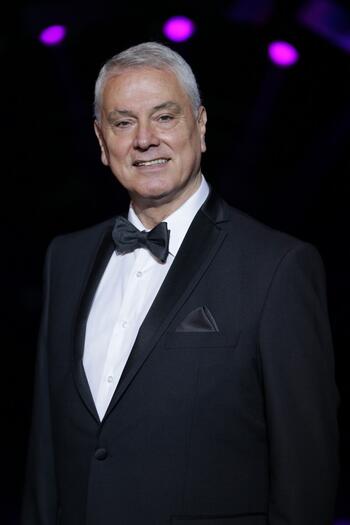
International media sensation and Egyptian political satirist Bassem Youssef, also known as the “Arab Jon Stewart,” will share with the Stanford community his thoughts on why political satire has come to embody an important element of modern day politics. He will also reflect on his own experience as the co-founder and host of the internationally acclaimed political satire talk show “Al-Bernameg.” Youssef will discuss the challenges and obstacles he faced in providing the Egyptian public alternative viewpoints on politics not represented by the mainstream news media.


Speaker Bio

Image
media01

Named one of TIME’s “100 most influential people in the world” in 2013, Bassem Youssef is an Egyptian satirist, columnist, and talk show host. A cardiac surgeon by training, Youssef turned to comedy after he was inspired by the Egyptian revolution. He uploaded the first episode of his homemade newscast, “The B+ Show,” to YouTube in May 2011. After it garnered more than 5 million views in three months, Youssef was named the host of “Al-Bernameg,” a satirical newscast modeled after Jon Stewart’s “The Daily Show.” Youssef’s bold, intelligent, and humorous critiques of Egyptian politics quickly became a hit with audiences in the country and garnered more than 40 million viewers. In 2012, Mohamed Morsi’s government pursued charges against Youssef for "insulting the president," “insulting Islam," and “reporting false news.” In March 2013, Youssef was briefly detained, released on bail, and fined. CBC suspended the broadcast of “Al-Bernameg” in November 2013. In 2014, Youssef announced that he was ending the program due to the dangerous political climate in Egypt. In the spring of 2015 Youssef served as a resident fellow at the Institute of Politics at the John F Kennedy School of Government at Harvard University. He has recently been announced as the host of the International Emmy Awards gala of 2015.


Directions 

Via I-280 (north or south): LINK

From the east bay via CA-92 (San Mateo Bridge): LINK

Via US 101 (north or south): LINK

Additional directions are available here


Parking 

Parking Structure 7 offers underground parking at the Knight Management Center. Permits are required and enforced Monday through Friday from 8 am to 4 pm. Click here to access Campus Maps.

One-day visitor permits (called “scratchers”) allow for parking in any pay-and-display or metered space, and are available for purchase at the Parking and Transportation Services (P&TS) office for $12 each. Be sure to scratch off the correct date and hang your permit facing outward from your rear-view mirror. "A," "C," and "shared" resident/commuter lots are enforced Monday-Friday, 6 a.m. to 4 p.m. You are free to park in these areas after enforcement hours.

You can also pay for parking using the pay-by-space kiosks located in Structure 7. Simply enter the number for your parking space and pay with cash or card. You do not need to display your receipt in your vehicle. The receipt is not valid in any other location.

Other nearby parking locations include:

  • Parking lot at Bonair Siding Rd. and Serra St. — coin-meter spaces, two-minute walk
  • Parking lot at Memorial Way and Galvez St. — pay-and-display machine, five-minute walk
  • Visitor Center parking lot at 295 Galvez St. — pay-and-display machine, ten-minute walk
  • Parking Structure 6 at Campus Dr. East and Wilbur Way — pay-and-display machine, ten-minute walk

Meters are generally enforced 8 a.m. to 4 p.m., unless otherwise posted. You are free to park in these areas after enforcement hours.

More parking and permit information is available here.

We honor any state's disabled person placards in nearly all marked parking spaces on campus. Please visit the Persons with Disabilities page for more information.

Event Flyer
Download pdf

Cemex Auditorium, Knight Management Center

655 Knight Way
Stanford, CA 94305

Bassem Youssef Egyptian Political Satirist Egyptian Political Satirist
Seminars
-

Abstract:

Screening of the award winning documentary 'Dancing in Jaffa' starring Pierre Dulaine who will be in attendance and will participate in a Q&A session following the film. Free and open to the public. Dinner provided. Preceded by short performance by the Stanford Middle East Ensemble.

Speaker Bio:

Image
pierre dulaine 21

Pierre Dulaine was born in Jaffa, Palestine in 1944 to an Irish father and a Palestinian mother--both of whom fled the area in 1948.  After eight months of moving several times, Dulaine's family settled in Amman, Jordan. In 1956, the Suez Crisis forced Dulaine's parents to flee the country, eventually resettling in Birmingham, England.  In 1994 Dulaine founded the Dancing Classrooms program in New York City's public schools in which he encouraged children from various backgrounds to dance together. He later traveled to the city of his birth, Jaffa, to visit his childhood home and to make a film, 'Dancing in Jaffa,' where he brought Israeli Arabs and Jews together through dance and music.  His life was also fictionalized in the film Take the Lead starring Antonio Banderas.  More recently, Pierre Duaine has gained much acclaim in the Arab world for his role as Judge on the Arabic version of the TV show 'So You Think You Can Dance' where he encouraged young Arab men and women to pursue dance as way of dealing with difficult circumstances and certain outdated social taboos.

(See flyer for list of co-sponsors)


Note: Pierre Dulaine will give a lunchtime lecture on campus on May 29. For more information, click here.

Watch 'Dancing in Jaffa' trailer


[[{"fid":"218684","view_mode":"crop_870xauto","fields":{"format":"crop_870xauto","field_file_image_description[und][0][value]":"PD flyer","field_file_image_alt_text[und][0][value]":"","field_file_image_title_text[und][0][value]":"","field_credit[und][0][value]":"","field_caption[und][0][value]":"","field_related_image_aspect[und][0][value]":"","thumbnails":"crop_870xauto","pp_lightbox":false,"pp_description":false},"type":"media","attributes":{"height":1344,"width":870,"class":"media-element file-crop-870xauto"}}]]

Building 206-113
Stanford, CA

Pierre Dulaine
Film Screenings
-

*Open only to Stanford students.* 

Speaker Bio: 

Zahera Harb is one of the six 2013-2014 FSI-Humanities Center International Visitors and will be in residence at Stanford in May 2014. She is Senior Lecturer in International Journalism at City University London. She received her M.A. and Ph.D. in journalism studies from Cardiff University (United Kingdom). As an expert on Arab media, she has published widely on journalism ethics, conflict and war reporting, political communication and representation of Muslims and Islam in western media. Her recent publications include Narrating Conflict in the Middle East: Discourse, Image and Communications Practices in Lebanon and Palestine (2013) and Channels of Resistance: Liberation Propaganda, Hezbollah and the Media (2011). Dr. Harb also has 11 years of experience as a journalist in Lebanon working for Lebanese and international media organizations.


This event is co-sponsored by the Sohaib and Sara Abbasi Program in Islamic Studies, CDDRL Program on Arab Reform and Democracy, the Mediterranean Studies Forum, Stanford Humanities Center, Arab Studies Table, Stanford Language Center. 

Building 30, Room 102

Zahera Harb Senior Lecturer in International Journalism Speaker City University London
Seminars
-

Abstract:

The seminar session will present findings from a new study on the entrepreneurship ecosystem in post-revolutionary Egypt and Tunisia. The discussion will focus on the challenges facing entrepreneurs and would-be entrepreneurs in these countries and the MENA region, and will highlight the importance of reform of the legal and regulatory environment.

Speakers bio:

Lina Khatib is the co-founding Head of the Program on Arab Reform and Democracy at the Center on Democracy, Development, and the Rule of Law at Stanford University. She joined Stanford University in 2010 from the University of London where she was an Associate Professor. Her research is firmly interdisciplinary and focuses on the intersections of politics, media, and social factors in relation to the politics of the Middle East. She is also a consultant on Middle East politics and media and has published widely on topics such as new media and Islamism, US public diplomacy towards the Middle East, and political media and conflict in the Arab world, as well as on the political dynamics in Lebanon and Iran. She has an active interest in the link between track two dialogue and democratization policy. She is also a Research Associate at SOAS, University of London, and, from 2010-2012, was a Research Fellow at the USC Center on Public Diplomacy at the Annenberg School.

Amr Adly has a Ph.D. from the European University Institute-Florence, Department of political and social sciences (Date of completion: September 2010). His thesis topic was "The political economy of trade and industrialization in the post-liberalization period: Cases of Turkey and Egypt". The thesis was published by Routledge in December 2012 under the title of State Reform and Development in the Middle East: The Cases of Turkey and Egypt.

He has several other academic publications that have appeared in the Journal of Business and Politics, Turkish Studies, and Middle Eastern Studies, in addition to articles in several other periodicals and newspapers in English and Arabic.

Before joining Stanford, he worked as a senior researcher at the Egyptian Initiative for Personal Rights, heading the unit of social and economic rights, and at the Ministry of Foreign Affairs as a diplomat.

At Stanford, he is leading a research project on reforming the regulatory environment governing entrepreneurship after the Arab Spring in Egypt and Tunisia, which will result in policy papers as well as conferences in the two countries. 

Greg Simpson is Deputy Regional Director of the Middle East and North Africa division at the Center for International Private Enterprise (CIPE), where in addition to co-managing the division with the regional director, he also directly oversees CIPE’s sizeable Egypt portfolio. A veteran of the nongovernmental sector with eighteen years of experience in strengthening democratic institutions, Simpson came to CIPE from the U.S. online political firm New Media Communications, where he focused on developing and managing the company’s international initiatives. Prior to New Media, Simpson worked at the International Republican Institute (IRI), where he held three successive country director posts in the Balkans. There he directed assistance programs in political party development, political communications, local governance, grassroots organization and mobilization, civil society development, public opinion research, and election observation. During this time, Simpson advised and trained hundreds of political activists and elected officials, and directly advised two of the region’s presidents. Before joining IRI, Simpson held positions at the American Council of Young Political Leaders (ACYPL) and the Center for Civil Society in Southeastern Europe. He holds a B.A. in International Studies from American University in Washington, DC. Simpson currently resides in Alexandria, Virginia with his wife and two children. 

One of the four core institutes of the National Endowment for Democracy and an affiliate of the U.S. Chamber of Commerce, the Center for International Private Enterprise (CIPE) is a U.S. non-profit organization with the mission of strengthening democracy around the globe through private enterprise and market-oriented reform. CIPE has supported more than 1,300 initiatives in over 100 developing countries, involving the private sector in policy advocacy and institutional reform, improving governance, and building understanding of market-based democratic systems. CIPE provides management assistance, practical experience, and financial support to local organizations to strengthen their capacity to implement democratic and economic reforms.

Encina Ground Floor Conference Room

Lina Khatib Program Manager, Arab Reform and Democracy Moderator CDDRL
Amr Adly Postdoctoral Scholar Panelist CDDRL
Gregory Simpson Deputy Regional Director of the Middle East and North Africa division at the Center for International Private Enterprise Panelist CIPE
Seminars
-

Lina Khatib is the co-founding Head of the Program on Arab Reform and Democracy at the Center on Democracy, Development, and the Rule of Law at Stanford University. She joined Stanford University in 2010 from the University of London where she was an Associate Professor. Her research is firmly interdisciplinary and focuses on the intersections of politics, media, and social factors in relation to the politics of the Middle East. She is also a consultant on Middle East politics and media and has published widely on topics such as new media and Islamism, US public diplomacy towards the Middle East, and political media and conflict in the Arab world, as well as on the political dynamics in Lebanon and Iran. She has an active interest in the link between track two dialogue and democratization policy. She is also a Research Associate at SOAS, University of London, and, from 2010-2012, was a Research Fellow at the USC Center on Public Diplomacy at the Annenberg School.

Amr Adly has a Ph.D. from the European University Institute-Florence, Department of political and social sciences (Date of completion: September 2010). His thesis topic was "The political economy of trade and industrialization in the post-liberalization period: Cases of Turkey and Egypt". The thesis was published by Routledge in December 2012 under the title of State Reform and Development in the Middle East: The Cases of Turkey and Egypt.

He has several other academic publications that have appeared in the Journal of Business and Politics, Turkish Studies, and Middle Eastern Studies, in addition to articles in several other periodicals and newspapers in English and Arabic.

Before joining Stanford, he worked as a senior researcher at the Egyptian Initiative for Personal Rights, heading the unit of social and economic rights, and at the Ministry of Foreign Affairs as a diplomat.

At Stanford, he is leading a research project on reforming the regulatory environment governing entrepreneurship after the Arab Spring in Egypt and Tunisia, which will result in policy papers as well as conferences in the two countries.

Adel Iskandar is a scholar of media and international communication. He is the author and coauthor of several works including Al-Jazerra: The Story of the Network that is Rattling Governments and Redefining Modern Journalism (co-authored with Mohammed el-Naway, Basic Books, 2003). Iskandar's work deals with the intersections of media (pring, electronic, and digital) culture, identity, and politics, and he has lectured extensively on these topics at universateries worldwide. His latest publications include two coedited volumes titled Edward SAid: A Legacy of Emancipation and Representation (co-edited with Hakem Rustom, University of California Press, 2010) and Mediating the Arab Uprisings (Tadween, 2013). His just published title the uthored anthology Egypt In Flux: Essay on an unfinished Revolution (OUP/AUC Press, 2013. Iskandar is a postdoctoral fellow at the Center for Contemporary Arab Studies at Georgetown University.

Hesham Sallam is a doctoral candidate in government at Georgetown University and co-editor of Jadaliyya ezine. He is former program specialist at the U.S. Institute of Peace. His research focuses on Islamist movements and the politics of economic reform in the Arab World. Sallam’s research has previously received the support of the Social Science Research Council and the U.S. Institute of Peace. Past institutional affiliations include Middle East Institute, Asharq Al-Awsat, and the World Security Institute. He is editor of Egypt's Parliamentary Elections 2011-2012: A Critical Guide to a Changing Political Arena (Tadween Publishing, 2013).

CISAC Conference Room

Lina Khatib Program Manager, Arab Reform and Democracy Speaker CDDRL
Amr Adly Postdoctoral Scholar Speaker CDDRL
Adel Iskandar Postdoctoral Fellow Speaker the Center for Contemporary Arab Studies at Georgetown University.

Encina Hall, E105
616 Jane Stanford Way
Stanford, CA 94305-6055

0
Senior Research Scholar
hesham_sallam_thumbnail_image_for_cddrl_1-2_copy.jpg

Hesham Sallam is a Senior Research Scholar at CDDRL, where he serves as Associate Director for Research. He is also Associate Director of the Program on Arab Reform and Development. Sallam is co-editor of Jadaliyya ezine and a former program specialist at the U.S. Institute of Peace. His research focuses on political and social development in the Arab World. Sallam’s research has previously received the support of the Social Science Research Council and the U.S. Institute of Peace. He is author of Classless Politics: Islamist Movements, the Left, and Authoritarian Legacies in Egypt (Columbia University Press, 2022), co-editor of Struggles for Political Change in the Arab World (University of Michigan Press, 2022), and editor of Egypt's Parliamentary Elections 2011-2012: A Critical Guide to a Changing Political Arena (Tadween Publishing, 2013). Sallam received a Ph.D. in Government (2015) and an M.A. in Arab Studies (2006) from Georgetown University, and a B.A. in Political Science from the University of Pittsburgh (2003).


Associate Director for Research, Center on Democracy, Development and the Rule of Law
Associate Director, Program on Arab Reform and Development
Date Label
Hesham Sallam Predoctoral Fellow Speaker CDDRL
Panel Discussions
-

Lina Khatib is the co-founding Head of the Program on Arab Reform and Democracy at the Center on Democracy, Development, and the Rule of Law at Stanford University. She joined Stanford University in 2010 from the University of London where she was an Associate Professor. Her research is firmly interdisciplinary and focuses on the intersections of politics, media, and social factors in relation to the politics of the Middle East. She is also a consultant on Middle East politics and media and has published widely on topics such as new media and Islamism, US public diplomacy towards the Middle East, and political media and conflict in the Arab world, as well as on the political dynamics in Lebanon and Iran. She has an active interest in the link between track two dialogue and democratization policy. She is also a Research Associate at SOAS, University of London, and, from 2010-2012, was a Research Fellow at the USC Center on Public Diplomacy at the Annenberg School.

Lina is one of the core authors of the forthcoming Arab Human Development Report (2013) published by the UNDP, and a member of the Board of Directors of the Syria Justice and Accountability Center. She is also a founding co-editor of the Middle East Journal of Culture and Communication, a multidisciplinary journal concerned with politics, culture and communication in the region, and in 2009 co-edited (with Klaus Dodds) a special issue of the journal on geopolitics, public diplomacy and soft power in the Middle East. She edited the Journal of Media Practice from 2007-2010.

Paul Wise is the Richard E. Behrman Professor of Child Health and Society, Professor of Pediatrics at Stanford University School of Medicine, and Senior Fellow in the Freeman Spogli Institute for International Studies at Stanford University.  He is Director of the Center for Policy, Outcomes and Prevention and a core faculty of the Centers for Health Policy and Primary Care Outcomes Research, at Stanford University.

Dr. Wise received his A.B. degree summa cum laude and his M.D. degree from Cornell University, a Master of Public Health degree from the Harvard School of Public Health and did his pediatric training at the Children's Hospital in Boston.  His former positions include serving as the Director of Emergency and Primary Care Services at the Children's Hospital, Boston, Director of the Harvard Institute for Reproductive and Child Health at Harvard Medical School, and Special Assistant to the U.S. Surgeon General.  Prior to moving to Stanford University, Dr. Wise was Vice-Chief of the Division of Social Medicine and Health Inequalities in the Department of Medicine, Brigham and Women's Hospital and Harvard Medical School, the academic and research base of Partners in Health.

Rajaie Batniji is a resident physician in internal medicine at Stanford and a CDDRL affiliate. His research examines the selection of priority diseases and countries in global health, and he is interested in global health financing and the priority-setting process of international institutions. His work has also examined social determinants of health in the Middle East. At FSI, Dr. Batniji is co-investigator on Global Underdevelopment Action Fund projects explaining U.S. global health financing and political causes of public health crisis.

Dr. Batniji received his doctorate in international relations (D.Phil) from Oxford University where he studied as a Marshall Scholar. He also earned a M.D. from the University of California, San Francisco School of Medicine and M.A. and B.A. (with distinction) degrees in History from Stanford University. Dr. Batniji was previously based at Oxford's Global Economic Governance Program, and he has worked as a consultant to the World Health Organization.

Encina Ground Floor Conference Room

Lina Khatib Program Manager, Arab Reform and Democracy Program Speaker
Paul H. Wise Richard E. Behrman Professor of Child Health and Society and CHP/PCOR Core Faculty Member; CDDRL and CISAC Affiliated Faculty Member Speaker
Rajaie S. Batniji CDDRL Affiliated Scholar 2011-2012; Resident Physician in Internal Medicine, Stanford Medical Center Speaker
Seminars
-

This event is co-sponsored by the Arab Studies Table

Abstract:

Ahmed Benchemsi, a Stanford visiting scholar and award-winning Moroccan journalist, will introduce "FreeArabs.com". The new media outlet aims to provide the Arab Spring secular generation with a global platform, a digital haven for speaking out, building ties and developing a strong network. Under the editorial line "Democracy, Secularism, Fun" and with a newsy and arty activist tone, Free Arabs will expose corruption and authoritarianism in the Middle East, invoke genuine democracy as a challenge to Islamists, and fight to restore the real meaning of secularism (ie, freedom of choice) in a region where this word has long been demonized by both oppressive governments and religious zealots.

Speaker Bio:

Ahmed Benchemsi is a visiting scholar at Stanford University's Program on Arab Reform and Democracy at the Center on Democracy, Development and the Rule of Law. His focus is on "The seeds of secularism in the post-Spring Arab world".

Before joining Stanford, Ahmed was the publisher and editor of Morocco's two best-selling newsweeklies TelQuel (French) and Nishan (Arabic), which he founded in 2001 and 2006, respectively. Covering politics, business, society and the arts, Ahmed's magazines were repeatedly cited by major media such as CNN, BBC, Al Jazeera and more, as strong advocates of democracy and secularism in the Middle East and North Africa.

Ahmed received awards from the European Union and Lebanon's Samir Kassir Foundation, notably for his work on the "Cult of personality" surrounding Morocco's King. He also published op-eds in Le Monde and Newsweek where he completed fellowships.

Ahmed received his M.Phil in Political Science in 1998 from Paris' Institut d'Etudes Politiques (aka "Sciences Po"), his M.A in Development Economics in 1995 from La Sorbonne, and his B.A in Finance in 1994 from Paris VIII University.


Image


Encina Ground Floor Conference Room

CDDRL
616 Serra Street
Encina Hall
Stanford, CA 94305

0
Visiting Scholar Program on Arab Reform and Democracy
Benchemsi_headshot.jpg MPhil

Ahmed Benchemsi is a visiting scholar at Stanford University's Program on Arab Reform and Democracy at the Center on Democracy, Development and the Rule of Law. His focus is on the democratic grassroots movement that recently burgeoned in Morocco, as in Tunisia and Egypt. Ahmed researches how and under what circumstances a handful of young Facebook activists managed to infuse democratic spirit which eventually inspired hundreds of thousands, leading them to hit the streets in massive protests. He investigates whether this actual trend will pave the way for genuine democratic reform or for the traditional political system's reconfiguration around a new balance of powers - or both.  

Before joining Stanford, Ahmed was the publisher and editor of Morocco's two best-selling newsweeklies TelQuel (French) and Nishan (Arabic), which he founded in 2001 and 2006, respectively. Covering politics, business, society and the arts, Ahmed's magazines were repeatedly cited by major media such as CNN, BBC, Al Jazeera and more, as strong advocates of democracy and secularism in the Middle East and North Africa.

Ahmed received awards from the European Union and Lebanon's Samir Kassir Foundation, notably for his work on the "Cult of personality" surrounding Morocco's King. He also published op-eds in Le Monde and Newsweek where he completed fellowships.

Ahmed received his M.Phil in Political Science in 1998 from Paris' Institut d'Etudes Politiques (aka "Sciences Po"), his M.A in Development Economics in 1995 from La Sorbonne, and his B.A in Finance in 1994 from Paris VIII University.

Ahmed Benchemsi Visiting Scholar and award-winning Moroccon journalist Speaker Stanford University
Seminars
-

Abstract:

Marking the publication of Lina Khatib's latest book Image Politics in the Middle East: The Role of the Visual in Political Struggle, this seminar focuses on the evolution of political expression in the Middle East over the past decade, highlighting the visual dimension of power struggles between citizens and leaders in Lebanon, Iran, Egypt, Libya, and Syria.

About the speaker:

Lina Khatib is a co-founder and Program Manager of the Program on Arab Reform and Democracy at the Center on Democracy, Development, and the Rule of Law at Stanford University. She joined Stanford University in 2010 from the University of London where she was an Associate Professor. Her research is firmly interdisciplinary and focuses on the intersections of politics, media, and social factors in relation to the politics of the Middle East. She is also a consultant on Middle East politics and media and has published widely on topics such as new media and Islamism, US public diplomacy towards the Middle East, and political media and conflict in the Arab world, as well as on the political dynamics in Lebanon and Iran. She has an active interest in the link between track two dialogue and democratization policy. She is also a Research Associate at SOAS, University of London, and, from 2010-2012, a Research Fellow at the USC Center on Public Diplomacy at the Annenberg School.

Lina is a founding co-editor of the Middle East Journal of Culture and Communication, a multidisciplinary journal concerned with politics, culture and communication in the region, and in 2009 co-edited (with Klaus Dodds) a special issue of the journal on geopolitics, public diplomacy and soft power in the Middle East. She also edited the Journal of Media Practice from 2007-2010. She is one of the core authors of the forthcoming Arab Human Development Report (2012) published by the UNDP.

She has written two books, Filming the Modern Middle East: Politics in the Cinemas of Hollywood and the Arab World (IB Tauris 2006), which is a study of the link between international relations and film, focusing on 25 years of cinematic representation of politics in the region (1980-2005), from the Arab-Israeli conflict to the Gulf War to Islamic fundamentalism, and Lebanese Cinema: Imagining the Civil War and Beyond (IB Tauris 2008). The book takes a socio-political approach to the study of Lebanese cinema over the last thirty years, focusing on the issues of Lebanese national identity, history, sectarian conflict, and memory of the Civil War.

Lina has recently finished writing a book titled Image Politics in the Middle East: The Role of the Visual in Political Struggle for IB Tauris. The book examines the power struggles among states, other political actors, and citizens in the region that are expressed through visuals, and focuses on case studies from Lebanon, Egypt, Syria, Libya, and Iran, with a focus on the role of the image as a political tool in the Arab Spring. She has also recently led a multidisciplinary research project on US public diplomacy in the digital age, in collaboration with the University of Oxford and the University of Wolverhampton, the outcome of which will appear in the Middle East Journal in 2012.

Before joining the academic field, Lina worked in broadcast journalism in Lebanon. She is a frequent commentator on the Middle East in the media with appearances on Al-Jazeera (Arabic and English), CNN, BBC, Sky News and other media outlets across the globe.

Encina Ground Floor Conference Room

Lina Khatib Program Manager for the Program on Arab Reform and Democracy Speaker CDDRL
Seminars
Subscribe to Media