Democracy
Authors
News Type
Commentary
Date
Paragraphs

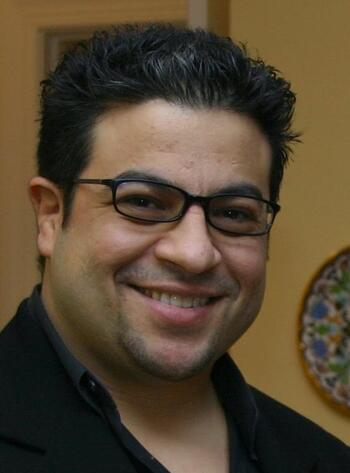
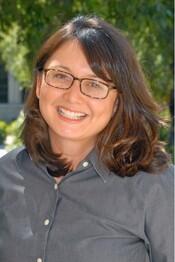
To mark five years since the onset of the January 25 Revolution, five Egypt scholars examined the evolving political landscape in Egypt as part of a panel titled “The Containment of Politics in Egypt,” organized by the Program on Arab Reform and Democracy (ARD). The panel featured Stanford Historian Joel Beinin, Associate Professor of Political Science at Stanford Lisa Blaydes, ARD Visiting Scholar Amr Hamzawy, Executive Director of the Tahrir Institute on Middle East Policy Nancy Okail, and ARD Associate Director Hesham Sallam. The discussion revolved around a number of key issues, including the recent legislative elections, the cohesion of the ruling coalition, the regime’s responses to various economic challenges, and the impact of state repression on spaces for political contestation and resistance.

Hero Image
slide1
All News button
1
-

Abstract

After five years of political support for the regime of Bashar Al-Asad in its war against the opposition, Russia intervened militarily on his behalf in September 2015 and suddenly later this year Russian President Vladimir Putin announced the withdrawal of the Russian troops from Syria. While Moscow claims that its intervention was aimed at destroying ISIS and other terrorists groups, but the vast majority of its air strikes seem to target the moderate armed opposition, which has fought ISIS on the ground. This presentation assesses the outcome of Russia’s intervention, arguing that it neither achieved its goal of destroying ISIS nor did it tip the balance favor of Asad. Instead, the intervention had resulted in the killing of Syrian civilians, complicated the conflict in Syria, and constrained the prospects for a political solution by empowering Asad on the ground.

Speaker Bio

Image
radwan
Radwan Ziadeh is a senior analyst at the Arab Center in Washington D.C. He is the founder and director of the Damascus Center for Human Rights Studies in Syria and co-founder and executive director of the Syrian Center for Political and Strategic Studies in Washington, D.C. He is a Visiting Scholar at the Center for the Study of Human Rights at Columbia University, and Fellow at the Institute for Social Policy and Understanding (ISPU) in Washington D.C. Ziadeh was the managing editor of the Transitional Justice Project in the Arab World, and the Head of the Syrian Commission for Transitional Justice, which was established on November 14, 2013 by the Syrian Interim Government. He was also involved in the Syrian political opposition. He was elected in October 2011 as director of the Foreign Relations Office of the Syrian National Council until he resigned from the position in November 2012. He wrote more than twenty books in English and Arabic. His most recent book is Syria's Role in a Changing Middle East: The Syrian-Israeli Peace Talks (I.B.Tauris, 2016). Ziadeh holds a D.D.S in Dentistry from Damascus University, Diploma in international Human Rights Law from College of Law at the American University in Washington D.C, an MA in Democracy and Governance from Georgetown University in Washington D.C, and an MS in Finance from Kogod School of Business at the American University in Washington D.C.


[[{"fid":"222587","view_mode":"crop_870xauto","fields":{"format":"crop_870xauto","field_file_image_description[und][0][value]":"Radwan Ziadeh flyer","field_file_image_alt_text[und][0][value]":"","field_file_image_title_text[und][0][value]":"","field_credit[und][0][value]":"","field_caption[und][0][value]":"","field_related_image_aspect[und][0][value]":"","thumbnails":"crop_870xauto"},"type":"media","attributes":{"width":"870","style":"width: 870px;","class":"media-element file-crop-870xauto"}}]]


CISAC Central Conference Room
Encina Hall, 2nd Floor
616 Serra St
​Stanford, CA 94305

Radwan Ziadeh Arab Center, Washington, DC
Seminars
-

Abstract

After nearly five years since the start of the uprising, Syria finds itself divided and embattled, with no end in sight. More significantly, more than half of the Syrian population is displaced and the death toll surpassed 300,000 by all counts. The Syrian tragedy persists and, more than any other case of mass uprising in the region, continues to be shrouded in political power-plays and contradictions at the local, regional, and international levels. Defined increasingly by an absence of a clear favorable outcome, considering existing parties to the conflict, the logic of the lesser evil reigns supreme. This lecture is an attempt to understand the roots and dynamics of the tragic Syrian uprising, with particular attention to its background and to the recent Russian intervention.

Speaker Bio

Image
unnamed
Bassam Haddad is Director of the Middle East Studies Program and Associate Professor in the Department of Public and International Affairs at George Mason University, and is Visiting Professor at Georgetown University. He is the author of Business Networks in Syria: The Political Economy of Authoritarian Resilience (Stanford University Press, 2011). Haddad is currently editing a volume on Teaching the Middle East After the Arab Uprisings, a book manuscript on pedagogical and theoretical approaches. His most recent books include two co-edited volumes: Dawn of the Arab Uprisings: End of an Old Order? (Pluto Press, 2012) and Mediating the Arab Uprisings (Tadween Publishing, 2013). Haddad serves as Founding Editor of the Arab Studies Journal a peer-reviewed research publication and is co-producer/director of the award-winning documentary film, About Baghdad, and director of the critically acclaimed film series, Arabs and Terrorism, based on extensive field research/interviews. More recently, he directed a film on Arab/Muslim immigrants in Europe, titled The "Other" Threat. Haddad is Co-Founder/Editor of Jadaliyya Ezine and serves on the Editorial Committee of Middle East Report. He is the Executive Director of the Arab Studies Institute, an umbrella for five organizations dealing with knowledge production on the Middle East and Founding Editor of Tadween Publishing.


This event is co-sponsored by The Markaz: Resource Center at Stanford University.


[[{"fid":"221861","view_mode":"crop_870xauto","fields":{"format":"crop_870xauto","field_file_image_description[und][0][value]":"Bassam Haddad January 21","field_file_image_alt_text[und][0][value]":"","field_file_image_title_text[und][0][value]":"","field_credit[und][0][value]":"","field_caption[und][0][value]":"","field_related_image_aspect[und][0][value]":"","thumbnails":"crop_870xauto"},"type":"media","attributes":{"width":"870","class":"media-element file-crop-870xauto"}}]]


CISAC Central Conference Room
Encina Hall, 2nd Floor
616 Serra St
Stanford, CA 94305

Bassam Haddad Associate Professor George Mason University
Seminars
-

Abstract

The sectarian-based segregation that has shaped urbanism in Baghdad is a direct outcome of the 2003 U.S.-led invasion and occupation of Iraq. The "post"-occupied city is characterized by the normalization of concrete “security” blast-walls that choke urban circulation and sever communities. The notorious blast walls -- or "Bremer Walls" -- perpetuate and intensify conditions of urban segregation. As the summer's surge of anti-government protests in Baghdad demonstrate, the short-sighted nature of this militarized solution to sectarian-based violence has proven to be a superficial and unsustainable fix to the deep dilemma of sectarian segregation codified in Iraq’s political system. This presentation will examine the context for recent public dissent on the streets of Baghdad through the story of the capital city's fragmentation between 2006 and 2007. 

Speaker Bio

Image
md photo
Mona Damluji is Associate Dean and Director of The Markaz: Resource Center at Stanford University. She is a liberal arts educator, cultural activist and scholar with expertise in the Arab Middle East and broader Muslim World. Mona received her PhD from the University of California, Berkeley and was the Mellon Postdoctoral Fellow in Asian & Islamic Visual Culture at Wheaton College in Massachusetts. Mona regularly curates and organizes exhibits and programs featuring the work of artists and activists linked to Muslim and Arab communities and countries. Major recent projects have included "Open Shutters Iraq" at UC Berkeley and "Arab Comics: 90 Years of Popular Visual Culture" at Brown University. Mona has worked as the educational outreach director for the Arab Film Festival, organizing an annual festival screening for students and teachers in San Francisco, Oakland and Berkeley. Her exhibition and book reviews appear in Jadaliyya, AMCA and the International Journal of Islamic Architecture. Mona's publications also appear in the Journal of Urban History, Comparative Studies of South Asia, Africa and the Middle East, and Subterranean Estates: the Life Worlds of Oil and Gas.


This event is co-sponsored by the Sara and Sohaib Abbasi Program in Islamic Studies and The Markaz: Resource Center.


CISAC Central Conference Room
Encina Hall, 2nd Floor
616 Serra St
Stanford, CA 94305

Mona Damluji
Seminars
-

Abstract

With the nearing of the fifth anniversary of the January 25 Revolution, this panel examines the nature of politics under the rule of the current military sponsored regime in Egypt. What implications will the recent legislative elections have for political stability and the cohesion of the ruling coalition? How is the regime responding to the various economic challenges it currently confronts? In what ways has the persistence of state repression affected and shaped the space for political contestation and resistance?

Panelists


Joel Beinin
Donald J. McLachlan Professor of History,
Stanford University


Lisa Blaydes
Associate Professor of Political Science,
Stanford University


Amr Hamzawy
ARD Visiting Scholar,
CDDRL, Stanford University


Nancy Okail
Executive Director,
The Tahrir Institute for Middle East Policy
(via Skype)


Hesham Sallam
Associate Director, ARD
CDDRL, Stanford University


Moderator:

Larry Diamond
Senior Fellow, FSI; 
Senior Fellow Hoover Institute,
Stanford University


Image
Joel Beinin
Joel Beinin is the Donald J. McLachlan Professor of History and Professor of Middle East History. He received his A.B. from Princeton University in 1970, his M.A. from Harvard University in 1974, and his A.M.L.S. and Ph.D. from the University of Michigan in 1978 and 1982. He also studied at the American University of Cairo and and the Hebrew University of Jerusalem. He lived in Egypt in 1969, 1980-81, 1985, 1986, 1994, 2004-05, and 2006-08 and in Israel in 1965-66, 1970-73, 1987, 1988, 1993, and 1993. He has taught Middle East history at Stanford University since 1983. From 2006 to 2008 he served as Director of Middle East Studies and Professor of History at the American University in Cairo. His research and writing focuses on workers, peasants, and minorities in the modern Middle East and on Israel, Palestine, and the Arab-Israeli conflict. Beinin has written or edited nine books, most recently Social Movements, Mobilization, and Contestation in the Middle East and North Africa; co-edited with Frédéric Vairel (Stanford University Press, 2011) and The Struggle for Worker Rights in Egypt (Solidarity Center, 2010). His articles have been published in leading scholarly journals as well as The NationMiddle East ReportThe Los Angeles TimesThe San Francisco ChronicleLe Monde Diplomatique, and others. He has appeared on Al-Jazeera TV, BBC radio, National Public Radio, and many other TV and radio programs throughout North America, and in France, Egypt, Singapore, and Australia, and has given frequent interviews to the global media. In 2002 he served as President of the Middle East Studies Association of North America.

Image
blaydes2
Lisa Blaydes is an Associate Professor of Political Science at Stanford University.  She is the author of Elections and Distributive Politics in Mubarak’s Egypt (Cambridge University Press, 2011).  Professor Blaydes received the 2009 Gabriel Almond Award for best dissertation in the field of comparative politics from the American Political Science Association for this project.  Her articles have appeared in the American Political Science Review, International Studies Quarterly, International Organization, Journal of Theoretical Politics, Middle East Journal, and World Politics. During the 2008-2009 and 2009-2010 academic years, Professor Blaydes was an Academy Scholar at the Harvard Academy for International and Area Studies.  She holds degrees in Political Science (PhD) from the University of California, Los Angeles and International Relations (BA, MA) from Johns Hopkins University.

Image
Larry Diamond website pic
Larry Diamond is a senior fellow at the Hoover Institution and at the Freeman Spogli Institute for International Studies. He also serves as the Peter E. Haas Faculty Director of the Haas Center for Public Service at Stanford. For more than six years, he directed FSI’s Center on Democracy, Development, and the Rule of Law, and he continues to lead its programs on Liberation Technology, Arab Reform and Democracy, and Democracy in Taiwan.  He is the founding co-editor of the Journal of Democracy and also serves as Senior Consultant at the International Forum for Democratic Studies of the National Endowment for Democracy. His sixth and most recent book, In Search of Democracy (Routledge, 2016), explores the challenges confronting democracy and democracy promotion, gathering together three decades of his work on democratic development, particularly in Africa and Asia.  He has also edited or co-edited more than 40 books on democratic development around the world.

Image
amr hamzawy cropped
Amr Hamzawy is a visiting scholar at the Program on Arab Reform and Democracy. He studied political science and developmental studies in Cairo, The Hague, and Berlin. After finishing his doctoral studies and after five years of teaching in Cairo and Berlin, Hamzawy joined the Carnegie Endowment for International Peace (Washington, DC) between 2005 and 2009 as a senior associate for Middle East Politics. Between 2009 and 2010, he served as the research director of the Middle East Center of the Carnegie Endowment in Beirut, Lebanon. In 2011, he joined the Department of Public Policy and Administration at the American University in Cairo, where he continues to serve today. Hamzawy also serves as an associate professor of political science at the Department of Political Science, Cairo University. His research and teaching interests as well as his academic publications focus on democratization processes in Egypt, tensions between freedom and repression in the Egyptian public space, political movements and civil society in Egypt, contemporary debates in Arab political thought, and human rights and governance in the Arab world. Dr. Hamzawy is a former member of the People’s Assembly after being elected in the first Parliamentary elections in Egypt after the 25th of Jan 2011 revolution. He is also a former member of the Egyptian National Council for Human Rights. Hamzawy contributes a daily column and a weekly op-ed to the Egyptian independent newspaper Shorouk.

Image
nancy okail
Nancy Okail is the Executive Director of TIMEP. She brings more than 15 years of experience promoting democracy and development in the Middle East and North Africa region to this role. Prior to joining TIMEP, Dr. Okail was the director of Freedom House’s Egypt program. She has also worked with the Egyptian government as a senior evaluation officer of foreign aid and has managed programs for Egyptian pro-democracy organizations that challenged the Mubarak regime. She was also one of the defendants convicted and sentenced to prison in the widely publicized case of 43 non-governmental organization workers charged with using foreign funds to foment unrest in Egypt. She holds a Ph.D. from the University of Sussex in the U.K. where her dissertation examined the power relations of foreign aid.

Image
heshamsallam cddrl3
Hesham Sallam is a Research Associate at CDDRL and serves as the Associate-Director of the Program on Arab Reform and Democracy. He is also a co-editor of Jadaliyya ezine and a former program specialist at the U.S. Institute of Peace. His research focuses on Islamist movements and the politics of economic reform in the Arab World. Sallam’s research has previously received the support of the Social Science Research Council and the U.S. Institute of Peace. Past institutional affiliations include Middle East Institute, Asharq Al-Awsat, and the World Security Institute. He is editor of Egypt's Parliamentary Elections 2011-2012: A Critical Guide to a Changing Political Arena (Tadween Publishing, 2013). Sallam received a Ph.D. in Government (2015) and an M.A. in Arab Studies (2006) from Georgetown University, and a B.A. in Political Science from the University of Pittsburgh (2003).


[[{"fid":"221614","view_mode":"crop_870xauto","fields":{"format":"crop_870xauto","field_file_image_description[und][0][value]":"Egypt panel flyer","field_file_image_alt_text[und][0][value]":false,"field_file_image_title_text[und][0][value]":false,"field_credit[und][0][value]":"","field_caption[und][0][value]":"","field_related_image_aspect[und][0][value]":"","thumbnails":"crop_870xauto"},"type":"media","field_deltas":{"7":{"format":"crop_870xauto","field_file_image_description[und][0][value]":"Egypt panel flyer","field_file_image_alt_text[und][0][value]":false,"field_file_image_title_text[und][0][value]":false,"field_credit[und][0][value]":"","field_caption[und][0][value]":"","field_related_image_aspect[und][0][value]":"","thumbnails":"crop_870xauto"}},"link_text":null,"attributes":{"width":"870","class":"media-element file-crop-870xauto","data-delta":"7"}}]]


CISAC Central Conference Room
Encina Hall, 2nd Floor
616 Serra St
Stanford, CA 94305

Joel Beinin
Lisa Blaydes
Amr Hamzawy
Nancy Okail
Hesham Sallam
Panel Discussions
Authors
News Type
Q&As
Date
Paragraphs

In a Q and A with The Stanford Daily, CDDRL Program on Arab Reform and Democracy Visiting Scholar Amr Hamzawy remarks on his time in the Egyptian parliament and the factors that led him and his family to leave the country for America. 


Amr Hamzawy is a visiting scholar at Stanford’s Center on Democracy, Development, and the Rule of Law (CDDRL) and an associate professor of political science at Cairo University. Before arriving at Stanford, Hamzawy played critical roles in the Egyptian political scene, both during and after the Arab Spring — including a term in the first parliament elected after Egypt’s 2011 revolution.

The Stanford Daily sat down with Hamzawy to discuss his work at Stanford and the state of Egyptian politics today.


The Stanford Daily (TSD): Why did you choose to spend time here at Stanford, and what’s the focus of your research here?

Amr Hamzawy (AH): Well, I had to leave Egypt. The background is I took a clear position against the military coup. I was in fact banned from travel for a year in Egypt in 2014, which was basically one of the tools the repressive government uses to intimidate opponents. In 2015 my ban was lifted. I was, however, banned from teaching at my home university, Cairo University. The environment was becoming increasingly fascist, increasingly repressive for anyone who expresses a different point of view opposed to the one narrative coming from the ruling establishment. There were increased pressures as far as I [was] concerned, as far as my family [was] concerned. My wife is an actress so she [had] been banned from working as well, and she has been pressured in different ways. So we decided, in fact against our initial wish, to leave Egypt.

What happened was I basically wrote to several colleagues and friends, and my first choice was CDDRL, where [Stanford professor of political science and sociology] Larry Diamond is a very good friend of mine and [Stanford professor of political science and former U.S. Ambassador] Mike McFaul is a very good friend of mine.

Stanford was a choice based on the reputation of CDDRL, my friendship with Mike and Larry and the excellent reputation of the Program on Arab Reform and Democracy, where [research associate] Hesham Sallam is at CDDRL. That’s basically what brought me to Stanford, and I wanted to be as far away as possible from Egypt. I keep saying it’s pretty far, and one of the greatest assets of the time difference is that you wake up and the day in Egypt has passed — so you take bad news in one shot, which is a big difference than following by the minute what is happening and unfolding all day.

In terms of my focus at Stanford, I am writing a book — it’s a research assignment so far — I’m working on a book where the working title is “Egypt’s Illiberal Liberals.” It’s an attempt to look at why the Egyptian middle class, which basically took out to the streets in 2011 to demand political freedom and democracy, decided to to give up on democratization and to once again move in the direction of calling on the military establishment to interfere and freeze pluralist politics.

One of the key issues which I am working on is how liberal, intellectual elites have been able to market the army interference and the military coup as a step to protect the nation state, to save society and to save the Egyptian identity.


TSD: You have studied and worked around the world. You completed a Ph.D. in Berlin, and you were also working with the Carnegie Endowment for International Peace in Beirut. How does Stanford compare?

AH: It’s more of a vibrant intellectual environment. Of course I am not undermining the positive assets of my university in Berlin or of Carnegie in D.C. or in Beirut, where in different ways the environment has been inspiring as well.

But as of now, it relates to my role in the last four years because I went through two phases: the first phase where I was part of an attempt to make Egypt a democratic place — prior to 2011, [through] writing primarily, but post 2011… after I was elected to parliament — and a second phase where I [was] basically classified as a state enemy [in] July 2013. In a way, Stanford is an excellent place to reflect on the experience personally and to reflect in more of an objective manner — looking at what went wrong.

The big question in the literature is: Was it doomed to fail — was Egypt going to fail no matter what, or did key actors…commit key mistakes, tactical and strategic mistakes, which led Egypt to where it is today? That is sort of the big debate in the last two years, and Stanford is an excellent place to engage that debate and to try to contribute to it.


TSD: You founded a political party in 2011. However, you withdrew from Egypt’s current, 2015 parliamentary elections. Why?

AH: We founded the Egypt Freedom Party in 2011, and our platform has always been a liberal democratic platform — where you can compare our platform to the ideas of liberal parties in Europe or the U.S. — with a clear and pronounced commitment to a market economy and social justice, based on a socially responsible market economy as it’s framed in the European experience.

We fashioned a platform that enabled us to be elected to the “true parliament” — the only true parliament Egypt had in 2011 and 2012…. The level of competition was true, between people representing different shades, old and new. No one should imagine that 2011 eradicated the Mubarak regime. No, the Mubarak elite were very much out there, and it was their right. That’s very much what I believe in: As long as they are not implicated in human rights violations, they should be part of politics. We made the mistake… of trying to ban them from participating in politics. It was a shortsighted decision, which parliament took in 2012, and it backfired. It’s one of the big mistakes which I count as one of my own mistakes within the past four years.

At any rate, the elections of 2011… had the greatest voter turnout in modern Egyptian history of around 60 percent overall.

We had transparent management of the elections. Yes, religion was used, mosques were used, churches were used; but overall, it was a real breakthrough, so we participated, and I was elected to parliament. I tried to advance a democracy-based agenda — tried to push for security sector reform, transitional justice.

Parliament was dissolved six months after it started its work. The Assembly was sent home, and a year of increased tensions between the Muslim Brotherhood and the military establishment ended in a military coup in July 2013, basically freezing pluralist politics. Since then, what we have in Egypt is by no means a democratic environment or even a semi-democratic environment which would encourage someone like me to participate.

The one challenge you face is by participating you justify and legitimate that framework, that autocratic framework. When you participate in parliamentary elections in an autocratic or semi-autocratic setting or in a fascist setting, you have to have clarity with regard to how to weigh legitimating an unjust framework and becoming effective. My calculation is that I’m not going to be effective in the fascist environment, and I will only be used as a legitimating name.

TSD: You are known for criticizing the knee-jerk support that a majority of Egyptian liberals have shown Egypt’s current military regime since the 2013 coup. As a secular, liberal Egyptian yourself, has your criticism cost you any friends?

AH: Yes, many. On a personal note, that was the most shocking development in the last four years… to wake up to see most of [your friend and colleagues] giving up on democratic ideals and siding with the military establishment interfering in governance issues and freezing pluralist politics.

You see some of your friends not only buying into fascism — not only buying into the military dictatorship, but even playing the role of legitimating the dictatorship, of… justifying the bloodshed, justifying the military dictatorship, justifying the one-man show, which is backfiring.


TSD: What do you think is the biggest misunderstanding that Americans have about Egyptian politics today?

AH: I guess the biggest misunderstanding is a conventional one, which is to place your bet on the ruling establishment no matter what the ruling establishment is doing. The Americans did place their bet on Mubarak’s ruling establishment up until the very last day of the 18 days [of the 2011 Egyptian revolution], and then they shifted course.

In regards to [former Egyptian President] Mubarak and [current Egyptian President] Sisi you are placing your bet for regional issues, for international security concerns, for terror, on dictators who are basically creating more of an environment for terrorism domestically.


TSD: On a lighter note, you are a well-known personality in Egypt and the Arab world. In fact, you are married to an Egyptian movie star. Do people recognize you around the Bay Area?

AH: Yes, they do — Egyptians and Arabs. We were recently in San Francisco, [my wife] Basma and I, and she was stopped, and I was stopped by Egyptians and Arabs recognizing me. On campus, I get recognized by Arab students frequently, and so happily most of them are on our side — they are democracy fans, and so it’s pleasant recognition.

But we are enjoying being not recognized, because the last two years being recognized in a fascist environment as someone who is classified as a state enemy has been very unpleasant. There were incidents where people were shouting at us in the street. There was no physical violence, but you ask yourself, “Why am I doing this?” There are some moments personally which get to be very difficult for you to digest.


Hero Image
amr hamzawy talk 22513840242 o
Amr Hamzawy presents his talk 'Anti-democratic Deceptions: How Egyptian Liberals Endorse Autocracy' to the CDDRL community. 27 Oct. 2015.
Sadaf Minapara
All News button
1
News Type
News
Date
Paragraphs


On November 17, CDDRL’s Program on Arab Reform and Democracy (ARD) hosted Lina Khatib, a senior research associate with the Arab Reform Initiative, for a special talk on the Syrian crisis. Khatib was a co-founder of the ARD Program and managed its research agenda for four years before leaving CDDRL to lead the Carnegie Middle East Center in Beirut.

After conducting extensive fieldwork on the Syrian-Turkish border, Khatib provided a detailed analysis of ISIS’ origins and how they are benefitting from the unresolved crisis in Syria. Khatib also weighed in on the refugee crisis, as well as the regional rivalries that are using Syria as a proxy to exert themselves militarily. Khatib argued that a military solution to solving the ISIS problem is not the right approach, and encouraged the international community to begin engaging different members of the Syrian opposition, and rethinking their approach to international diplomatic negotiations.


Photo Album

Hero Image
dsc 0158
All News button
1
News Type
News
Date
Paragraphs

On October 27, CDDRL's Program on Arab Reform and Democracy welcomed former Egyptian Member of Parliament Amr Hamzawy, who shared his thoughts on recent shifts in liberal thought in Egypt over the past several years. During his talk, Hamzawy highlighted the challenges in defining liberalism in Egypt, providing evidence that large numbers of self-proclaimed Egyptian liberals are in fact turning against democratic values and expressing considerable support for the current government under President Abdel Fattah el-Sisi, legitimizing the military intervention in 2013. Despite this support, Hamzawy believes that youth on the polar end of the liberal spectrum hold the potential to bring about pro-democratic change throughout the country in the coming years. See photos and view a video of Hamzawy's talk at CDDRL below. 

To find out more about CDDRL's Program on Arab Reform and Democracy, please click here.


PHOTOS

VIDEO

Hero Image
amr hamzawy talk 22513840242 o
Amr Hamzawy presents his talk 'Anti-democratic Deceptions: How Egyptian Liberals Endorse Autocracy' to the CDDRL community. 27 Oct. 2015.
Sadaf Minapara
All News button
1
Subscribe to Democracy