
Stanford Launches New Democracy Action Lab to Confront Global Democratic Backsliding
Stanford Launches New Democracy Action Lab to Confront Global Democratic Backsliding
By combining rigorous research with practitioner collaborations, the Democracy Action Lab at the Center on Democracy, Development and the Rule of Law turns ideas into action.
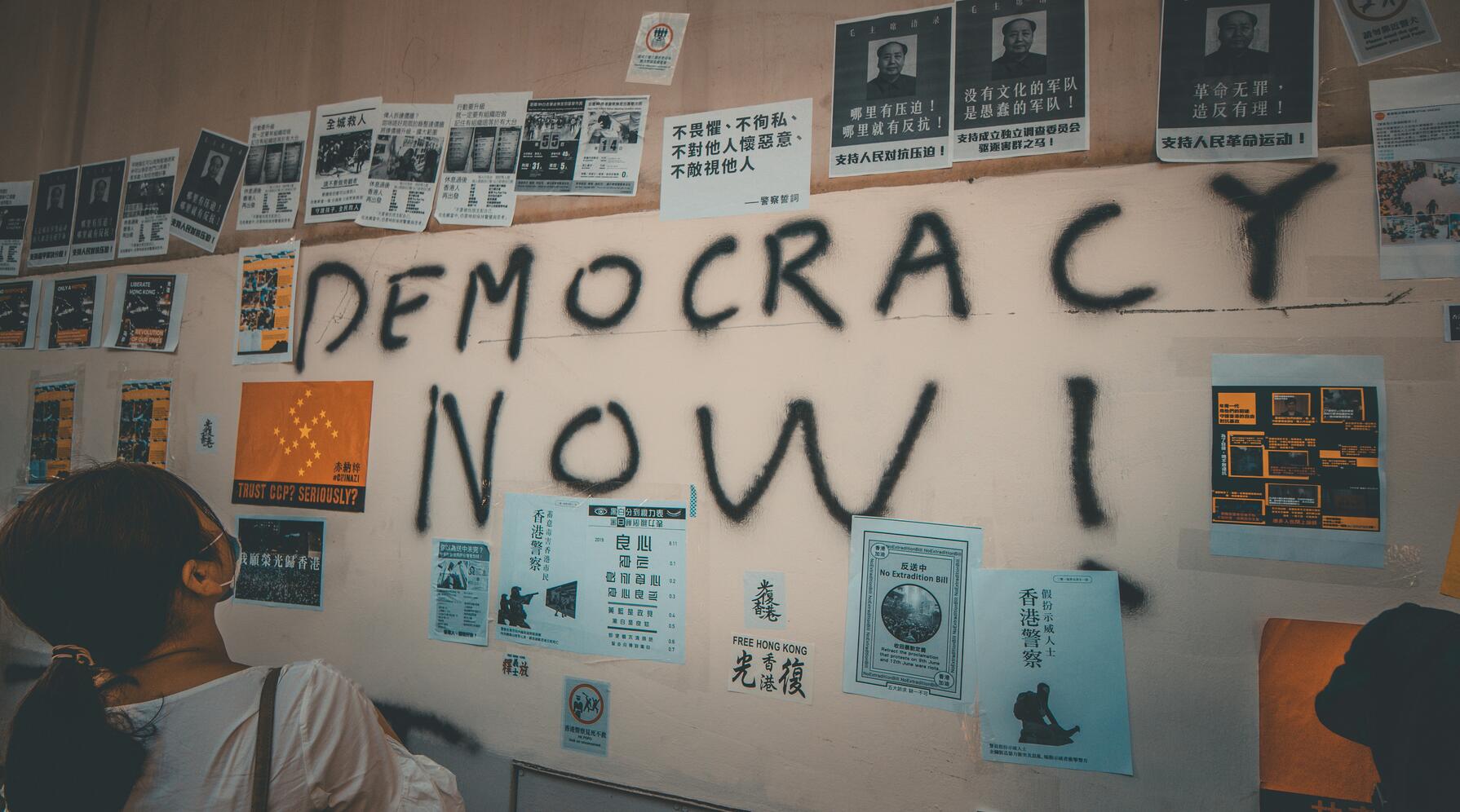
As democratic institutions around the world face mounting threats, Stanford University’s Center on Democracy, Development and the Rule of Law (CDDRL) has launched the Democracy Action Lab (DAL) — a new initiative designed to apply the findings of cutting-edge research to practice in the global effort to defend and revitalize democracy.
Housed within CDDRL at the Freeman Spogli Institute for International Studies (FSI), the Lab is co-directed by Beatriz Magaloni, the Graham H. Stuart Professor of International Relations and FSI Senior Fellow, and Alberto Díaz-Cayeros, FSI Senior Fellow at CDDRL. The Lab’s launch is made possible through the support of VélezReyes+ and the Zampa Foundation.
A New Chapter in the Study — and Practice — of Democracy
Over the past two decades, the global landscape for democracy has shifted dramatically. Today, only about one quarter of the world’s population lives under democratic governance — down from more than half just twenty years ago. Once-stable democracies are showing signs of strain, and autocratic regimes have grown more resilient. These challenges demand action.
“The Democracy Action Lab brings together the analytical depth of academia and the on-the-ground insights of those working on the front lines to protect and promote democracy,” said Kathryn Stoner, FSI Senior Fellow and Mosbacher Director of CDDRL. “By creating a sustained hub for collaboration among scholars, policymakers, and practitioners, the Lab ensures that Stanford’s research directly contributes to strengthening and defending democratic institutions and democratic practice around the world.”
From Research to Action
In an era of “democratic backsliding,” the Democracy Action Lab translates theory into practice. The Lab combines the tools of social science — data analysis, case comparison, and field experimentation — with the experiences of those in the daily fight for truly representative governance and strong and reliable rule of law. The result is a toolkit to help practitioners in their daily fight for freedom.
“In the social sciences, we’ve experienced what I can only describe as a scientific revolution,” said DAL Co-Director Díaz-Cayeros. “We now have more powerful tools and methods to gather and analyze data, and we can infer causal processes in ways that were unthinkable two decades ago.”
“At the same time,” he continued, “defenders of democracy around the world are developing new strategies to counter authoritarian abuses that are increasingly sophisticated and insidious. DAL seeks to turn sometimes highly technical findings into useful insights and strategies for policy and practice, and to learn from leaders and organizations advancing and defending democracy what the most pressing challenges are, and where social scientists must refocus their research to provide new answers.”
DAL’s agenda is organized around four key issues:
- How democratic erosion unfolds;
- How practitioners navigate strategic dilemmas;
- How diasporas may influence political struggles at home;
- How citizens’ beliefs and trade-offs shape their commitments to democracy.
A Hub for Innovation
Central to the Lab’s model is the Democracy Garage, an innovation hub where researchers and practitioners collaborate to prototype and test solutions to democratic challenges. Inspired by Silicon Valley’s legendary garages, the Democracy Garage embraces experimentation, iteration, and the co-creation of tools and strategies that practitioner-partners can implement on the ground in different countries and regional contexts.
“We need to combine the rigor of science with a renewed commitment to making academic research respond to the most urgent questions of our time,” shared DAL Co-Director Magaloni. “How can we generate knowledge that supports the quest for freedom and democracy everywhere?”
Héctor Fuentes, a pro-democracy practitioner from Venezuela, is a visiting scholar at CDDRL affiliated with the Democracy Action Lab and a 2024 alumnus of the Center’s Fisher Family Summer Fellows Program on Democracy and Development. He sees the Lab as a critical step toward making academic insights more accessible and useful to those defending democracy on the ground.
“There’s so much knowledge and there are so many insights buried beneath layers of academic papers. We need to bring them to the front lines of the democratic struggle. At the same time, there’s an extraordinary wealth of experience among those in the thick of the fight for positive change — political leaders, activists, and civil society organizers — whose work can deeply inform and enrich our research agendas.”
Supporting Innovation in the Defense of Democracy
Support from both VélezReyes+ and the Zampa Foundation underscores a shared belief in democracy as both a global public good and a fragile achievement requiring constant renewal.
“The loss in trust in democracy makes evident we need to find ways to make democracies more responsive, effective, and representative,” said Laura Oller, CEO at VelezReyes+. “In Latin America, we see rich debates on the causes of democratic decline in academia and bold practitioners on the frontlines innovating to strengthen democracies. Working with Stanford's Democracy Action Lab is a unique opportunity to bridge academic rigor and entrepreneurial experience to transform knowledge into tools for real change.”
“We deeply believe in the power of democracy and the rule of law to provide future generations with a better world,” said a Zampa Foundation representative.
Building Global Democratic Resilience
CDDRL’s long history of rigorous research and policy engagement provides the foundation for DAL’s action-oriented inquiry. The Lab will also serve as a strategic evaluation hub and repository of comparative cases in assessing the efficacy of democracy-protection efforts by governments, NGOs, and international organizations, identifying missed opportunities, and highlighting areas for innovation.
In doing so, DAL strengthens and extends CDDRL’s mission to combine academic excellence with on-the-ground impact. By institutionalizing and scaling efforts long championed by CDDRL scholars, the Lab is a permanent platform for collaboration between Stanford researchers and democracy advocates worldwide.
“This moment demands bold experimentation,” CDDRL’s director, Kathryn Stoner, said. “The Democracy Action Lab reflects our conviction that democracy can be strengthened and renewed by working together to design solutions for contexts where freedom is under serious assault.”

