Democracy
Authors
News Type
Commentary
Date
Paragraphs

As part of the Arab Reform and Democracy Program's speaker series, University of Richmond Political Scientist Sheila Carapico discussed findings from her ground-breaking study Political Aid and Arab Activism: Democracy Promotion, Justice, and Representation (Cambridge University Press, 2013) which explores two decades’ worth of projects sponsored by American, European, and other transnational agencies in four key sub-fields: the rule of law, electoral design and monitoring, female empowerment, and civil society. European and US-based scholars and practitioners have debated the purposes and sometimes the (limited) macro-effects of programs designed to promote transitions from authoritarianism to democracy in Middle East countries. Yet this discussion often lacks analysis of on-the-ground experiences or ignores the cumulative wisdom of local counterparts and intermediaries. Carapico discussed controversies and contradictions surrounding projects in Egypt, Palestine, and Iraq (the three main cases) and Jordan, Morocco, Yemen, Algeria, Tunisia, and Lebanon (where democracy brokers also work) to help explain why so many feminists and other advocates for justice, free elections, and civic agency concluded that foreign funding is inherently political and paradoxical.


Hero Image
sheila shot
All News button
1
Authors
News Type
Commentary
Date
Paragraphs

As part of the Arab Reform and Democracy Program speaker series, US Institute of Peace Vice-President for Applied Research on Conflict Steven Heydemann examined the future of authoritarian rule in the Arab region in the aftermath of the Arab uprisingsThe uprisings that spread across the Middle East in 2011 created new hope for democratic change in the Arab world.  Four years later, the euphoria that greeted the Arab uprisings has given way to a far more somber mood, a recognition of the limits of mass protests to bring about political change, and acknowledgement that the region's entrenched authoritarian regimes are more resilient than many protesters imagined. Yet in responding to the challenge of mass politics, authoritarian regimes in the Middle East have not simply shown their resilience. In adapting to new challenges they have also changed, giving rise to new and more troubling forms of authoritarian rule, suggesting that the turmoil of recent years may be only the beginning of an extended period of political instability, violence, and repression in many parts of the Middle East.


Hero Image
hyedemannnbest
Steven Heydemann speaks to the CDDRL community on authoritarianism in the Arab world.
All News button
1
Authors
News Type
Commentary
Date
Paragraphs

As part of the Arab Reform and Democracy Program's speaker series, Stanford Historian Joel Beinin discussed the role of workers in advancing revolutionary struggles in Egypt and TunisiaArab workers participated prominently in the popular uprisings of 2011. They shared the outrage of many of their compatriots over daily abuse by internal security forces, widespread corruption, and foreign policies subservient to U.S. interests. Their participation in those uprisings was also informed by struggles against the neoliberal economic restructuring of the region since the 1970s, which resulted in an indecent chasm between rich and poor, deteriorating working conditions and public social services, and high youth unemployment.

Egypt experienced a strike wave of unprecedented magnitude in the 2000s. Tunisia, with one exception, experienced less intense contestation by workers and others. Egyptian workers’ have had very limited influence on national politics in the post-Mubarak era. Democratic development seems unlikely in the near future. The Tunisian national trade union federation and its affiliates were the central force in installing procedural democracy. The nature of workers’ social movements in the 2000s partially explains these divergent outcomes.


Hero Image
screen shot 2015 02 04 at 3 01 20 pm
All News button
1
News Type
News
Date
Paragraphs

On the fourth anniversary of Egypt's January 25 Revolution, Hesham Sallam, associate director of CDDRL's Program on Arab Reform and Democracy and Jadaliyya co-editor, remarks on the return of authoritarianism in Egypt under President Abdel Fattah el-Sisi. Sallam argues that the ruling military regime has become more repressive than that of President Hosni Mubarak, highlighting growing victimization of civil society members. Listen to Sallam's interview with KPFA 94.1 Berkeley below.


Hero Image
Egypt Yannis Behrakis headliner Reuters Yannis Behrakis
All News button
1

The Program on Arab Reform and Democracy (ARD) speaker series seeks to promote critical discussions around questions of political change, social and economic rights, power and resistance in the countries of the Arab world. Scholars from across disciplines are invited to present new, innovative research that sheds light on the nuances of ongoing, salient developments and trends in the Arab world, while situating them in a rich historical context.

-

Abstract

Paul Amar will discuss his book The Security Archipelago, winner of the 2014 Charles Taylor Book Award of the American Political Science Association. The book provides an alternative historical and theoretical framing of the refashioning of free-market states and the rise of humanitarian security regimes in the Global South by examining the pivotal, trendsetting cases of Brazil and Egypt. Addressing gaps in the study of neoliberalism and biopolitics, Amar describes how coercive security operations and cultural rescue campaigns confronting waves of resistance have appropriated progressive, antimarket discourses around morality, sexuality, and labor. Homing in on Cairo and Rio de Janeiro, Amar reveals the innovative resistances and unexpected alliances that have coalesced in new polities emerging from the Arab Spring and South America's Pink Tide. These have generated a shared modern governance model that he terms the "human-security state."


Speaker Bio

Image
paul amar 1

Paul Amar, Associate Professor in the Global & International Studies Program, is a political scientist with affiliate appointments in Feminist Studies, Sociology, Comparative Literature, Middle East Studies, and Latin American & Iberian Studies. At UCSB he currently serves as Chair of Middle East Studies, Coordinator of the Campus Cluster on Security Studies, and member of the Graduate Studies Council. In addition, he serves as coordinator of scholarly  projects for the Arab Council of the Social Sciences, based in Beirut. Before he began his academic career, he worked as a journalist in Egypt, a police reformer in Brazil, and as a conflict-resolution and economic development specialist at the United Nations. His books include:  Cairo Cosmopolitan (2006); New Racial Missions of Policing (2010); Global South to the Rescue (2011); Dispatches from the Arab Spring (2013); The Middle East and Brazil (2014), and The Security Archipelago: Human-Security States, Sexuality Politics and the End of Neoliberalism. This most recent book was awarded the Charles Taylor Award for "Best Book of the Year" in 2014 by the Interpretive Methods Section of the American Political Science Association.


*This event is co-sponsored with CDDRL's Program on Arab Reform and Democracy and the Mediterranean Studies Program.*


[[{"fid":"217928","view_mode":"crop_870xauto","fields":{"format":"crop_870xauto","field_file_image_description[und][0][value]":"Paul Amar Flyer","field_file_image_alt_text[und][0][value]":"","field_file_image_title_text[und][0][value]":"","field_credit[und][0][value]":"","field_caption[und][0][value]":"","field_related_image_aspect[und][0][value]":"","thumbnails":"crop_870xauto","pp_lightbox":false,"pp_description":false},"type":"media","attributes":{"width":"870","class":"media-element file-crop-870xauto"}}]]


Reuben Hills Conference Room
2nd Floor East Wing E207
Encina Hall
616 Serra Street
Stanford, California 94305

Paul Amar Associate Professor, Global and International Studies Program University of California, Santa Barbara
Seminars
-

*This event is co-sponsored with CDDRL's Program on Arab Reform and Democracy and The Sohaib and Sara Abbasi Program in Islamic Studies.*

Abstract

European and US-based scholars and practitioners have debated the purposes and sometimes the (limited) macro-effects of programs designed to promote transitions from authoritarianism to democracy in Middle East countries. Yet this discussion often lacks analysis of on-the-ground experiences or ignores the cumulative wisdom of local counterparts and intermediaries. This seminar is based on Carapico’s ground-breaking study Political Aid and Arab Activism: Democracy Promotion, Justice, and Representation (Cambridge University Press, 2013) which explores two decades’ worth of projects sponsored by American, European, and other transnational agencies in four key sub-fields: the rule of law, electoral design and monitoring, female empowerment, and civil society. Specifically in the seminar Carapico will discuss controversies and contradictions surrounding projects in Egypt, Palestine, and Iraq (the three main cases) and Jordan, Morocco, Yemen, Algeria, Tunisia, and Lebanon (where democracy brokers also work) to help explain why so many feminists and other advocates for justice, free elections, and civic agency concluded that foreign funding is inherently political and paradoxical.

Speaker Bio

sheila carapico color Sheila Carapico

Sheila Carapico, Professor of Political Science and International Studies at the University of Richmond, has been exploring Arab activism since studying in Cairo and traveling around the region in 1971/72. She lived in Sana’a from 1977 through 1980, mainly researching community development initiatives and foreign aid interventions. Subsequently she worked as a consultant for the International Fund for Agricultural Development, the Netherlands Embassy, Human Rights Watch, and several other agencies in Yemen, Egypt, and Lebanon. She was a Fulbright research scholar and visiting fellow at the Sana’a University Women’s Studies and Social Research Center for two years during the ‘democratic opening’ in Yemen in the early 1990s. She served as Visiting Chairperson in the Department of Political Science at the American University in Cairo for all of 2010 and the ‘Arab spring’ semester of 2011, and returned to AUC as a visiting faculty member in the spring of 2013. In addition to Political Aid she is the author of Civil Society in Yemen: A Political Economy of Activism in Modern Arabia (Cambridge University Press, 1998) and other works on the comparative and international politics of the Arabian Peninsula and the Arab world. She is a contributing editor of Middle East Report.      


[[{"fid":"217801","view_mode":"crop_870xauto","fields":{"format":"crop_870xauto","field_file_image_description[und][0][value]":"Sheila Carapico flyer","field_file_image_alt_text[und][0][value]":"","field_file_image_title_text[und][0][value]":"","field_credit[und][0][value]":"","field_caption[und][0][value]":"","field_related_image_aspect[und][0][value]":"","thumbnails":"crop_870xauto","pp_lightbox":false,"pp_description":false},"type":"media","attributes":{"width":"870","class":"media-element file-crop-870xauto"}}]]


Sheila Carapico Professor of Political Science Department of Political Science, University of Richmond
Seminars
-

Abstract:

Over the last four years of upheaval in the Arab world, the notion of “the people,” Egyptian and otherwise, has proven profoundly resilient.  It is these “people”—as individuals and a collective—that are problematically celebrated as subjects finally fulfilling their long-awaited destiny; dismissed as passive objects duped by external forces and incapable of politics; or incited against as dangerous masses capable of destroying the nation. A return to the historical moment of the “Bread Intifada,” of 1977 interrupts the narrative resilience of the alternating sleep and wakefulness of the Egyptian, and more broadly the Arab people. By engaging 18-19 January 1977 as a moment of politics and popular sovereignty, this project challenges who and what count as political, rational, and legitimate. The role food played in protestors’ and government strategies and demands reveals how basic needs function as a trigger of social upheaval as well as a vehicle of political containment. This project attends to the roles that poverty and hunger play in politics in order to detail critiques of the open door policy. It explores how government officials, journalists, and protestors defined and ultimately contained the “poor” and the “hungry.” More importantly, by studying how protestors narrated and represented themselves and the tools they used to make their claims, this project troubles the construction of the “people.”  In so doing, it explores continuity and rupture between 1977 and 2011. 

Speaker Bio:

sherenesphoto Sherene Seikaly

   
Sherene Seikaly is Assistant Professor of history at the University of California, Santa Barbara. She is the co-editor of the Arab Studies Journal, and co-founder and editor of Jadaliyya e-zine. Seikaly's Men of Capital in Times of Scarcity: Economy in Palestine (Stanford University Press, forthcoming) explores how Palestinian capitalists and British colonial officials used economy to shape territory, nationalism, the home, and the body.

This event is co-sponsored by the Arab Studies Institute and the Sohaib and Sara Abbasi Program in Islamic Studies.


[[{"fid":"217836","view_mode":"crop_870xauto","fields":{"format":"crop_870xauto","field_file_image_description[und][0][value]":"Sherene Seikaly Flyer","field_file_image_alt_text[und][0][value]":"","field_file_image_title_text[und][0][value]":"","field_credit[und][0][value]":"","field_caption[und][0][value]":"","field_related_image_aspect[und][0][value]":"","thumbnails":"crop_870xauto","pp_lightbox":false,"pp_description":false},"type":"media","attributes":{"width":"870","class":"media-element file-crop-870xauto"}}]]


Okimoto Conference Room
3rd Floor East Wing
Encina Hall
616 Serra Street
Stanford, California 94305
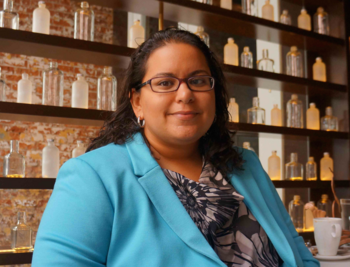
Sherene Seikaly Assistant Professor of History UCSB
Seminars
-

Abstract:

The uprisings that spread across the Middle East in 2011 created new hope for democratic change in the Arab world.  Four years later, the euphoria that greeted the Arab uprisings has given way to a far more somber mood, a recognition of the limits of mass protests to bring about political change, and acknowledgement that the region's entrenched authoritarian regimes are more resilient than many protesters imagined. Yet in responding to the challenge of mass politics, authoritarian regimes in the Middle East have not simply shown their resilience. In adapting to new challenges they have also changed, giving rise to new and more troubling forms of authoritarian rule, suggesting that the turmoil of recent years may be only the beginning of an extended period of political instability, violence, and repression in many parts of the Middle East.

Speaker Bio:

heydemann photo Steven Heydemann

Steven Heydemann serves as the vice president of Applied Research on Conflict at United States Institute of Peace. Heydemann is a political scientist who specializes in the comparative politics and the political economy of the Middle East, with a particular focus on Syria. His interests include authoritarian governance, economic development, social policy, political and economic reform and civil society. From 2003 to 2007, Heydemann directed the Center for Democracy and Civil Society at Georgetown University. From 1997 to 2001, he was an associate professor in the department of political science at Columbia University. Earlier, from 1990-1997, he directed the Social Science Research Council’s Program on International Peace and Security and Program on the Near and Middle East. Heydemann is the author of Authoritarianism in Syria: Institutions and Social Conflict, 1946-1970 (Cornell University Press, 1999), and editor of Networks of Privilege in the Middle East: The Politics of Economic Reform Revisited, (Palgrave Press, 2004), and War, Institutions and Social Change in the Middle East (University of California Press, 2000).

This event is co-sponsored by the Arab Studies Institute


[[{"fid":"217528","view_mode":"crop_870xauto","fields":{"format":"crop_870xauto","field_file_image_description[und][0][value]":"Steven Heydemann talk flyer","field_file_image_alt_text[und][0][value]":"","field_file_image_title_text[und][0][value]":"","field_credit[und][0][value]":"","field_caption[und][0][value]":"","field_related_image_aspect[und][0][value]":"","thumbnails":"crop_870xauto","pp_lightbox":false,"pp_description":false},"type":"media","attributes":{"height":506,"width":870,"class":"media-element file-crop-870xauto"}}]]

Goldman Conference Room
4th Floor East Wing E409
Encina Hall
616 Serra Street
Stanford, California 94305

Steven Heydemann Vice President, Applied Research on Conflict USIP
Seminars
-

Abstract:

Arab workers participated prominently in the popular uprisings of 2011.  They shared the outrage of many of their compatriots over daily abuse by internal security forces, widespread corruption, and foreign policies subservient to U.S. interests. Their participation in those uprisings was also informed by struggles against the neoliberal economic restructuring of the region since the 1970s, which resulted in an indecent chasm between rich and poor, deteriorating working conditions and public social services, and high youth unemployment.

Egypt experienced a strike wave of unprecedented magnitude in the 2000s. Tunisia, with one exception, experienced less intense contestation by workers and others. Egyptian workers’ have had very limited influence on national politics in the post-Mubarak era.  Democratic development seems unlikely in the near future.  The Tunisian national trade union federation and its affiliates were the central force in installing procedural democracy. The nature of workers’ social movements in the 2000s partially explains these divergent outcomes.

Speaker Bio:

Image
Joel Beinin

Joel Beinin is the Donald J. McLachlan Professor of History and Professor of Middle East History. He received his A.B. from Princeton University in 1970, his M.A. from Harvard University in 1974, and his A.M.L.S. and Ph.D. from the University of Michigan in 1978 and 1982. He also studied at the American University of Cairo and and the Hebrew University of Jerusalem. He lived in Egypt in 1969, 1980-81, 1985, 1986, 1994, 2004-05, and 2006-08 and in Israel in 1965-66, 1970-73, 1987, 1988, 1993, and 1993. He has taught Middle East history at Stanford University since 1983. From 2006 to 2008 he served as Director of Middle East Studies and Professor of History at the American University in Cairo. His research and writing focuses on workers, peasants, and minorities in the modern Middle East and on Israel, Palestine, and the Arab-Israeli conflict.


Beinin has written or edited nine books, most recently Social Movements, Mobilization, and Contestation in the Middle East and North Africa; co-edited with Frédéric Vairel (Stanford University Press, 2011) and The Struggle for Worker Rights in Egypt (Solidarity Center, 2010). His articles have been published in leading scholarly journals as well as The Nation, Middle East Report, The Los Angeles Times, The San Francisco Chronicle, Le Monde Diplomatique, and others. He has appeared on Al-Jazeera TV, BBC radio, National Public Radio, and many other TV and radio programs throughout North America, and in France, Egypt, Singapore, and Australia, and has given frequent interviews to the global media. In 2002 he served as President of the Middle East Studies Association of North America.

This event is co-sponsored by the Arab Studies Institute.


[[{"fid":"217426","view_mode":"crop_870xauto","fields":{"format":"crop_870xauto","field_file_image_description[und][0][value]":"Beinin Flyer","field_file_image_alt_text[und][0][value]":"","field_file_image_title_text[und][0][value]":"","field_credit[und][0][value]":"","field_caption[und][0][value]":"Beinin Flyer","field_related_image_aspect[und][0][value]":"","thumbnails":"crop_870xauto","pp_lightbox":false,"pp_description":false},"type":"media","attributes":{"height":655,"width":870,"class":"media-element file-crop-870xauto"}}]]

Goldman Conference Room
4th Floor East Wing E409
Encina Hall
616 Serra Street
Stanford, California 94305

Joel Beinin Donald J. McLachlan Professor of History Stanford University
Seminars
Subscribe to Democracy