Democracy
-

ABSTRACT

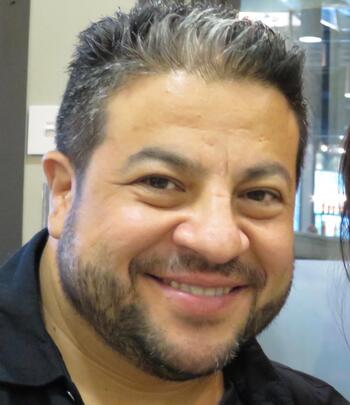
The Iraqi government, the Peshmerga, the international coalition and a consortium of militia have been winning the war against ISIS in Iraq.  The concern moving forward is whether Iraq’s state institutions have what it takes to prevent ISIS from reemerging in a new, and more deadly form after the current conflict is over. What does recent history, the current military campaign, and the Donald Trump administration’s current trajectory tell us about Iraq’s prospects?


SPEAKER BIO

Image
headshot 2
Zaid Al-Ali is the Senior Adviser on Constitution-Building for the Arab Region at International IDEA and an independent scholar.  In his work, Al-Ali focuses on constitutional developments throughout the Arab region, with a particular focus on Iraq and the wave of reforms that took place in Morocco, Tunisia, Libya, Egypt, Jordan and Yemen following the start of popular uprisings in December 2010.  Al-Ali has published extensively on constitutional reform in the Arab region, including on process design issues and the impact of external influence.  He is the author of The Struggle for Iraq’s Future: How Corruption, Incompetence and Sectarianism Have Undermined Democracy (Yale University Press 2014).  Prior to joining International IDEA, Zaid worked as a legal adviser to the United Nations in Iraq, focusing on constitutional, parliamentary and judicial reform.  He also practiced international commercial arbitration law for 12 years, representing clients in investment and oil and gas disputes mainly as an attorney with Shearman & Sterling LLC in Paris and also as a sole practitioner.  He holds an LL.M. from Harvard Law School, a Maitrise en Droit from the University of Paris I (Panthéon-Sorbonne) and an LL.B. from King’s College London.  He was a Law and Public Affairs Fellow and Visiting Lecturer at Princeton University in 2015-2016.  He is the founder of the Arab Association of Constitutional Law and is a member of its executive committee.

Reuben Hills Conference Room
2nd Floor East Wing E207
Encina Hall
616 Serra Street
Stanford, California 94305

Zaid Al-Ali Senior Adviser International IDEA
Seminars
-

ABSTRACT

Political protests in non-democratic settings are not always contentious.  Some protests—even ones that harshly critique the ruling elite—can even become so routine that the protesters as well as the security agencies appear to be following a script.  Recognizing these routines is crucial to identifying precisely when ruptures or innovations do occur. This presentation will examine anti-Israeli protests in Jordan to explore such routines and ruptures in protest and policing repertoires before and after the outbreak of 2011 uprisings that spread across the Arab world.


SPEAKER BIO

Image
unnamed 2
Dr. Jillian Schwedler is Professor of Political Science at the City University of New York’s Hunter College and the Graduate Center, and Nonresident Senior Fellow of the Rafiq Hariri Center for the Middle East at the Atlantic Council.  She is member of the Board of Directors and the Editorial Committee of the Middle East Research and Information Project (MERIP), publishers of the quarterly Middle East Report.

Dr. Schwedler’s books include the award-winning Faith in Moderation: Islamist Parties in Jordan and Yemen (Cambridge 2006) and (with Laleh Khalili) Policing and Prisons in the Middle East (Columbia 2010).  Her articles have appeared in World Politics, Comparative Politics, Middle East Policy, Middle East Report, Journal of Democracy, and Social Movement Studies, among many others.  Her research has received support from the National Science Foundation, the United States Institute of Peace, the Fulbright Scholars Program, the American Institute for Yemen Studies, and the Social Science Research Council, among others. 


CISAC Central Conference Room
Encina Hall, 2nd Floor
616 Serra St
Stanford, CA 94305

Jillian Schwedler Professor of Political Science Hunter College
Seminars
-

ABSTRACT

This talk examines the ways through which successive Egyptian governments have utilized lawmaking to eliminate opponents and silence voices of dissent since the coup of 3 July 2013. Key examples include the adoption of a draconian protest law and anti-terrorism laws. Most recently, the legislature passed a bill that, subject to the president’s approval, is poised to significantly curtail the autonomy of civil society organizations. By restricting freedom of expression and association and clamping down on voices of dissent, these legal initiatives have helped upgrade the repressive bureaucratic tools at the disposal of the government.

SPEAKER BIO

Image
amr hamzawy cropped
Amr Hamzawy is a Senior Fellow at the Middle East Program at the Carnegie Endowment for International Peace and FSI-Stanford Humanities Center International Visitor, 2016-17. He studied political science and developmental studies in Cairo, The Hague, and Berlin. After finishing his doctoral studies and after five years of teaching in Cairo and Berlin, Hamzawy joined the Carnegie Endowment for International Peace (Washington, DC) between 2005 and 2009 as a senior associate for Middle East Politics. Between 2009 and 2010, he served as the research director of the Middle East Center of the Carnegie Endowment in Beirut, Lebanon. In 2011, he joined the Department of Public Policy and Administration at the American University in Cairo, where he continues to serve today. Hamzawy also serves as an associate professor of political science at the Department of Political Science, Cairo University. He is a former Visiting Scholar at CDDRL's Program on Arab Reform and Democracy.

His research and teaching interests as well as his academic publications focus on democratization processes in Egypt, tensions between freedom and repression in the Egyptian public space, political movements and civil society in Egypt, contemporary debates in Arab political thought, and human rights and governance in the Arab world.

Dr. Hamzawy is a former member of the People’s Assembly after being elected in the first Parliamentary elections in Egypt after the 25th of Jan 2011 revolution. He is also a former member of the Egyptian National Council for Human Rights. Hamzawy contributes a daily column and a weekly op-ed to the Egyptian independent newspaper Shorouk.

Amr Hamzawy Senior Fellow Senior Fellow at the Middle East Program at the Carnegie Endowment for International Peace
Seminars
-

ABSTRACT

Six years post Egypt’s January 25 revolution, the country remains in a state of volatility and political turmoil marked by an ailing economy, a security crisis, and unprecedented levels of repression. In this talk, Jack Shenker will discuss his recent book The Egyptians: A Radical History of Egypt's Unfinished Revolution (The New Press). The book examines the roots of Egypt’s revolution, arguing for a much more nuanced, and far-reaching view of the forces that are reshaping the region.

SPEAKER BIO

Image
js profile
Jack Shenker is an award-winning journalist based in London and Cairo, whose reporting has spanned the globe. Formerly Egypt correspondent for The Guardian, his coverage of the Egyptian revolution received multiple prizes. In 2012, his investigation into the deaths of African migrants in the Mediterranean was named news story of the year at the prestigious One World media awards. The Egyptians, published by Allen Lane / Penguin in the UK and The New Press in the US, is his first book.

CISAC Central Conference Room
Encina Hall, 2nd Floor
616 Serra St
Stanford, CA 94305

Jack Shenker Journalist and Writer
Seminars
-

This film screening is hosted by the Arab Reform and Democracy Program at the Center on Democracy, Development and the Rule of Law. 


This is a ticketed event, only guests with tickets will be admitted. Please print out your tickets before the event and present them at the door. All persons, regardless of age, require a ticket. Directions and parking information is available below. Doors will open at 6:30 pm. 


About Tickling Giants:

In the midst of the Egyptian Arab Spring, Bassem Youssef makes a decision that’s every mother’s worst nightmare… He leaves his job as a heart surgeon to become a full-time comedian. Dubbed, “The Egyptian Jon Stewart,” Bassem creates the satirical show, Al Bernameg. The weekly program quickly becomes the most viewed television program in the Middle East. In a country where free speech is not settled law, Bassem’s show becomes as controversial as it popular. He and his staff must endure physical threats, protests, and legal action, all because of jokes. As Bassem attempts to remain on the air, keep his staff safe, and not get arrested, he continues to let those in power know they’re being held accountable. Despite increasing danger, the team at Al Bernameg employ comedy, not violence, to comment on hypocrisy in media, politics, and religion. Directed by Sara Taksler, Tickling Giants follows the team of Al Bernameg as they discover democracy is not easily won. For more information visit http://ticklinggiants.com


About Bassem Youssef:

Image
bassem headshot

Named one of TIME’s “100 most influential people in the world” in 2013, Bassem Youssef is an Egyptian satirist, columnist, and talk show host. A cardiac surgeon by training, Youssef turned to comedy after he was inspired by the Egyptian revolution. He uploaded the first episode of his homemade newscast, “The B+ Show,” to YouTube in May 2011. After it garnered more than 5 million views in three months, Youssef was named the host of “Al-Bernameg,” a satirical newscast modeled after Jon Stewart’s “The Daily Show.” Youssef’s bold, intelligent, and humorous critiques of Egyptian politics quickly became a hit with audiences in the country and garnered more than 40 million viewers. Due to its sharp criticism of Egyptian leaders, Al-Bernameg faced political pressure from successive governments until it was finally taken off the air in the summer of 2014. Recently, Youssef launched “The Democracy Handbook,” a Fusion TV digital series that satirizes American politics through a Middle Eastern perspective. Youssef is currently a Visiting Scholar at CDDRL's Program on Arab Reform and Democracy. He served as a resident fellow at the Institute of Politics at Harvard University’s Kennedy School of Government in 2015.


Event Information:

-- Movie duration: 111 mins
-- Q&A with Bassem Youssef after the movie
-- Food and drink are prohibited in all indoor venues
-- Cameras and all recording devices are prohibited
-- Guests will be ask to turn off cell phones, pagers and alarms during the event

Directions 

Via I-280 (north or south): LINK

From the east bay via CA-92 (San Mateo Bridge): LINK

Via US 101 (north or south): LINK

Additional directions are available here


Parking 

Parking Structure 7 offers underground parking at the Knight Management Center. Permits are required and enforced Monday through Friday from 8 am to 4 pm. Click here to access Campus Maps.

One-day visitor permits (called “scratchers”) allow for parking in any pay-and-display or metered space, and are available for purchase at the Parking and Transportation Services (P&TS) office for $12 each. Be sure to scratch off the correct date and hang your permit facing outward from your rear-view mirror. "A," "C," and "shared" resident/commuter lots are enforced Monday-Friday, 6 a.m. to 4 p.m. You are free to park in these areas after enforcement hours.

You can also pay for parking using the pay-by-space kiosks located in Structure 7. Simply enter the number for your parking space and pay with cash or card. You do not need to display your receipt in your vehicle. The receipt is not valid in any other location.

Other nearby parking locations include:

  • Parking lot at Bonair Siding Rd. and Serra St. — coin-meter spaces, two-minute walk
  • Parking lot at Memorial Way and Galvez St. — pay-and-display machine, five-minute walk
  • Visitor Center parking lot at 295 Galvez St. — pay-and-display machine, ten-minute walk
  • Parking Structure 6 at Campus Dr. East and Wilbur Way — pay-and-display machine, ten-minute walk

Meters are generally enforced 8 a.m. to 4 p.m., unless otherwise posted. You are free to park in these areas after enforcement hours.

More parking and permit information is available here.

We honor any state's disabled person placards in nearly all marked parking spaces on campus. Please visit the Persons with Disabilities page for more information.


Cemex Auditorium, Knight Management Center
655 Knight Way
Stanford, CA 94305

Bassem Youssef Visiting Scholar, CDDRL
Film Screenings
-


This event is hosted by the Program on Arab Reform and Democracy at the Center on Democracy, Development and the Rule of Law. Bassem Youssef's fellowship at CDDRL is supported by the Carnegie Corporation of New York, and the Stanford Arts Office of the Associate Dean.


Event Details

  • This is a ticketed event, only guests with tickets will be admitted. Please print out your tickets before the event and present them at the door. All persons, regardless of age, require a ticket. 
  • The event will be held at Cubberley Auditorium at Stanford University. More information on directions and parking is available below. 
  • Doors will open at 6:30 pm. We ask that you please be seated by 6:50 pm. Any unclaimed seats at that time will be released to the stand-by line.


Join the conversation at #BassematStanford


Abstract

The Arab Spring and the political changes it accompanied brought to the forefront of the public realm a wide range of satirical political expressions, whether through talk shows, social media channels and pages, and even repertoires of political protests. In this talk, international media figure and political satirist Bassem Youssef will reflect on the popularity these forms of expressions have gained in light of the Arab Spring, and why states and their advocates found them threatening and were quick to limit and undermine them.


Speaker Bio

Named one of TIME’s “100 most influential people in the world” in 2013, Bassem Youssef is an Egyptian satirist, columnist, and talk show host. A cardiac surgeon by training, Youssef turned to comedy after he was inspired by the Egyptian revolution. He uploaded the first episode of his homemade newscast, “The B+ Show,” to YouTube in May 2011. After it garnered more than 5 million views in three months, Youssef was named the host of “Al-Bernameg,” a satirical newscast modeled after Jon Stewart’s “The Daily Show.” Youssef’s bold, intelligent, and humorous critiques of Egyptian politics quickly became a hit with audiences in the country and garnered more than 40 million viewers. Due to its sharp criticism of Egyptian leaders, Al-Bernameg faced political pressure from successive governments until it was finally taken off the air in the summer of 2014. Recently, Youssef launched “The Democracy Handbook,” a Fusion TV digital series that satirizes American politics through a Middle Eastern perspective. Youssef is currently a Visiting Scholar at CDDRL's Program on Arab Reform and Democracy. He served as a resident fellow at the Institute of Politics at Harvard University’s Kennedy School of Government in 2015.


Directions

FROM 101: Take the University Avenue exit west. University will change to Palm Drive once you get onto campus. Take a left onto Campus Drive East. Take a right onto Mayfield Avenue. Take a right into the Tressider Union parking lot and park. Walk towards White Plaza (Bookstore), then towards the Clock Tower. Cubberley Auditorium appears after the Clock tower on the right.

FROM 280: Take the Sand Hill Road exit east. Follow Sand Hill Road, then take a right onto Junipero Serra Boulevard. Take a left onto Campus Drive East. Take a left onto Mayfield Avenue. Take a right into the Tressider Union parking lot and park. Walk towards White Plaza (Bookstore), then towards the Clock Tower. Cubberley Auditorium appears after the Clock tower on the right.


Parking Information

Meters and permitted parking is generally enforced 8 a.m. to 4 p.m., unless otherwise posted. You are free to park in these areas after enforcement hours.

Park either on the main Oval, or the Memorial Lot just north of the Memorial Hall on Memorial Way, or South of the campus union at Mayfield Ave.

For map and additional parking information visit http://campus-map.stanford.edu

[[{"fid":"224151","view_mode":"crop_870xauto","fields":{"format":"crop_870xauto","field_file_image_description[und][0][value]":"","field_file_image_alt_text[und][0][value]":false,"field_file_image_title_text[und][0][value]":false,"field_credit[und][0][value]":"","field_caption[und][0][value]":"","field_related_image_aspect[und][0][value]":"","thumbnails":"crop_870xauto"},"type":"media","field_deltas":{"1":{"format":"crop_870xauto","field_file_image_description[und][0][value]":"","field_file_image_alt_text[und][0][value]":false,"field_file_image_title_text[und][0][value]":false,"field_credit[und][0][value]":"","field_caption[und][0][value]":"","field_related_image_aspect[und][0][value]":"","thumbnails":"crop_870xauto"}},"attributes":{"width":"870","class":"media-element file-crop-870xauto","data-delta":"1"},"link_text":null}]]

Cubberley Auditorium
485 Lasuen Mall
Stanford, CA 94305

Bassem Youssef Visiting Scholar Visiting Scholar, CDDRL
Seminars
-

ABSTRACT

By now, those following the news on Syria have been saturated with analysis, data, information, and misinformation on developments there since 2011. Yet we observe an increasing gravitation to mutually exclusive narratives that adorn websites and publications on the situation in Syria: (a) the narrative of pure and consistent revolution versus that of (b) external conspiracy/designs on Syria. Both narratives carry grains of truth, but are encumbered by maximalist claims and fundamental blindspots that forfeit various potentials for enduring cease-fires and/or transitions, let alone mutual understanding. This talk will address these competing narratives in the context of international escalation marked by increasing US-Russian tension and continued multi-layered conflicts on the battlefield. It closes with addressing a framework for understanding and gauging potential prospects despite conflicting declarations by all parties involved.


SPEAKER BIO

Image
unnamed
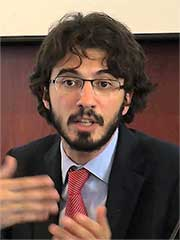
Bassam Haddad is Director of the Middle East Studies Program and Associate Professor at the School of Policy, Government, and International Affairs (SPGIA) at George Mason University. He is the author of Business Networks in Syria: The Political Economy of Authoritarian Resilience (Stanford University Press, 2011) and Co-Editor of Dawn of the Arab Uprisings: End of an Old Order? (Pluto Press, 2012). Bassam serves as Founding Editor of the Arab Studies Journal a peer-reviewed research publication and is co-producer/director of the award-winning documentary film, About Baghdad, and director of a critically acclaimed film series on Arabs and Terrorism, based on extensive field research/interviews. Bassam is Co-Founder/Editor of Jadaliyya Ezine and the Executive Director of the Arab Studies Institute, an umbrella for five organizations dealing with knowledge production on the Middle East. He serves on the Board of the Arab Council for the Social Sciences and is Executive Producer of Status Audio Journal.


*This event is supported by the Stanford Initiative for Religious and Ethnic Understanding and Coexistence


[[{"fid":"224129","view_mode":"crop_870xauto","fields":{"format":"crop_870xauto","field_file_image_description[und][0][value]":"Bassam Haddad flyer","field_file_image_alt_text[und][0][value]":"","field_file_image_title_text[und][0][value]":"","field_credit[und][0][value]":"","field_caption[und][0][value]":"","field_related_image_aspect[und][0][value]":"","thumbnails":"crop_870xauto"},"type":"media","attributes":{"width":"870","class":"media-element file-crop-870xauto"}}]]

Reuben Hills Conference Room
2nd Floor East Wing E207
Encina Hall
616 Serra Street
Stanford, California 94305
Bassam Haddad Associate Professor George Mason University
Seminars
News Type
News
Date
Paragraphs

The Program on Arab Reform and Democracy (ARD) at Stanford’s Center on Democracy, Development, and the Rule of Law (CDDRL) is pleased to welcome international media figure and Egyptian political satirist Bassem Youssef as a visiting scholar during the Fall of 2016. Dubbed the Jon Stewart of the Arab World, Youssef was the host of the popular TV political satire show Al-Bernameg, which was the first of its kind in the Middle East region. Al-Bernameg was the most watched show in the history of Egyptian TV with an average of 40 million viewers every week. Due to its sharp criticism of Egyptian leaders, Al-Bernameg faced political pressure from successive governments until it was finally taken off the air in the summer of 2014. Recently, Youssef launched “The Democracy Handbook,” a Fusion TV digital series that satirizes American politics through a Middle Eastern perspective. Named one of TIME’s “100 most influential people in the world” in 2013, Youssef served as a resident fellow at the Institute of Politics at Harvard University’s Kennedy School of Government in 2015.

Youssef’s fellowship is supported by a generous grant from the Carnegie Corporation, and by the Stanford Arts Office of the Associate Dean. In the following interview Youssef discusses his current projects and their relevance to the Stanford community.


[[{"fid":"224139","view_mode":"crop_870xauto","fields":{"format":"crop_870xauto","field_file_image_description[und][0][value]":"Bassem Youssef at CDDRL","field_file_image_alt_text[und][0][value]":"","field_file_image_title_text[und][0][value]":"","field_credit[und][0][value]":"Djurdja Jovanovic Padejski ","field_caption[und][0][value]":"Bassem Youssef speaking with members of the CDDRL community at Stanford University, September 29, 2016","field_related_image_aspect[und][0][value]":"","thumbnails":"crop_870xauto"},"type":"media","attributes":{"width":"870","class":"media-element file-crop-870xauto"}}]]

Bassem Youssef in conversation with ARD Associate-Director Hesham Sallam and CDDRL Visiting Scholar Alexandra Pichler Fong at the CDDRL fall 2016 reception, September 29, 2016 (Photo credit: Djurdja Jovanovic Padejski)


What are your research goals and priorities at CDDRL, Stanford?

I am not a stranger to CDDRL. About a year ago I spoke at the Center in conversation with Professor Larry Diamond in what might have been one of the best interviews I had on a college campus in the United States. During my visit, I was very impressed with CDDRL’s efforts to try to make sense of all what is happening in the Middle East and to nuance American perspectives on the situation the region. I was elated when I was informed that there was a chance for me to join forces with this prestigious center.

Through my fellowship at CDDRL, I would like to bring a different voice to the discussion over what is happening in the Middle East and the Muslim World, and how narratives in the United States can affect the realities in the region. Beyond my own research on satire and social change, my priority is to connect with the student community at Stanford and encourage them to find their own voices and their own opinions about that part of the world. I believe that satire can be a great tool to understand and even change how people view the world around them. As much I have a lot to share with students, I am sure I will have a great deal to learn from them too, and from the Stanford community more generally. I had the privilege to meet with some of the smartest young people here and I look forward to benefit from this intellectually promising experience.


How are the ongoing political developments in the United States informing your current projects?

After I moved to the United States, I started to follow the American elections very closely. With the rise of a populist Right not just in the States but also in Europe, I could see many similarities of how masses are being controlled through hate, xenophobia, and fear. These have been key elements in the narratives used by many Middle Eastern regimes for decades. As people were horrified with the likes of Donald Trump, Ted Cruz and Ben Carson, this came to me as a reminder that no nation, no matter how strong or advanced, is free of such forms of public manipulation and fear-mongering. This was a great starting point for me here in the States. I discovered many similarities that I can comment on and use to show people that we are not that different from each other and that intolerance and bigotry have no single home or language. I was fortunate to relay that message in my new show in America "Democracy Handbook" and also in my coverage of the National Conventions of the Republican and Democratic Parties.


What is your assessment of the prospects for meaningful political change at the current moment in Egypt?

The current realities in Egypt and the Middle East are a product of decades of authoritarian rule. What happened in the Arab Spring interrupted the rule of particular autocrats, but did not succeed in delivering the type of lasting social change we all had hoped for. The biggest obstacle to meaningful social change in Egypt remains the massive webs of special interests that have ruled the country for the last 60 years and shaped its political and social hierarchies. It was naive of us to think that 18 days of protests could make profound changes to the system. You can get rid of the autocrat at the helm, but the system can still endure, as evidenced by the current realities. Any changes will be worthless in the absence of complete transparency and accountability of the ruling class that controls the country’s economy, governance, and legislation.

Hero Image
bassem
Bassem Youssef at the CDDRL fall 2016 reception, September 29, 2016
Djurdja Jovanovic Padejski
All News button
1
Authors
News Type
News
Date
Paragraphs

In a talk dated April 20, 2016, American University of Kuwait Scholar Farah Al-Nakib discussed her recently released book Kuwait Transformed: A History of Oil and Urban Life (Stanford University Press, 2016). The book traces the relationships between the urban landscape, patterns and practices of everyday life, and social behaviors and relations in Kuwait, from its settlement in 1716 through the bridge of oil discovery to the twenty-first century. The history that emerges reveals how decades of urban planning, suburbanization, and privatization have eroded an open, tolerant society and given rise to the insularity, xenophobia, and divisiveness that characterize Kuwaiti social relations today. However, over the past decade several social forces and youth-based movements—from political protesters to architects and small entrepreneurs—have been staking claims to the city and demanding a different kind of urban experience. Beyond simply reviving the declined urban center, Al-Nakib argues, their efforts have the potential to restore Kuwaiti society’s lost urbanity.


Hero Image
screen shot 2016 05 17 at 11 26 11 am
All News button
1
-

Abstract

In this talk Nancy Okail will reflect on the renewed crackdown on civil society in Egypt, the closing of public space, and the continued regression in rights and freedoms. In the course of the past months the military-sponsored regime of Abdel-Fattah Al-Sisi has escalated its confrontation with civil society organizations by announcing a new set of investigations against prominent human rights defenders and NGOs. The talk will analyze the conditions motivating the regime’s renewed crackdown against civil society and the impact of these politically motivated investigations on the regime’s domestic and international standing and the struggle for political change in Egypt.
 

Speaker Bio

Image
nancy okail
Nancy Okail is the Executive Director of The Tahrir Institute for Middle East Policy (TIMEP). She brings more than 15 years of experience promoting democracy and development in the Middle East and North Africa region to this role. Prior to joining TIMEP, Dr. Okail was the director of Freedom House’s Egypt program. She has also worked with the Egyptian government as a senior evaluation officer of foreign aid and has managed programs for Egyptian pro-democracy organizations that challenged the Mubarak regime. She was also one of the defendants convicted in the widely publicized case of 43 non-governmental organization employees charged with using foreign funds to foment unrest in Egypt. She was sentenced in absentia to five years in prison, and, as a result, has spent the last four years in exile. She holds a Ph.D. from the University of Sussex in the U.K. where her dissertation examined the power relations of foreign aid.


[[{"fid":"222701","view_mode":"crop_870xauto","fields":{"format":"crop_870xauto","field_file_image_description[und][0][value]":"Nancy Okail flyer","field_file_image_alt_text[und][0][value]":"","field_file_image_title_text[und][0][value]":"","field_credit[und][0][value]":"","field_caption[und][0][value]":"","field_related_image_aspect[und][0][value]":"","thumbnails":"crop_870xauto"},"type":"media","attributes":{"width":"870","class":"media-element file-crop-870xauto"}}]]


CISAC Central Conference Room
Encina Hall, 2nd Floor
616 Serra St
​Stanford, CA 94305

Nancy Okail Executive Director TIMEP
Seminars
Subscribe to Democracy